



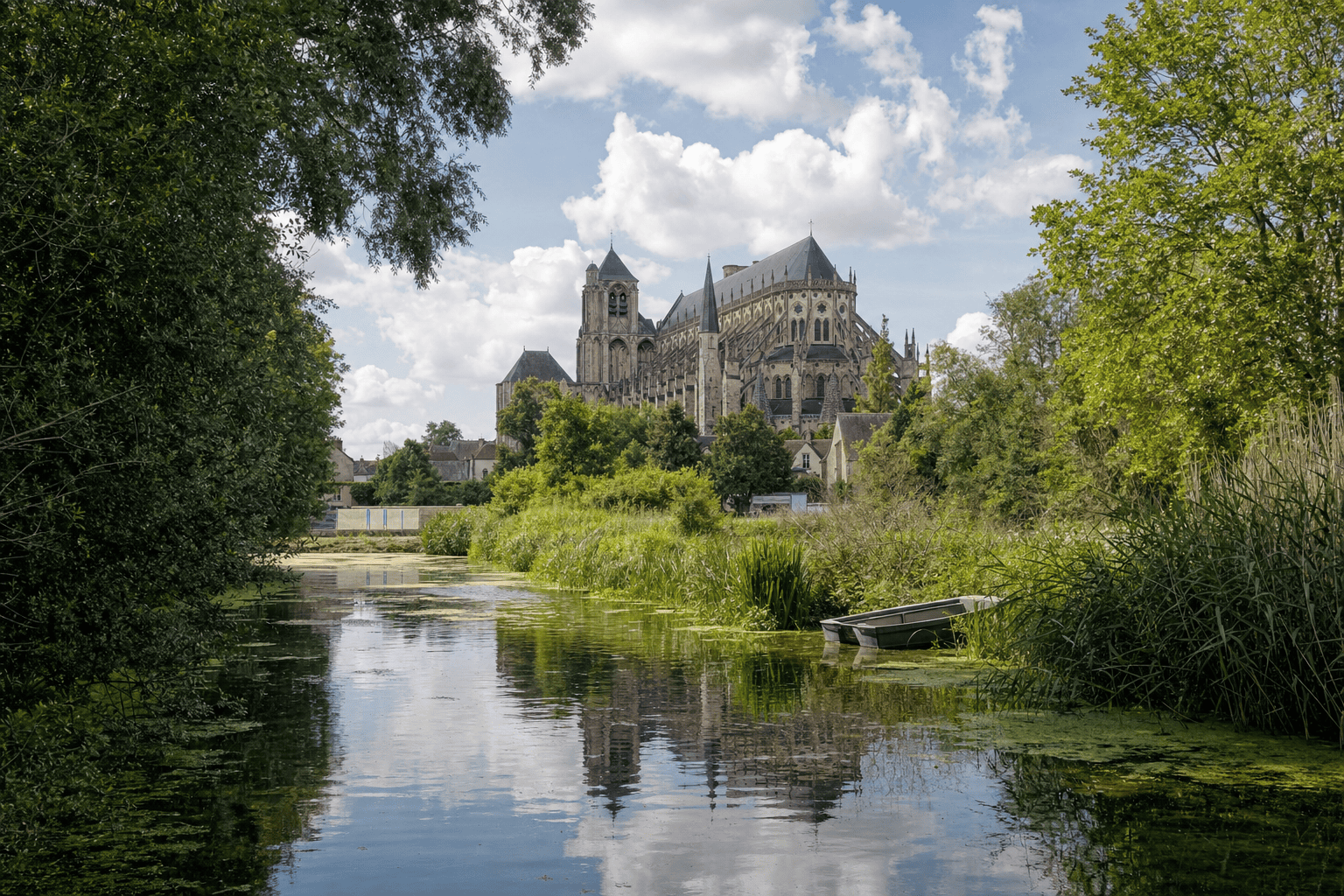
Marais de Bourges: A Stroll Among Gardens and Canals
Bourges
Just a few hundred yards from the old town, the Marais de Bourges unfolds as a remarkable landscape of market gardens, waterways, and quiet paths. This protected natural area can be explored on foot or by bicycle, following the Yèvre, the Voiselle, and the many “coulants” that shape the plots. For a more immersive experience, local operators offer boat trips at certain times of year, subject to availability and reservations. Above all, take your time: the scenery changes with the plantings, the light, and the seasons.
Practical information
Park outside the marshes and follow the maps or signs posted on-site. Stay on authorized paths, respect the quiet, and do not enter cultivated plots.
Getting to the Marais de Bourges from Paris
To discover Bourges without planning the entire journey yourself, BookingParisTransfer.com can provide a private transfer from Paris, a Paris hotel, Charles de Gaulle Airport, or Orly, with a return to Paris or onward travel. The service covers transportation only: visits, reservations, and any boat rides must be arranged with local operators.
Departure from Paris, Île-de-France, CDG, or ORY, depending on your itinerary; return to Paris is available.
A Market-Garden Landscape in the Heart of Bourges
The Marais de Bourges offers a surprisingly rural escape right next to the historic center. According to local tourism descriptions, the site covers approximately 135 hectares, while the protected and listed area is more precisely described as a 155-hectare expanse. This mosaic of gardens, meadows, fruit trees, ditches, and waterways gives the landscape its distinctive character. Visitors do not come here to find a uniformly landscaped park, but a living area shaped by landowners and market gardeners.
The walk reveals plots of varying sizes and appearances: vegetables, flowers, huts, small bridges, and planted banks create a succession of different scenes. The nearby cathedral and historic streets heighten the contrast. Within minutes, medieval architecture gives way to a quiet countryside atmosphere. This transition is one of the site's main attractions and makes it well worth including in a day spent exploring Bourges.
Understanding the History of the Marshes
Before becoming a garden area, the marshes played a role in Bourges' natural defenses. Wetlands and waterways formed a protective barrier around the city before they were gradually organized and cultivated. Local history notably records that, in the 17th century, the Jesuits acquired the marshes and leased them to private individuals. Market gardening later became firmly established and helped feed the city for generations.
This history explains the site's present-day structure. The canals are not merely decorative features: they help manage the water, serve the plots, and maintain a delicate balance between cultivation and wetland. Terms used locally, such as “coulant,” “bourde,” and “plate,” reflect the area's distinctive heritage vocabulary. A guided tour can help explain these uses and distinguish the different types of waterways. The site's designation as a protected landscape and natural monument highlights the importance of preserving this traditional organization rather than turning it into a standardized recreational area.
Choosing a Walk or Bike Ride
The easiest way to explore the area is to follow the paths accessible on foot. Several entry points are signposted around Rue de Babylone, Quai des Maraîchers, and Chemin des Prébendes. From the historic center, walking allows you to reach the marshes gradually, without interrupting your city tour. Sturdy footwear is recommended, as the ground can be damp or uneven, especially after rainy weather.
Bicycles can also be used on authorized routes, provided you ride slowly and give priority to agricultural activities. The network is not designed as a sports cycling path: some crossings are narrow, and the banks may be fragile. Maps posted on-site are useful for finding your way, but they do not necessarily provide access to every plot. Some sections are private and must be respected. For a first visit, a short route through the most accessible areas is enough to get a feel for the atmosphere. Visitors who want to photograph or observe wildlife should keep a low profile and avoid the busiest times.
Exploring the Marshes by Boat
A traditional boat offers another way to understand the Marais de Bourges. From the water, the plots appear from a different angle, and the canals reveal the logic of the landscape. Local boats may be called “plates,” while the person traditionally operating one is known as a “bourdeur.” This experience lets you observe the banks, gardens, and narrow passages without covering long distances on foot.
Boat trips are not necessarily available every day or under the same conditions throughout the year. It is therefore wise to check with the tourist office or organizing association before setting out, and to book when required. The presence of canals does not mean that visitors are free to navigate them: some waterways are connected to private properties and marsh management. A guided outing also provides explanations about maintaining the coulants, cultivating the plots, and protecting the site.
Wildlife, Plants, and Atmosphere Through the Seasons
Much of the marshes' charm lies in their seasonal changes. In spring, the gardens come back to life, fruit trees blossom, and vegetation covers the banks. Summer highlights the vegetable gardens, flowers, and foliage, but can also make areas with little shade feel hotter. In early fall, the harvests, tree colors, and lower light create a particularly photogenic atmosphere. Even winter has its appeal: the garden structures, canals, and plant silhouettes become easier to distinguish.
The marshes are also home to biodiversity associated with water and gardens. You may see birds, insects, and wetland vegetation, but sightings of any particular species are not guaranteed. Observe respectfully: do not feed the animals, pick plants, or approach private plots. Quiet is an essential part of the experience. A lightweight pair of binoculars and a discreet camera can enhance your walk, but the best memory is often simply of a landscape observed without rushing.
Practical Tips for a Respectful Visit
The Marais de Bourges is an inhabited, cultivated, and sensitive area—not merely a tourist attraction. Most plots belong to private individuals or associations, and visitors must remain on paths and in areas open to the public. Signs and maps installed on-site make it easier to find your way, but they do not replace notices concerning private property. Do not cross a plot, move a gate, or venture onto a bank that appears to be reserved for market gardeners.
For a comfortable outing, bring water, sun protection, and shoes suitable for uneven ground. Strollers and wheelchairs may encounter difficulties depending on the route; if accessibility is important, check the itinerary before your visit. Dogs must remain under control, and the tranquility of the area should be preserved. Finally, water conditions or temporary regulations may affect certain activities, particularly fishing. Check the latest official information before any regulated activity, and do not automatically assume that an old notice is still valid.
Combining the Marshes with the Historic Center
The marshes are easy to incorporate into an itinerary devoted to Bourges. One pleasant option is to begin at Saint-Étienne Cathedral and in the streets of the medieval quarter, then gradually make your way down toward the wetlands. The change in atmosphere is quick: after the historic façades, the gardens and canals offer a more contemplative break. Depending on your pace, you can then return to the center to visit the Palais Jacques-Cœur, half-timbered houses, or historic squares.
For families, a short walk followed by a snack or meal nearby may be more enjoyable than a long route. Photography enthusiasts may prefer the morning or late afternoon, when reflections and shadows give the coulants more depth. Visitors with half a day to spare can look for a guided walk or boat trip, subject to current availability. The key is to allow some extra time: the marshes are better suited to slow observation than to a tightly scheduled visit. From Paris, they can also make an original nature stop on an itinerary focused on the heritage of Berry.
Frequently Asked Questions
Where are the Marais de Bourges located?
Is access to the Marais de Bourges free?
Can you visit the marshes by boat?
How much time should I allow for a visit?
Can you drive into the marshes?
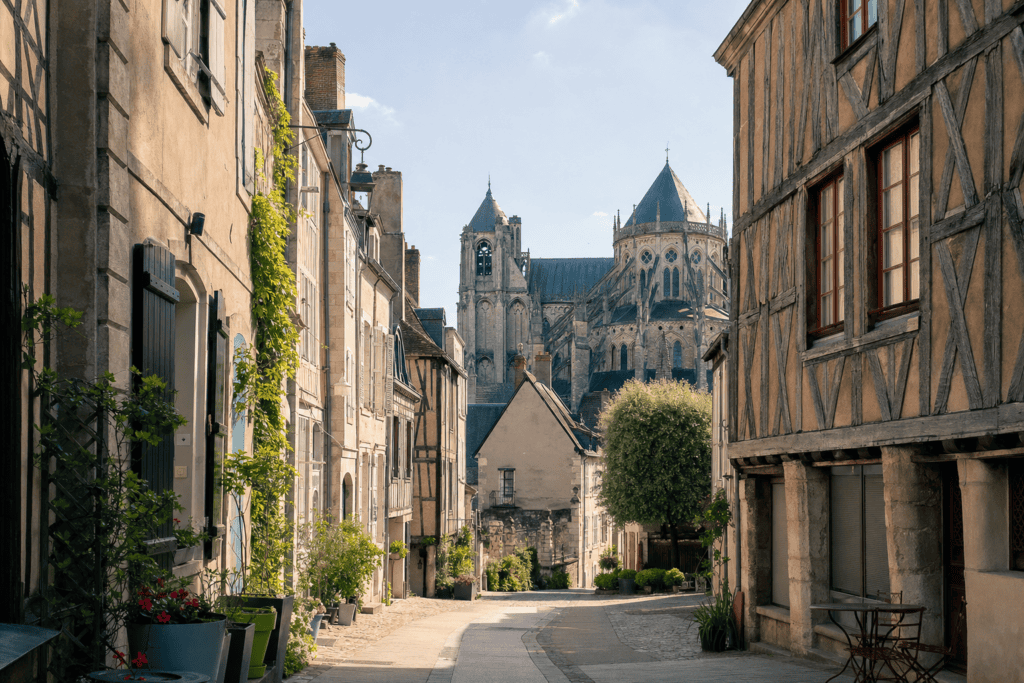 Strolling Through Bourges’ Historic Center A walking tour through Bourges’ old streets, among half-timbered houses, grand townhouses, lively squares…
 Saint-Étienne Cathedral of Bourges A Gothic masterpiece in Bourges, recognized by UNESCO for its architecture, sculptures, and stained glass…
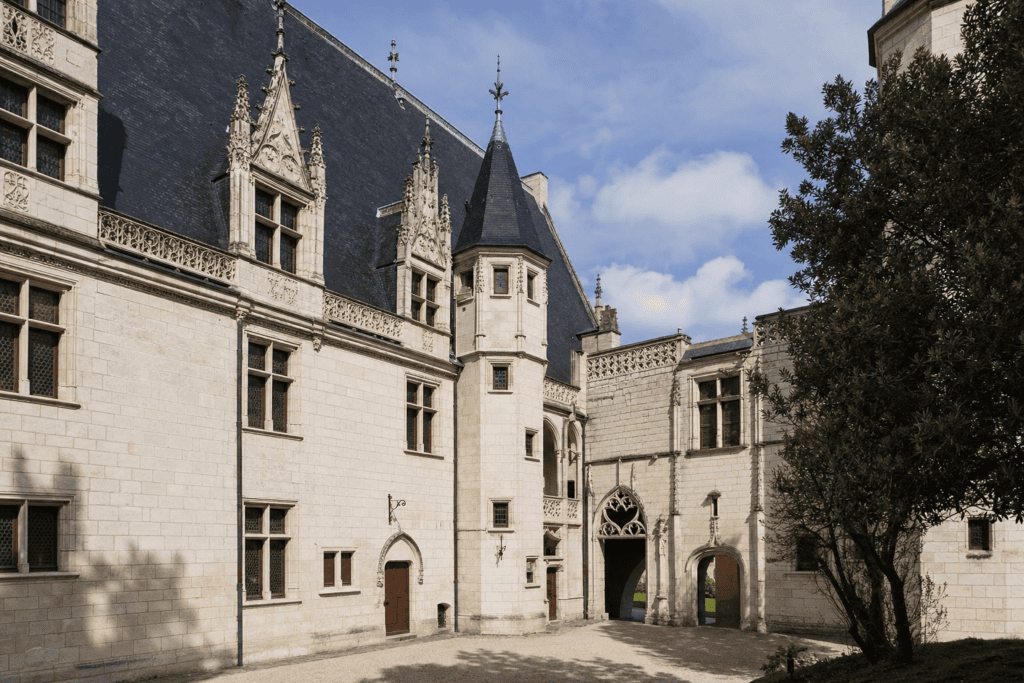 Jacques-Cœur Palace A masterpiece of flamboyant Gothic civic architecture, combining royal grandeur, carved symbols, and the fascinating story of…
 Berry Museum A multidisciplinary museum housed in the remarkable Hôtel Cujas, showcasing ancient archaeology, medieval heritage, and local traditions…
Online booking · Paris → Marais de Bourges, Bourges, Cher. Access is available via Rue de Babylone, Quai des Maraîchers, and Chemin des Prébendes, among other routes.
Choose your pickup date and time
Your departure and arrival details are already pre-filled. You can adjust them in the fare calculator before viewing the vehicles and fare.