



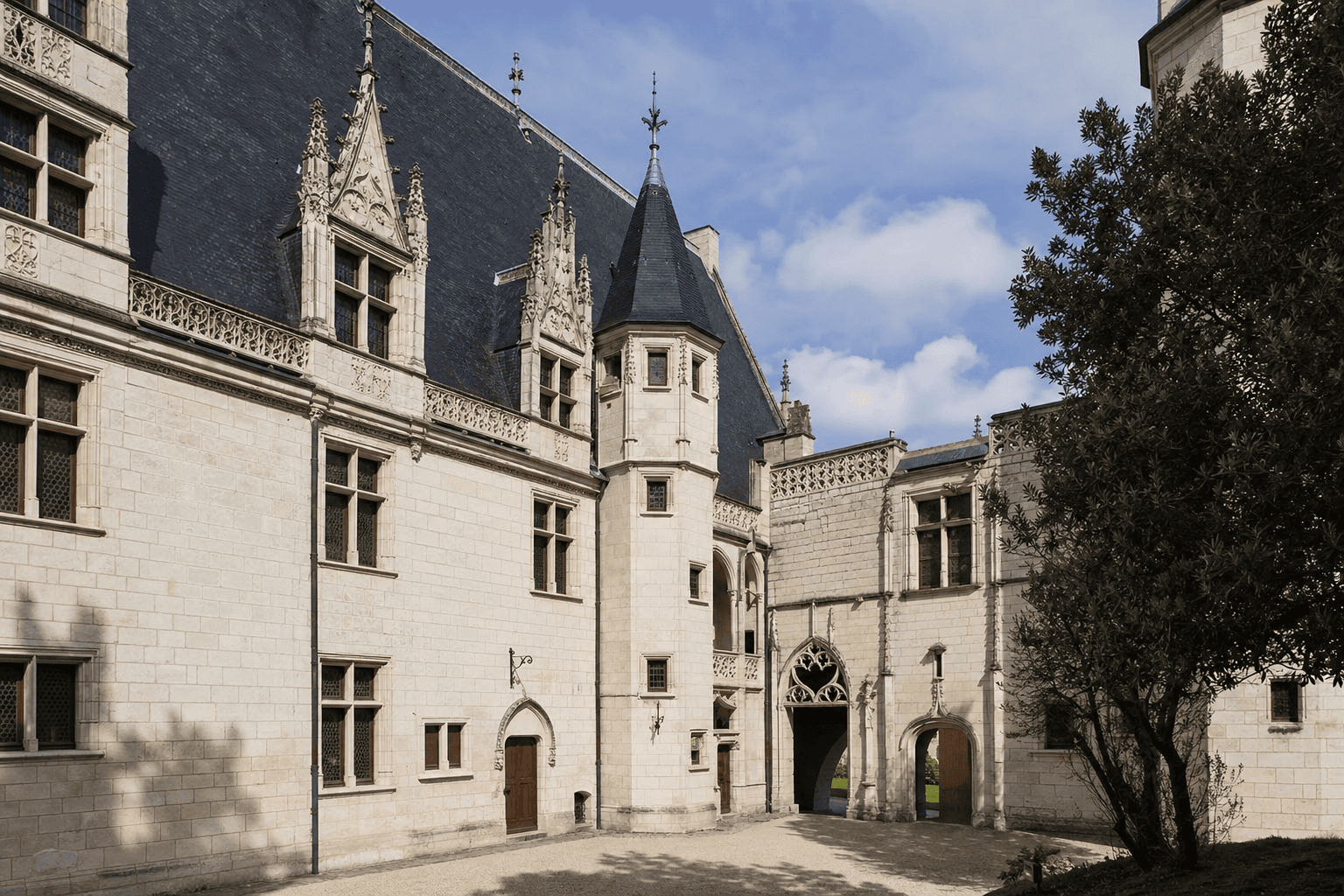
Jacques-Cœur Palace in Bourges: Gothic Splendor
Bourges
In the heart of Bourges’ historic center, Jacques-Cœur Palace reveals one of the most remarkable 15th-century civic residences. Built between 1443 and 1451 for Jacques Cœur, Charles VII’s chief financier, this “Grant’ Maison” tells the story of the spectacular rise of a merchant who became close to the royal court. Behind its elegant façade and turrets, the visit reveals an architecture designed to impress: grand rooms, a chapel, staircases, fireplaces, sculptures, and symbols linked to its owner’s success. The tour also provides insight into the social and political ambitions of a man whose fortune was built on long-distance trade and service to the king.
Practical information
Take a close look at the façades and decorations before entering, then take time during the visit to spot the scallop shells, emblems, and scenes of everyday life.
Getting to Bourges from Paris with a private chauffeur
For a cultural day trip from Paris, Booking Paris Transfer can arrange private transportation to Bourges, departing from a Paris hotel, CDG, or ORY, with a return to Paris. Transportation is separate from admission to Jacques-Cœur Palace, so be sure to check the monument’s official hours before setting your departure time.
Transportation service departing from Paris, the Île-de-France region, CDG, or ORY; admission tickets are not sold.
A palace born from Jacques Cœur’s rise
Jacques-Cœur Palace is inseparable from its owner’s extraordinary life story. Born in Bourges to a family of merchants, Jacques Cœur developed commercial activities that brought him into contact with trade networks spanning the Mediterranean and the East. His success gradually brought him closer to the court of Charles VII, who appointed him the king’s financier in 1438. This role gave him a crucial position in managing the royal finances and brought him to the heart of power.
Construction of his Bourges residence began in 1443 and was completed around 1451. The building was not a fortified castle but an urban residence designed to display newfound power, considerable wealth, and proximity to the sovereign. Jacques Cœur had the signs of his success incorporated into the residence while adopting certain codes of the nobility. The house thus became both a social manifesto and a place to live.
Yet his fortunes took a sudden turn. Accused of embezzlement and arrested in 1451, he lost much of his property. He later escaped and died in 1456 during an expedition in the Mediterranean. The palace takes on its full significance when viewed against this trajectory: a man who rose from commerce to the highest levels of government, only to be overtaken by rivalries at court.
Exceptional civic architecture in the 15th century
The palace is a rare example of flamboyant Gothic civic architecture. Unlike the great religious buildings of the same period, it shows how a powerful figure arranged a private residence designed for display, comfort, and everyday organization. Its layout combines a main residential building, an inner courtyard, galleries, staircases, and several service areas.
The street-facing façade immediately draws the eye with its openings, sculptures, and defensive features reinterpreted in a residential setting. In the courtyard, the volumes are easier to read: turrets, large windows, dormers, and stone decorations create a particularly theatrical architectural scene. The palace was built partly on Bourges’ Gallo-Roman walls, which explains the presence of old towers incorporated into the complex.
The residence also reflects a modern approach to aristocratic living. Formal circulation routes and private passages are separated, while the fireplaces testify to an ambitious pursuit of comfort for the mid-15th century. Each space served a purpose: welcoming guests, praying, working, housing the household, or organizing services. This combination of prestige and efficiency makes the monument especially informative.
Sculpted decorations to look for during your visit
Jacques-Cœur Palace can be read like a book carved in stone. The sculptures are more than simple ornaments: they create a statement about their patron’s success. Jacques Cœur’s emblems, especially scallop shells, appear in various details and recall his visual identity. References to the royal world, chivalry, and commerce can also be found throughout.
The façades and interiors combine plant motifs, human figures, animals, angels, and scenes inspired by everyday life. This variety gives the decoration a remarkably tangible quality. By looking up, visitors can discover sculpted figures in expressive poses, clothing details, and features that reveal the tastes and perspectives of the late Middle Ages.
The chapel deserves particular attention for its sculpted features and religious references. It recalls that the residence was not only a place for entertaining: it also had to express its owner’s piety and status. To get the most from your visit, it is best to proceed slowly and examine the surrounds, corbels, fireplaces, and upper sections rather than focusing only on the grand rooms. The most interesting details are sometimes the least noticeable at first glance.
A residence designed to welcome and impress
The palace allows visitors to imagine life in a great urban household at the end of the Middle Ages. The ceremonial spaces were intended to welcome important visitors, host meetings, and display Jacques Cœur’s prestige. The dimensions, openings, and richness of the decorations were designed to impress guests as soon as they entered the courtyard.
But the building is more than a succession of prestigious rooms. Its design reveals a carefully organized circulation system. Galleries and staircases structure movement, while private rooms and service areas remain more discreet. This separation kept the grandeur in the visible rooms while ensuring the house functioned day to day.
The fireplaces found in many rooms are an important indication of the comfort being sought. They were used for heating, preparing meals, or enhancing the presentation of the rooms. The sculptures around them contribute to each room’s identity. By observing these features, it becomes clear that medieval architecture did not strictly separate function from decoration: a practical fixture could also serve as a symbol of prestige.
From private mansion to public monument
After Jacques Cœur’s disgrace, the building changed owners and uses several times. In 1682, the city of Bourges purchased it and successively installed administrative and judicial functions there. The name “palace” was maintained in part because the building housed the courthouse during the 19th and 20th centuries.
These changes altered some spaces and occasionally damaged parts of the building. The palace was acquired by the French state in 1923, then underwent a major restoration campaign between 1928 and 1938. The aim was to recover the residence’s appearance and highlight its decorative features. Restoration does not mean that the monument is frozen in time: like any historic building, it requires regular monitoring and conservation work.
Visitor conditions may therefore change depending on ongoing work. Some rooms or sections of the route may be temporarily closed, and opening hours may be adjusted. Before setting out, consult the official Jacques-Cœur Palace page or information from the Centre des Monuments Nationaux. This is especially useful if you want to see a particular space, join a guided tour, or visit as part of a group.
Tips for planning your visit to Bourges
Jacques-Cœur Palace is located at 10 bis rue Jacques-Cœur, in the historic center of Bourges. It is easy to include in a day devoted to the city’s heritage, alongside Saint-Étienne Cathedral, the old streets, and the neighborhood’s other private mansions. Allow enough time for your visit, as the monument deserves careful attention to its decorations and circulation routes.
Opening hours, prices, visitor arrangements, and accessible areas may change depending on the season or the progress of restoration work. Information published by the Centre des Monuments Nationaux should therefore remain your reference before departure. The site generally lists several options, including self-guided visits and, depending on the period, guided tours or audio-guided visits. Groups may need to book in advance.
The monument contains staircases and structural constraints related to its historic design. Visitors with accessibility needs should inquire directly before coming to learn which route is actually available. For families, a booklet or special activity may be offered depending on the program. Finally, arrive early enough: final admission may take place before the official closing time, and a modified route may require additional time.
Why include the palace in your exploration of Bourges
Jacques-Cœur Palace is one of the most revealing places for understanding Bourges during the Hundred Years’ War and the restoration of royal power. At that time, the city hosted an important court around Charles VII and became a major political, economic, and cultural center. The palace bears witness to a period when merchant fortunes, royal administration, and noble ambitions came together.
Its visit ideally complements Saint-Étienne Cathedral. The cathedral illustrates Bourges’ religious and urban power, while the palace shows how an exceptionally wealthy individual sought to rival the great institutions of his time through architecture and decoration. This complementarity makes the historic center especially coherent for a cultural excursion.
The monument will appeal equally to history enthusiasts and to those interested in architecture, sculpture, or urban heritage. It also provides an introduction to the Jacques Cœur Route and to the other remarkable residences of Berry. By taking time to examine the symbols, materials, and traces of successive changes, you are not simply visiting a beautiful house: you are discovering the ambitions, networks, and vulnerabilities of a man who sought to record his rise in stone.
Frequently Asked Questions
Where is Jacques-Cœur Palace located?
How much time should I allow for the visit?
Are the opening hours the same year-round?
Is the route accessible to people with reduced mobility?
Can the palace be combined with other visits in Bourges?
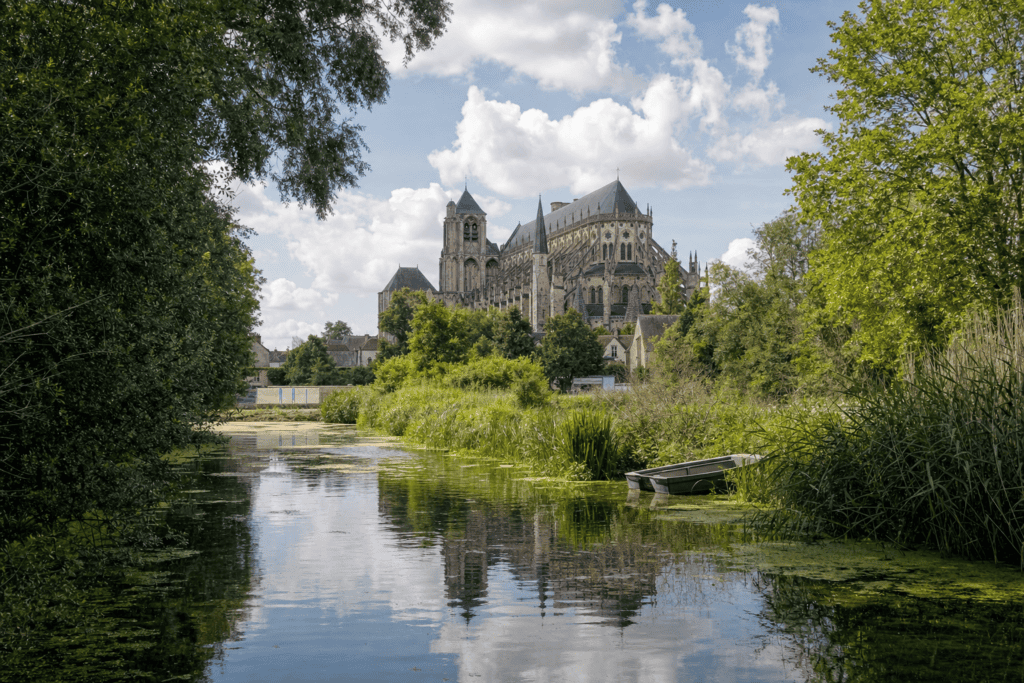 Bourges Marshes A unique green haven at the foot of Bourges’ historic center, with cultivated gardens, small canals…
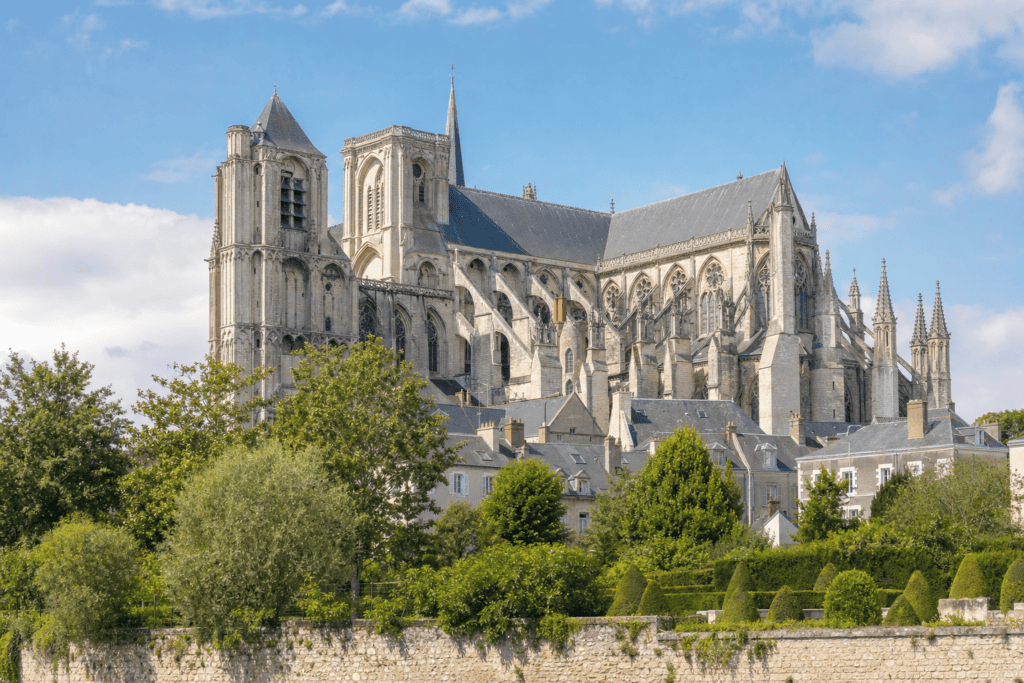 Saint-Étienne Cathedral of Bourges A Gothic masterpiece in Bourges, recognized by UNESCO for its architecture, sculptures, and stained glass…
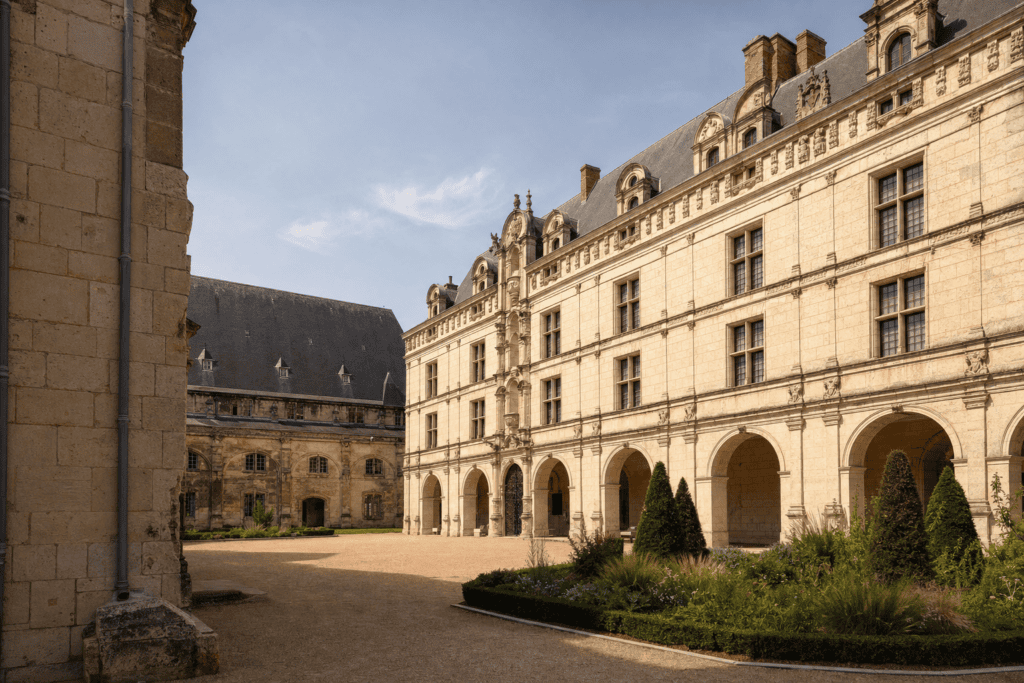 Berry Museum A multidisciplinary museum housed in the remarkable Hôtel Cujas, showcasing ancient archaeology, medieval heritage, and local traditions…
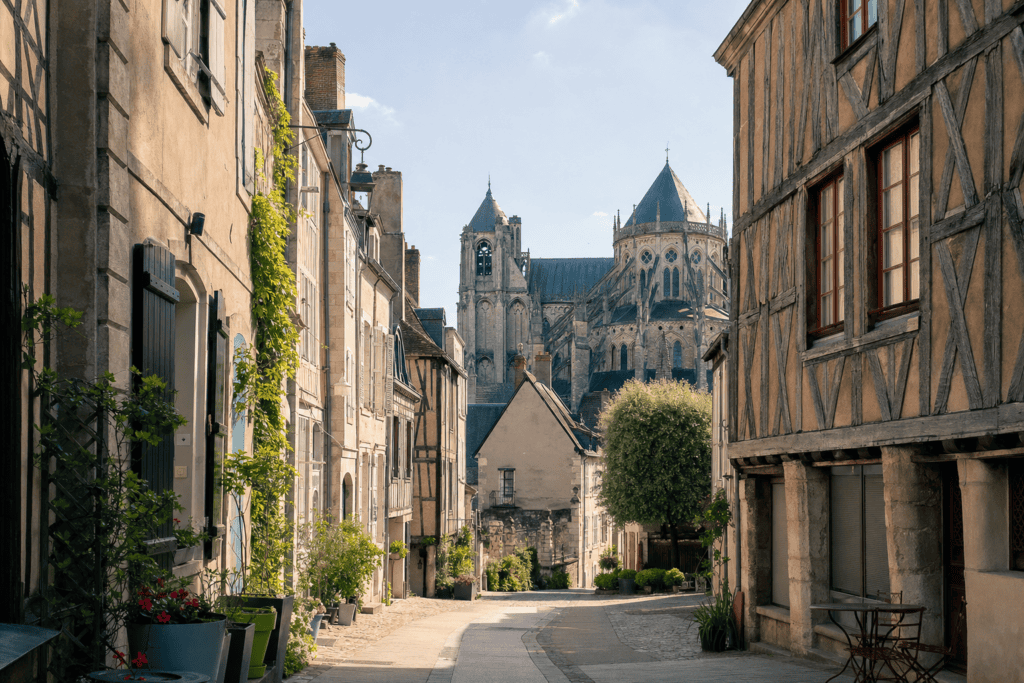 Strolling Through Bourges’ Historic Center A walking tour through Bourges’ old streets, among half-timbered houses, grand townhouses, lively squares…
Online booking · Paris → 10 bis rue Jacques-Cœur, 18000 Bourges, France
Choose your pickup date and time
Your departure and arrival details are already pre-filled. You can adjust them in the fare calculator before viewing the vehicles and fare.