



Rethondes Armistice Museum: Visitor Guide
Compiègne
In the Forest of Compiègne, the Rethondes Armistice Museum and its commemorative clearing form a major memorial site in Hauts-de-France. The visit explains the signing of the armistice on November 11, 1918, the Franco-German armistice of June 22, 1940, and the memorial’s successive transformations. The site is administratively located in Rethondes, while its postal address is generally listed as Route de Soissons, 60200 Compiègne. This distinction is worth considering when planning a journey from Compiègne train station or from Paris. Before setting out, check the official information to confirm opening hours, admission fees, access conditions, and any exceptional closures.
Practical information
Start with the museum to follow the chronology, then continue to the railway carriage and outdoor monuments. Wear suitable shoes and check the official information regarding accessibility, opening hours, and closures.
Getting to Rethondes from Paris
Private transportation can be arranged from Paris, a Paris hotel, CDG, or ORY to the Rethondes clearing, with a return to Paris or continuation of an itinerary begun in the Île-de-France region. The service covers transportation only and does not include admission tickets.
Departure from Paris, the Île-de-France region, CDG, or ORY; return to Paris or continuation of an itinerary beginning in Paris.
Finding the Memorial in the Forest of Compiègne
The Armistice Clearing is often presented as a Compiègne site because the city is the main nearby rail and tourist reference point. However, the site is located within the municipality of Rethondes, in the Oise department. Its postal address, generally listed as Route de Soissons, 60200 Compiègne, may therefore come as a surprise when planning navigation or booking transportation.
The memorial is not located in Compiègne’s historic center or immediately near its train station. It is set in a woodland environment comprising the museum, reconstructed railway carriage, clearing, Garden of Remembrance, and several monuments. This location was not accidental: in 1918, the site was intended to provide discretion, security, and military control while remaining accessible to Allied headquarters.
For a first visit, allow enough time to alternate between indoor and outdoor areas. The quiet of the forest is an integral part of the experience and helps explain why this site became so important to the memory of World War I.
Understanding the Armistice of November 11, 1918
In the fall of 1918, Germany requested negotiations as the Western Front was undergoing profound upheaval. The German delegation joined the train used by the Allied headquarters of Marshal Ferdinand Foch. The discussions took place in a railway carriage equipped for command purposes, positioned in a controlled woodland area away from major urban centers.
The armistice terms were signed on November 11, 1918, at 5:15 a.m. The ceasefire then took effect at 11 a.m. This difference between the time of signing and the end of the fighting is an important point in the visit. The armistice ended military operations on the Western Front, but it was not yet a peace treaty.
The Treaty of Versailles, signed on June 28, 1919, subsequently established peace with Germany. The museum places these events in the broader context of total war: the mobilization of societies, human losses, destruction, prisoners, and political upheaval. The visit thus shows that the end of the fighting alone was not enough to guarantee lasting peace.
The Reconstructed Railway Carriage and the Museum Route
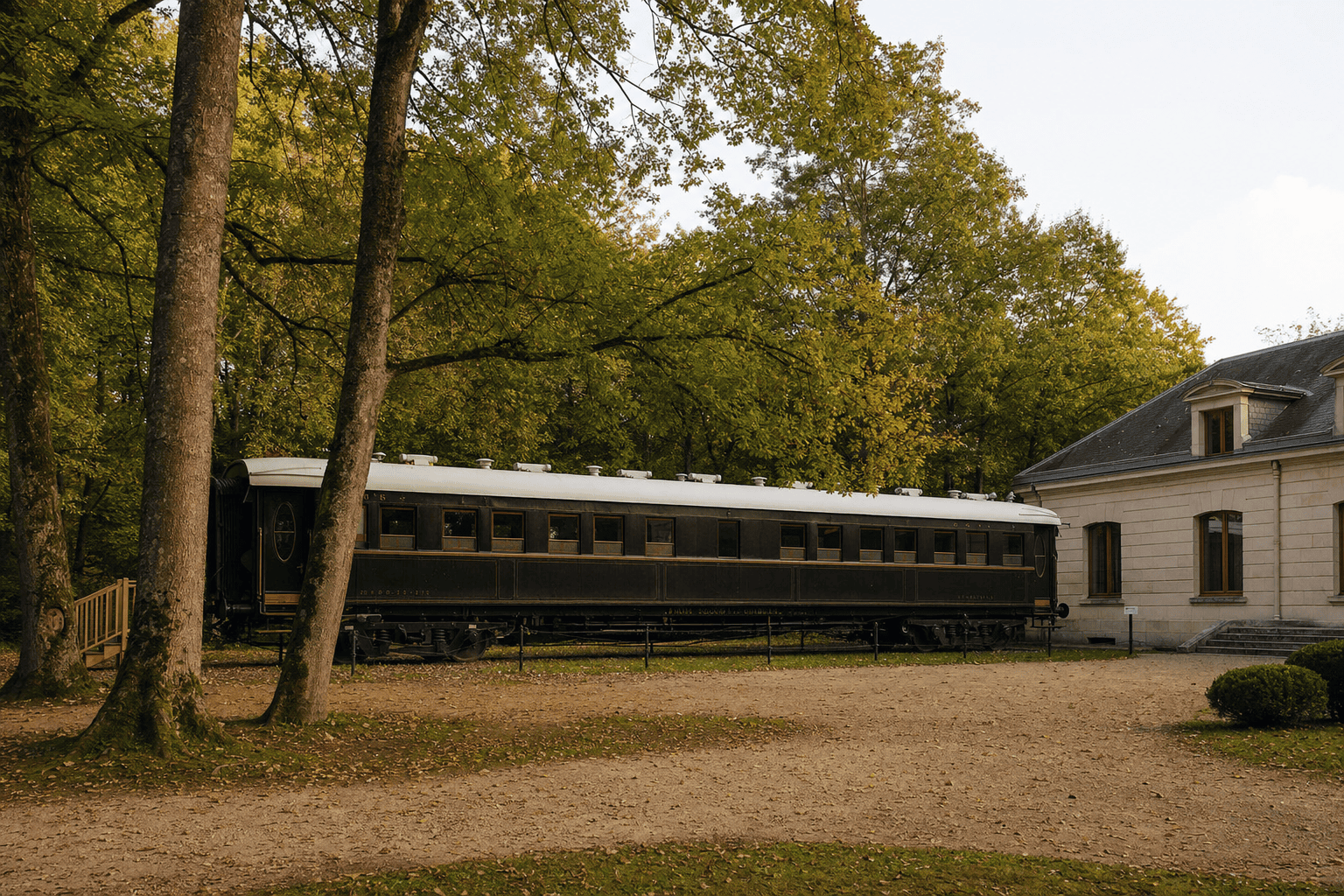
The railway carriage is the memorial’s most immediately evocative feature. It gives tangible form to negotiations often reduced to a date in school textbooks. By discovering this confined railway space, visitors gain a better understanding of the material conditions of a diplomatic meeting organized far from the capitals, in an environment governed by military imperatives.
One historical point is essential: the railway carriage visible today is not the original 1918 carriage. Carriage 2419D, associated with the signing, was reused for the 1940 ceremony and then taken to Germany. It disappeared at the end of World War II. The museum therefore presents a reconstruction intended to recreate the setting of the event, not an object that has remained intact since the armistice.
The collections include documents, photographs, objects, and stereoscopic views. They address mobilization, soldiers’ lives, destruction, and the human consequences of the Great War. The route also connects the events of 1918 and 1940 with the memorial’s turbulent history.
Discovering the Clearing and Monuments
The outdoor visit naturally extends the museum route. Paths lead to monuments and commemorative features installed in a woodland setting where the silence, trees, and views contribute to the atmosphere. The statue of Marshal Foch, unveiled in 1937, recalls the Allied commander’s role in the 1918 negotiations and in shaping national memory.
The Garden of Remembrance deserves particular attention. It is not merely a passageway between the building and the outdoor areas: the inscriptions, flags, and landscaping invite a more contemplative reading. The contrast between the forest’s present-day tranquility and the violence of the events recalled is one of the visit’s great strengths.
The memorial also commemorates Augustin Trébuchon, a French soldier often described as the last Frenchman killed in the Great War. This wording requires qualification, as the exact time of his death and its administrative recording remain subjects of historical discussion. The site therefore helps distinguish commemorative memory, transmitted narratives, and documentary certainties.
1940: Destruction and Reconstruction of the Memorial
After 1918, the clearing became a memorial site commemorating the Allied victory. The decision to hold the Franco-German armistice there on June 22, 1940, therefore carried considerable symbolic weight. Adolf Hitler sought to reverse the site’s meaning and had the railway carriage associated with Germany’s 1918 defeat reused. The two ceremonies should not, however, be conflated: they took place in very different military and political contexts.
After the 1940 signing, the commemorative installations were dismantled or destroyed, while the railway carriage was taken to Germany. The site was thus stripped of the elements that embodied the memory of 1918. The disappearance of the original carriage at the end of the war explains why the memorial now contains a reconstruction.
The clearing and museum were subsequently restored and rebuilt gradually using plans, photographs, testimonies, documents, and recovered elements. The present-day landscape therefore combines historical traces, reconstructions, and curatorial choices. This material history helps convey the stakes of memory and propaganda associated with the site.
Getting to the Clearing from Compiègne
By car, access is via Route de Soissons, in the direction of Rethondes. For navigation, use the memorial’s official directions rather than a simple point located in central Compiègne. From Compiègne train station, the road journey is approximately 8 to 10 kilometers and often takes 10 to 20 minutes, but these estimates vary depending on the route, traffic, and exact starting point.
From Paris, you can take the train to Compiègne, but arriving there is not the end of the journey. The final trip to the clearing must be planned separately. A taxi booked in advance is generally the simplest option: confirm the pickup location, any waiting time, and the return journey. In this wooded area, it is best not to rely on finding an available car spontaneously at the station.
Cycling may suit visitors accustomed to woodland routes. Nevertheless, plan for the total distance, road surface, weather, signage, and return to Compiègne. Local services and visitor arrangements may change, so check the official information before departure.
Planning a Visit from Paris and the Oise
The museum appeals to history enthusiasts, families, school groups, and international visitors drawn to Europe’s shared memory. With children, a few basic concepts can make the visit easier to understand: World War I, armistice, peace treaty, World War II, and propaganda. Some documents directly address combat and human losses, so adapt the route to each person’s age and sensitivity.
A day in the Oise can combine the clearing with Compiègne and its imperial palace, which offers insight into another period of French history. Pierrefonds Castle is another possible heritage extension. Check the opening hours, travel times, and admission arrangements for each site separately. For the memorial alone, allow approximately 1.5 to 2 hours.
Dates close to November 11 may affect the atmosphere and visitor numbers because of ceremonies. Private transportation from Paris, a Paris hotel, CDG, or ORY can be arranged with a return to Paris or continuation of an itinerary begun in the Île-de-France region. This option covers transportation only and does not include admission tickets.
Frequently Asked Questions
Where exactly is the Armistice Clearing located?
Is the railway carriage on display the one from 1918?
What can you see at the Armistice Museum?
Can you visit from Paris without a car?
How much time should I allow?
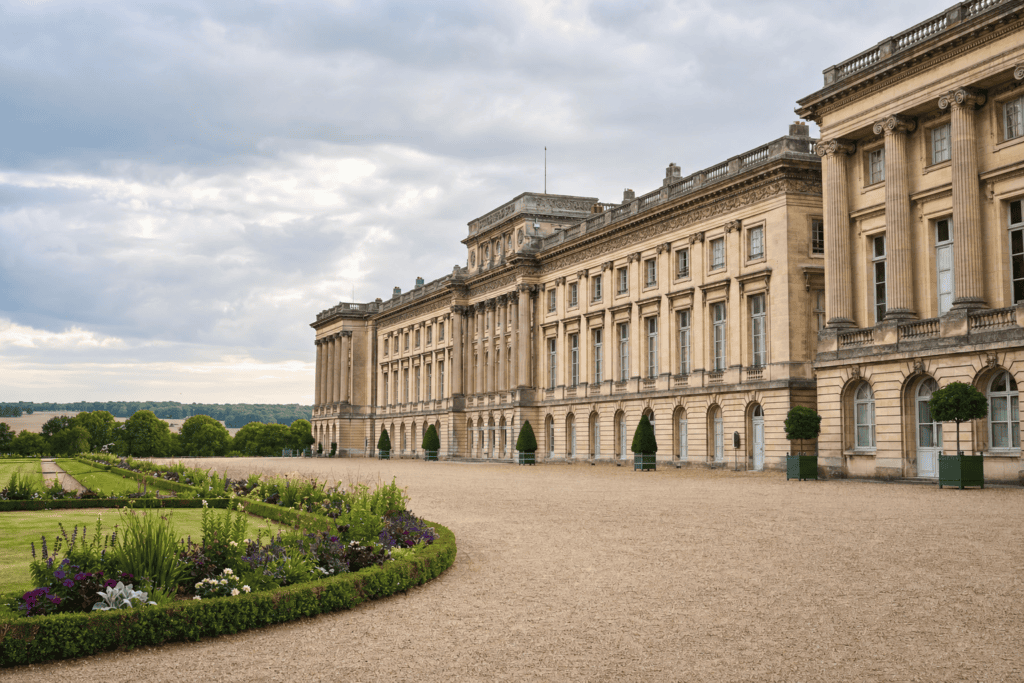 Château de Compiègne and Imperial Apartments A remarkable royal and imperial palace, with historic apartments, museums, a park, and the Compiègne Forest.
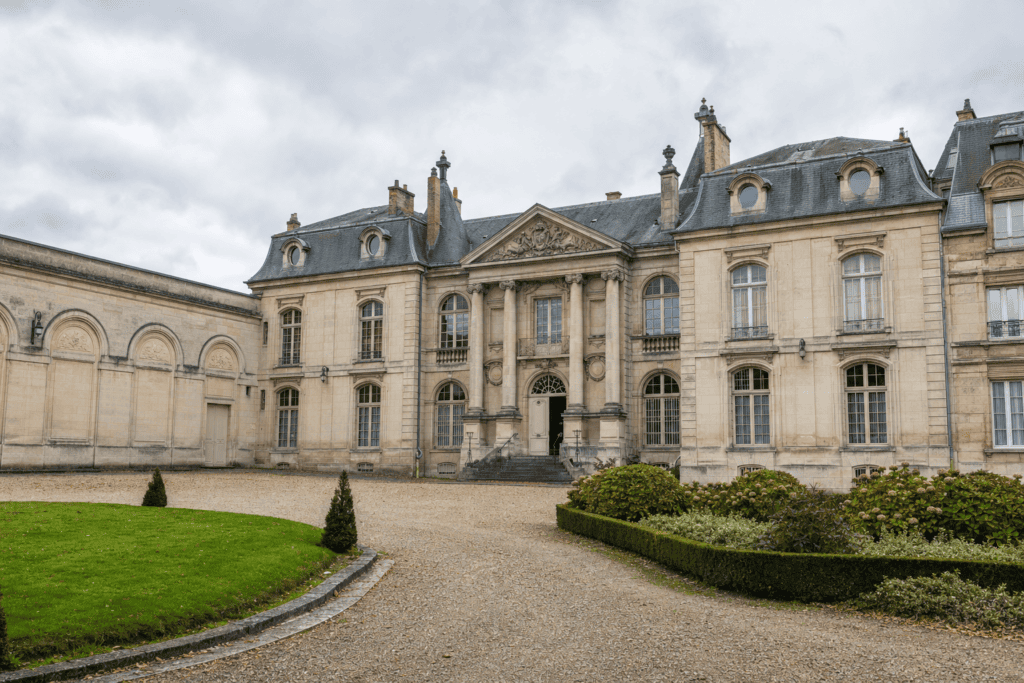 Antoine Vivenel Museum and Historical Figurine Museum Two museums in central Compiègne where you can explore art, archaeology, and history through their collections…
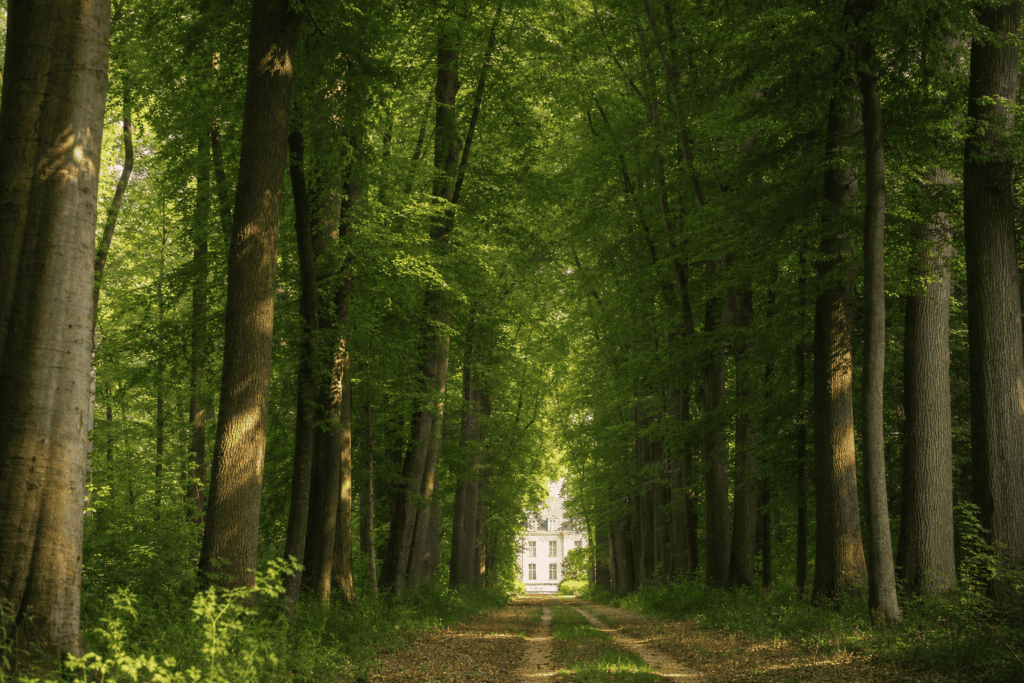 Compiègne Forest A historic forest near Compiègne, ideal for walking, cycling, observing nature, and connecting several…
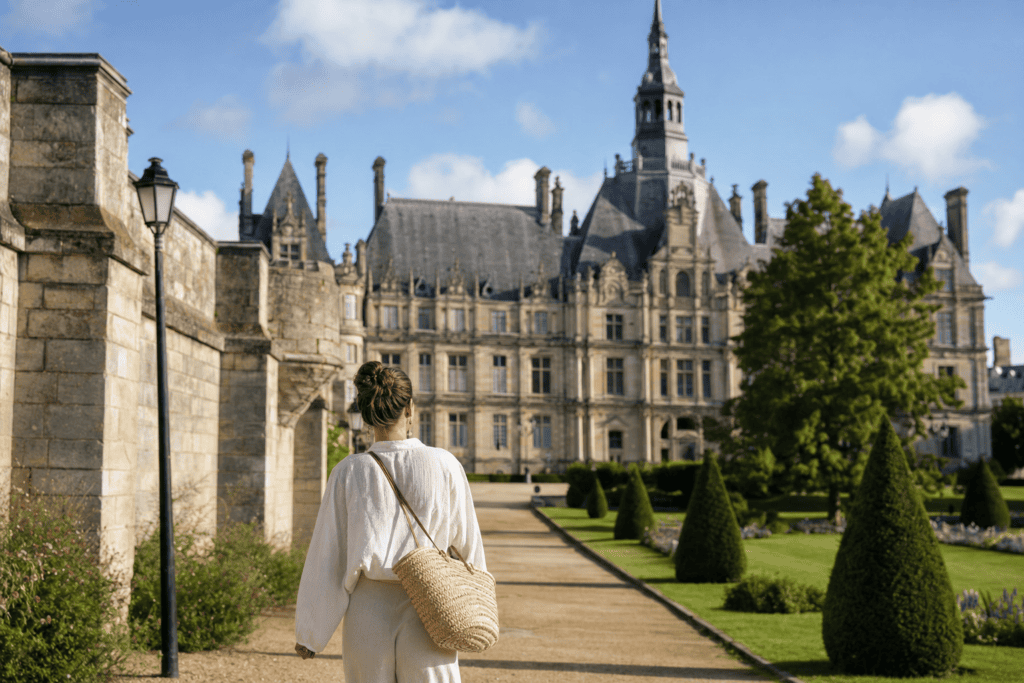 What to Do in Compiègne Without a Car from the Train Station A car-free itinerary from Compiègne station: imperial palace, museums, historic center, riverfront…
Online booking · Paris → Armistice Clearing, Route de Soissons, 60200 Compiègne. The memorial is located within the municipality of Rethondes, in the Oise department, outside central Compiègne.
Choose your pickup date and time
Your departure and arrival details are already pre-filled. You can adjust them in the fare calculator before viewing the vehicles and fare.