



Dijon’s Owl Trail: Explore the Old Center on Foot
Dijon
Dijon’s Owl Trail is an excellent introduction to the capital of Burgundy. This marked route takes visitors through the historic center, from medieval streets to ducal palaces, passing churches, private mansions, and iconic squares along the way. The traditional loop includes 22 stops and takes about an hour of leisurely walking, not including visits, breaks, or detours. Additional loops also allow you to explore other neighborhoods and the area around the Chartreuse de Champmol. Following the bronze arrows, discover Dijon as an open-air museum, where ducal power, religious architecture, commerce, and the Burgundian art of living come together.
Practical information
Wear comfortable shoes and take time to look up: the carved details, colorful roofs, and interior courtyards are a major part of the trail’s appeal.
Getting to Dijon from Paris with a private chauffeur
For an organized excursion from Paris, Booking Paris Transfer can provide transportation between Paris, a Paris hotel, Charles de Gaulle or Orly Airport, and Dijon, with the option of returning to Paris. The service covers transportation only: it does not include an admission ticket, a guided tour, or reservations at Dijon’s monuments.
Departure from Paris, a hotel in the Île-de-France region, CDG, or ORY; return to Paris or an itinerary that began in Paris.
Understanding the Owl Trail
The Owl Trail is the easiest sightseeing route for getting acquainted with old Dijon. Its traditional loop includes 22 stops in the historic center and follows bronze arrows set into the ground. They make it easy to follow the route without constantly checking a map, while still leaving you free to stop at a shop, courtyard, or monument.
The trail is generally associated with Jardin Darcy as its starting point, while the Tourist Office on rue des Forges is a convenient place to get information and check the materials currently available. You can complete the route in about an hour of walking, but it is better suited to a half-day if you would like to enter certain sites, visit a museum, or spend time admiring the façades.
Since 2011, three additional loops have complemented the classic route. They extend the discovery to the Jean-Jacques Rousseau and Zola neighborhoods, as well as the Chartreuse de Champmol site and the Well of Moses. Before setting out, check the latest information from Dijon Bourgogne Tourism & Congress, as route materials and practical details may change.
The Owl, Dijon’s symbol and good-luck charm
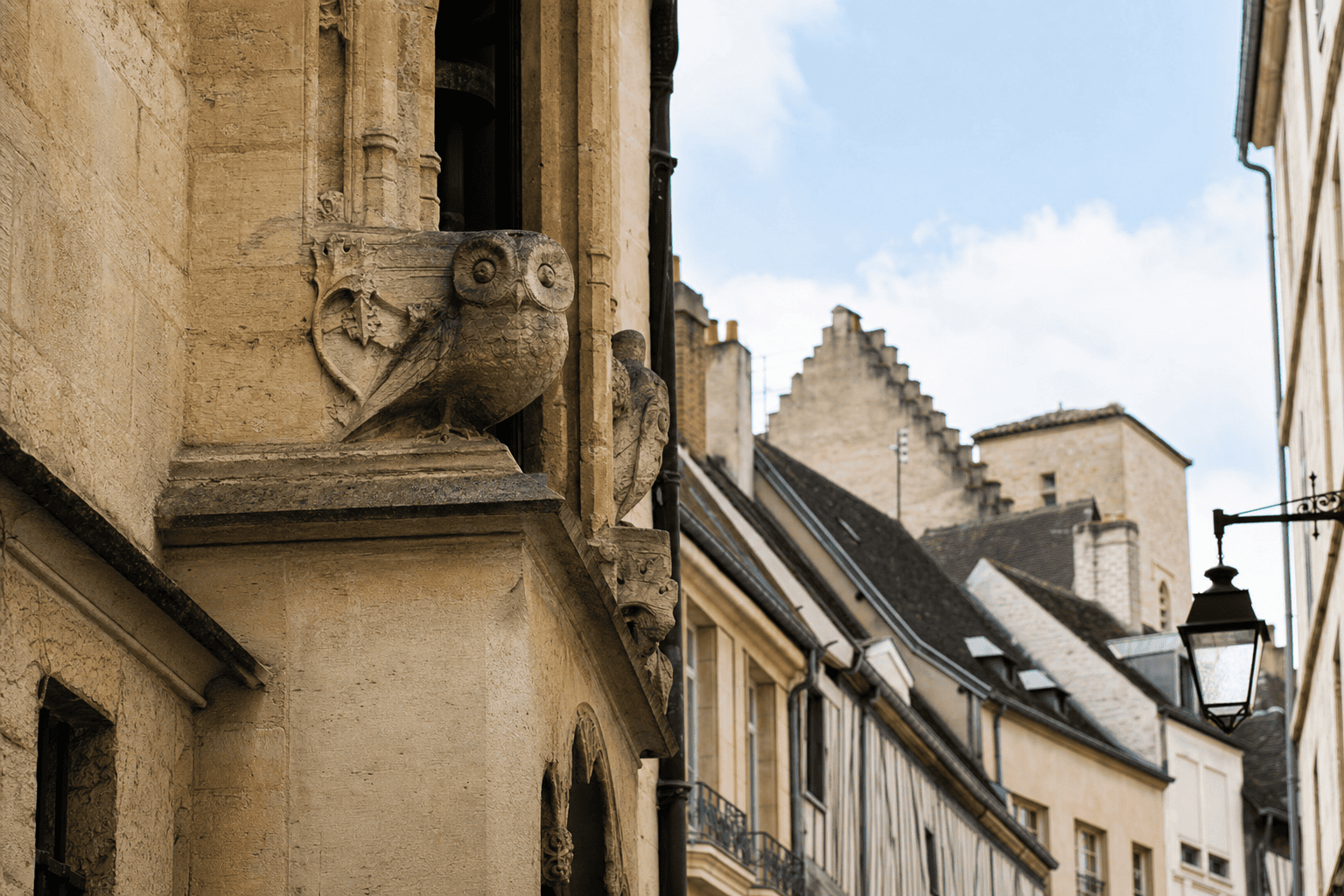
The famous carved owl is found on a buttress of Notre-Dame Church, on rue de la Chouette. It has become Dijon’s beloved emblem and is the trail’s most sought-after moment. Tradition holds that you should touch the sculpture with your left hand, on the side of your heart, while making a wish. The gesture is now part of the city’s tourism folklore, although the owl’s exact origins remain debated.
Several theories surround it: it may be a stonemason’s mark, a symbol of wisdom, or a representation connected to ducal history. Dijon’s heritage documentation emphasizes that its meaning has not been established with certainty. This element of mystery adds to its charm and encourages visitors to look at Notre-Dame’s other carved details.
The owl should not be viewed as an isolated attraction. Instead, it serves as a guide for observing Gothic architecture, gargoyles, buttresses, and the historic layout of the streets. Spend a few minutes around the church before continuing along the trail’s arrows.
Medieval streets and private mansions
The trail reveals the elegance of Dijon’s historic streets, where half-timbered houses stand alongside Renaissance and classical-era private mansions. Rue des Forges is one of the most interesting places to begin: it brings together several remarkable residences and recalls the importance of parliamentary families, merchants, and servants of the ruling powers.
Rue Verrerie offers a different atmosphere. Narrower and more picturesque, it retains the character of a medieval shopping street. Now known for its antique dealers and boutiques, it invites you to slow down rather than simply follow the marked route. Look at the door surrounds, dormer windows, signs, and differences in height between the buildings.
Popular stops include Maison Millière, a 15th-century house, and the courtyard of Hôtel Vogüé. Interior courtyards are not always accessible: follow the instructions on-site and never force your way through. For further information, Dijon’s heritage website also offers themed brochures devoted to courtyards, houses, and private mansions.
Notre-Dame, Saint-Michel, and the churches of the center
The religious buildings give the trail real historical depth. Built in the 13th century, Notre-Dame Church is recognizable by its Gothic façade, numerous sculptures, and jacquemart, an automaton clock installed at the top. Its compact architecture is partly explained by the narrow plot on which it was built. From rue de la Chouette, also look at the details of the apse and buttresses.
Farther on, Saint-Michel Church stands out for its monumental façade and variety of architectural influences. It is located in a pleasant area to explore around the theater and Square des Ducs. The Musée Rude, housed in a former church, offers another way to discover Dijon sculptor François Rude, subject to current opening conditions.
The loop also leads to Saint-Jean, Saint-Philibert, and Saint-Bénigne Cathedral. These buildings do not all date from the same period or serve the same purpose; together, they show how Dijon developed around parishes, religious institutions, and urban power.
The Dukes’ Palace, Place de la Libération, and museums
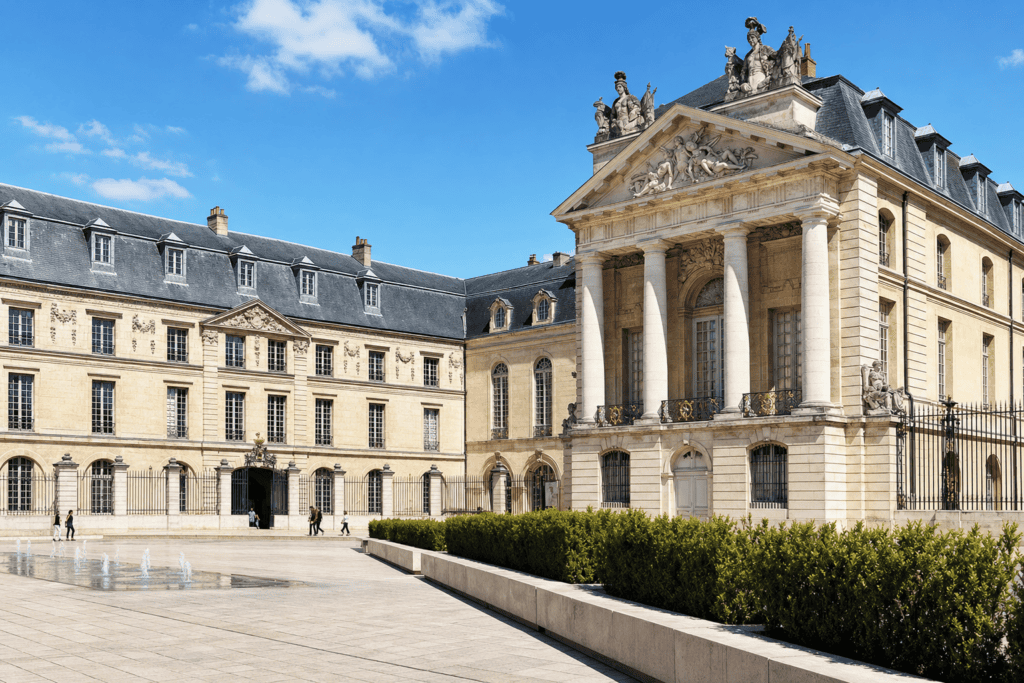
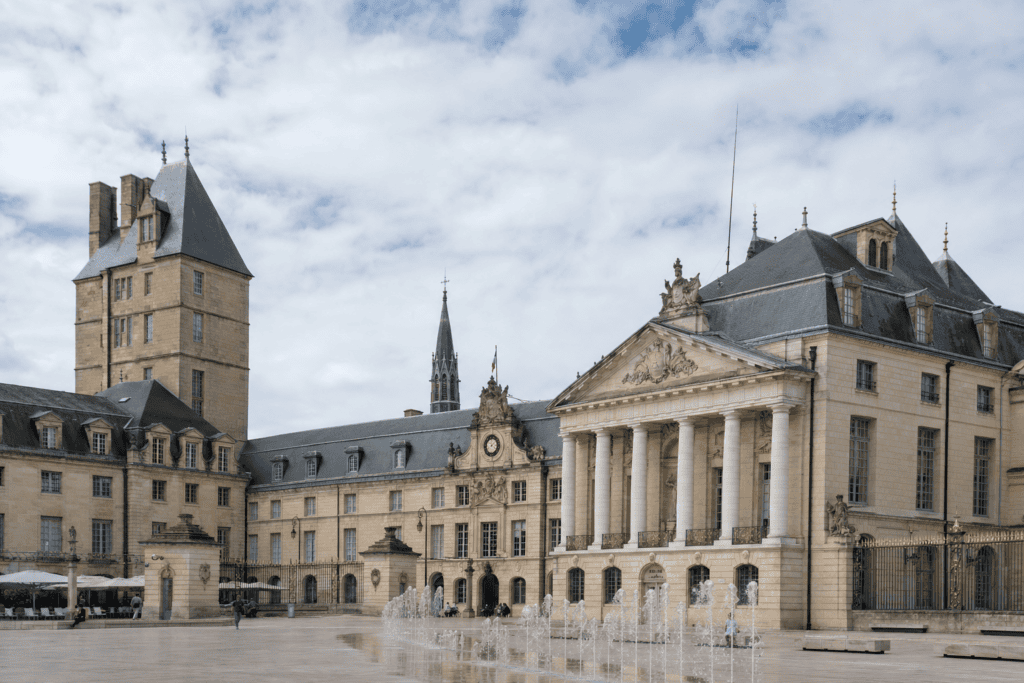
The Palace of the Dukes and Estates of Burgundy is one of the trail’s major highlights. Its silhouette dominates Place de la Libération and recalls Dijon’s political role during the era of the Dukes of Burgundy. The palace now houses City Hall and the Musée des Beaux-Arts de Dijon, whose collections connect the building’s history with that of the city and region.
Place de la Libération is ideal for taking a break and appreciating how the old center has changed. From this open space, look at the palace’s different wings, the rooftops, and the views toward the adjoining streets. The square is also a useful landmark for planning a longer visit, especially if you would like to spend time in the museum.
The Philippe le Bon Tower, associated with the palace, may be visited separately depending on current time slots and procedures. Do not confuse the Owl Trail, which can be followed freely through the streets, with a guided tour or entry to a monument; these activities may require a separate reservation through the official organizations.
Adapt the walk to your pace
The trail is suitable for most visitors who can walk through a city, but keep in mind the cobblestones, occasionally narrow sidewalks, and frequent stops. Flexible, comfortable shoes are preferable, especially if you extend the loop into the additional neighborhoods. With children, turn the walk into an observation game: look for carved animals, coats of arms, gargoyles, signs, and differences between the façades.
Morning is a good time to enjoy a quieter atmosphere. In the late afternoon, the light can highlight the stonework and rooftops, but some indoor sites may no longer be accessible. On market days or during events, the center may be livelier and some views more crowded; this is part of the experience, but allow extra time.
The official guidebook or app may provide additional explanations. Check the information before your visit, particularly museum hours, visits to the Philippe le Bon Tower, and any route changes. The trail markers remain useful, but a map on your phone can help you find a specific point after a break.
Continue exploring around old Dijon
The Owl Trail provides an excellent backbone for a day in Dijon. After completing the loop, spend time at the Musée des Beaux-Arts, stroll around Les Halles, or explore the city center’s shopping streets. Dijon’s Les Halles, built in a style inspired by the metal architecture of the late 19th century, offers another side of the city, focused more on products, exchange, and gastronomy.
Visitors interested in heritage can consult Dijon’s “City of Art and History” brochures. They offer more focused perspectives on interior courtyards, historical periods, religious buildings, and rue de la Chouette. For a deeper look, guided tours by the Tourist Office place the monuments within a broader historical context.
From Paris, Dijon is well suited to a day trip or a stop in Burgundy. To avoid wasting time upon arrival, private transportation can be arranged from a Paris hotel, Paris, CDG, or ORY, with a return to Paris or continuation of a regional itinerary. The driver provides the transportation; visits, tickets, and reservations must be arranged separately with the relevant sites.
Frequently Asked Questions
How long does it take to complete the Owl Trail?
Where does Dijon’s Owl Trail begin?
Does Dijon’s owl really bring good luck?
Is the trail suitable for children?
Can you visit the monuments along the trail?
 Dijon Museum of Fine Arts A major museum housed in the former ducal palace, renowned for its princely tombs and collections…
 Palace of the Dukes and the Estates of Burgundy A princely palace in the heart of Dijon, combining the Musée des Beaux-Arts, ducal tombs, Place de la…
 Darcy Garden A historic, elegant garden that is easily accessible from Dijon station, known for its pools,…
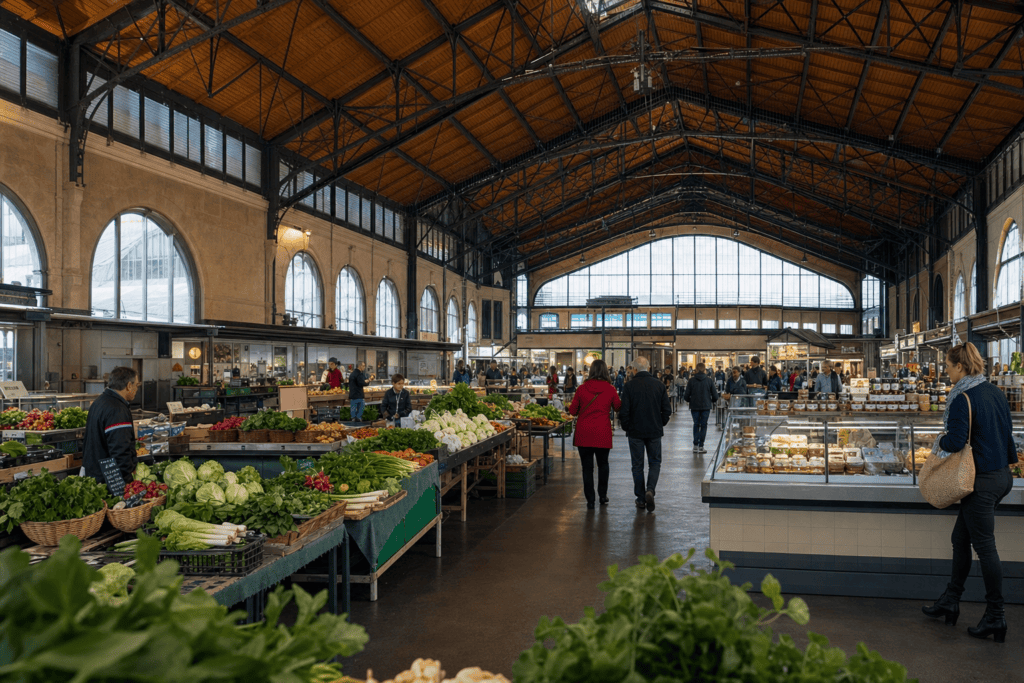 Dijon Central Market Halls An iconic covered market for discovering Burgundy products and the everyday atmosphere of Dijon.
Book online · Paris → Dijon Historic Center; recommended starting points: Jardin Darcy or the Tourist Office, rue des Forges, 21000 Dijon
Choose your pickup date and time
Your departure and arrival details are already pre-filled. You can adjust them in the fare calculator before viewing the vehicles and fare.