



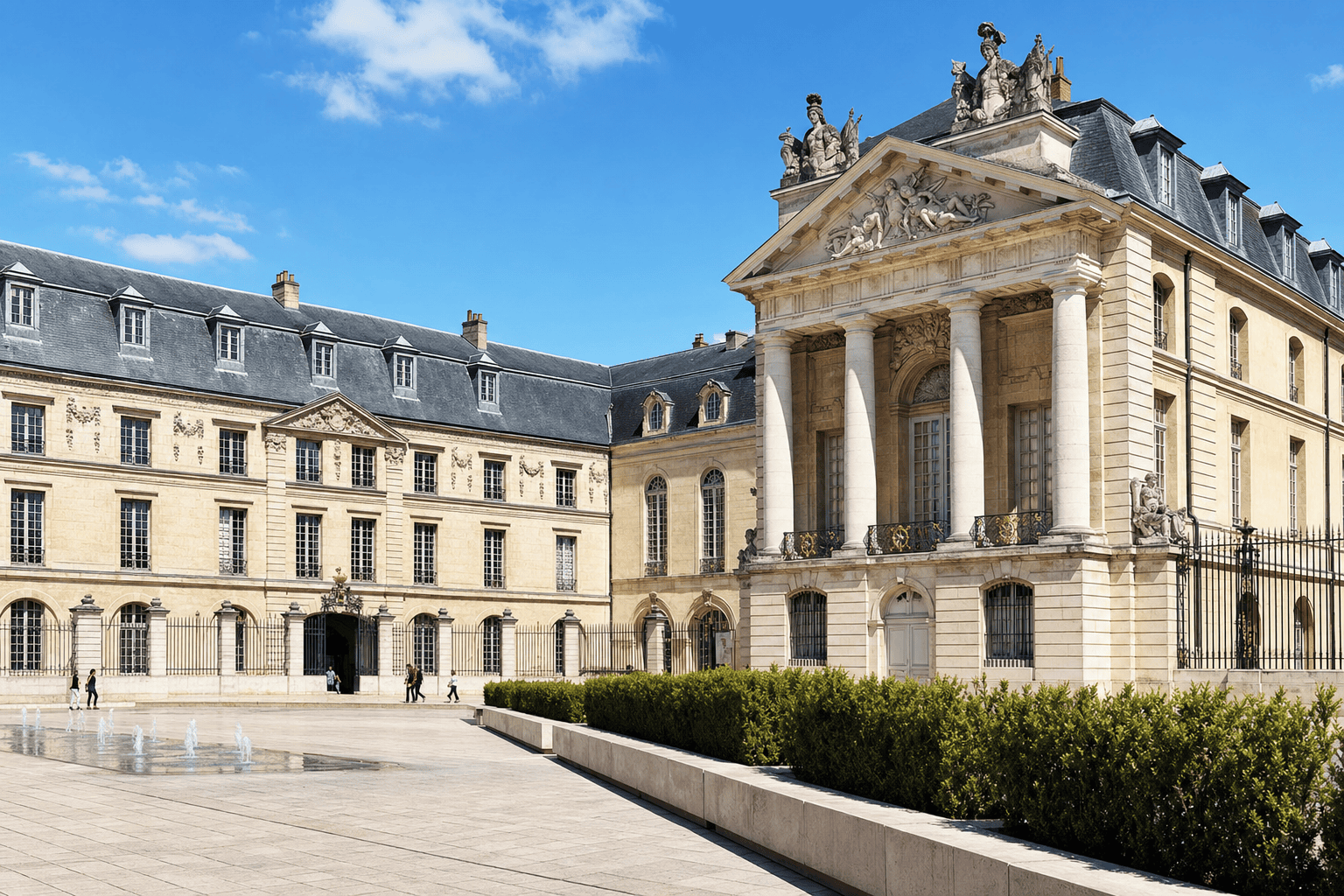
Musée des Beaux-Arts de Dijon: Visitor Guide
Dijon
Housed in the former Palace of the Dukes and Estates of Burgundy, the Musée des Beaux-Arts de Dijon is one of the major cultural attractions in the historic center. Its collections span a remarkably long period, from antiquity to contemporary art, including an exceptional section devoted to the history of the Duchy of Burgundy. With princely architecture, sculpted tombs, European paintings, and modern works, a visit offers a way to discover Dijon through its artistic and political heritage.
Practical information
Start with the medieval galleries and the ducal tombs, then choose a few sections to explore in depth rather than rushing through the entire chronology.
Plan Your Paris–Dijon Trip
To visit the Musée des Beaux-Arts de Dijon from the capital, Booking Paris Transfer can arrange private transportation from Paris, a Paris hotel, CDG, or ORY. The service covers transportation only: museum admission, tours, and activities on site must be arranged directly with Dijon Musées. A return itinerary to Paris can be arranged based on your schedule.
Private transportation from Paris, a Paris hotel, CDG, or ORY to Dijon, with the option of returning to Paris. Admission not included.
A Museum at the Heart of the Ducal Palace
The setting is the first masterpiece to discover. The Musée des Beaux-Arts de Dijon occupies part of the former Palace of the Dukes and Estates of Burgundy, in the heart of the historic center. The visit therefore combines art collections with a monument that tells the story of Dijon’s changing centers of power, from the dukes’ residence to the administrative and cultural transformations of later centuries.
As you move through the spaces, take time to observe the scale, decorations, staircases, and changing atmosphere between the older galleries and more recent additions. This contrast gives the route a distinctive character. The museum is also an excellent introduction to Burgundy’s history: the works evoke princely patronage, exchanges with the territories of northern Europe, and the growth of a local artistic community. Located on Place des Ducs de Bourgogne, it is easy to visit as part of a stroll through Dijon’s pedestrian center.
The Tombs of the Dukes of Burgundy
The Tombs of the Dukes of Burgundy gallery is one of the museum’s essential highlights. The funerary monuments of Philip the Bold and John the Fearless, along with those of their wives, reflect the political importance of the Burgundian dynasty in the late Middle Ages. Their decoration combines miniature architecture, sculptures, inscriptions, and kneeling figures in a setting designed to preserve the memory of the princes.
The famous mourners naturally draw the eye. These small sculpted figures accompany the funeral procession and display a remarkable variety of gestures, clothing, and poses. They come from the Chartreuse de Champmol, a necropolis founded by the dukes near Dijon. To fully appreciate the ensemble, focus on the details rather than limiting yourself to an overall view: drapery, faces, galleries, and depth effects reveal the quality of the work. This gallery also provides an essential key to understanding the role of patronage in Burgundian art.
Antiquity, Medieval Art, and Burgundian Heritage
The route begins with ancient works and continues into the medieval periods. This progression places the objects and paintings within a long-term artistic history. The antiquities collections provide points of reference for the forms, stories, and models that continued to influence European artists long after antiquity.
The medieval section is especially important for Dijon and Burgundy. It brings together sculptures, paintings, and works connected with religious institutions or the princely court. Works associated with the Chartreuse de Champmol reflect the ambition of the dukes and the movement of artists between Burgundy, the Netherlands, and the Rhineland regions. Look at the expressions, gestures, traces of polychromy, and details of the landscapes or architecture. Labels and interpretation materials help explain the works’ original, often religious functions, as well as the changes they underwent over time.
Italian, French, and Northern European Paintings
The old-master painting collections expand the visit across several European schools. Italian, French, and Northern European works allow visitors to compare approaches to light, materials, perspective, and religious or secular subjects. Visitors interested in the Renaissance and Baroque will find several points of reference, while those who enjoy genre scenes and landscapes can linger over more intimate compositions.
The Blower at the Lamp, attributed to Georges de La Tour, is among the museum’s best-known works. Its concentrated light creates a quiet atmosphere and invites you to slow down. Paintings from the Northern schools often stand out for their precision, richly detailed settings, and carefully constructed landscapes. Rather than trying to remember every name, compare the use of chiaroscuro, textures, and the space given to the figures. A guided tour or interpretation material can help clarify the connections between the works and major European artistic movements.
From the 18th Century to Contemporary Art
The museum is more than its medieval treasures. The galleries devoted to the 18th century evoke the institution’s origins and its connection to art education in Dijon. The Condé Salon, the Statue Gallery, and other historic spaces show how works were displayed and how collectors’ tastes evolved.
The 19th century then introduces the major changes in French painting, with artists and sensibilities associated with Romanticism, Symbolism, Impressionism, and their developments. The modern and contemporary collections open up another dialogue, shaped by Cubism, abstraction, and a diversity of practices. The Granville donation played an important role in enriching this collection. Juan Gris, Robert de La Fresnaye, Nicolas de Staël, Vieira da Silva, and Yan Pei-Ming are among the artists visitors may encounter along the route. This diversity is particularly appealing to groups with different artistic tastes.
Prepare for Your Visit to Dijon
The museum is located on Place des Ducs de Bourgogne, in a central area that can easily be incorporated into a day of exploring Dijon. Dijon-Ville station is within walking distance of the historic center, while public transportation serves the area around the palace. If you are driving, it is best to identify suitable parking in advance, as streets in the center may be pedestrianized, restricted, or altered during events.
The permanent collections of Dijon’s museums are advertised as free to enter, but temporary exhibitions, guided tours, and activities may have different conditions. Check the official information before your trip to confirm hours, closing days, possible reservations, and accessibility. Families can ask about discovery materials and activities offered by Dijon Musées. For a comfortable visit, wear suitable shoes and leave time for a break in the historic center afterward.
What to See Around the Musée des Beaux-Arts?
The museum is ideally located for continuing your exploration of Dijon on foot. From Place des Ducs de Bourgogne, walk to Place de la Libération and the old streets of the protected historic district. Private mansions, sculpted façades, and passageways offer another perspective on the city’s urban heritage. The Owl Trail also links several notable sites in the center, subject to checking its route and the available information at the time of your visit.
The Musée François Rude and the Musée de la Vie bourguignonne can complement your itinerary, depending on your interests and their opening schedules. A break at the market halls or at a downtown establishment offers a chance to discover local specialties, including preparations inspired by Burgundian cuisine. From Paris, a well-organized day can combine the museum, the ducal palace, a heritage walk, and lunch in Dijon. For a longer stay, the city also makes a convenient base for exploring the Côte-d’Or and Burgundy’s wine villages.
Useful sources
Frequently Asked Questions
Is admission to the Musée des Beaux-Arts de Dijon free?
How much time should I allow for the visit?
Is the museum suitable for a family visit?
Do you need to book a visit to the museum?
How do you get to the museum from Paris?
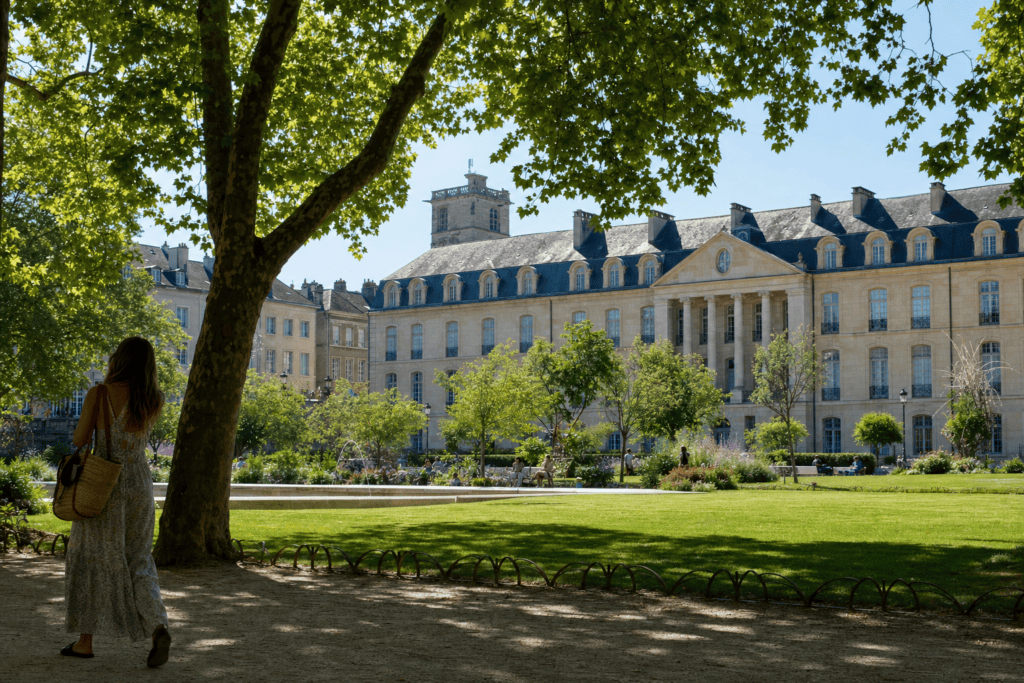 Darcy Garden A historic, elegant garden that is easily accessible from Dijon station, known for its pools,…
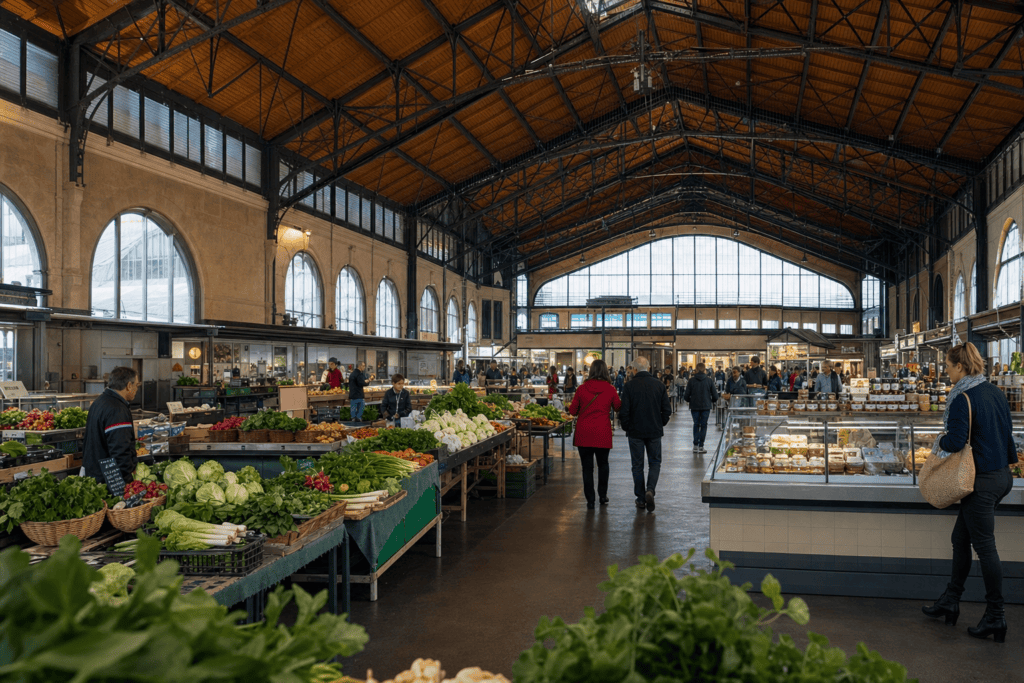 Dijon Central Market Halls An iconic covered market for discovering Burgundy products and the everyday atmosphere of Dijon.
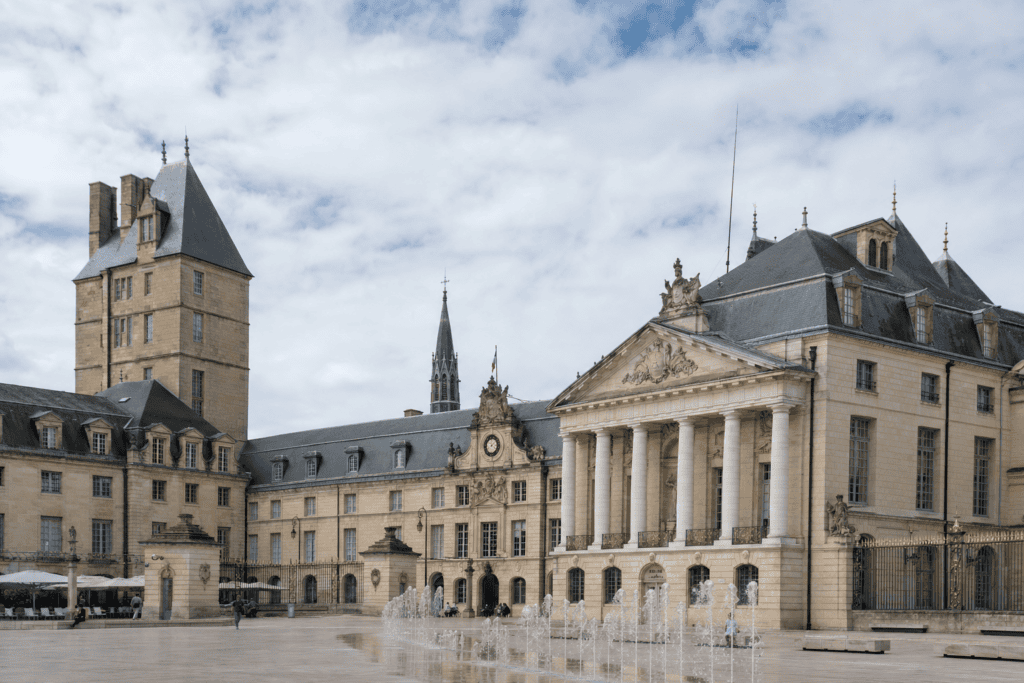 Palace of the Dukes and the Estates of Burgundy A princely palace in the heart of Dijon, combining the Musée des Beaux-Arts, ducal tombs, Place de la…
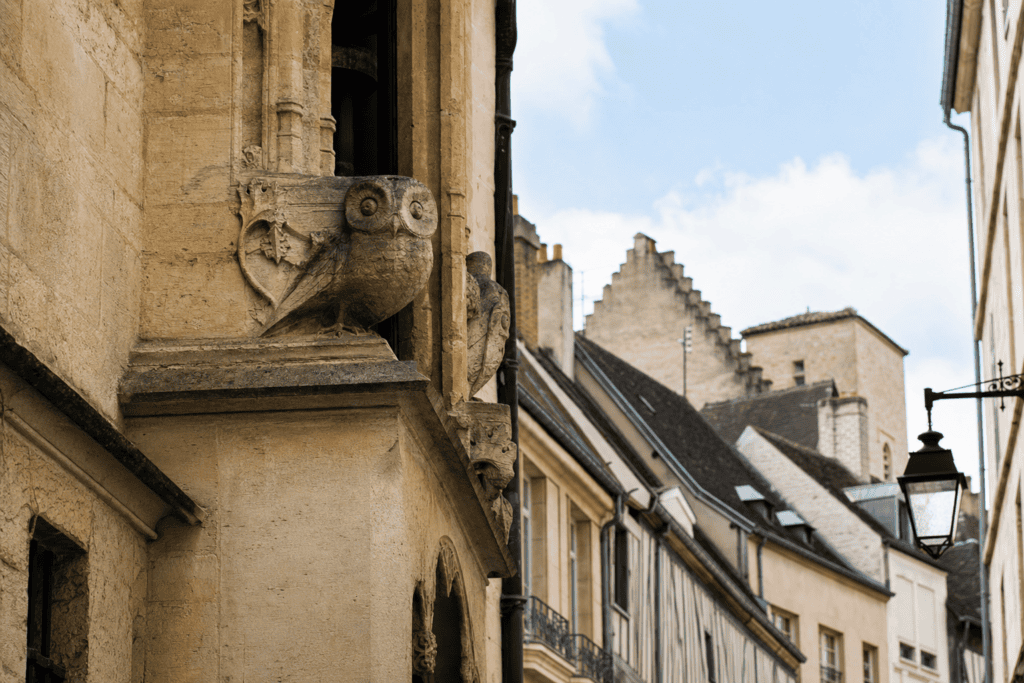 The Owl and the Historic Center Trail A marked 22-stop walk through the medieval streets, private mansions, and…
Online booking · Paris → Palace of the Dukes and Estates of Burgundy, Place des Ducs de Bourgogne, 21000 Dijon
Choose your pickup date and time
Your departure and arrival details are already pre-filled. You can adjust them in the fare calculator before viewing the vehicles and fare.