



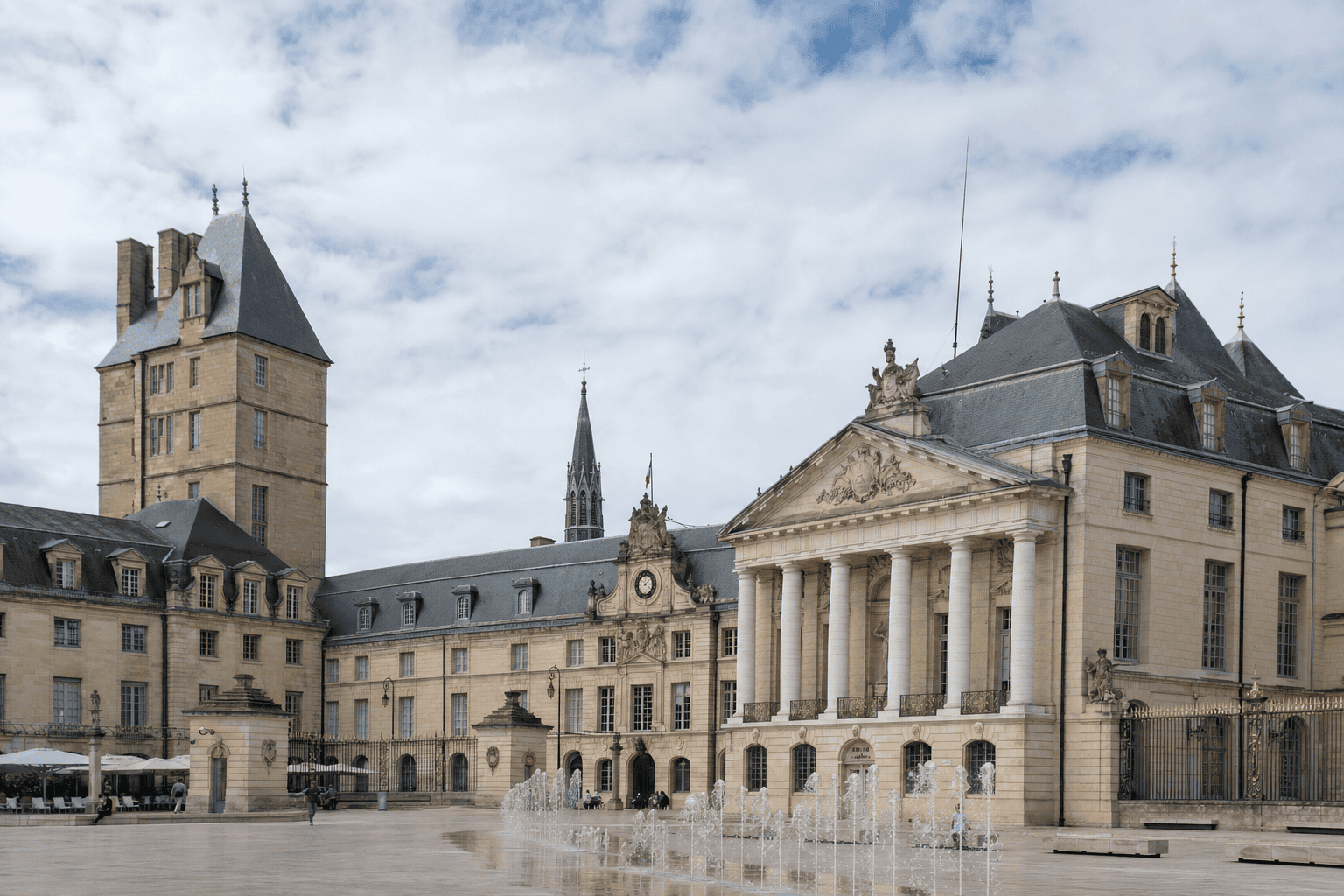
Visit the Palace of the Dukes in Dijon
Dijon
In the heart of Dijon’s historic center, the Palace of the Dukes and the Estates of Burgundy brings together medieval heritage, classical architecture, and art collections. Once the residence of the Valois dukes, the complex now houses the Dijon Museum of Fine Arts and extends around Place de la Libération. Philippe the Good Tower, accessible through organized tours subject to available time slots, offers a remarkable view over the city. Seeing the palace from the outside is enough to appreciate its scale, but visiting the museum provides a deeper understanding of Dijon’s political and artistic role in Burgundy.
Practical information
Start at Place de la Libération, then visit the museum before planning the tower. The climb involves 316 steps, so wear comfortable shoes and consider your physical abilities.
Getting to Dijon from Paris with a private chauffeur
To include the Palace of the Dukes and the Estates of Burgundy in an excursion from the capital, Booking Paris Transfer can arrange private transportation between Paris, your Paris hotel, CDG or ORY and Dijon, with a return to Paris or continuation of your itinerary. This service covers transportation only: museum or tower tickets and reservations must be arranged with the official institutions.
Departure is possible from Paris, a hotel in the Île-de-France region, CDG or ORY; return to Paris or continuation of your itinerary according to your plans.
A princely residence in the heart of Dijon
The Palace of the Dukes and the Estates of Burgundy tells the story of Dijon’s political rise during the Middle Ages. From the second half of the 14th century, the Valois dukes transformed and expanded an older residence to assert their power. Philip the Bold initiated this development, which was continued by his successors in a Burgundy that was highly influential on the European stage at the time. The palace gradually became a place of residence, representation, and government.
Its name also recalls the role of the Estates of Burgundy, assemblies that brought together representatives of the province’s various orders and territories. However, the complex visible today is the result of several periods of construction. Medieval elements stand alongside classical façades and features built or remodeled in the 17th and 18th centuries. This layering explains the monument’s richness: Philippe the Good Tower evokes the medieval ducal palace, while the regular wings give the square a more classical appearance. The site is therefore both a historic monument and a summary of Dijon’s urban evolution.
Reading the palace from Place de la Libération
Place de la Libération is the best vantage point from which to begin your visit. Its broad semicircle opens up the palace façades and lets you understand their composition before entering the museum. Take a few minutes to compare the different volumes: Philippe the Good Tower rises above the complex, while the classical wings frame the view and connect the monument with the town hall. The proportions of the square convey the political importance the palace was designed to project.
The light noticeably changes the appearance of the site. In the morning, the façade details are often easier to see; late in the day, the square becomes a lively space lined with terraces and passageways leading toward the old town. From here, you can continue on foot to Rue des Forges, Notre-Dame Church, Rue de la Chouette, and the heritage routes through the protected area. This walk usefully complements the interior visit by placing the palace within Dijon’s living urban fabric rather than treating it as an isolated monument.
Discover the Museum of Fine Arts
Housed in the former ducal palace, the Dijon Museum of Fine Arts extends the historical experience through a wide-ranging artistic journey. Its collections cover several periods, from antiquity to contemporary art, with particularly important holdings in medieval art, European painting, and Burgundy’s heritage. Renovation completed in 2019 refreshed the presentation of the works while preserving the close connection between the galleries and the palace architecture.
For a first visit, you do not necessarily need to see everything. The galleries devoted to the dukes of Burgundy are essential, especially the tombs room, which contains the funerary monuments of Philip the Bold and John the Fearless with Margaret of Bavaria. The sculptures of Claus Sluter and his circle reflect the influence of the Burgundian court. The museum states that admission to the permanent collections is free for self-guided visits, but conditions may change. Check the official information before setting out, particularly for exhibitions, guided tours, or temporary installations.
Climb Philippe the Good Tower
Philippe the Good Tower offers the most panoramic perspective of the palace and central Dijon. Built in the 15th century, it stands approximately 46 meters high and recalls the prestige of the ducal residence. Its staircase has 316 steps to the terrace. The climb is therefore physically demanding, but it also reveals a part of the monument that is separate from the museum’s self-guided route. The landings and construction details provide insight into the tower’s representational function.
From the top, you can see the rooftops of the historic center, church towers, boulevards, and Burgundy’s landscapes. However, access arrangements should not be assumed: the climb is generally offered as part of an organized tour, with time slots that may vary depending on the season and visitor numbers. Check the conditions with the Dijon Tourist Office and allow extra time in case of a wait. Avoid this visit if you have significant difficulty with stairs, and it is best not to schedule it immediately before an appointment.
Spaces and works to prioritize
The tombs room is generally the highlight of a first visit. The funerary monuments of Philip the Bold and John the Fearless, their mourners, and their sculpted decoration evoke spirituality, dynastic memory, and the princes’ desire to showcase their lineage. These works help explain why the Burgundian court played a major role in the history of European art at the end of the Middle Ages.
The rest of the museum deserves an itinerary tailored to your interests. Painting enthusiasts can seek out works associated with the Flemish, Italian, and French schools; architecture lovers will appreciate the dialogue between the works and the historic galleries. Open routes and spaces may change depending on construction, exhibitions, or the cultural program. If you are visiting to see a specific work, be sure to consult the museum’s official website before arriving. For a quick visit, allow at least one hour; a closer look at the medieval and modern collections can easily take half a day, especially if you add the tower and exterior areas.
Planning an enjoyable visit to Dijon
The palace is in a central area that is ideal for exploring on foot. Half a day is enough to combine Place de la Libération, the museum, Rue des Forges, Notre-Dame, and several streets in the historic center. Les Halles central market and other Dijon attractions can round out your walk, depending on their opening hours and your schedule. The square itself is an open urban space, while access to the galleries depends on the institutions concerned.
Before you leave, check the Museum of Fine Arts’ opening hours, closing days, any exceptional closures, and the access conditions for the tower. Climbing time slots may be limited during busy periods. For a family visit, start with a short museum route and plan a break in the square before deciding whether to add the climb. Strollers, large luggage, and accessibility conditions should be checked directly with the institutions. Finally, allow time to look at the façades: the exterior visit should not be reduced to simply waiting to go inside.
Including the palace in a Burgundy stay
The Palace of the Dukes and the Estates of Burgundy brings together several sides of Dijon: former political capital, city of art, administrative center, and gateway to the vineyards. Its location makes it easy to combine heritage, gastronomy, and an urban walk without making numerous journeys. Even without entering the museum, Place de la Libération offers a compelling first impression of the monument’s scale and role in the city.
For a complete experience, combine three perspectives: the history of the duchy in the collections, the medieval and classical architecture visible from the squares, and the view from the tower if a time slot is available. You can then continue through the old streets, to the Cité internationale de la gastronomie et du vin, or along the Côte-d’Or wine routes, depending on how much time you have. As opening hours, any admission fees, booking arrangements, and accessible areas may change, use the official websites to finalize your plans. The palace nevertheless remains an excellent starting point for understanding Dijon before exploring the rest of Burgundy.
Useful sources
Frequently Asked Questions
Where is the Palace of the Dukes and the Estates of Burgundy located?
Is the Dijon Museum of Fine Arts free?
Can you climb Philippe the Good Tower independently?
How many steps are there in Philippe the Good Tower?
How much time should I allow for a visit?
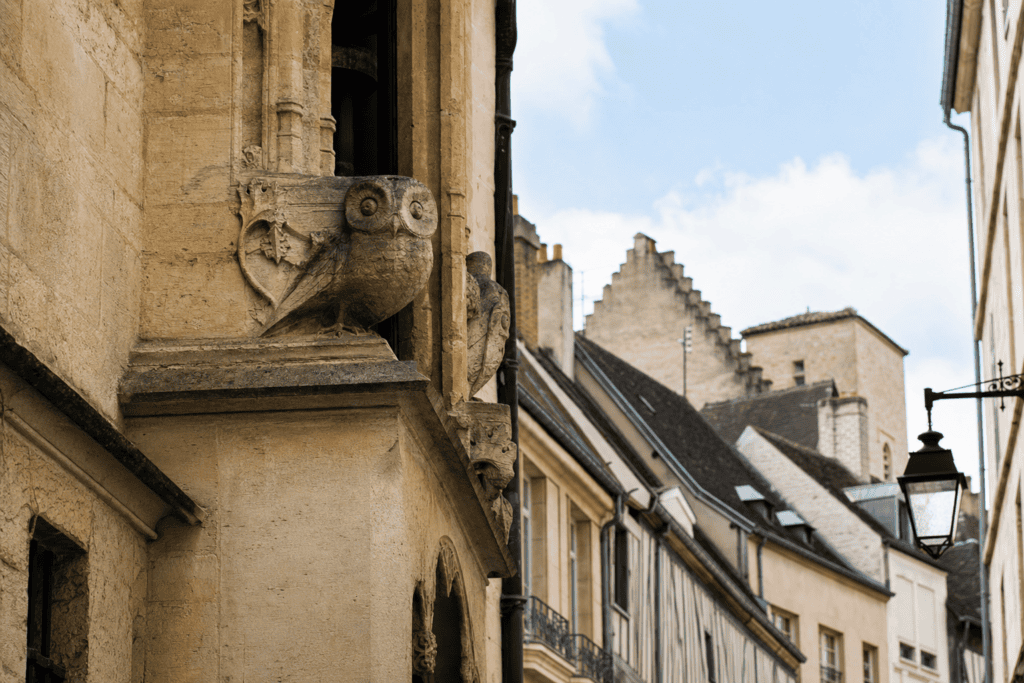 The Owl and the Historic Center Trail A marked 22-stop walk through the medieval streets, private mansions, and…
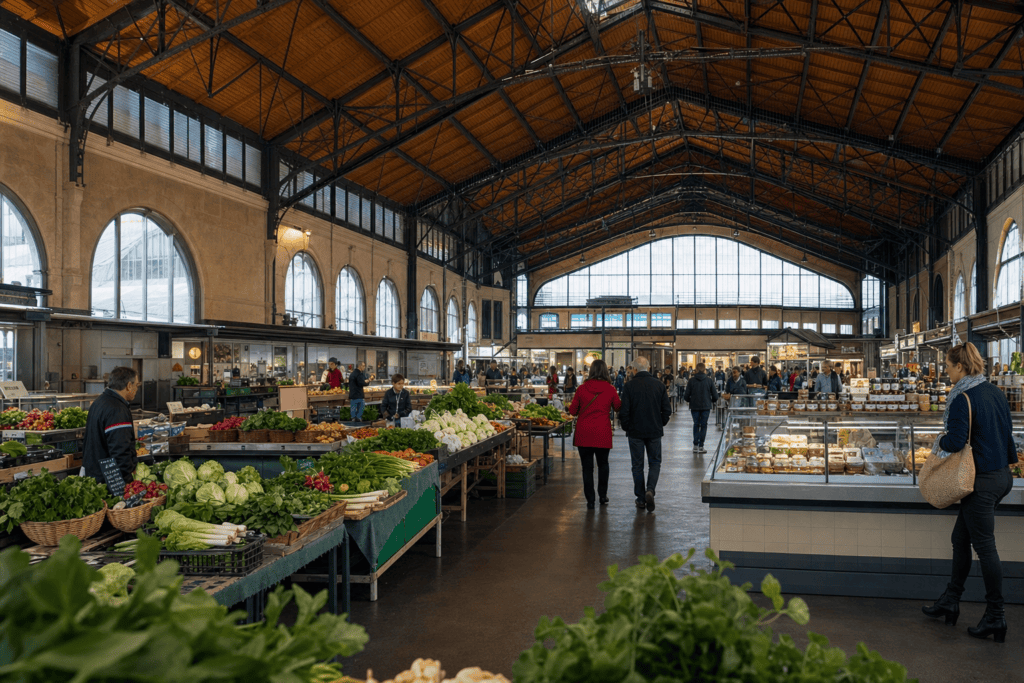 Dijon Central Market Halls An iconic covered market for discovering Burgundy products and the everyday atmosphere of Dijon.
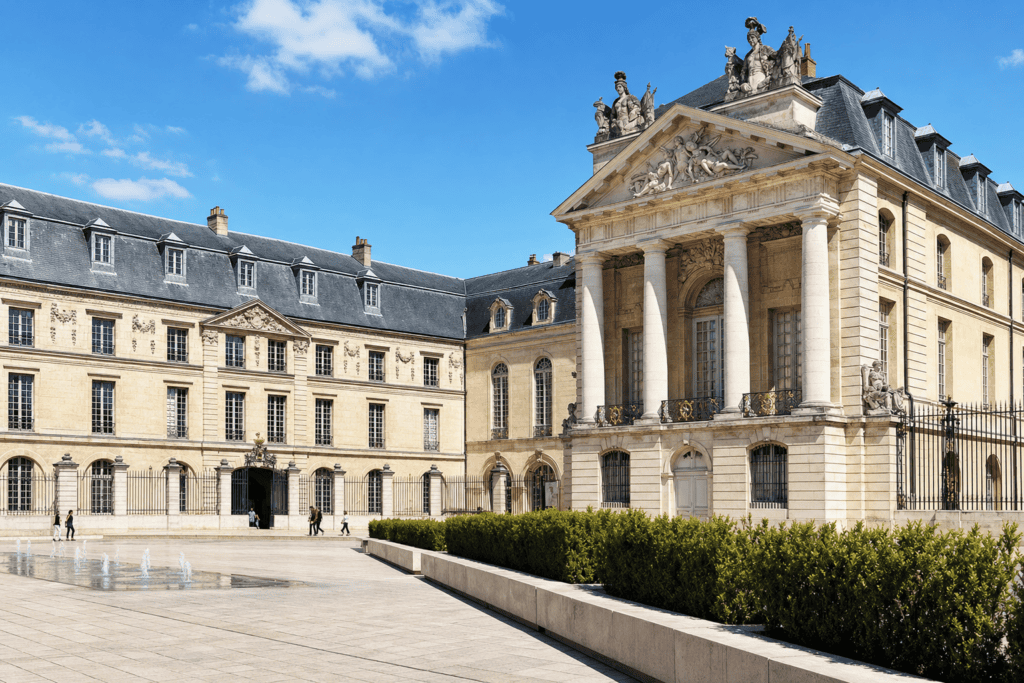 Dijon Museum of Fine Arts A major museum housed in the former ducal palace, renowned for its princely tombs and collections…
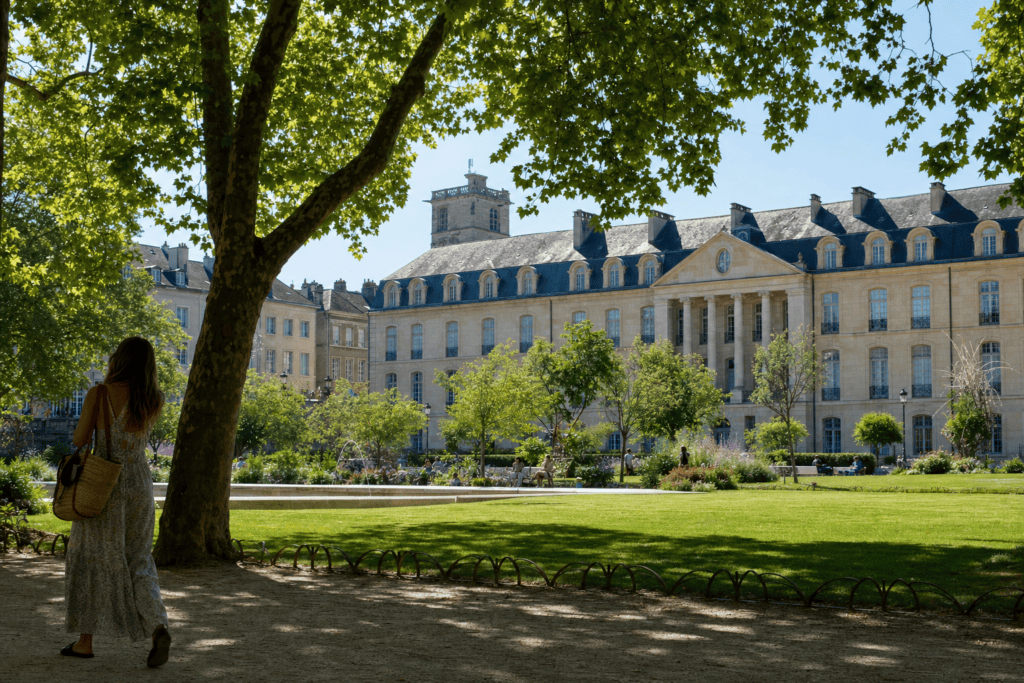 Darcy Garden A historic, elegant garden that is easily accessible from Dijon station, known for its pools,…
Online booking · Paris → Palace of the Dukes and the Estates of Burgundy, Place de la Libération, 21000 Dijon
Choose your pickup date and time
Your departure and arrival details are already pre-filled. You can adjust them in the fare calculator before viewing the vehicles and fare.