




Jardin Darcy in Dijon: a green retreat in the heart of the city
Dijon
Dijon's first public garden, Jardin Darcy is a pleasant gateway to the historic center. Built around a former water reservoir, it combines terraces, balustrades, ponds, greenery, and sculptures in an urban setting that's easy to reach from the train station. Visitors come for a few minutes between sightseeing stops, to let the children play, or simply to take in the activity around Place Darcy before continuing toward Rue de la Liberté and Dijon's heritage sites.
Practical information
Start at the entrance by Place Darcy, admire the Pompon bear, then slowly make your way down toward the ponds before continuing on foot to Rue de la Liberté or the historic center.
Reach Dijon from Paris with complete peace of mind
To include Jardin Darcy in a Burgundy getaway, Booking Paris Transfer can arrange private transportation from Paris, a Paris hotel, Charles de Gaulle Airport, or Orly, with arrival in Dijon and the option of returning to Paris. The service covers transportation only and does not include admission tickets or a guided tour.
Departure available from Paris, the Île-de-France region, CDG, or ORY; return to Paris or a tailor-made itinerary from Paris.
A public garden in the heart of Dijon
Jardin Darcy is one of the first places to discover when arriving in Dijon by train. Located beside Place Darcy, it forms a natural transition between the train station, the city's main thoroughfares, and the historic district. Its appeal lies as much in its setting as in its location: within a few steps, you leave the bustle of the avenue and enter a green space arranged around water.
The garden was designed in 1880 by architect Félix Vionnois. It is considered Dijon's first public garden and retains a Neo-Renaissance design, with terraces, balustrades, stairways, and a central pond. This tiered layout gives the site a pleasant sense of depth, even though it remains relatively modest in size.
For a first introduction to Dijon, Jardin Darcy is therefore a simple and worthwhile stop: it does not require a long visit, but it helps illustrate the connection between the city's urban history, water, and public spaces.
The history of the Henry Darcy reservoir
Beneath the garden lies a former reservoir connected to the work of Dijon engineer Henry Darcy. Built between 1838 and 1840, it was part of a major project to improve Dijon’s drinking-water supply. The circular reservoir later gave its name to the square and garden above it.
This hydraulic history explains why the design is so strongly centered around water. The pond, cascades, and changing levels are not merely ornamental: they preserve the memory of a facility that profoundly transformed the city in the 19thth century. The City of Dijon now states that the reservoir is used to store water for irrigating some of the tramway's grassed platforms.
Occasional visits to the reservoir may be offered depending on the local program. Since dates and arrangements may change, check with the City of Dijon or the tourist office before planning this specific visit.
Ponds, terraces, and a landscaped setting
The charm of Jardin Darcy lies first and foremost in its landscape design. From the upper section, the balustraded terraces offer a view down toward the pond and lower levels. Two stairways frame the descent and give the garden a theatrical quality, sometimes compared with Italian gardens. The water features naturally draw the eye and contrast with the façades and traffic of the neighboring square.
The greenery provides a welcome sense of space without trying to compete with Dijon's larger parks. Flower beds, trees, shrubs, and grassy areas create a short, pleasant walk where visitors can sit or slow down. Depending on the season, the colors and density of the plantings change noticeably; the garden may be in full bloom in spring, more shaded in summer, and more sculptural as the foliage thins.
Take time to notice the details: railings, balustrades, sculptures, rockeries, and water channels form a cohesive whole, designed more for strolling and observation than for a long hike.
The Pompon bear, the garden's symbol
At the entrance to Jardin Darcy, the white bear is usually the first feature visitors notice. Known locally as the “Pompon bear,” it pays tribute to Burgundian sculptor François Pompon, born in Saulieu and known for his streamlined animal forms. The work displayed in the garden is a copy made by Henry Martinet in 1937; the original white bear is held at the Musée d’Orsay.
This sculpture gives the site an instantly recognizable landmark, appreciated by families and art lovers alike. It is worth stopping before heading down toward the pond, as its location highlights the connection between Dijon and the region's artistic heritage. The bear is also a convenient meeting point when visiting the city center as a group.
Around this figure, the garden features other decorative and architectural elements, including the railings, fountain, and sculpted grotto. The ensemble is best appreciated by taking a few minutes to walk around it rather than crossing the park directly toward Avenue de la Liberté.
A pleasant family stop
Jardin Darcy is well suited to a family break at the beginning or in the middle of a day of sightseeing. Children can observe the bear, ponds, stairways, and water features, while adults enjoy the benches and shade from the plantings. Local and tourist sources mention a playground, but its exact equipment may change as improvements are made.
The garden is not an isolated natural area: it is in the city center, in a lively setting with pedestrian traffic and changes in elevation. It is therefore best to keep a close eye on younger children near the stairs, ponds, and passageways. For an extended picnic, other green spaces in Dijon may be more suitable, but Darcy works very well for a short break with a snack.
As a family, plan on a 20- to 45-minute visit, then continue toward Rue de la Liberté, the market, or the streets of the protected historic district, depending on the children's ages and energy levels.
Access from the train station and nearby walks
Jardin Darcy is especially convenient for travelers arriving in Dijon by train. It is just a few minutes’ walk from the station, on Place Darcy, and benefits from urban transit service in the heart of the city center. Municipal documents indicate several access points around Place Darcy, Place du Rosoir, and Avenue de la 1st French Army. For public transportation, check current routes and stops with the Divia network, as itineraries may change.
From the garden, a natural walk is to cross Place Darcy and then follow Rue de la Liberté toward the historic center. You can also reach Jardin de l’Arquebuse, not far from the train station, or continue toward the covered market and medieval streets. This location makes it easy to include Darcy in a day devoted to Dijon's heritage without taking a detour.
If driving, use the parking facilities and follow traffic conditions indicated by the city rather than trying to stop directly beside the garden. The area is central and often busy.
Tips for making the most of your visit
Jardin Darcy is easy to visit without a reservation for a regular walk, but events, reservoir visits, and temporary activities may sometimes have specific arrangements. Before setting out, check the information published by the City of Dijon and the tourist office, especially if you are looking for a guided tour or cultural event.
For photos, the upper section provides a good view of the overall design, while the stairways offer opportunities to frame the ponds, balustrades, and greenery. Soft morning or late-afternoon light highlights the stone textures and water reflections. In hot weather, bring water and sun protection, even though some areas are shaded.
Finally, think of the garden as one stop rather than the day's only activity. Its proximity to the train station, Rue de la Liberté, the historic center, and Dijon's other gardens makes it an excellent starting point for a smooth urban itinerary, on foot and without rushing.
Useful sources
Frequently Asked Questions
Where exactly is Jardin Darcy located?
Why is Jardin Darcy named that?
What does the bear at the garden entrance represent?
Is Jardin Darcy suitable for children?
Can you visit the reservoir beneath the garden?
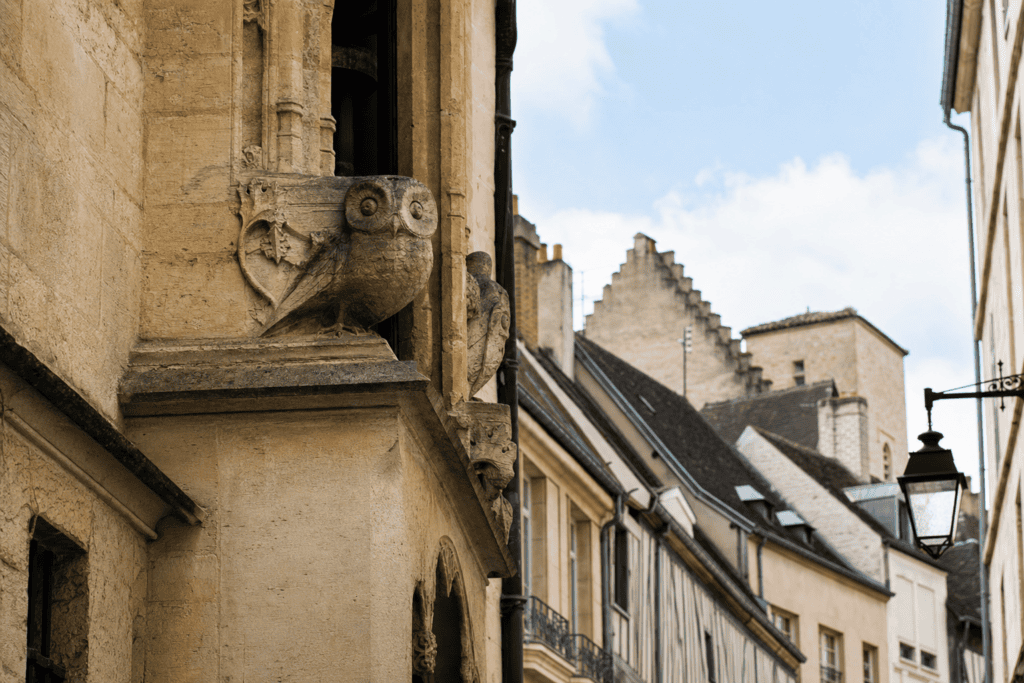 The Owl and the Historic Center Trail A marked 22-stop walk through the medieval streets, private mansions, and…
 Dijon Central Market Halls An iconic covered market for discovering Burgundy products and the everyday atmosphere of Dijon.
 Dijon Museum of Fine Arts A major museum housed in the former ducal palace, renowned for its princely tombs and collections…
 Palace of the Dukes and the Estates of Burgundy A princely palace in the heart of Dijon, combining the Musée des Beaux-Arts, ducal tombs, Place de la…
Online booking · Paris → Place Darcy, 21000 Dijon, France
Choose your pickup date and time
Your departure and arrival details are already pre-filled. You can adjust them in the fare calculator before viewing the vehicles and fare.