



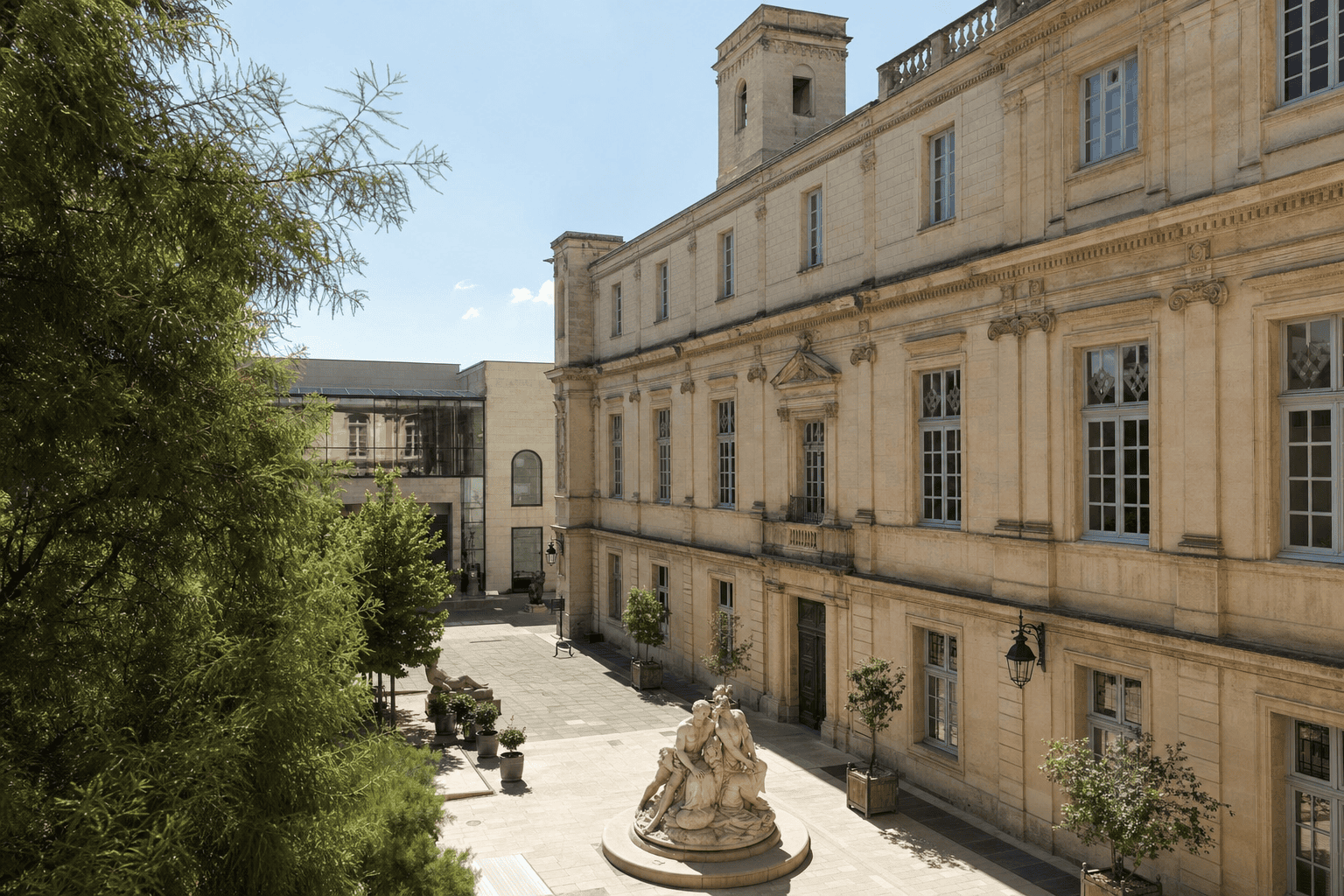
Musée Fabre in Montpellier: the Grand Fine Arts Museum
Montpellier
Located in the heart of Montpellier, the Musée Fabre offers a sweeping journey through the history of painting, from the Renaissance to modern and contemporary art. Founded from the collection of Montpellier-born painter François-Xavier Fabre, it brings together European works in an architectural setting that combines a former Jesuit college, historic mansions, and contemporary spaces. The visit moves from Italian, Flemish, Dutch, Spanish, and French masters to works by Frédéric Bazille, Gustave Courbet, Eugène Delacroix, and Pierre Soulages. It is well worth including both on a first stay in Montpellier and during a more in-depth cultural day.
Practical information
Don’t try to see everything too quickly. Choose a focus—Renaissance, French painting, Bazille, or Soulages—then leave time for the rooms that hold your attention.
Traveling from Paris to Montpellier with a chauffeur
For a cultural trip organized from the capital, Booking Paris Transfer can provide private transportation between Paris, a Paris hotel, CDG or ORY and Montpellier, with a return to Paris or the option to include the Musée Fabre in a broader itinerary through mainland France. The service covers transportation only: museum admission and any required reservations must be arranged separately with the institution.
Private transportation from Paris, a Paris hotel, CDG or ORY to Montpellier, with the option of returning to Paris. Admission ticket not included.
Why visit the Musée Fabre in Montpellier
The Musée Fabre is one of Montpellier’s major cultural attractions and deserves a prominent place on any itinerary devoted to the city. Its richness first lies in the chronological scope of its collections: the visit spans several centuries of European art, from the Renaissance through modern and contemporary art. The museum is not limited to one period or school; it allows visitors to compare painting techniques, subjects, and changing artistic perspectives.
Another advantage is its downtown location. After a stroll around Place de la Comédie, through the Écusson, or along the Charles-de-Gaulle Esplanade, it is easy to spend a few hours here. The building itself is part of the experience, with historic spaces complemented by more recent additions. This variety keeps the visit engaging and avoids the feeling of a uniform route.
For a first introduction to Montpellier, the museum offers an excellent balance of heritage, painting, and architecture. For regular museumgoers, its modern collections and the wing devoted to Pierre Soulages provide an additional reason to return.
A journey from the Renaissance to modern art
The permanent collection is arranged as a history of European art, featuring works from Italian, Flemish, Dutch, Spanish, and French traditions, among others. This breadth makes it possible to observe how painting evolved: the importance of drawing and composition during the Renaissance, the growing interest in texture and light in later centuries, and the gradual emergence of more personal artistic visions in the modern era.
The galleries devoted to the old masters provide useful reference points, even for visitors without a background in art history. Portraits, religious scenes, landscapes, and still lifes reveal the subjects favored in each period. Take time to look at the sizes, frames, figures’ gestures, and the ways painters construct space.
The museum also displays works by major French artists of the 18th and 19th centuries, including Delacroix, Géricault, and Courbet. The transition to modernity is especially compelling: painting gradually moves away from academic rules and gives greater emphasis to experience, materiality, and contemporary life.
François-Xavier Fabre, Bazille, and artists connected to Montpellier
The museum’s identity is inseparable from François-Xavier Fabre, a painter born in Montpellier and the source of its founding collection. His act of donating his collection helped establish a major fine arts museum in the city for generations to come. This history gives the collection a local dimension: these works are not merely housed in Montpellier; they are part of the city’s artistic memory.
The presence of Frédéric Bazille is another highlight. Born in Montpellier, close to the Impressionists, and killed prematurely during the Franco-Prussian War of 1870, Bazille holds a distinctive place in 19th-century painting. His works reveal an attentiveness to landscapes, figures, and light while retaining a strongly individual character.
Depending on which galleries are open and the exhibitions currently on view, visitors can also connect Montpellier artists with the major European movements displayed elsewhere in the museum. This regional perspective is valuable: it shows that Montpellier is not only a university and Mediterranean city, but also a place with a genuine history of artistic creation.
The Pierre Soulages wing and the transition to contemporary art
The section devoted to Pierre Soulages creates a marked change of atmosphere after the galleries of old master paintings. Known for his work with black, light, and texture, the artist is presented in a contemporary space designed to accommodate his works. The contrast with the historic collections is part of the visit’s appeal: it requires visitors to adjust their way of looking and pay attention to texture, relief, and the effects created by light.
In a Soulages work, black is never a uniform surface. Grooves, layers, and movements in the material create effects that change as visitors move around the piece. Don’t remain only at a distance; step closer, change your angle, and observe how light transforms the composition.
This section is especially appealing to visitors who want to go beyond figurative painting. It is also a good introduction to abstract art, showing that the perception of a work depends as much on light and space as on the subject depicted.
Architecture, collections, and the Hôtel Sabatier d’Espeyran
The Musée Fabre stands out for architecture that reflects several chapters of its history. The route includes spaces inherited from the Jesuit college, buildings connected with the museum’s establishment in the 19th century, and contemporary extensions. This succession creates changes in scale, light, and circulation that give the visit its distinctive rhythm.
Nearby, the Hôtel de Cabrières-Sabatier d’Espeyran enhances the experience with its decorative arts department. This historic mansion displays interiors, furniture, and objects that evoke the lifestyles of the bourgeoisie and aristocracy in the 18th and 19th centuries. Visitors are not simply viewing works hung on walls; they are entering rooms conceived as complete ensembles, where décor, furniture, and daily use interact.
This section’s opening conditions may differ from those of the main museum. If you would like to include it in your itinerary, check the official page before traveling and confirm whether access is included in the option you select.
Tips for planning your visit
The Musée Fabre is located at 39 boulevard Bonne Nouvelle in central Montpellier. Saint-Roch train station is within walking distance, while the Comédie and Corum tram stops provide easy access to the area. Arriving by public transportation is generally convenient, as the museum is in an urban area where parking may require more advance planning.
Hours, admission prices, closure days, and access arrangements may change depending on the season or temporary exhibitions. The museum is usually closed on Mondays, but this should be confirmed through the official source before your visit. Also check information about current exhibitions, guided tours, audio guides, and any required reservations.
Allow at least two hours to enjoy the collection. Art lovers can easily spend longer. Families may find it helpful to break up the visit and choose a few works as reference points. During busy periods, start with the collections that interest you most to keep the experience enjoyable.
What to see around the Musée Fabre in Montpellier
The Musée Fabre’s location makes it easy to plan a full day without extensive travel. Before or after your visit, head to the Charles-de-Gaulle Esplanade, a pleasant promenade between the historic center and the cultural district. Place de la Comédie is also a short walk away, with its cafés, façades, and the Fountain of the Three Graces.
Continuing toward the Écusson, you’ll discover a network of old streets, historic mansions, and small squares. Saint-Pierre Cathedral, the Faculty of Medicine, and the Arc de Triomphe at Porte du Peyrou can round out a heritage itinerary, taking into account each site’s individual hours. For a break, choose a restaurant or café downtown rather than planning an overly packed schedule.
Visitors interested in contemporary art can also look into Montpellier’s other cultural venues, including MO.CO., whose program changes regularly. The Musée Fabre remains the best starting point for understanding the city’s artistic history, thanks to the depth of its collections and its setting at the heart of Montpellier’s heritage.
Frequently Asked Questions
Where is the Musée Fabre located?
How much time should I allow to visit the Musée Fabre?
Is the museum devoted only to old master paintings?
Is the Hôtel Sabatier d’Espeyran part of the Musée Fabre?
Should I check the hours before visiting?
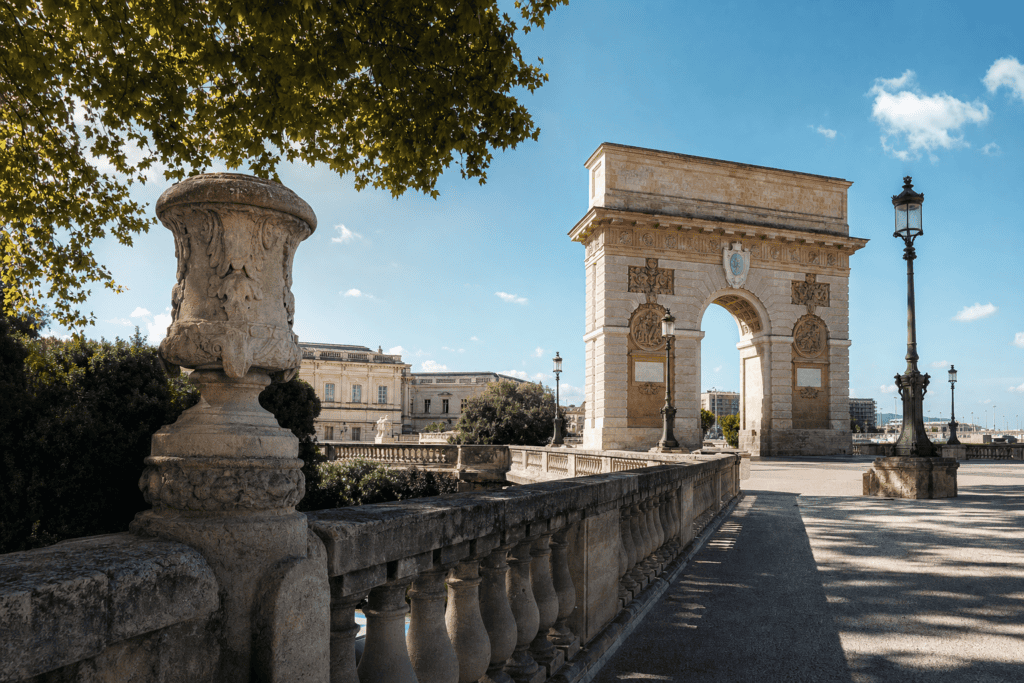 Peyrou Promenade and Triumphal Arch A monumental Montpellier complex bringing together a triumphal arch, a statue of Louis XIV, a water tower, and…
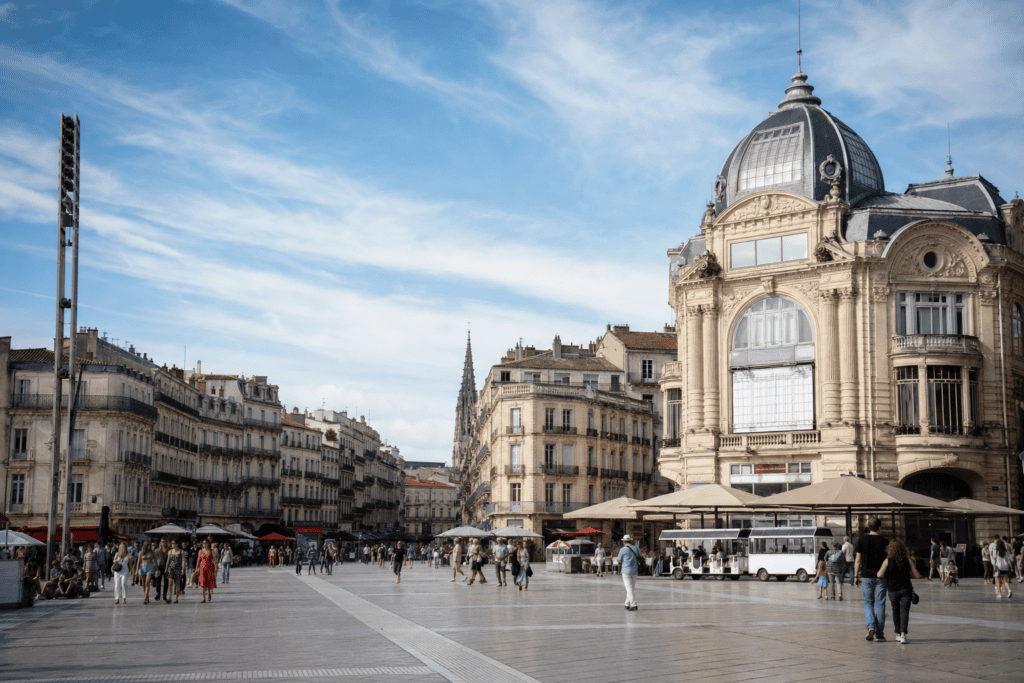 Place de la Comédie and Écusson The best starting point for exploring Montpellier on foot, from the Three Graces fountain to…
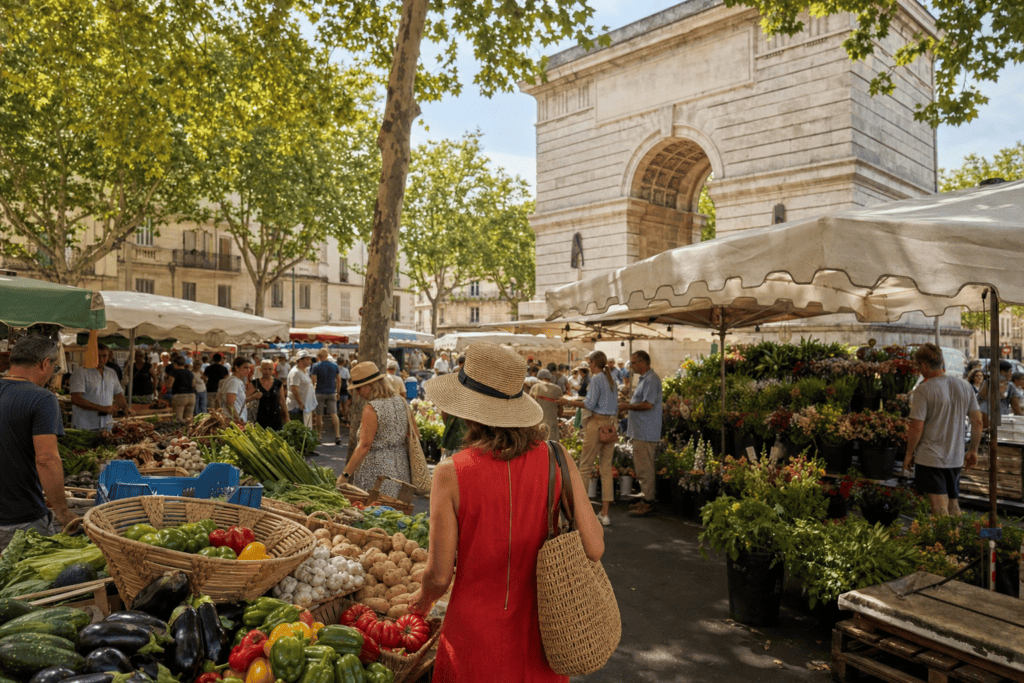 Arceaux Market A lively market beneath the Saint-Clément aqueduct, ideal for discovering local products and the atmosphere of the neighborhood…
 What to Do Around Montpellier: City, Sea, and Nature A realistic guide to Montpellier: the Écusson in the morning, then just one choice between the lagoon,…
Online booking · Paris → 39 boulevard Bonne Nouvelle, 34000 Montpellier, France
Choose your pickup date and time
Your departure and arrival details are already pre-filled. You can adjust them in the fare calculator before viewing the vehicles and fare.