



Place de la Comédie and the Écusson: The Heart of Montpellier
Montpellier
Between the expansive Place de la Comédie, the opera house, outdoor terraces, and old lanes, the Place de la Comédie and Écusson capture much of Montpellier’s charm. The best way to explore them is mainly on foot, moving from square to square while looking up at the façades, balconies, and historic residences in the city center.
Practical information
Start at the Fountain of the Three Graces, then make your way slowly toward Rue de la Loge, the squares of Saint-Roch, Sainte-Anne, and Canourgue, before continuing to the Peyrou. Comfortable shoes are recommended on the cobblestones.
Getting to Montpellier from Paris by private chauffeur
Pour intégrer la Place de la Comédie et l’Écusson à un séjour dans le sud de la France, Booking Paris Transfer peut organiser un trajet au départ de Paris, d’un hôtel parisien, de l’aéroport Charles-de-Gaulle ou d’Orly, avec arrivée à Montpellier et possibilité de retour vers Paris. Le service concerne le transport uniquement : les visites, réservations et billets restent à organiser séparément.
Possible departure from Paris, a Paris hotel, CDG, or ORY; return to Paris or a custom itinerary from Paris.
The Place de la Comédie: Your First Introduction to Montpellier
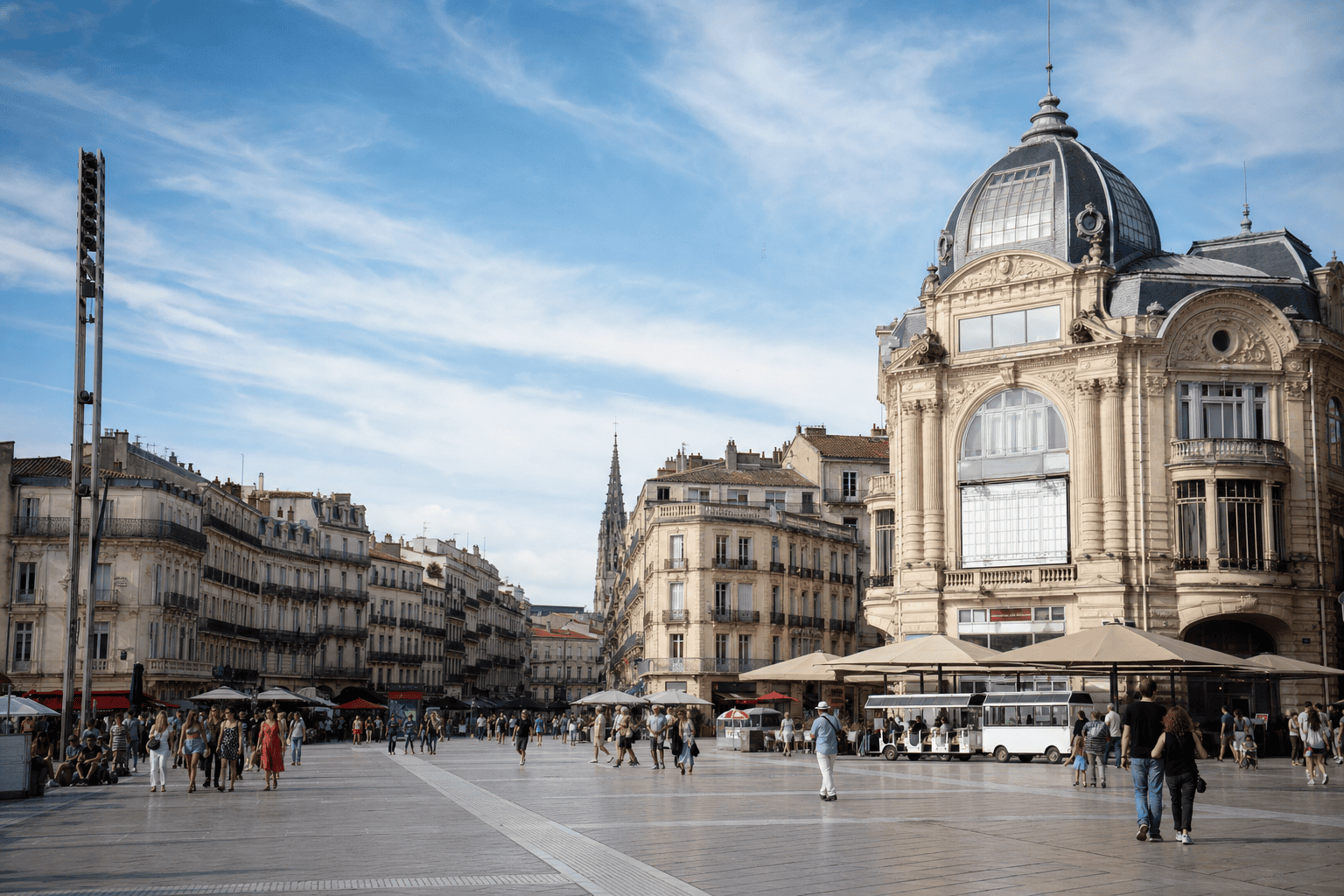
The Place de la Comédie is the most natural starting point for exploring Montpellier. Nicknamed the “Egg Square” because of its oval shape, it is a broad pedestrian space dominated by the Opéra Comédie. At its center, the Fountain of the Three Graces immediately catches the eye. Created by Étienne d’Antoine in 1773, this work has become one of the city’s symbols.
Take time to admire the 19thth century façades, ornate balconies, and views opening toward the Esplanade Charles-de-Gaulle. The square is also a hub of local life, where cafés, restaurants, street performers, and passersby cross paths throughout the day. It can be busy, especially in good weather and during events, but this energy is part of its identity.
For a first look, walk around the square before heading into the Écusson. You’ll easily spot the Tourist Office, public transportation, and several shopping streets. At night, the lighting gives the buildings a different atmosphere, perfect for an after-dinner stroll.
The Écusson: A Historic Maze to Explore on Foot
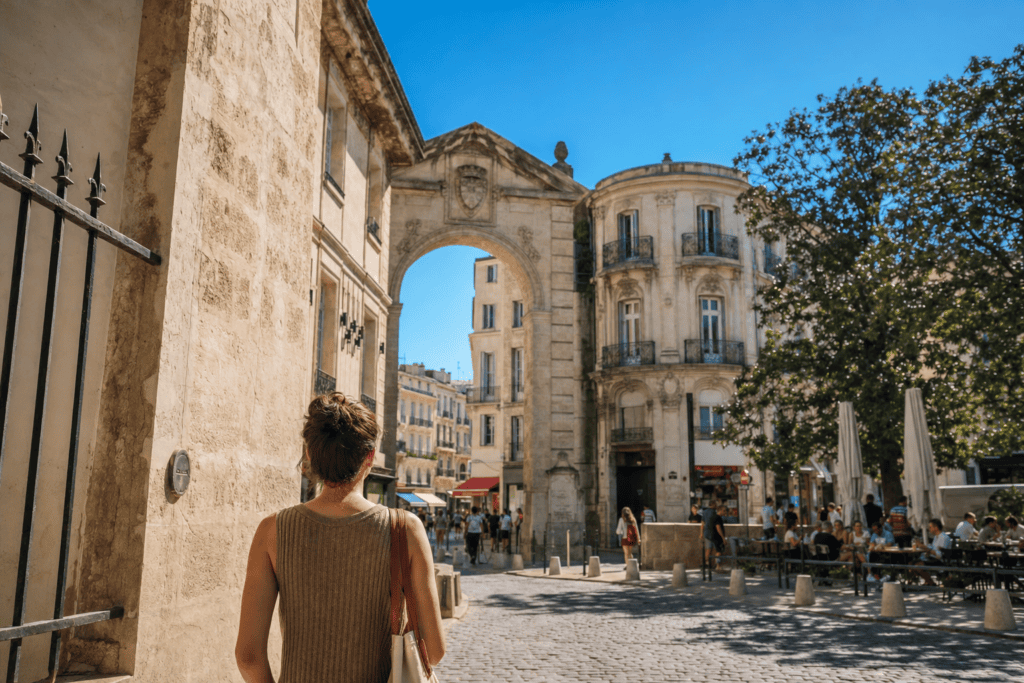
The Écusson is Montpellier’s historic center, organized around a network of narrow streets, squares, and passageways that have preserved much of their original layout. From the Place de la Comédie, exploring it is less about following a rigid route than embracing the detours. One street opens onto a small square, a staircase reveals an old façade, and a partly open door may offer a glimpse of an interior courtyard.
Rue de la Loge provides a convenient route to the heart of the shopping district, while Rue de l’Ancien Courrier, Rue de l’Aiguillerie, and Rue des Trésoriers de la France invite you to slow down. The neighborhood is largely pedestrianized, making it pleasant to explore, although some streets are cobbled or uneven. Strollers and wheelchairs may require additional planning depending on the route.
To understand the city, look at the details: old shop signs, window surrounds, door knockers, gateways, and changes in elevation. The Écusson is explored as much with your eyes as with a map.
Private Mansions and Architectural Details
One of the Écusson’s main attractions is its private mansions, urban residences built or substantially remodeled mainly during the 17thth and 18th centuries. Behind sometimes understated façades are courtyards, monumental staircases, galleries, and decorative features that reflect the prosperity of some Montpellier families.
Not all of these buildings are open to visitors, so do not go through a doorway or enter a private courtyard without permission. However, some guided tours offered by the Tourist Office occasionally explore their history and architecture. Since conditions, dates, and reservations may change, always check the official schedule before your visit.
As you walk, look up at the decorative faces, ironwork, and carved surrounds. The Hôtel Saint-Côme, near the Place de la Canourgue, also recalls Montpellier’s importance in medical and surgical education. The neighborhood’s heritage is not limited to major monuments; it can be read in the continuity of the façades and the proportions of the streets.
From Saint-Roch to Sainte-Anne: Squares That Set the Pace
The Place de la Comédie is only the first stop on a route dotted with more intimate squares. Place Saint-Roch, recognizable by its church and welcoming atmosphere, is especially pleasant for a break. Terraces play an important role in neighborhood life, as do the small businesses along the nearby streets.
Place Sainte-Anne has a more artistic atmosphere, with its deconsecrated church and surrounding studios and cultural venues. Farther north, Place de la Canourgue offers an elegant pause, lined with greenery and remarkable buildings. It is an excellent stop before continuing to Saint-Pierre Cathedral and the Place Royale du Peyrou.
This route highlights Montpellier’s diversity: a grand, open monumental square, shopping plazas, gathering places, and quieter spaces. To fully appreciate the contrasts, alternate the main streets with a few detours. In the late afternoon, the low sunlight accentuates the façades’ textures and the depth of the views.
Museums, Heritage, and Monuments Around the Comédie
The Place de la Comédie’s location makes it easy to reach several cultural sites in the city center. The Esplanade Charles-de-Gaulle leads to the Musée Fabre, one of Montpellier’s major museums, as well as the Pavillon Populaire, which presents photography through a changing program. Since exhibitions, access conditions, and hours change regularly, it is best to check the official websites before planning your visit.
Continuing west through the Écusson, you’ll discover Rue Foch, the Arc de Triomphe, and the Place Royale du Peyrou. Saint-Pierre Cathedral, with its monumental porch, is also worth a detour. More discreet, the medieval mikveh recalls Montpellier’s long religious and cultural history; visits depend on scheduled time slots or organized tours.
A good approach is to spend the first part of the day exploring the streets and squares, then choose one museum or monument for a deeper look. This keeps the experience from becoming a simple checklist of must-see attractions. The center is rich enough to warrant a second visit to explore another area.
Where to Take a Break: Terraces, Shops, and Local Specialties
The Place de la Comédie and Écusson are especially well suited to a food-focused exploration. The square’s terraces offer a direct view of the urban bustle, while the surrounding streets are home to cafés, ice cream shops, pastry shops, restaurants, and independent boutiques. For a quieter break, walk a few minutes farther toward Place Saint-Roch, Place Sainte-Anne, or Place de la Canourgue.
The city center also makes it easy to build a stroll around regional products: sweets, biscuits, Languedoc wines, cheeses, and Mediterranean specialties are available from a variety of merchants. Since businesses and hours may change, use the Tourist Office’s up-to-date recommendations rather than relying on an old list.
To enjoy the atmosphere without losing too much time, plan a break around noon or mid-afternoon, then continue exploring when the streets become quieter. On very hot days, choose shaded passages and carry water with you. In the evening, the Écusson takes on a different character: restaurants, bars, and squares make the walk livelier, while the Comédie becomes a popular meeting point.
Practical Tips for Planning Your Visit
The best way to visit this area is to plan a flexible route of at least two hours. From the Place de la Comédie, enter the Écusson via Rue de la Loge, detour through Saint-Roch and Sainte-Anne, then head up toward Place de la Canourgue, the cathedral, and the Peyrou. You can shorten or extend this route depending on your pace and the places you visit.
The tram is a convenient way to reach the city center, particularly via the Comédie stop, while Saint-Roch train station is within walking distance. If you’re driving, check traffic conditions, pedestrian zones, and official parking facilities before setting out. Construction work and events may temporarily affect access.
Wear suitable shoes, especially if you plan to explore the old streets through multiple detours. For a guided tour, monument access, or cultural event, check the latest information from Montpellier Tourism. People with reduced mobility can request an adapted route; elevations and cobblestones vary from street to street. Finally, respect neighborhood residents by keeping passageways clear and remaining mindful of private spaces.
Frequently Asked Questions
How long does it take to visit the Place de la Comédie and Écusson?
Is the Place de la Comédie easy to reach by public transportation?
Can you visit the private mansions in the Écusson?
What route should you take for a first visit?
Is the visit suitable for people with reduced mobility?
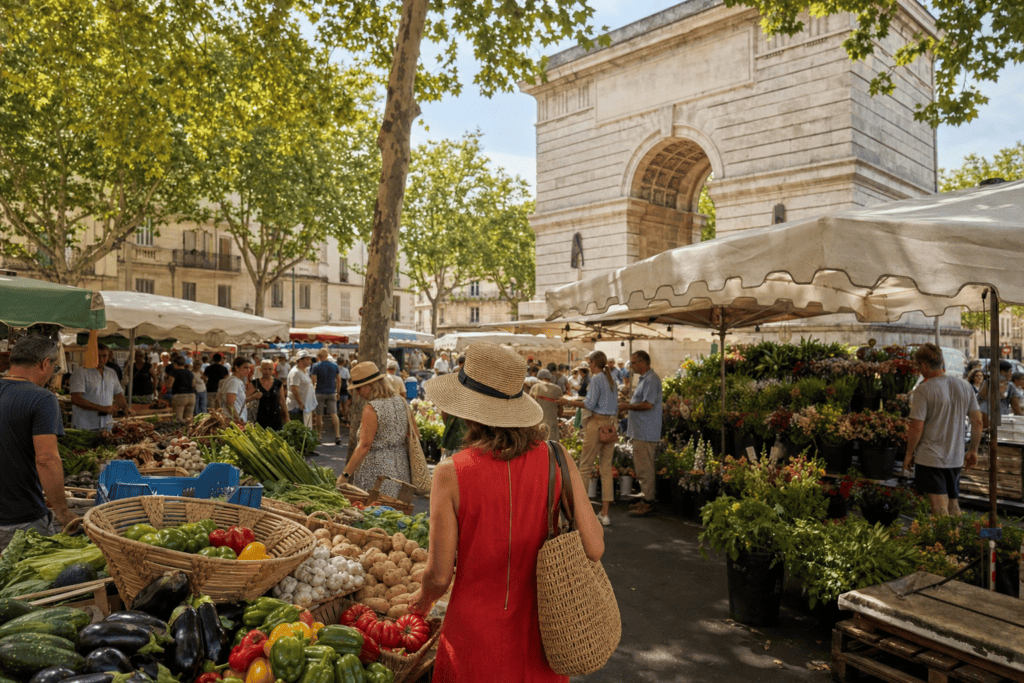 Arceaux Market A lively market beneath the Saint-Clément aqueduct, ideal for discovering local products and the atmosphere of the neighborhood…
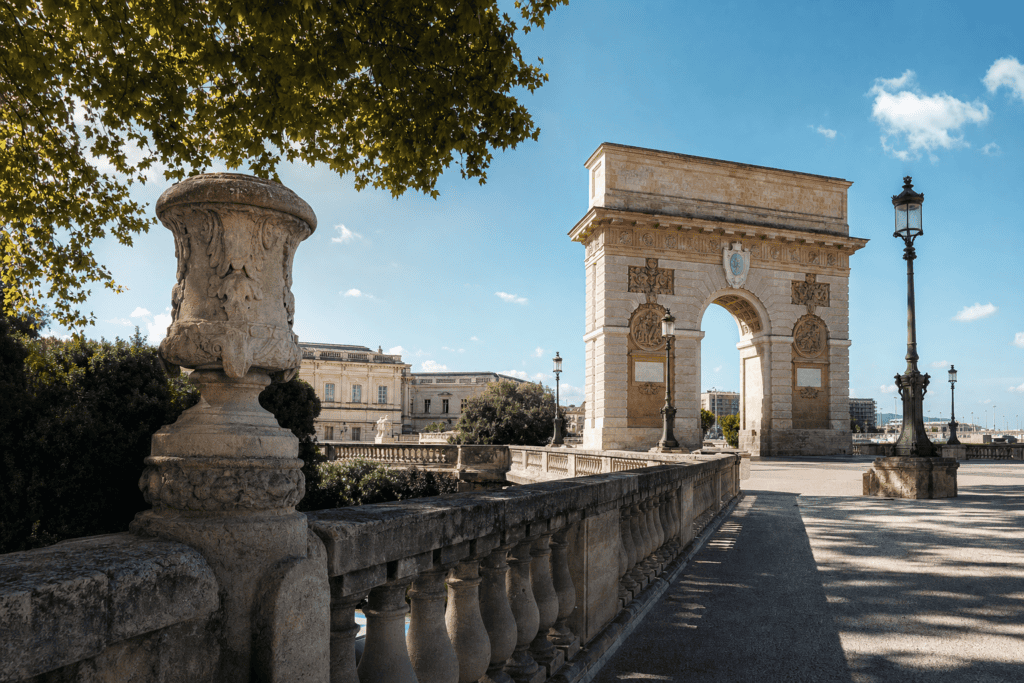 Peyrou Promenade and Triumphal Arch A monumental Montpellier complex bringing together a triumphal arch, a statue of Louis XIV, a water tower, and…
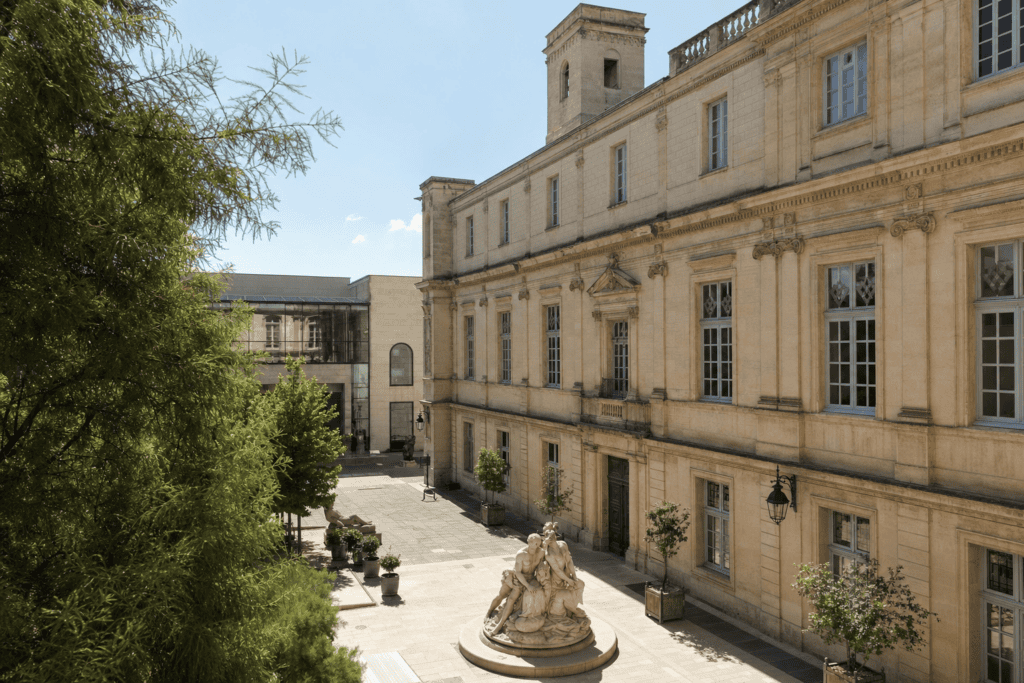 Musée Fabre A major journey from the Renaissance to contemporary art, in the heart of Montpellier, featuring Bazille, Soulages…
 What to Do Around Montpellier: City, Sea, and Nature A realistic guide to Montpellier: the Écusson in the morning, then just one choice between the lagoon,…
Online booking · Paris → Place de la Comédie, 34000 Montpellier, France
Choose your pickup date and time
Your departure and arrival details are already pre-filled. You can adjust them in the fare calculator before viewing the vehicles and fare.