



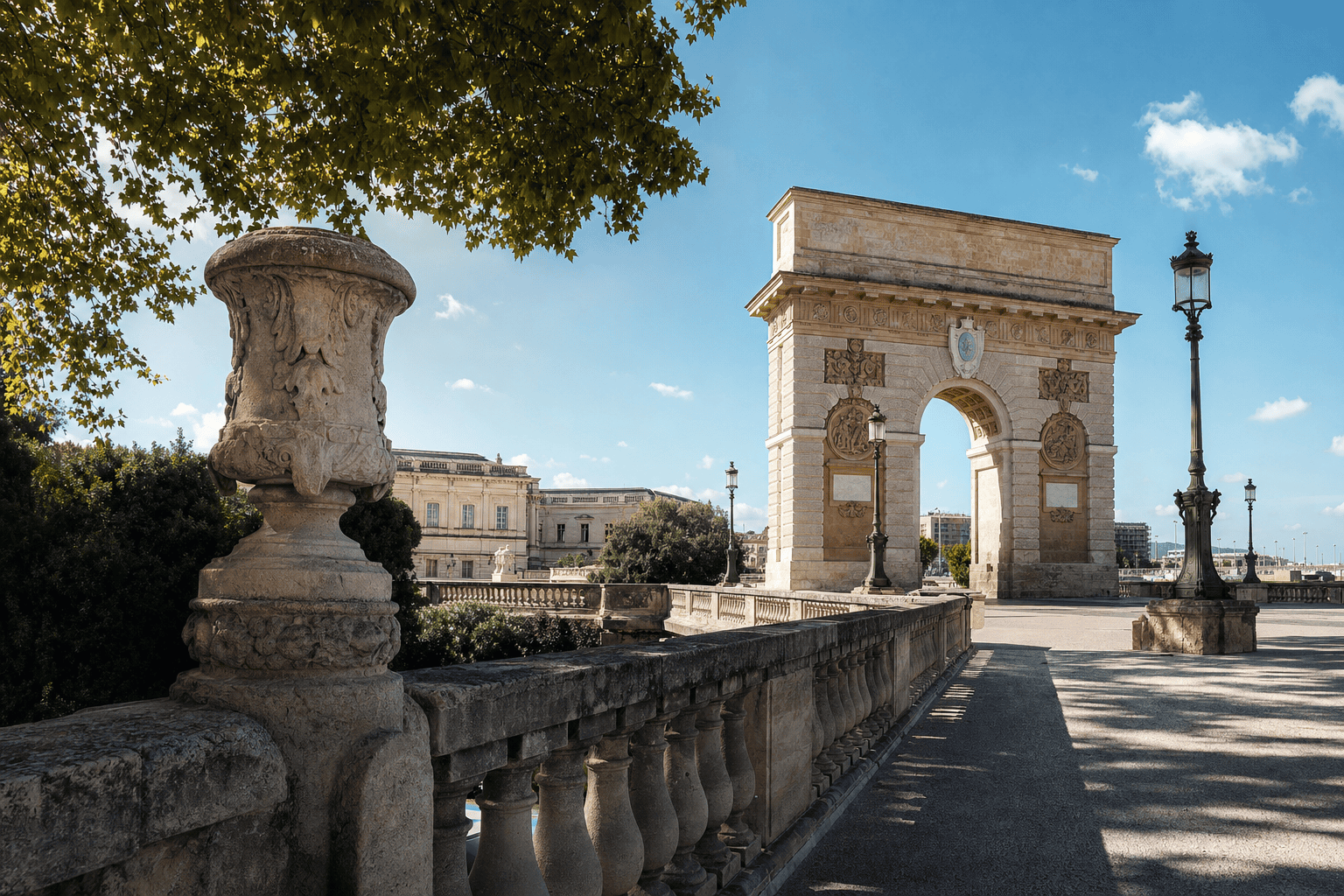
Peyrou Promenade and Triumphal Arch in Montpellier
Montpellier
West of the Écusson, Peyrou Promenade forms one of Montpellier’s most remarkable monumental ensembles. The triumphal arch, the equestrian statue of Louis XIV, the water tower, and the Arceaux Aqueduct create a broad historic perspective that is pleasant to explore on foot. The site offers insight into the monarchy’s role in beautifying the city, as well as the importance of its water supply. Depending on the weather, the promenade offers open views of Montpellier and the surrounding hills. It is well suited to a first visit, a couples’ stroll, or a tour focused on heritage and urban photography.
Practical information
Start on Rue Foch at the triumphal arch, continue toward the statue of Louis XIV, then make your way to the water tower before optionally continuing to the Arceaux Aqueduct.
Getting to Montpellier from Paris by private chauffeur
To include Peyrou in a stay in Montpellier, Booking Paris Transfer can arrange private transportation from Paris, a Paris hotel, Charles de Gaulle Airport, or Orly Airport, with arrival in Montpellier and the option of returning to Paris. The service covers transportation only: visits, monument access, and any reservations must be arranged separately.
Departure available from Paris, a Paris hotel, CDG, or ORY; return to Paris or a customized itinerary departing from Paris.
A monumental ensemble in the heart of Montpellier
Peyrou Promenade is a vast royal square west of the Écusson. Its appeal lies not in a single monument, but in the sequence linking the triumphal arch, the tree-lined esplanade, the equestrian statue of Louis XIV, the water tower, and the Arceaux Aqueduct. This axis gives the site a distinctive sense of depth and connects several periods in Montpellier’s urban history.
Arriving from Rue Foch, you symbolically cross the former threshold of the city before emerging into a much more open space. Walls, gates, ramps, and rows of trees shape the promenade without making it difficult to explore. Visitors come for the architecture, a break, or to observe the relationship between the old town and the neighborhoods to the west.
Peyrou is also a convenient starting point for the Jardin des Plantes, Saint-Pierre Cathedral, and the Arceaux district.
The triumphal arch, Peyrou’s historic entrance
The triumphal arch marks the eastern entrance to the promenade. It was built in 1691-1692 on the site of a former city gate, as part of the major improvements associated with the reign of Louis XIV. Its architecture transforms an urban passageway into a commemorative monument and asserts the presence of royal power in Montpellier.
From Rue Foch, take time to observe the pale stone, sculpted decorations, medallions, and attic. The arch is not meant to be viewed only from the front: as you move toward Peyrou, it becomes the first element of an axis extending to the equestrian statue. This succession of views accounts for much of the site’s visual impact.
Access to the top is not permanently open to the public. It may be available during guided tours or special openings. Since schedules, dates, and conditions may change, check with the tourist office or municipal information before planning this visit.
The royal square and the statue of Louis XIV
The central part of Peyrou is organized around an equestrian statue of Louis XIV. The ensemble reflects the desire to beautify Montpellier and stage royal authority in a monumental public space. The statue is the promenade’s main landmark and lies on the axis connecting the triumphal arch with the water tower.
To understand the site’s composition, view it successively from the eastern entrance, the side paths, and the water tower. Each position changes the relationship between the sculpture, the trees, and the rooftops of the Écusson. Benches and shaded areas provide places to pause, especially on hot days.
Peyrou remains a popular place with local residents. Walkers, families, students, and joggers share its paths. On some Sundays, a flea market known as the “Dimanches du Peyrou” may take place here; check the municipal calendar for dates and any applicable details.
The water tower and the Arceaux Aqueduct
At the western end of the promenade stands the monumental water tower, designed in the 18th century as part of the water-supply system connected to the Lez spring. The Saint-Clément Aqueduct, often called the Arceaux Aqueduct or Pitot Aqueduct, carried water to Montpellier along a route of approximately 14 kilometers. The water tower is therefore the functional and architectural culmination of this project.
From Peyrou, the line of arches continues toward the Arceaux district. This continuity makes the connection between technical heritage and the urban landscape visible. The materials, arcades, and trees create a setting very different from the Écusson’s narrow streets, while remaining directly connected to the historic center.
You can leave the promenade to the west and walk toward Les Arceaux to see more of the aqueduct. When it is held, the neighborhood market adds an everyday dimension to the experience. Check local sources for market days before setting out.
Open views over Montpellier and its surroundings
Peyrou Promenade offers unobstructed views across part of Montpellier. From the esplanade, you can see the rooftops of the Écusson and the surrounding neighborhoods. In clear weather, some inland landmarks, such as Pic Saint-Loup or the Cévennes, may be visible, but visibility depends heavily on the weather, season, and air quality.
It is best to present these horizons as a possibility rather than a guaranteed view. The Mediterranean may also be visible under certain conditions, while more distant hills can be seen only during periods of exceptional atmospheric clarity. Peyrou’s appeal, however, does not depend solely on the panorama: the monuments and the esplanade’s layout already provide a complete experience.
For photographs, look for sightlines between the arch, the statue, and the water tower. Be considerate of other visitors and protected heritage areas, especially during busy periods.
Planning a walking tour
A simple visit can begin at the “Peyrou – Arc de triomphe” tram stop, served by line 4 of Montpellier’s transit network. From the stop, head to Rue Foch and approach the triumphal arch from the east. This gradual arrival lets you discover the monument before the esplanade and its central axis open up before you.
Continue toward the equestrian statue, walk along the tree-lined paths, then head to the water tower. Allow about an hour for this loop, taking time to admire the architectural details. If you have more time, continue to the Arceaux Aqueduct, then return via the Jardin des Plantes and Saint-Pierre Cathedral.
The ground surface, changes in level, and stairs may make some sections difficult for people with reduced mobility. Access to the top of the arch is subject to conditions separate from those governing the ground-level promenade. For transportation, guided tours, events, and any restrictions, check the latest information from the City of Montpellier and the tourist office.
What to see around Peyrou
Peyrou fits easily into a day exploring Montpellier’s historic center. The Jardin des Plantes, founded in the 16th century, is nearby and offers a greener atmosphere. Saint-Pierre Cathedral, with its monumental porch, and the medical school extend the visit to other important sites of Montpellier’s heritage.
As you descend toward the Écusson, you can reach Place de la Canourgue, admire the private mansions, and continue to Place de la Comédie. In the other direction, the Arceaux district lets you follow the aqueduct and discover a lively residential area with a market when it is open.
The appeal of this itinerary lies in its variety: royal architecture, water history, gardens, religious heritage, and local life follow one another without requiring a long journey. Wear comfortable shoes, bring water in hot weather, and allow extra time for breaks. Peyrou is worth exploring rather than simply photographing from the arch.
Frequently Asked Questions
Where is Peyrou Promenade located?
Can you climb to the top of the triumphal arch?
How much time should you allow to visit Peyrou?
Is Peyrou accessible by tram?
What can you see from the promenade?
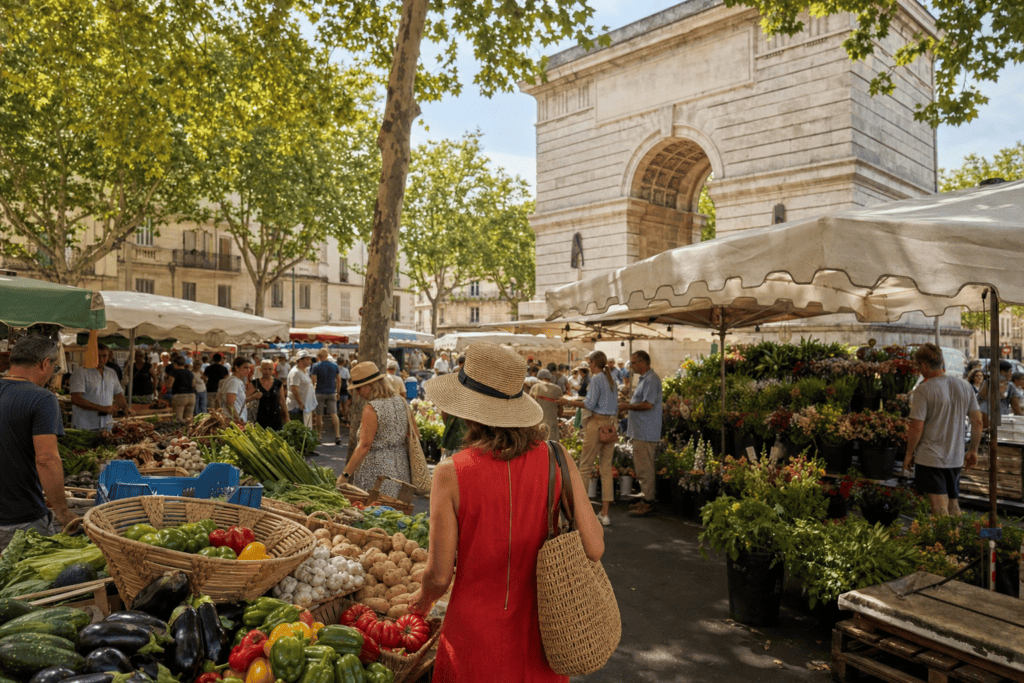 Arceaux Market A lively market beneath the Saint-Clément aqueduct, ideal for discovering local products and the atmosphere of the neighborhood…
 What to Do Around Montpellier: City, Sea, and Nature A realistic guide to Montpellier: the Écusson in the morning, then just one choice between the lagoon,…
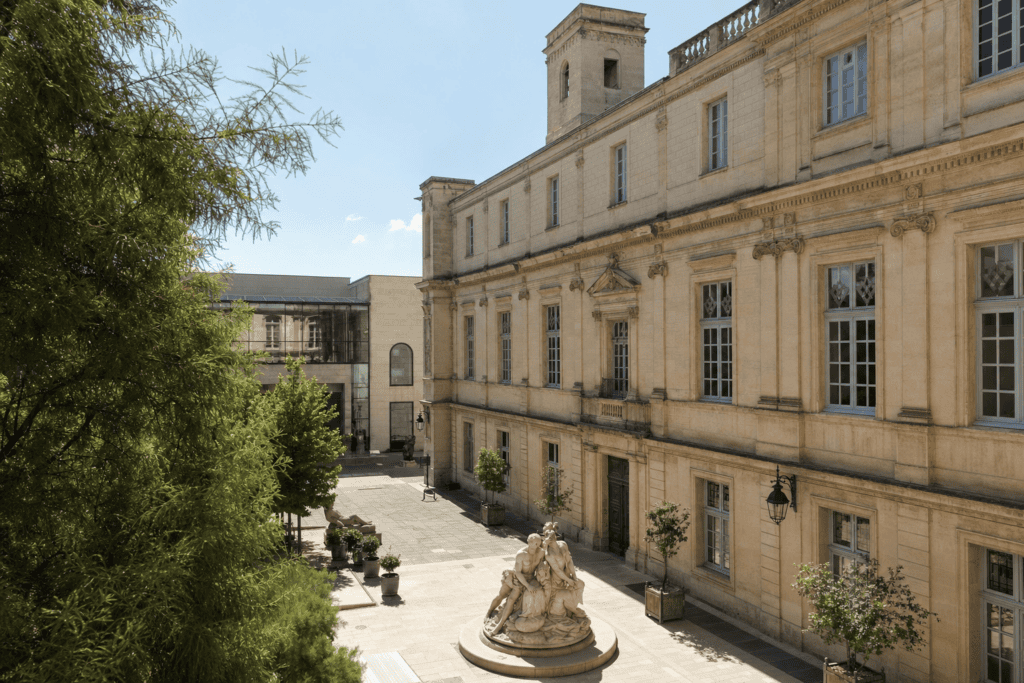 Musée Fabre A major journey from the Renaissance to contemporary art, in the heart of Montpellier, featuring Bazille, Soulages…
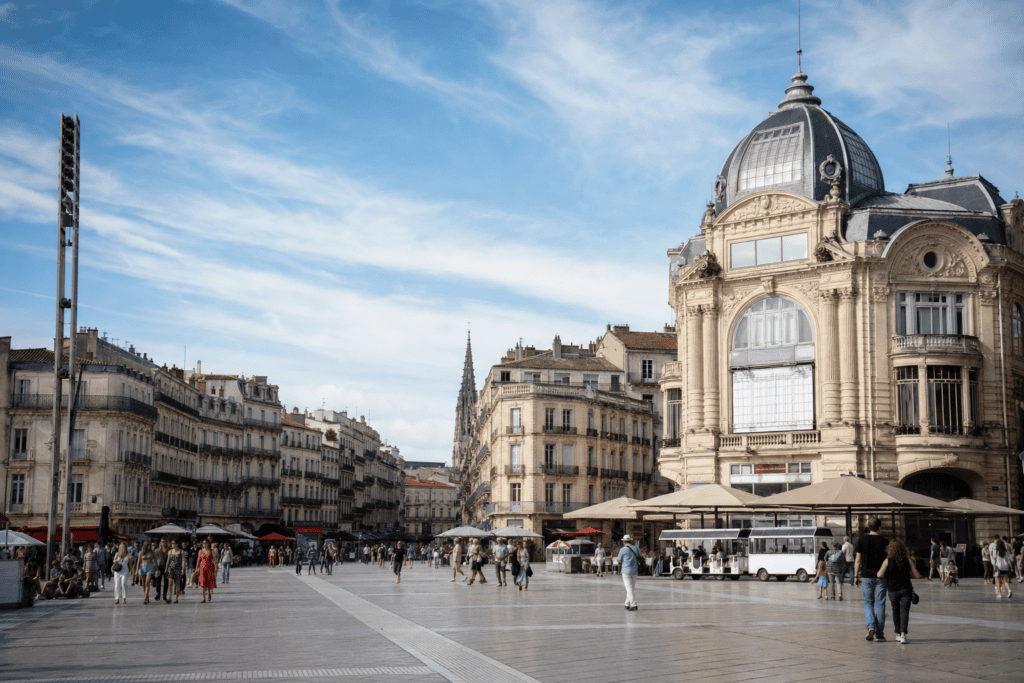 Place de la Comédie and Écusson The best starting point for exploring Montpellier on foot, from the Three Graces fountain to…
Online booking · Paris → Rue Foch and Peyrou Promenade, 34000 Montpellier, Hérault, Occitanie
Choose your pickup date and time
Your departure and arrival details are already pre-filled. You can adjust them in the fare calculator before viewing the vehicles and fare.