



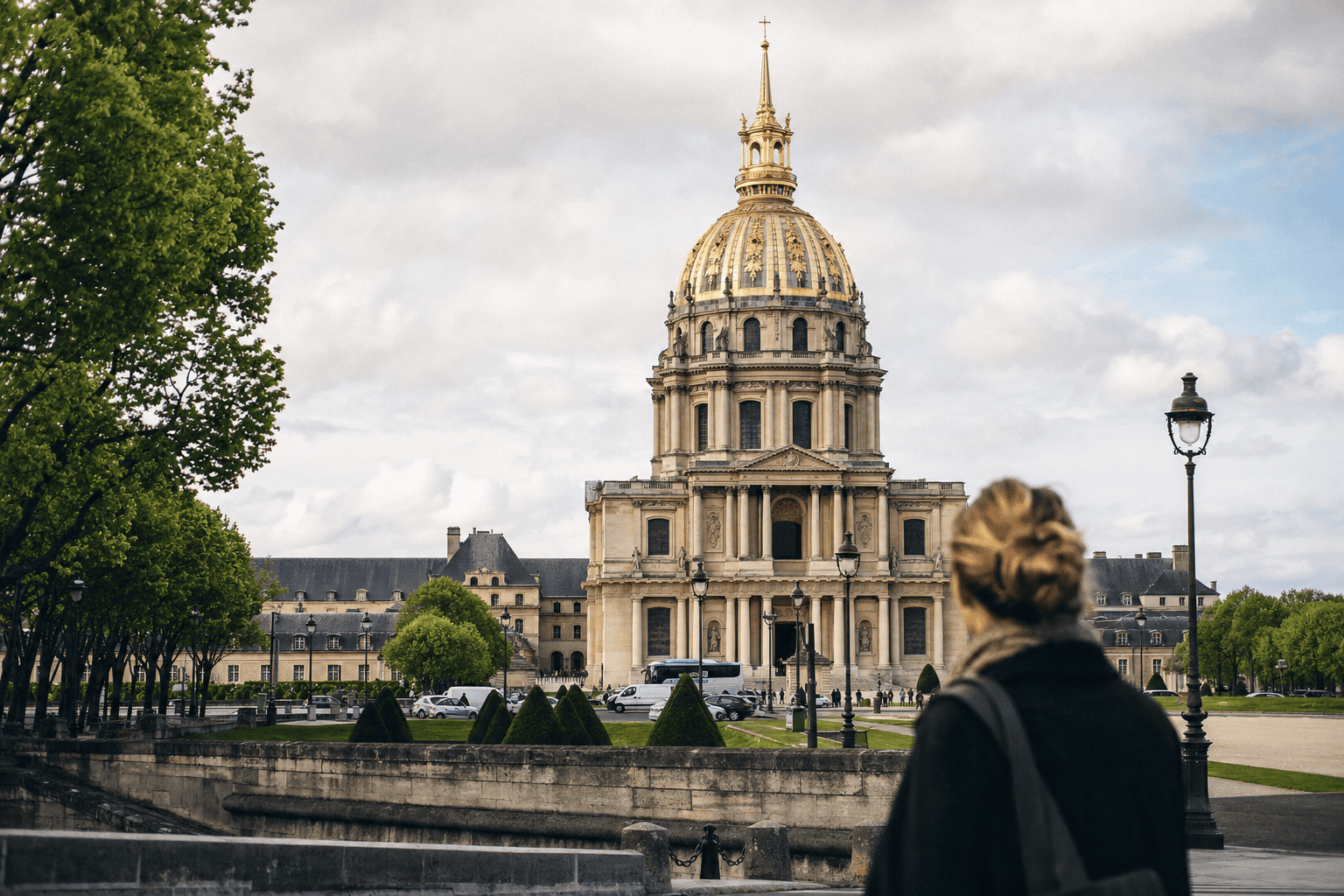
Hôtel des Invalides: Guide to the Golden Dome in Paris
Paris
Recognizable by its golden dome, Hôtel des Invalides is a vast monumental complex in Paris’s 7th arrondissement. Founded under Louis XIV to house wounded, elderly, or ill soldiers, it is now home to the Cathedral of Saint-Louis des Invalides, the Dome and Napoleon I’s tomb, the Army Museum, the Musée des Plans-Reliefs, and the Musée de l’Ordre de la Libération. Exploring the Cour d’Honneur and Esplanade from outside can fit into a one- to two-hour walk. To visit the interiors and collections, plan on about half a day. This guide covers the site’s history, the main routes, entrances to look out for, transportation, and useful checks to make before setting out.
Practical information
First, locate the museum entrance at 129 rue de Grenelle, then follow the signs to the areas corresponding to your ticket or itinerary. For the Dome and cathedral, check the access point for the day: routes may be separate and can change depending on how the site is organized.
Getting to Les Invalides from Paris
From a Paris hotel, train station, or Paris-Charles-de-Gaulle or Paris-Orly airport, Booking Paris Transfer can arrange a private ride to the Les Invalides area, with a return to Paris or onward travel to another stop on your itinerary. The service covers transportation only and does not include museum admission or visit tickets. Check the site’s access conditions before you arrive.
Transportation service departing from Paris, a Paris hotel, CDG, or ORY. The drop-off point depends on traffic conditions and the access restrictions in effect on the day of travel.
An Institution Created for Soldiers
Hôtel des Invalides was founded in 1670 by Louis XIV to house, care for, and support soldiers who had become disabled after their service. The project met a social need, but it also demonstrated the monarchy’s ability to care for veterans of a standing army. Located in the Grenelle plain, then on the outskirts of Paris, the institution included courtyards, dormitories, care facilities, a church, and administrative offices.
Libéral Bruant designed the institution’s overall plan, while Jules Hardouin-Mansart worked on the Dome church. The first residents arrived before construction was fully complete. From the outset, Les Invalides was therefore a place to live and work, not merely a commemorative monument. This function explains the regular façades and the layout around the Cour d’Honneur. Observing the site makes it easier to understand the connection between the architecture of the Grand Siècle, military assistance, and the assertion of state power.
The Golden Dome and the Two Churches
The Dome is Les Invalides’ most famous visual landmark. Its tall cupola, lanterns, and gilded decoration dominate views across the neighborhood and can be seen from the Esplanade, the banks of the Seine, and several Paris bridges. The building was designed to give the royal institution a prestigious dimension. Light dramatically changes its appearance: the volumes and gilding look different early in the morning, under overcast skies, or at the end of the day.
It is important to distinguish the Dome Church from the Cathedral of Saint-Louis des Invalides, often called the Soldiers’ Church. The two spaces belong to the same complex but serve different purposes. The cathedral remains connected to the military community and soldiers’ worship, while the Dome has become a national necropolis. This distinction is essential when planning your route, as entrances, opening hours, and visiting arrangements may be separate. Check the signs and official information on the day of your visit.
Napoleon I’s Tomb
Napoleon I’s tomb gave Les Invalides additional symbolic significance. After dying on Saint Helena in 1821, Napoleon was returned to France in 1840 during the Return of the Ashes. His permanent tomb was installed beneath the Dome in 1861, following work led by architect Louis Visconti. The monumental tomb stands at the center of a crypt open across several levels, allowing visitors to view it from a descending, ceremonial perspective.
The Dome also houses the tombs of several military figures, including Turenne, Vauban, Napoleon II, Joseph and Jérôme Bonaparte, as well as Marshals Foch and Lyautey. The visit therefore tells more than the story of the Empire alone. It shows how different periods of French military history were brought together in one place. Take time to look at the inscriptions, sculptures, and layout of the crypt rather than limiting your visit to a photograph of the tomb.
The Army Museum and Other Collections
The Army Museum occupies a large part of the site and offers an extensive journey from ancient weapons and armor to modern conflicts. Galleries devoted to the modern era, the Revolutionary and Napoleonic Wars, the two world wars, and military remembrance trace the development of technology, uniforms, and societies at war. Personal belongings and firsthand accounts add a human dimension to episodes often studied from a strategic perspective.
The Musée des Plans-Reliefs offers a unique perspective on the landscape through its models of fortified towns. The Musée de l’Ordre de la Libération presents the history of the Companions of the Liberation, Free France, and the Resistance. Since the complex is extensive, choose your priorities before arriving: selecting a few galleries is often more enjoyable than rushing through everything. Programming, exhibitions, and accessible areas may change, so check the museum’s information before finalizing your itinerary.
Cour d’Honneur and Architectural Details
The Cour d’Honneur is a natural starting point for understanding the scale of Les Invalides. Its repeated arcades, symmetrical façades, and orderly perspectives reflect the function of an institution intended to house a large resident community. Reliefs and sculptures associated with Louis XIV, Mars, Minerva, and Hercules evoke the blend of royal power, military strength, and political virtue sought by the designers.
From the courtyard, observe the relationship between the low buildings, rooftops, and the Dome’s vertical mass. This exterior view helps you get oriented before entering the interior spaces. Follow the designated routes, respect any areas that may be closed off, and observe instructions related to ceremonies. For photography, the Esplanade offers more distance, while the courtyard allows you to capture details and the repeating arcades. Lighting and access may vary depending on the season or how the site is being organized.
Esplanade and Walks in the 7th Arrondissement
Hôtel des Invalides is part of a neighborhood particularly rich in walking routes. To the north, the Esplanade des Invalides opens onto a long, tree-lined vista offering distant views of the Dome. From the Alexandre III Bridge, you can continue toward the Grand Palais and the banks of the Seine. In the other direction, the route leads toward the Champ de Mars and the Eiffel Tower. The Quai d’Orsay and the area around the National Assembly round out an urban tour focused on institutions and major monuments.
Museum lovers can plan a visit to the Musée d’Orsay to the east, while Saint-Germain-des-Prés can be reached on foot by continuing toward the Left Bank. To the south, the École Militaire extends the area’s military history trail. For a comfortable outing, separate your collection visit from your outdoor walk. Events, construction, or ceremonies may alter usual routes, particularly around the Esplanade and monumental entrances.
Entrances, Transportation, and Visit Planning
The Army Museum’s reference address is 129 rue de Grenelle, in the 7th arrondissement. Once there, follow the signs for the museum, the Dome, or the Cathedral of Saint-Louis des Invalides: these areas may not be visited via the same route. The Cour d’Honneur is an architectural landmark, but it should not automatically be considered the sole entrance for every route. On-site notices and official guidance take precedence if arrangements change.
Invalides station is served by Metro lines 8 and 13, as well as RER C. La Tour-Maubourg on line 8 and Varenne on line 13 may also be convenient, depending on your route and the open entrance. Several bus lines serve the nearby avenues. From airports or train stations, allow extra time for transfers and the final walk. Check schedules, security checks, reservations, and accessibility information before departing: access to some areas, particularly the Dome Church, may be limited for people with reduced mobility.
Useful sources
Frequently Asked Questions
What is the address of Hôtel des Invalides?
How much time should I allow to visit Les Invalides?
Which stations serve Hôtel des Invalides?
Which areas can you visit on site?
Is the site accessible to people with reduced mobility?
 Musée de l’Orangerie A small-scale Paris museum where Monet’s Water Lilies engage in dialogue with the great masters…
 Paris by Night on a Panoramic Bus A comfortable evening loop for admiring Paris’s illuminated monuments, with a route and a…
 Parc Astérix In Plailly, attractions, shows, and Gaulish humor make for a family excursion that is easy to organize from Paris…
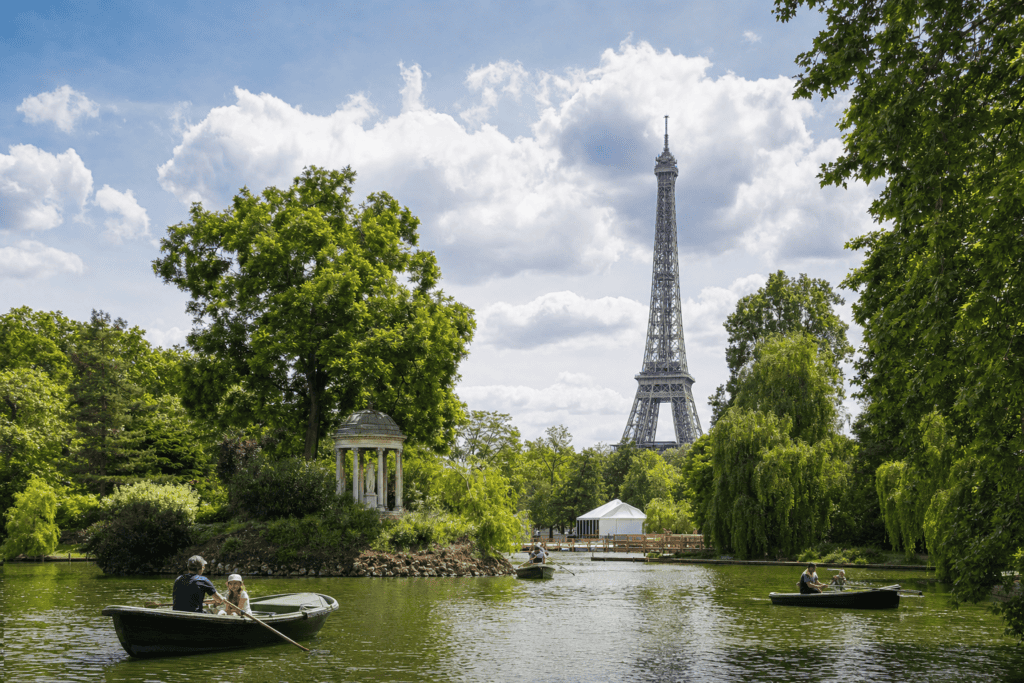 Jardin d’Acclimatation A historic Paris park with rides, animals, gardens, and a walk suitable for a flexible family outing…
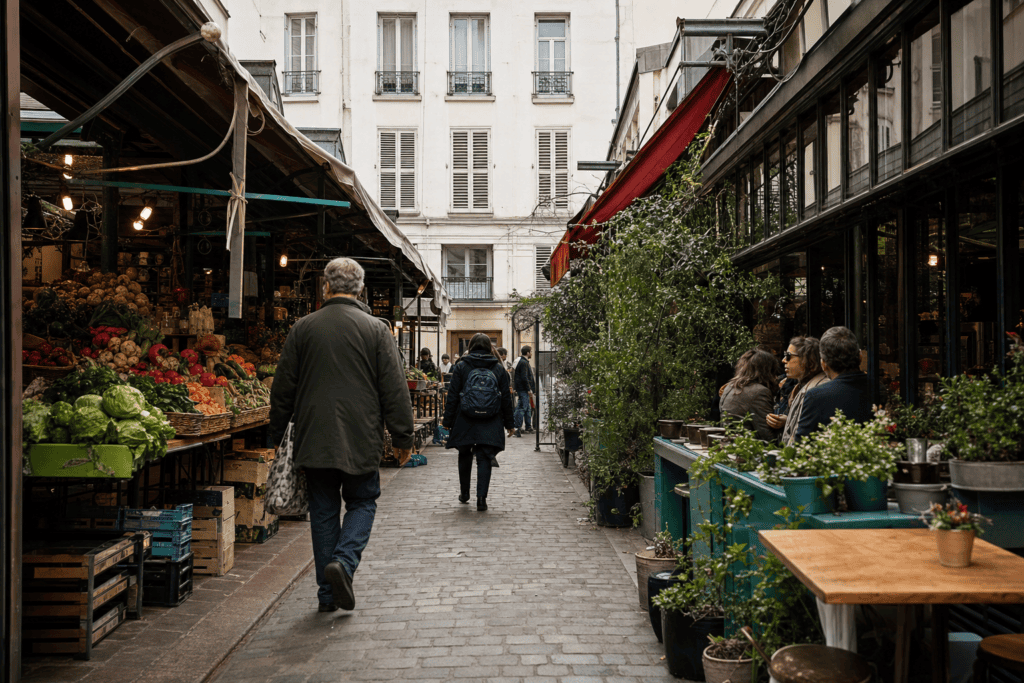 Marché des Enfants Rouges In the Haut Marais, this historic covered market brings together fresh produce and food counters from the…
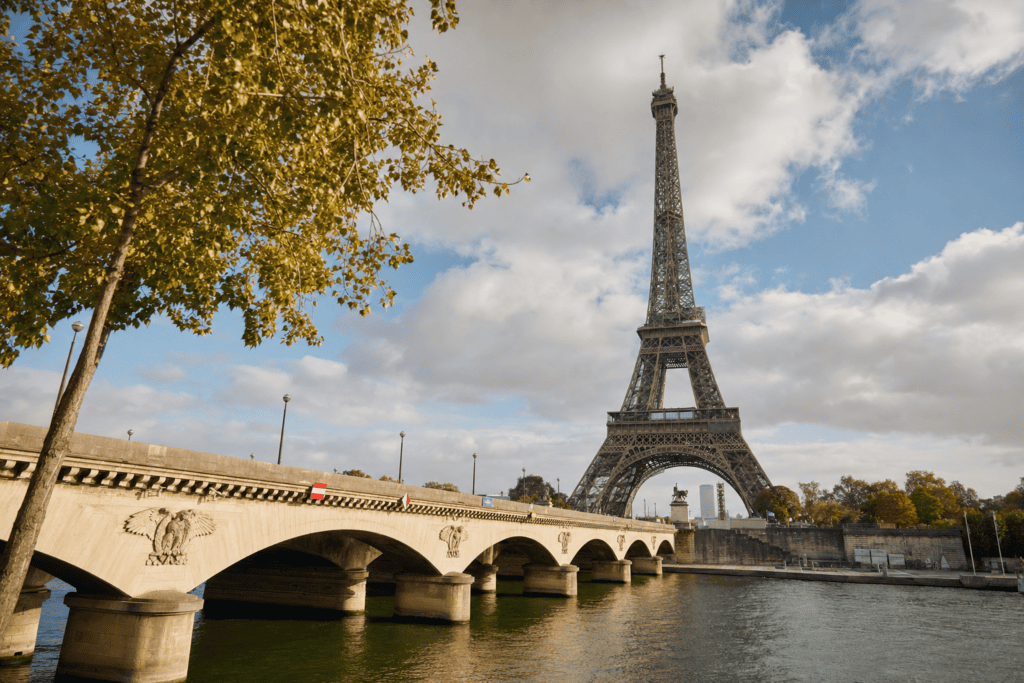 Eiffel Tower Visit the Eiffel Tower with a practical guide to the ascent, panoramic views, access, and the best…
Online booking · Paris → 129 rue de Grenelle, 75007 Paris, France
Choose your pickup date and time
Your departure and arrival details are already pre-filled. You can adjust them in the fare calculator before viewing the vehicles and fare.