



Visiting the Eiffel Tower: Climb, Views, and Practical Tips
Paris
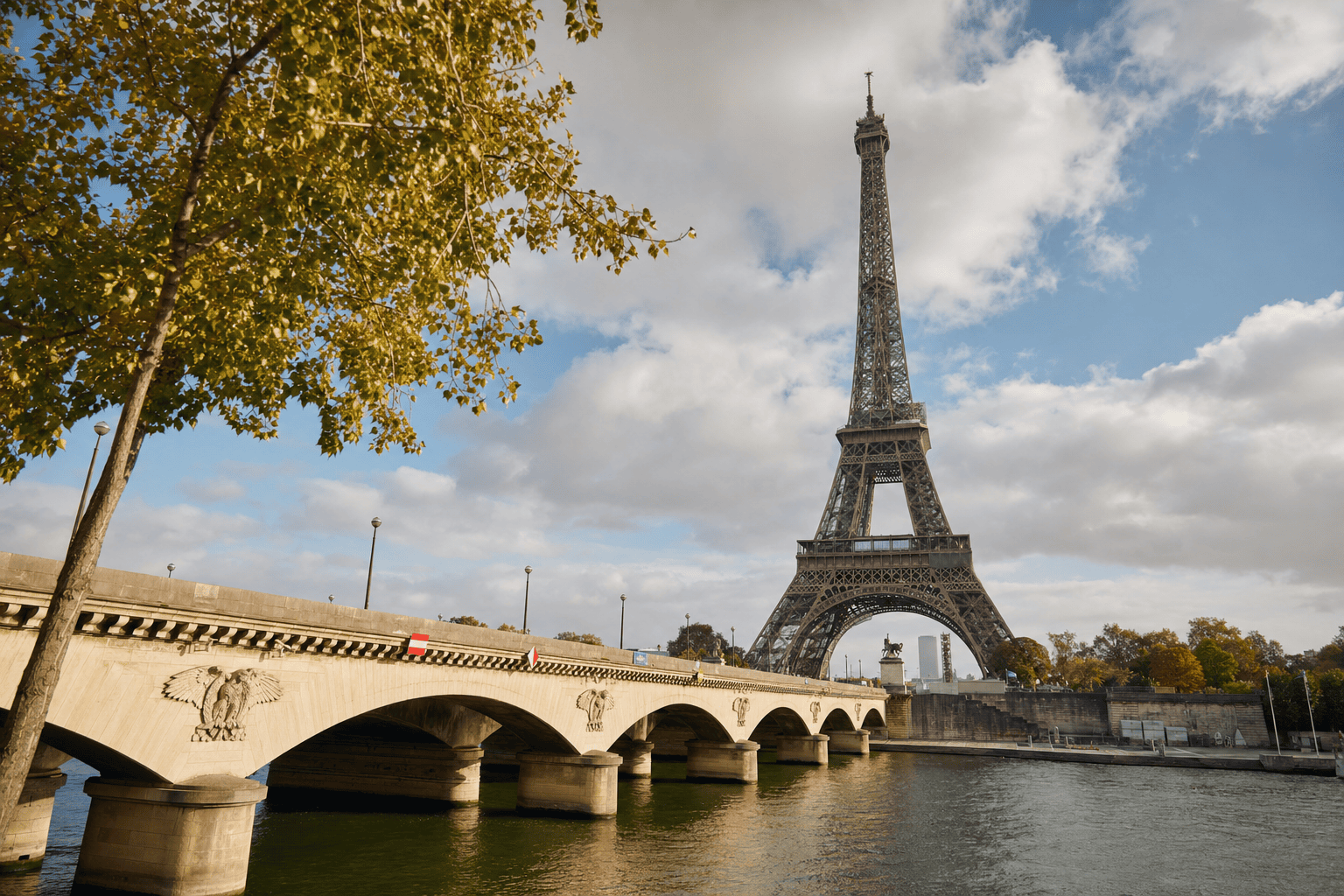
Visiting the Eiffel Tower means discovering an engineering masterpiece, a symbol of Paris, and one of the capital’s best viewpoints. Your visit can begin at the foot of the landmark, in the gardens and on the Champ de Mars, before continuing with a climb to the second floor or the summit. Here’s how to plan your visit, choose your route, and enjoy the finest views around the tower, from the Trocadéro to the Seine.
Practical information
Book well in advance if you want to go to the summit, arrive with extra time before the entry time shown on your ticket, and bring an extra layer: the platforms are exposed to wind, even when the temperature at street level is pleasant.
Getting to the Eiffel Tower from Paris, CDG or ORY
Booking Paris Transfer can provide private transportation from a Paris hotel, Charles de Gaulle Airport, or Orly Airport to the Eiffel Tower, with a return trip to Paris. The service covers transportation only and does not include admission or a reservation to go up the tower.
Book your ticket separately on the Eiffel Tower’s official website, and allow extra time for security checks and Paris traffic.
Why visit the Eiffel Tower?
The Eiffel Tower is at once a historic landmark, an engineering achievement, and an exceptional vantage point over Paris. From the ground, its four pillars and network of beams reveal the scale of its structure. From the upper levels, the perspective changes completely: the Seine, Les Invalides, the Louvre, Montmartre, and the capital’s major avenues gradually come into view.
The visit is equally suited to a first introduction to Paris, a family outing, a romantic walk, or a photography trip. Even without going up, the Champ de Mars, Trocadéro, and the riverbanks offer several ways to see the landmark and enjoy different perspectives.
A history linked to the 1889 World’s Fair
Built for the 1889 World’s Fair, the Eiffel Tower embodied its era’s confidence in industry and advances in engineering. Designed under the direction of Gustave Eiffel, it was assembled from thousands of metal components and rivets.
Its bold silhouette initially drew criticism before becoming one of France’s best-known symbols. Its height also gave it scientific and strategic value, particularly for experiments related to communications. On site, this history can be seen in the arches, diagonals, platforms, and joints visible from the forecourt and the upper levels.
Which levels should you choose for your climb?
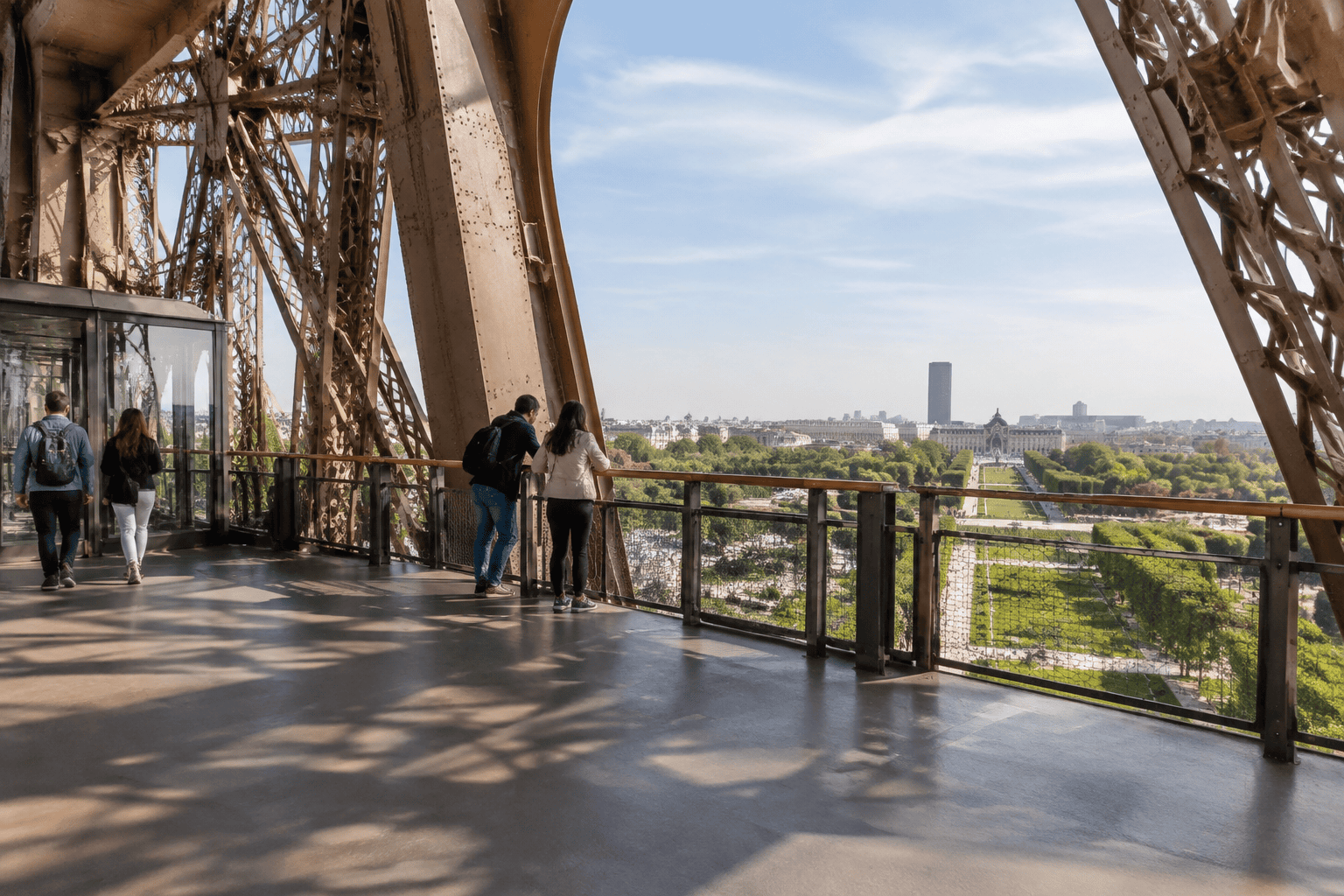
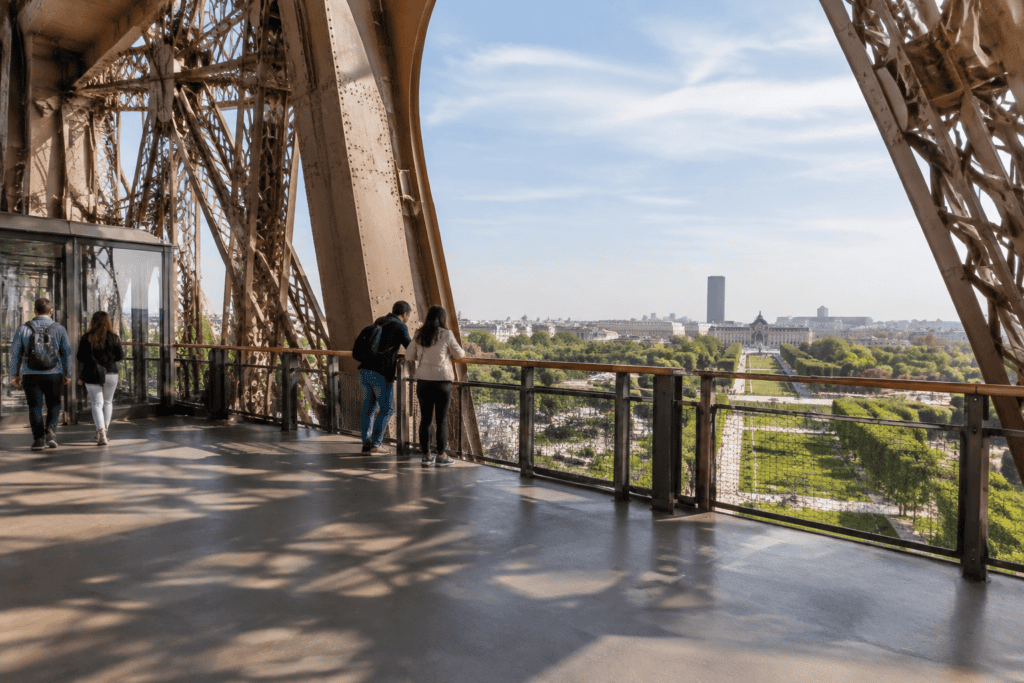
The first floor, about 57 meters up, lets you appreciate the scale of the landmark and view the Champ de Mars from an unusual angle. The second floor, about 116 meters up, generally offers an excellent balance between height and a clear view of the cityscape. Paris’s main landmarks are easier to identify from here when visibility is good.
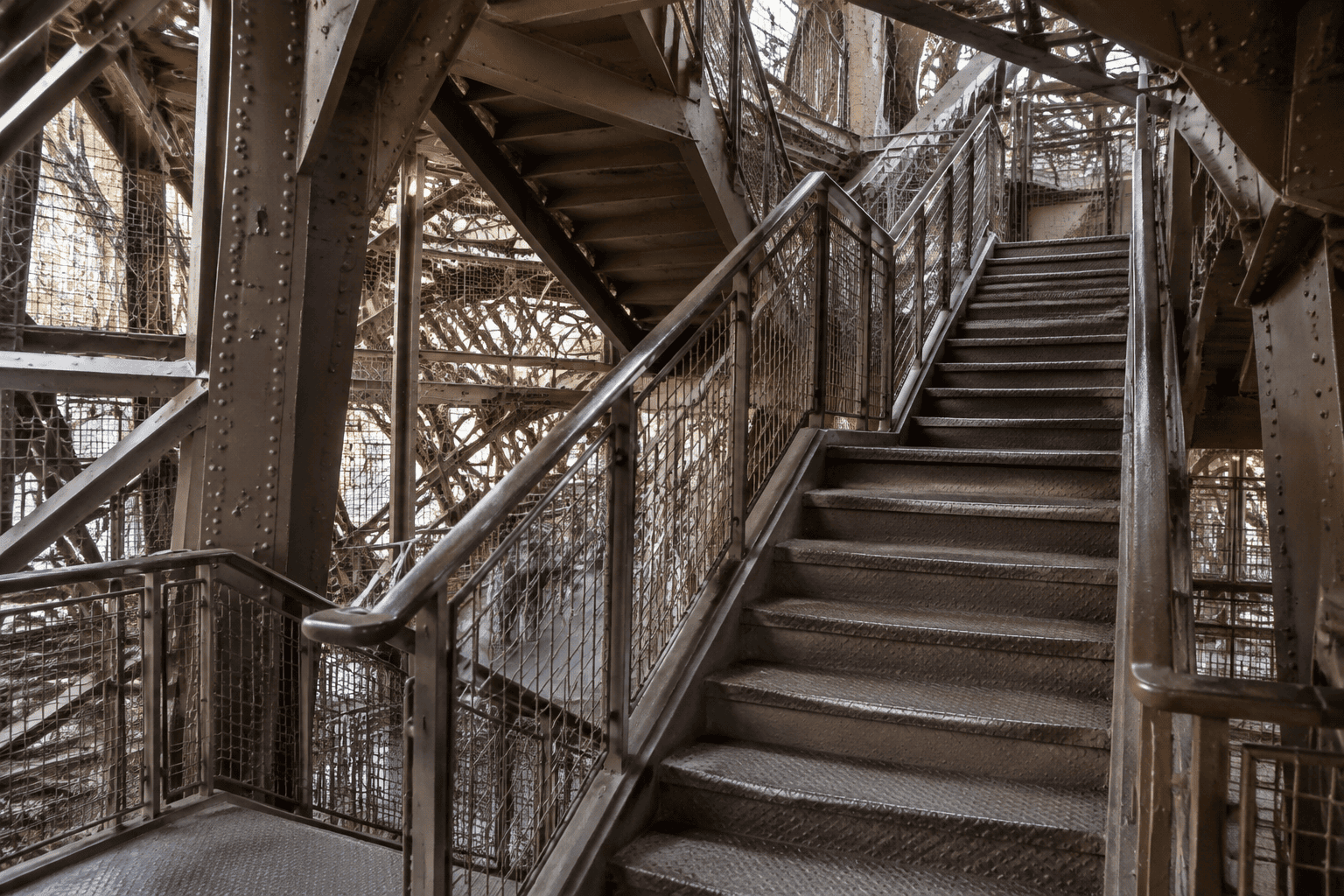
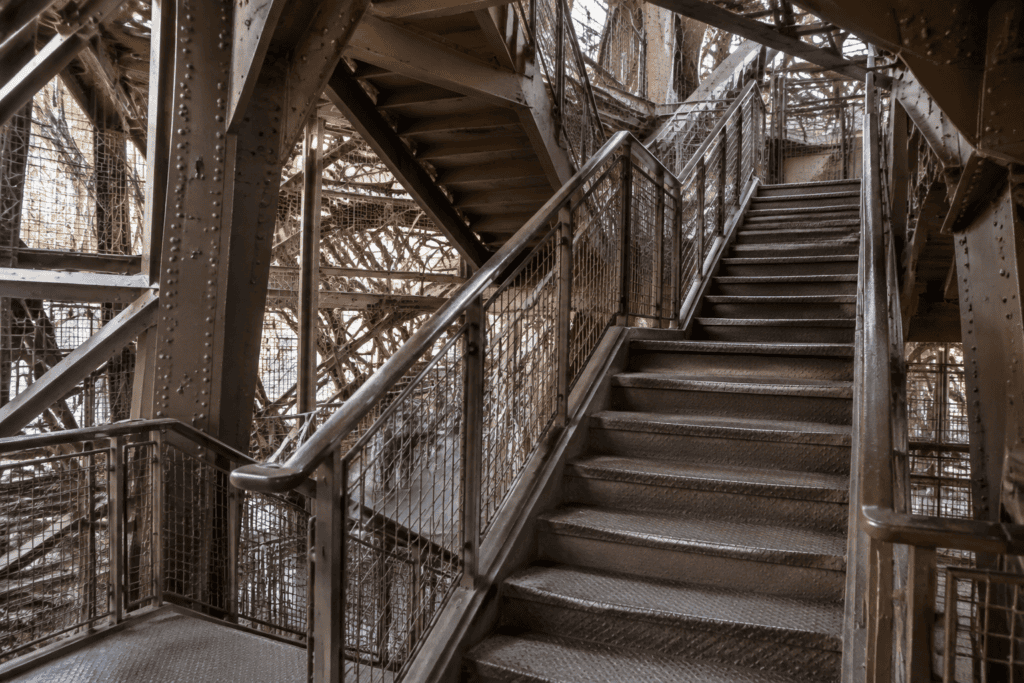
The summit provides the most elevated experience, with a platform about 276 meters above the ground. Access to the summit is by elevator from the second floor. Depending on the ticket type and availability, part of the climb may be made via the stairs to the second floor.
The stairs, summit access, and certain platforms may be subject to weather conditions, safety rules, and operational constraints. Visitors with reduced mobility should consult the official information before choosing their route.
Views from the Eiffel Tower
From the second floor, the Seine is an excellent reference point for finding your bearings. Depending on visibility, you may recognize Les Invalides, the Louvre, Notre-Dame, Sacré-Cœur, and the major avenues crossing Paris. This level is especially interesting for taking in the city’s details and photographing its vistas.
The summit offers a broader view and a stronger sense of height. The buildings appear smaller, but your gaze takes in a much larger part of the metropolitan area. The two levels therefore complement each other: the second floor is better for reading the cityscape, while the summit emphasizes the panoramic experience.
Light greatly changes the experience. A lightly overcast sky can soften contrasts, while clear weather increases the depth of the view. After nightfall, the tower lights up, and its sparkling display depends on the landmark’s scheduled operation and any restrictions in place that day.
The best viewpoints around the landmark
Trocadéro offers one of the most recognizable views of the Eiffel Tower. From the esplanade and gardens, the frontal view lets you photograph the landmark along its axis, especially when morning or late-afternoon light highlights its structure.
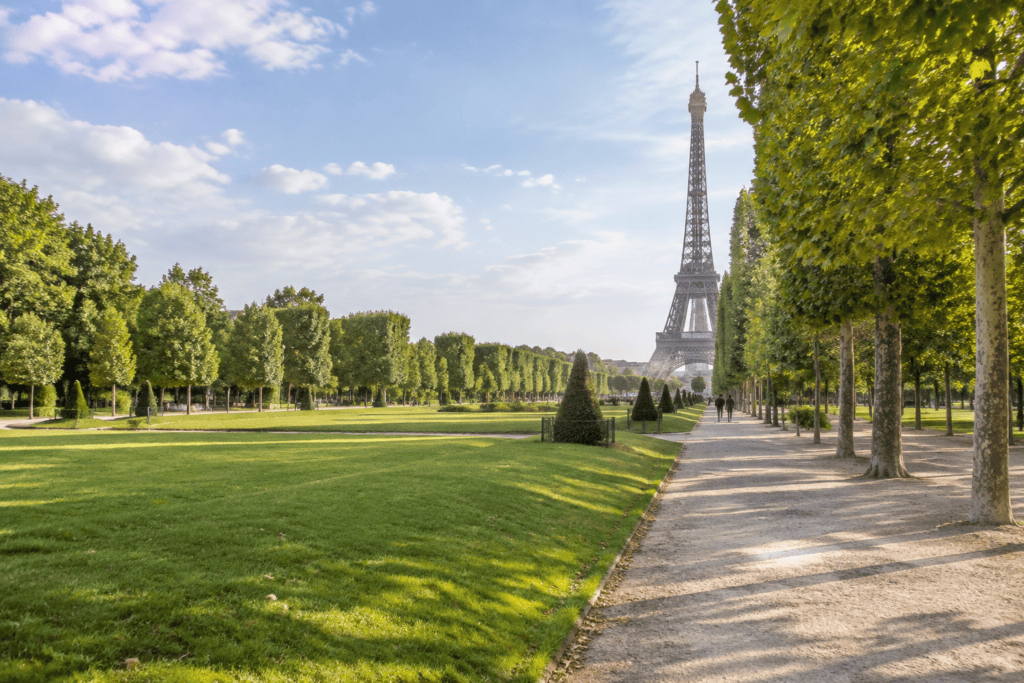
The Champ de Mars offers a more open approach. As you walk along the tower’s axis, its silhouette gradually changes, and you can better appreciate the relationship between the landmark, the lawns, and Paris’s grand vistas. The Seine riverbanks and some bridges offer different compositions, with the water, boats, and façades in the background.
A walking loop linking Trocadéro, the Eiffel Tower, the Champ de Mars, and Les Invalides lets you enjoy varied views without too much travel between stops. Wear comfortable shoes and adapt the route to the weather.
Practical Tips Before Your Visit
Check the official calendar, prices, available ticket types, and any exceptional closures when planning your visit. A timed ticket corresponds to a specific entry time, so allow enough time to reach the correct pillar and pass through security.
Travel light. Large bags and certain bulky items may be refused, and you should not rely on general luggage storage at the landmark. Keep your ticket accessible on your phone or in the format specified by the ticketing service, and wear suitable shoes, especially if you choose the stairs.
In strong winds or unfavorable weather, some parts of the route may be restricted. For children, a gradual visit with a break on the first or second floor may be more comfortable. Purchase tickets only from the official ticket office or a clearly identified provider: a transportation service does not replace an admission ticket.

Planning a Day Around the Eiffel Tower
For a first visit, start at Trocadéro to enjoy the view before walking through the gardens toward the Eiffel Tower. After your climb, take time to explore the Champ de Mars. You can then walk to Les Invalides or extend your stroll along the Seine.
Another option is to continue toward Passy or Île aux Cygnes to discover more distant views of the tower. In the evening, Trocadéro and the riverbanks offer a chance to see the illuminated landmark, subject to the day’s conditions and operating schedule.
Booking Paris Transfer can arrange private transportation from a Paris hotel, Charles de Gaulle Airport, or Orly Airport to the Eiffel Tower, with the option of a return trip to Paris. The service covers transportation only: admission to the landmark and ticket reservations must be arranged separately through the official ticket office.
Useful sources
Frequently Asked Questions
Do you need a ticket to see the Eiffel Tower from the outside?
Can you take the stairs to the summit?
How much time should you allow to visit the Eiffel Tower?
What is the best time to visit the Eiffel Tower?
What should you check before visiting?
Does Booking Paris Transfer sell Eiffel Tower tickets?
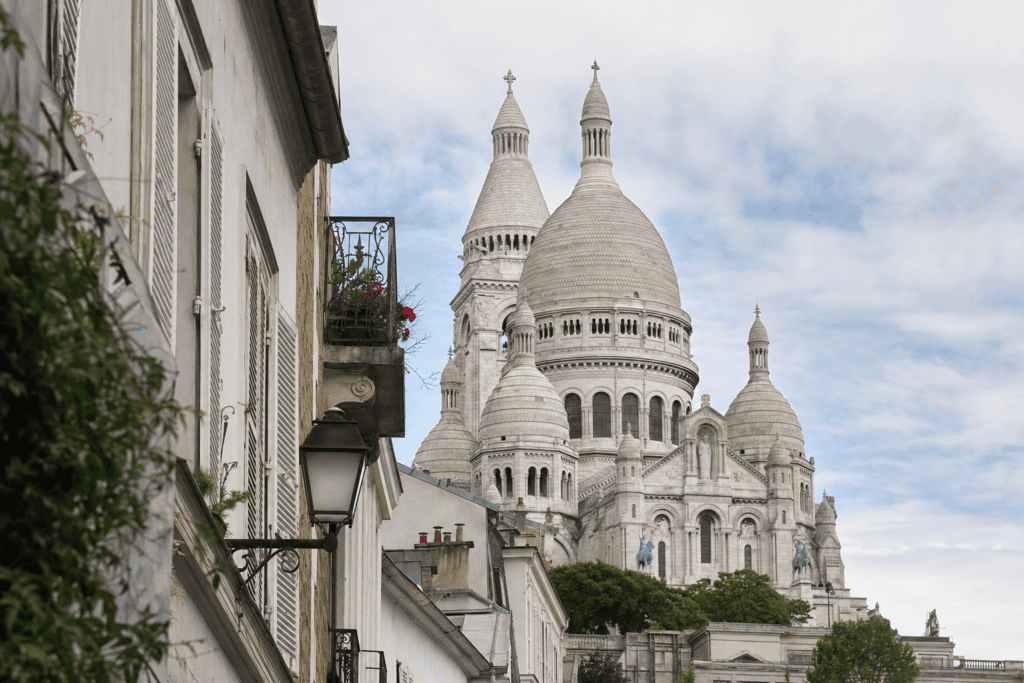 Montmartre and the Sacré-Cœur Basilica A walking route through Abbesses, Place du Tertre, and Sacré-Cœur, with narrow streets…
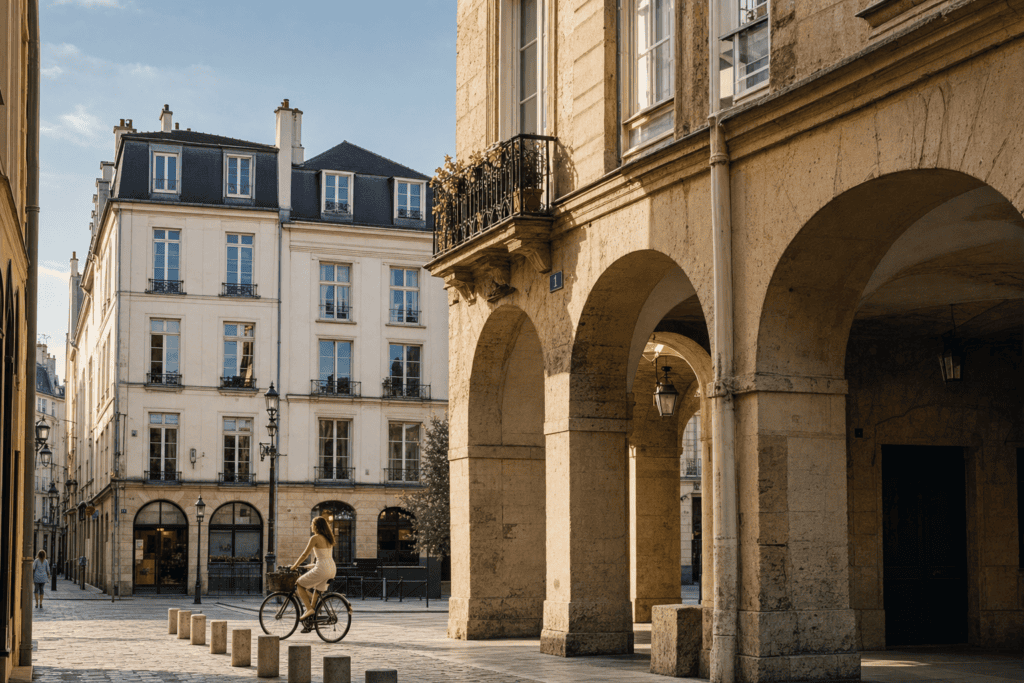 Le Marais An iconic Paris neighborhood known for its private mansions, Place des Vosges, museums, and more…
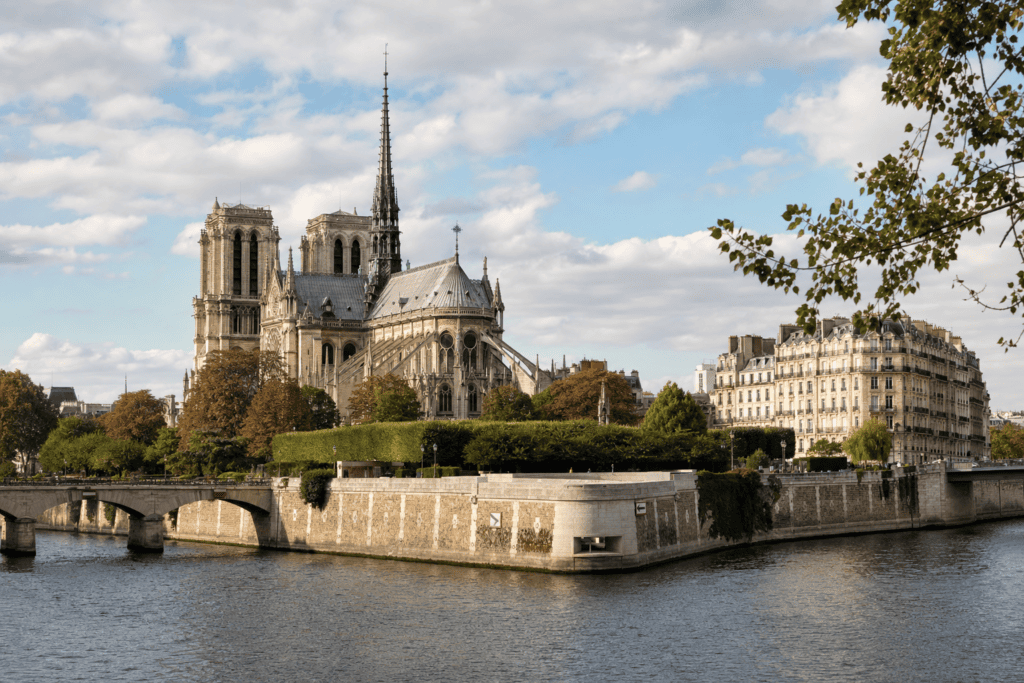 Notre-Dame Cathedral of Paris and Île de la Cité Notre-Dame, the Seine quays, and the monuments of Île de la Cité form a promenade…
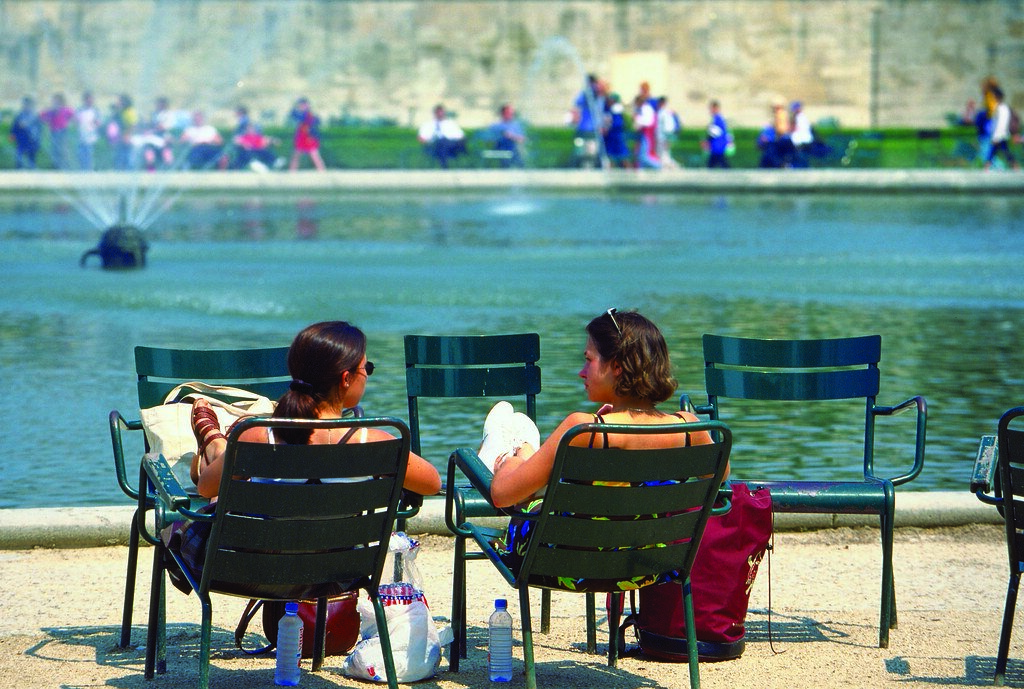 Luxembourg Garden A historic garden spanning approximately 23 hectares, ideal for a walk around the pond or a peaceful break…
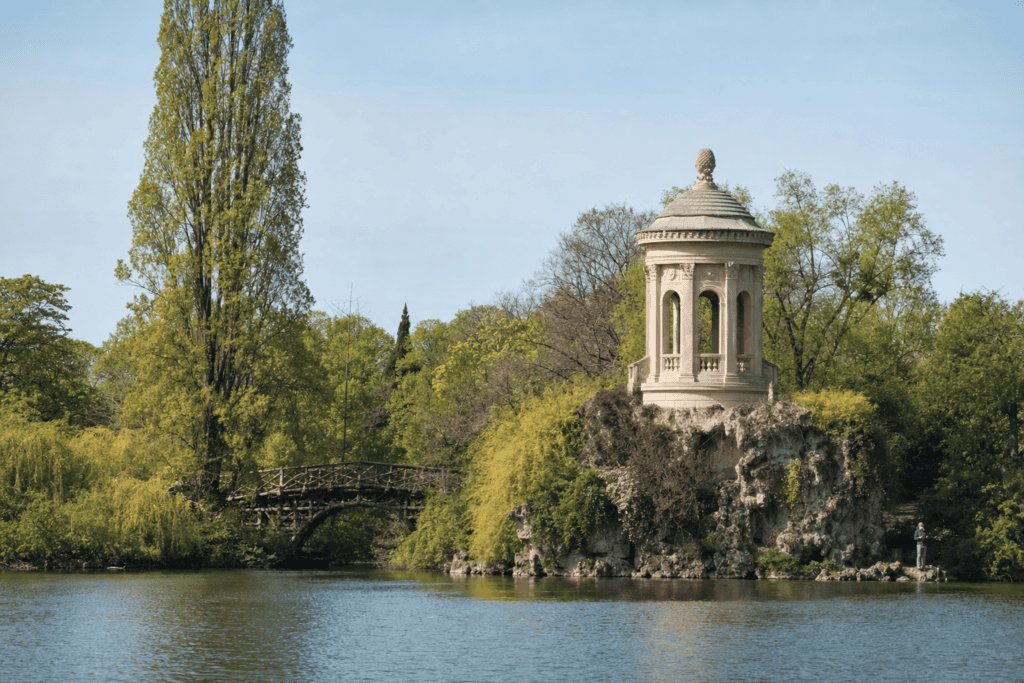 Bois de Vincennes Lakes, forest, cycling paths, and botanical gardens: an easy nature escape from Paris.
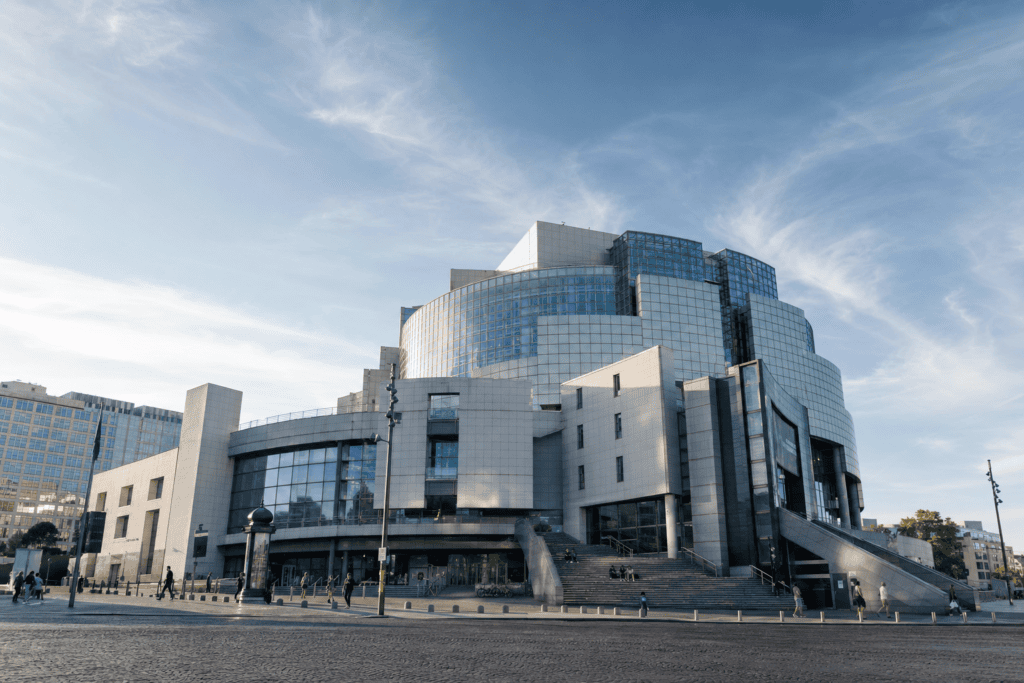 Paris Opera Bastille Opera, ballet, contemporary architecture, and a stroll around Bastille: an iconic cultural outing to…
Online booking · Paris → Champ de Mars, 5 avenue Anatole France, 75007 Paris
Choose your pickup date and time
Your departure and arrival details are already pre-filled. You can adjust them in the fare calculator before viewing the vehicles and fare.