



Rouen Cathedral: Visitor’s Guide
Rouen
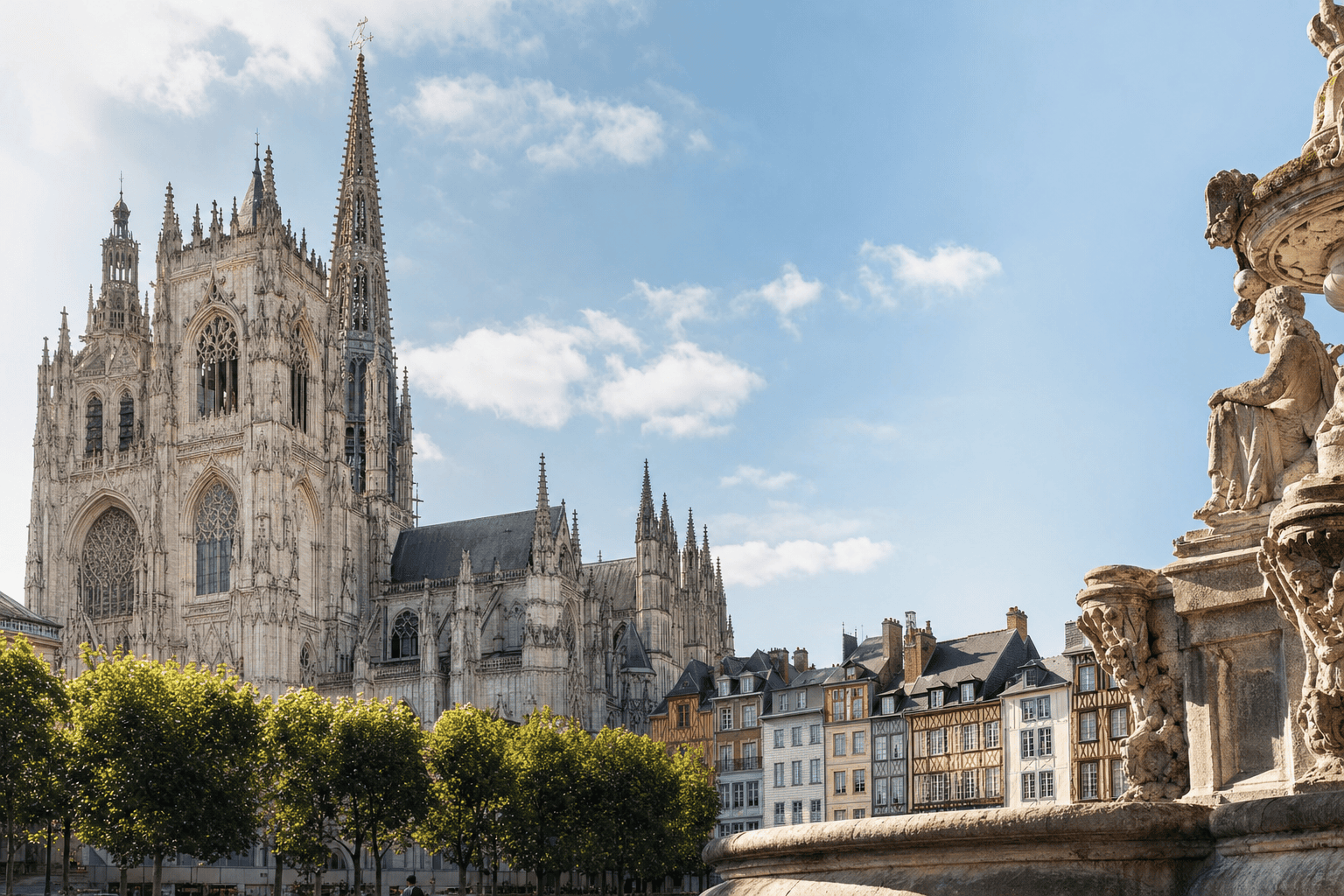
At the heart of the historic center, Rouen Cathedral overlooks Cathedral Square with its richly carved Gothic façade and spectacular spire. The building tells the story of several centuries of religious, artistic, and urban history. It is also the monument Claude Monet painted many times in the 1890s as he observed the changing light on the stone. A visit lets you discover the nave, chapels, stained-glass windows, and traces of a heritage deeply connected to Normandy’s identity. Admission is free, but the cathedral remains first and foremost a place of worship, so services may affect visiting conditions. Before setting out, check the latest information on the official website.
Practical information
Start by viewing the façade from the square, then walk around the building via Rue Saint-Romain and Place de la Calende before going inside. Check the opening hours and any liturgical updates shortly before your visit.
Travel to Rouen from Paris with a chauffeur
To discover Rouen Cathedral without arranging every step of the journey yourself, Booking Paris Transfer can provide private transportation from Paris, a Paris hotel, Charles de Gaulle Airport, or Orly Airport. The service covers travel between Paris and Rouen, with the option of returning to Paris or incorporating the trip into a Normandy itinerary that began in the Île-de-France region. It does not include an admission ticket or a local guided tour, so check the cathedral’s access conditions and official hours separately.
Private transportation from Paris, a Paris hotel, CDG or ORY, with a possible return to Paris. No admission ticket included.
A cathedral at the heart of Rouen’s history
Rouen Cathedral occupies a central location in the old town, just steps from Rue du Gros-Horloge, the courthouse, and the Seine. The diocese presents it as the mother church of the diocese and a living symbol of several centuries of Christian presence in Rouen. The first sanctuaries established on this site date back to the early Middle Ages, but the building visible today is the result of numerous construction, transformation, and restoration campaigns.
The nave and main sections reflect the evolution of Gothic architecture, while the portals and towers illustrate different periods. The cathedral has also experienced fires, rebuilding, restoration, and damage from the 1944 bombings. This eventful history explains the variety of forms and details you notice while walking through the monument. To better understand the whole, take time to compare the differences in style between the western façade, the side towers, and the portals opening onto the old streets.
The Gothic façade: a spectacle to take in slowly
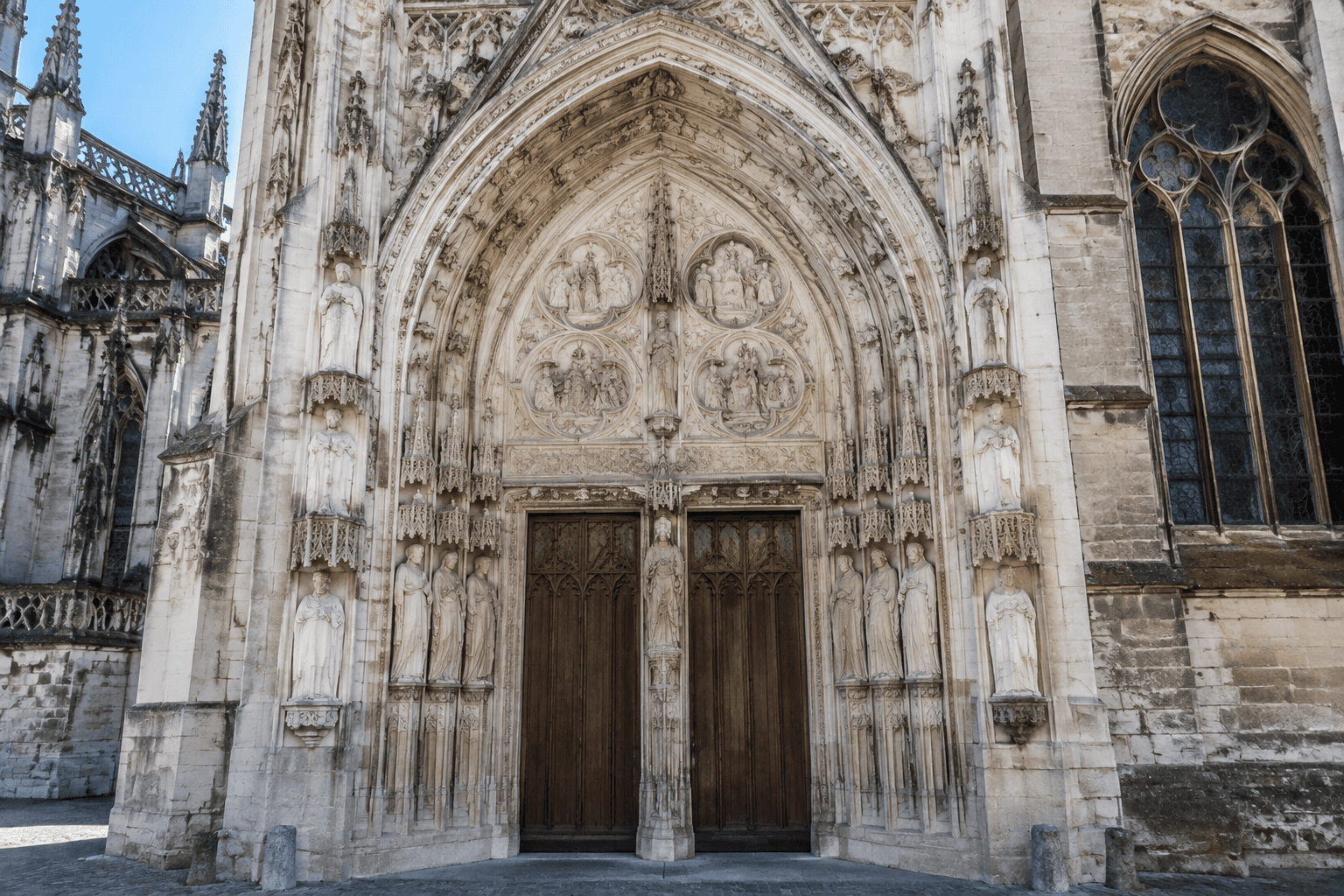
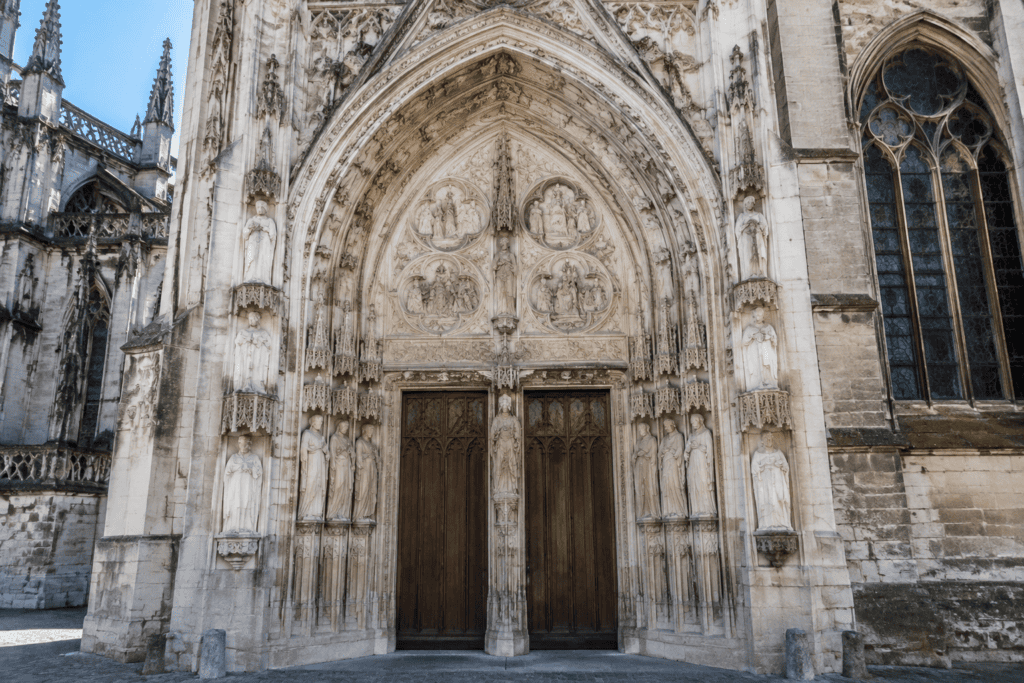
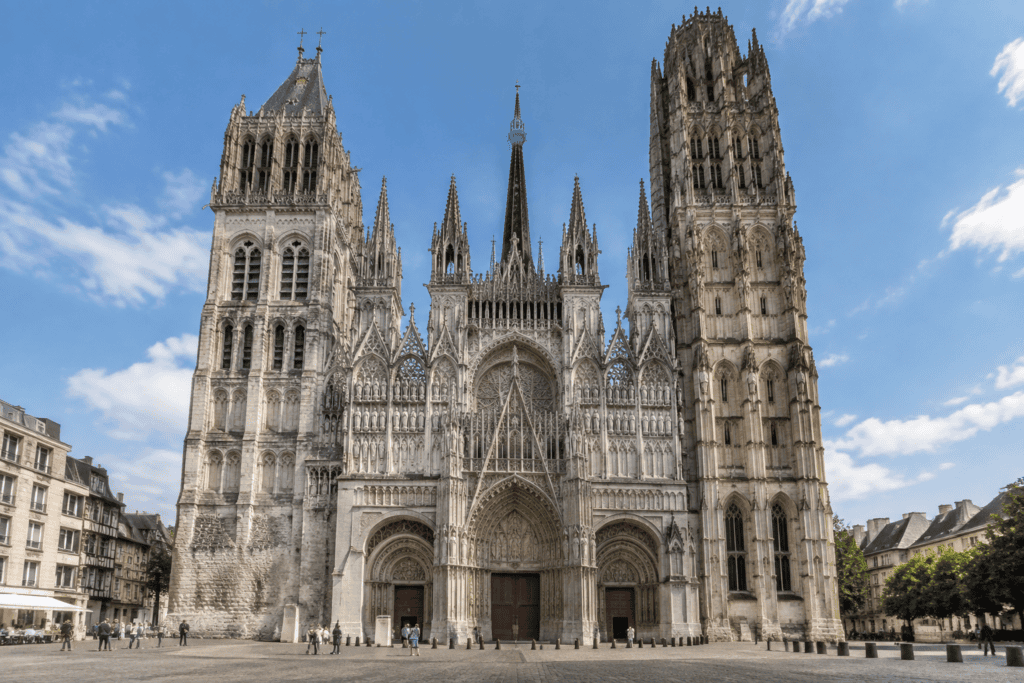
The western façade is the cathedral’s best-known image. It is more than a uniform decorative surface: its portals, sculptures, galleries, and towers form a complex composition whose details reveal themselves gradually. From Cathedral Square, look up at the portal sculptures and the vertical lines that draw the eye toward the upper sections. The stone takes on different tones depending on the time of day and the weather, making for highly varied photographs.
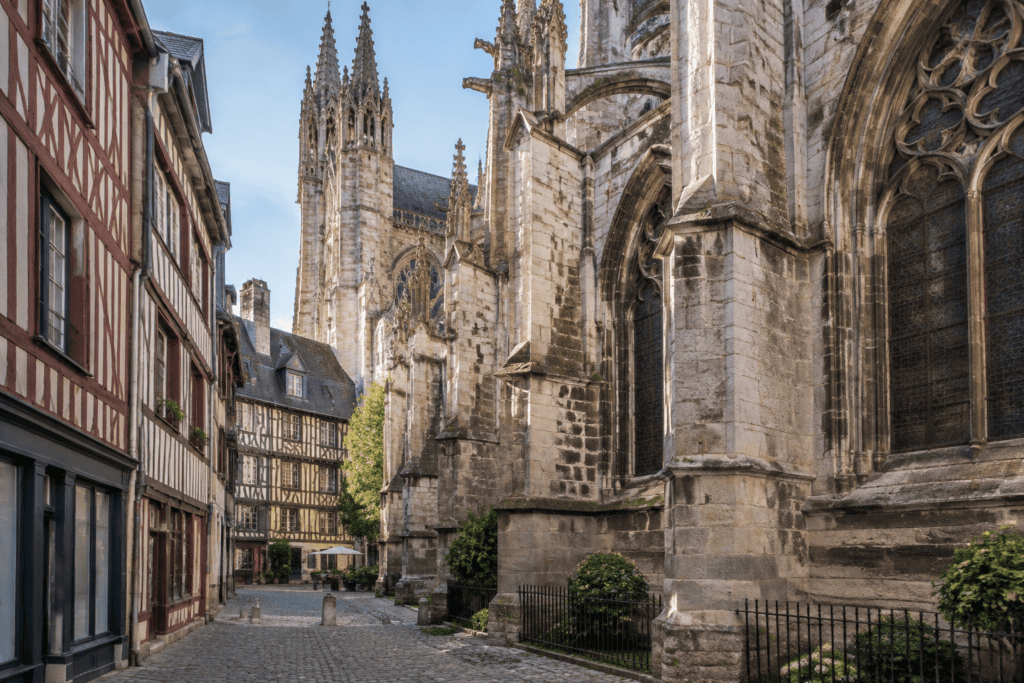
The Saint-Romain and Beurre towers frame the façade, but they are not identical. Their histories and silhouettes differ, giving the whole a particularly interesting asymmetrical appearance. The central spire naturally draws attention: it dominates the cityscape and serves as a landmark from several points in Rouen. For a fuller view, walk around the building via Rue Saint-Romain and Place de la Calende. This stroll reveals the side portals, the depth of the buttresses, and the relationship between the cathedral and the half-timbered houses of the historic center.
Claude Monet and the light on stone
The cathedral’s fame is also linked to Claude Monet. In the 1890s, the painter created a series of around thirty paintings devoted to the façade, observing it at different times of day and under changing atmospheric conditions. Monet was not simply trying to reproduce the architecture; he was studying the effects of light, shadows, mist, and color variations on the carved stone.
This artistic reference changes the way you look at the monument. Rather than searching for one definitive view, observe the façade at different times of day. In the morning, the reliefs may appear sharper; as the sun sinks, the sculptures and galleries sometimes take on a warmer tone. An overcast sky brings out the details rather than the contrasts. Monet’s series is now dispersed among several collections, but its idea remains immediately understandable on site: the cathedral seems to change appearance without moving. To extend this discovery, the Rouen Museum of Fine Arts is a natural stop on an itinerary devoted to Impressionism and Normandy’s artistic heritage.
What to see inside the building
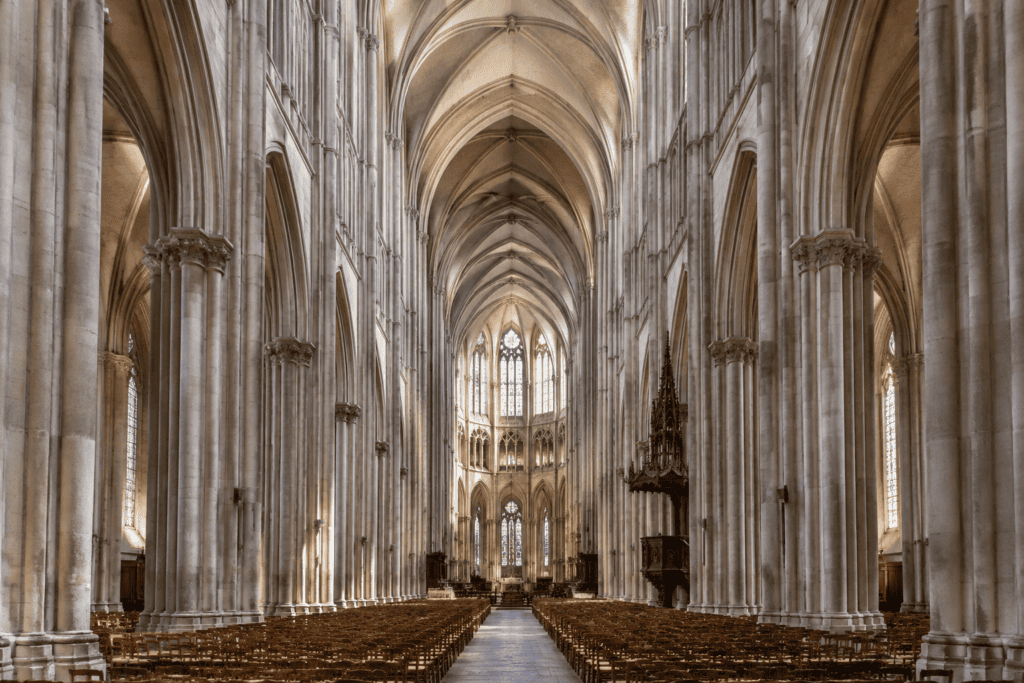
Inside, the nave gives a characteristic Gothic impression of height and depth. Arches, vaults, and pillars organize the perspective toward the choir, while the side aisles lead to the side chapels. Take a few minutes to let your eyes adjust to the light: the stained-glass windows do not always reveal themselves at first glance, especially when the outdoor light is bright.
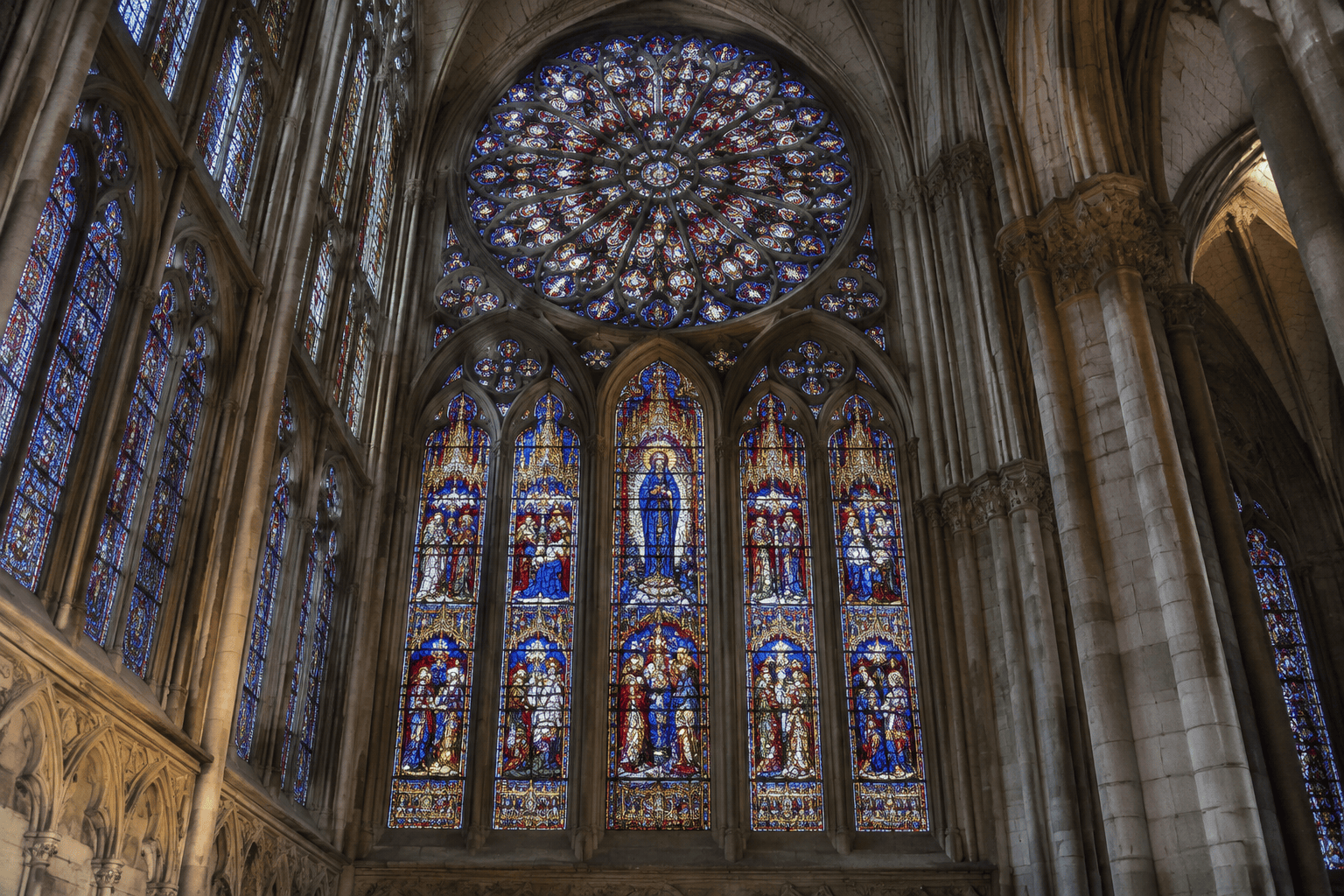
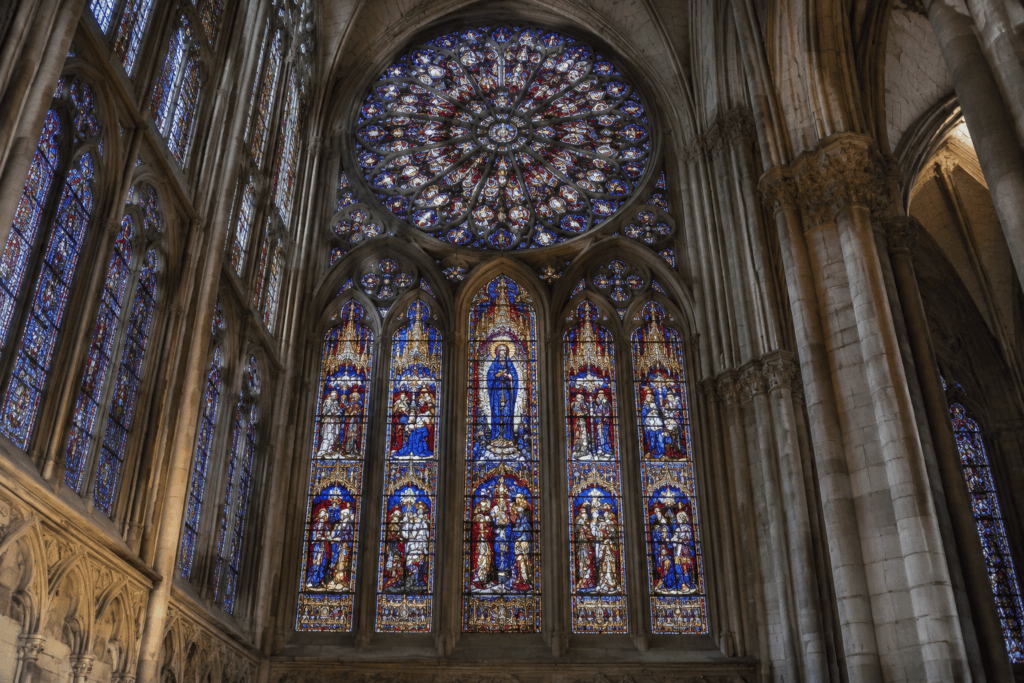
The stained-glass windows are one of the visit’s main highlights. Some sections date back to earlier periods and reflect the richness of Normandy’s glassmaking heritage, while others have been restored or replaced over the course of history. The colors vary depending on the orientation and weather, creating a different atmosphere between the transept, ambulatory, and chapels. The choir and Chapel of the Virgin deserve particular attention, but access may depend on services or the way the space is being used. The crypt, baptistery, and certain closed areas may be included in guided tours organized by the cathedral, depending on the officially announced schedule.
Plan your visit and respect the place of worship
Individual visits to the cathedral are listed as free and do not require reservations. The hours published on the official website generally indicate opening on Monday afternoons, during the day from Tuesday to Saturday, and on Sundays and holidays with separate hours. This information may change because of services, religious events, construction, or special circumstances, so check the official page before traveling.
As the cathedral is a place of prayer, appropriate clothing and a discreet attitude are expected. Visitors are asked not to eat or drink inside, to silence their phones, and not to take photographs or move around in a way that disturbs worshippers. Pets are not allowed inside the building according to the cathedral’s stated guidelines. For visitors with reduced mobility, an accessible entrance is indicated on Rue du Change, through the Portail des Maçons. If in doubt, ask at the information desk or check the official guidance before your visit.
How to include the cathedral in a day in Rouen
The cathedral is easy to visit as part of a day devoted to Rouen’s historic center. Start at Cathedral Square, then head toward Rue Saint-Romain and the Cour des Libraires to see the surroundings of the building. Continue to Rue du Gros-Horloge, one of the city’s most iconic streets, before making your way to Place du Vieux-Marché and the sites associated with Joan of Arc. This itinerary combines religious architecture, historic houses, shopping streets, and heritage sites.
The Museum of Fine Arts, within walking distance, complements the visit particularly well with its painting collections and connection to Rouen’s artistic history. Saint-Ouen Abbey Church, the antiques district, and the Seine quays can also be added to the itinerary, depending on the time available. Wear comfortable shoes: the streets in the center are often cobbled, and exploring is more enjoyable on foot. To photograph the cathedral, alternate frontal views from the square with side angles showing the towers and neighboring historic buildings.
Tips for a More Rewarding Visit
The best way to visit the cathedral is to combine an initial overall impression with closer observation of a few details. From the square, take a wide photograph, then approach the portals to examine the sculptures. Inside, look at the vaults before focusing on the stained-glass windows and chapels. This progression helps you understand the building’s structure without being immediately absorbed by a single decorative element.
If you enjoy photography, plan several visits to the façade rather than taking just one shot. The light changes quickly between morning, midday, and late afternoon, as Monet demonstrated. However, respect any photography restrictions and the quiet of services. Guided tours announced on certain weekends can be useful for accessing areas usually closed to the public; their arrangements may change, particularly during holidays and periods of religious celebration. Finally, check the official website’s news before coming: concerts, ceremonies, heritage events, or illuminations may alter the atmosphere and access to certain areas.
Useful sources
Frequently Asked Questions
Is admission to Rouen Cathedral free?
Can you visit the cathedral during Mass?
What are the must-see features?
Is the cathedral accessible to people with reduced mobility?
How much time should you allow on site?
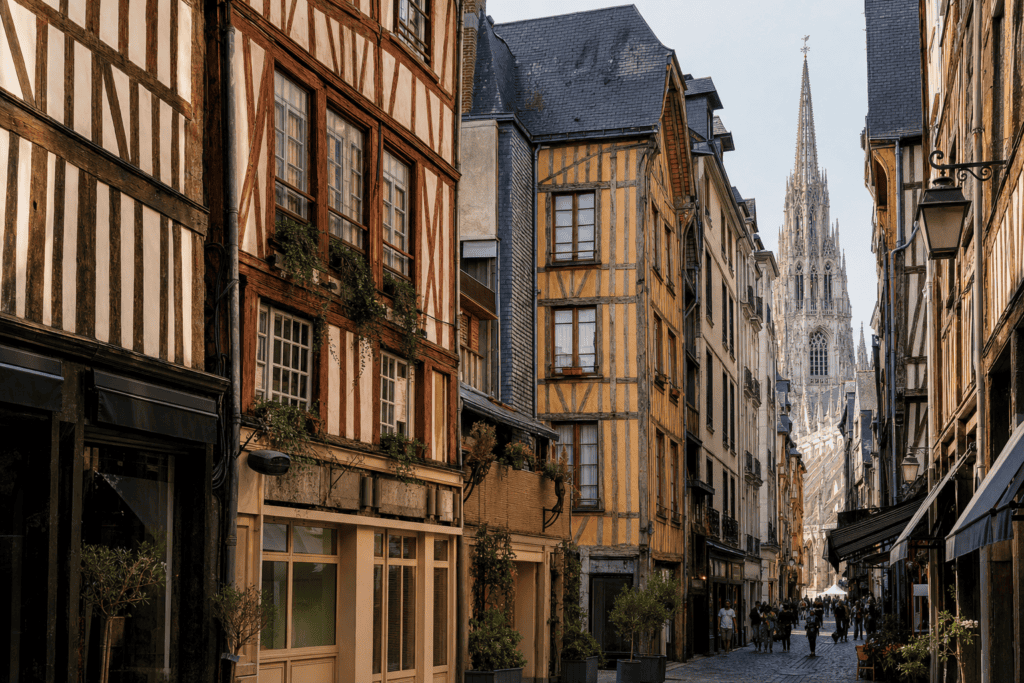 Rouen Historic Center and Half-Timbered House District A walking tour through the heart of Rouen, among the Gros-Horloge, half-timbered houses, squares…
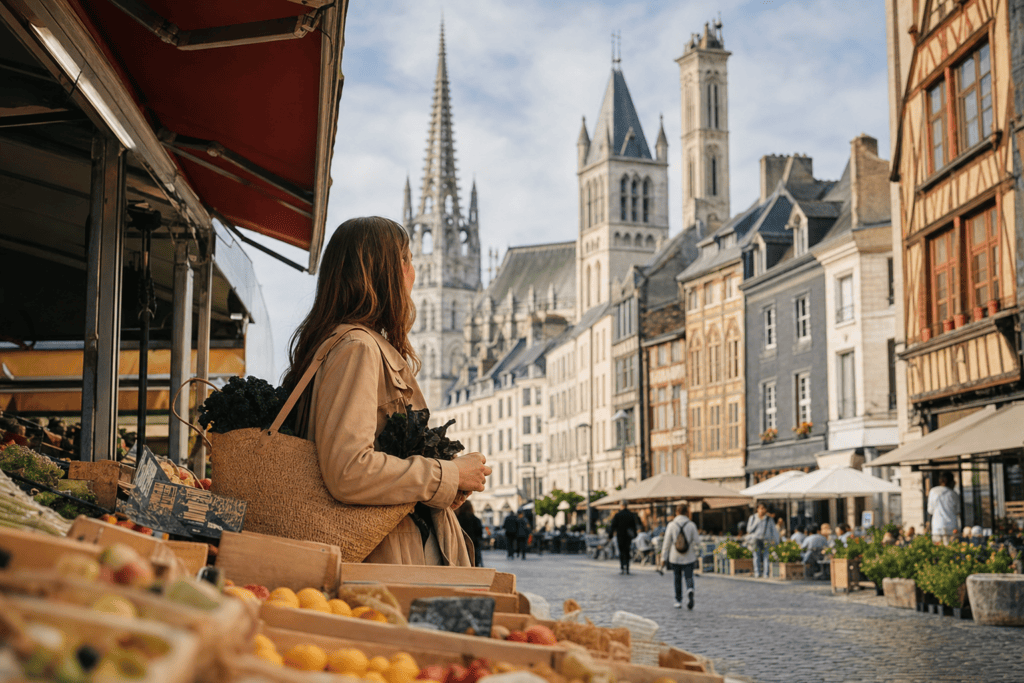 What to do in Rouen: a food-focused itinerary through markets and Norman specialties A food-focused route through Rouen, including Saint-Marc Market, Place du Vieux-Marché, Norman cheeses, apples, and sweet treats…
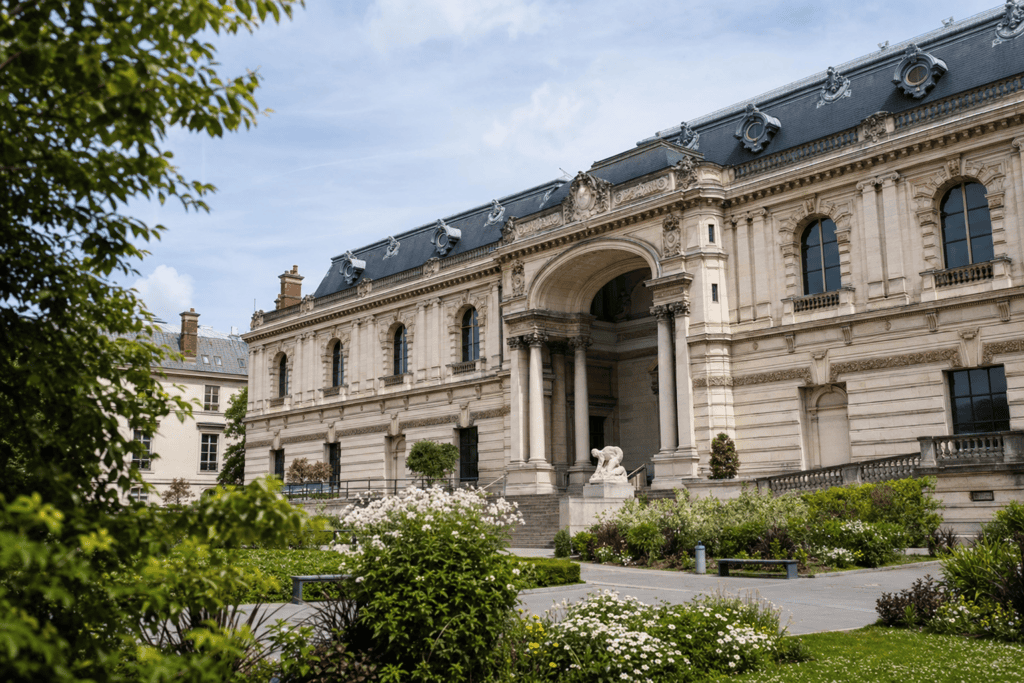 Rouen Fine Arts Museum A major museum in Normandy, from the Renaissance to modern art, featuring Poussin, Delacroix, Géricault, Monet…
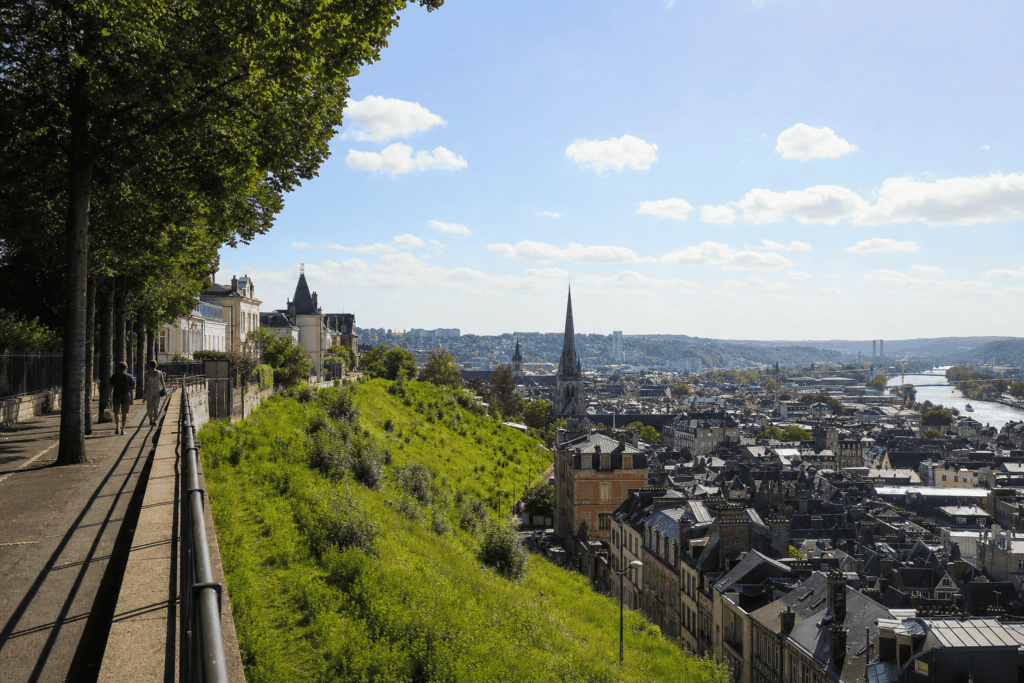 Panorama of Sainte-Catherine Hill An iconic viewpoint in Rouen, offering a remarkable view over the Seine, the cathedral and the…
Book online · Paris → Cathedral Square, 76000 Rouen, Normandy, France
Choose your pickup date and time
Your departure and arrival details are already pre-filled. You can adjust them in the fare calculator before viewing the vehicles and fare.