



Historic Rouen: the perfect walking tour
Rouen
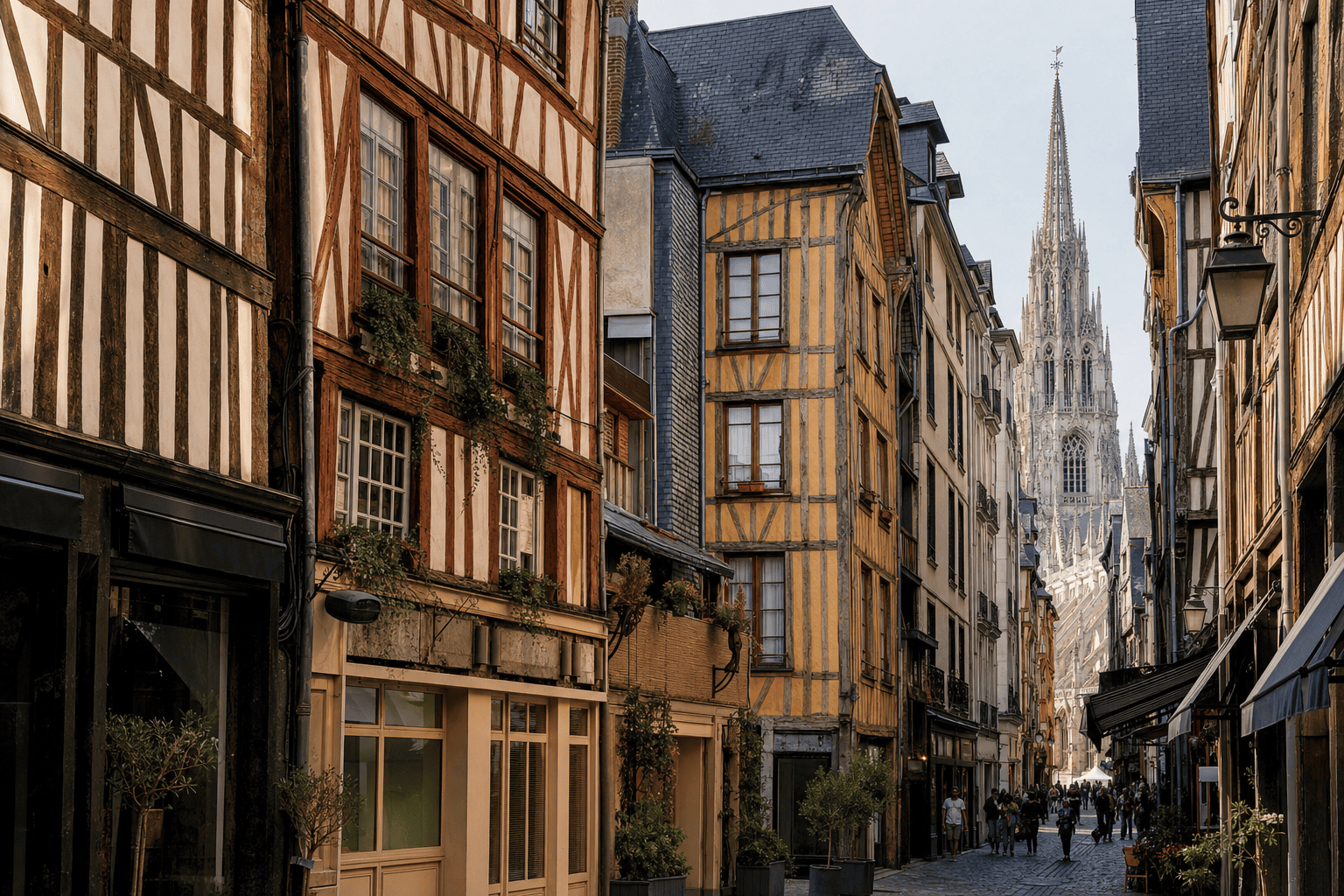
Historic Rouen is particularly well suited to exploring on foot. From the rue du Gros-Horloge and half-timbered façades to historic squares and medieval lanes, this walk reveals a city where history remains present in every vista. The route connects several major landmarks without imposing a rigid itinerary: simply take time to look up, admire the carved details and linger in the Saint-Maclou, Saint-Patrice and Vieux-Marché districts.
Practical information
Start near the cathedral, continue toward the Gros-Horloge, then head to the Vieux-Marché, taking a detour through rue Saint-Romain, rue Damiette and rue Eau-de-Robec.
Getting to Rouen from Paris with ease
To discover historic Rouen without arranging the journey yourself, Booking Paris Transfer can provide private transportation from Paris, a Paris hotel, Charles de Gaulle Airport or Orly. The service covers travel from Paris to Rouen, with the option of returning to Paris or incorporating the trip into an itinerary that began in the Île-de-France region. It does not include admission tickets or a local guided tour, so you remain free to explore the Gros-Horloge, half-timbered streets and historic squares at your own pace.
Private transportation from Paris, a Paris hotel, CDG, or ORY; return to Paris available. No admission ticket included.
Why start with historic Rouen
Historic Rouen offers a particularly rich way to understand the city, as several centuries of architecture stand side by side within an easy-to-explore area. The cathedral, shopping streets, civic buildings and half-timbered houses form an urban landscape where the walk itself matters as much as the monuments. It is not simply a matter of checking off places to photograph: the appeal lies in the transitions between an open square, a narrow lane and an old façade revealed around a corner.
The Right Bank contains much of this heritage. Rue Saint-Romain, rue Damiette, rue Eau-de-Robec and rue Beauvoisine are especially good for rediscovering the atmosphere of the old town, while rue du Gros-Horloge forms the most obvious route between the cathedral and the Vieux-Marché. The city itself notes that certain pedestrian streets have played an important role in revitalizing the historic center, particularly rue du Gros-Horloge, which was pedestrianized in the 1970s.
For a first visit, wear comfortable shoes and be willing to slow down: the best details are often above the shopfronts or along the side streets.
Rue du Gros-Horloge and its iconic landmark
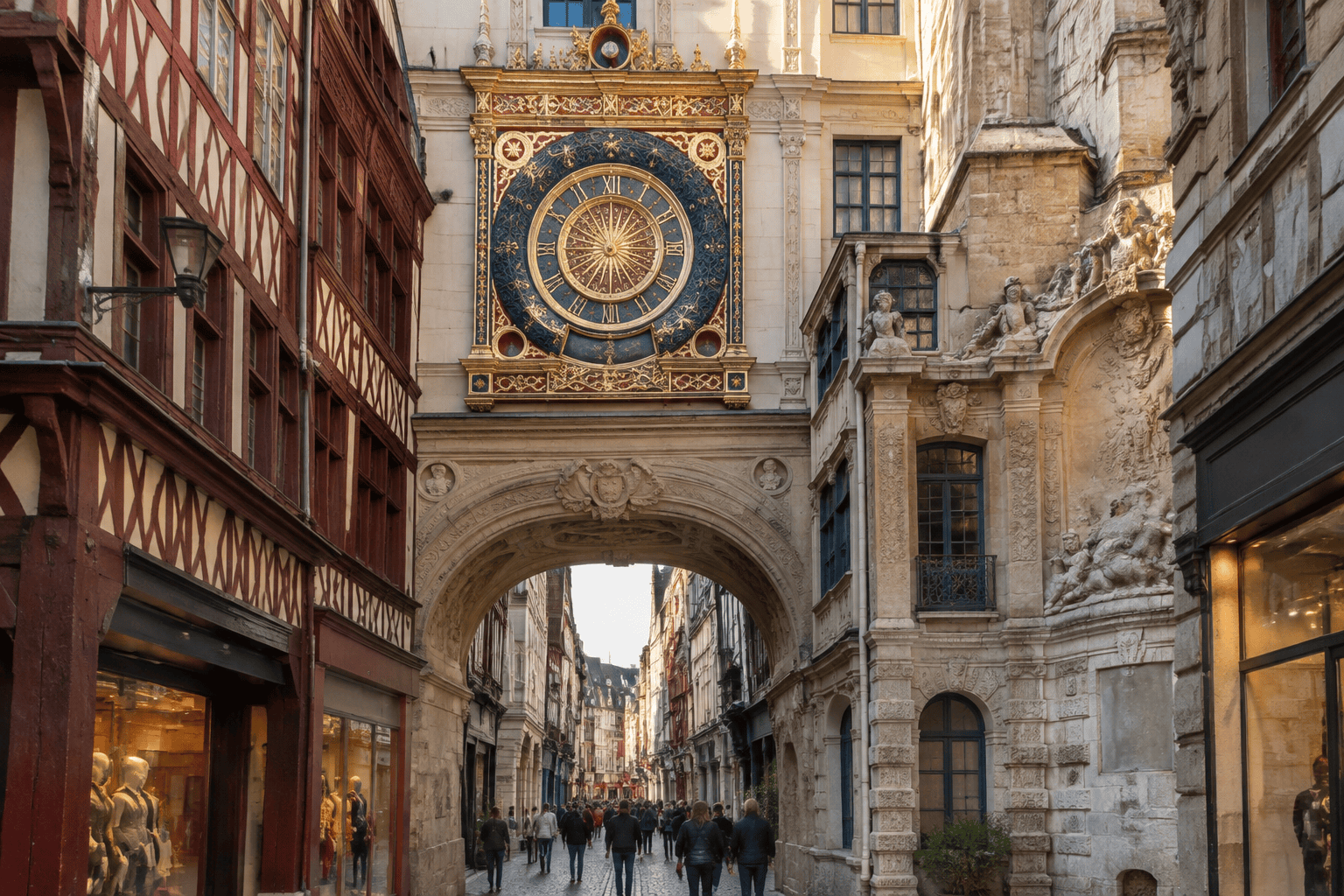
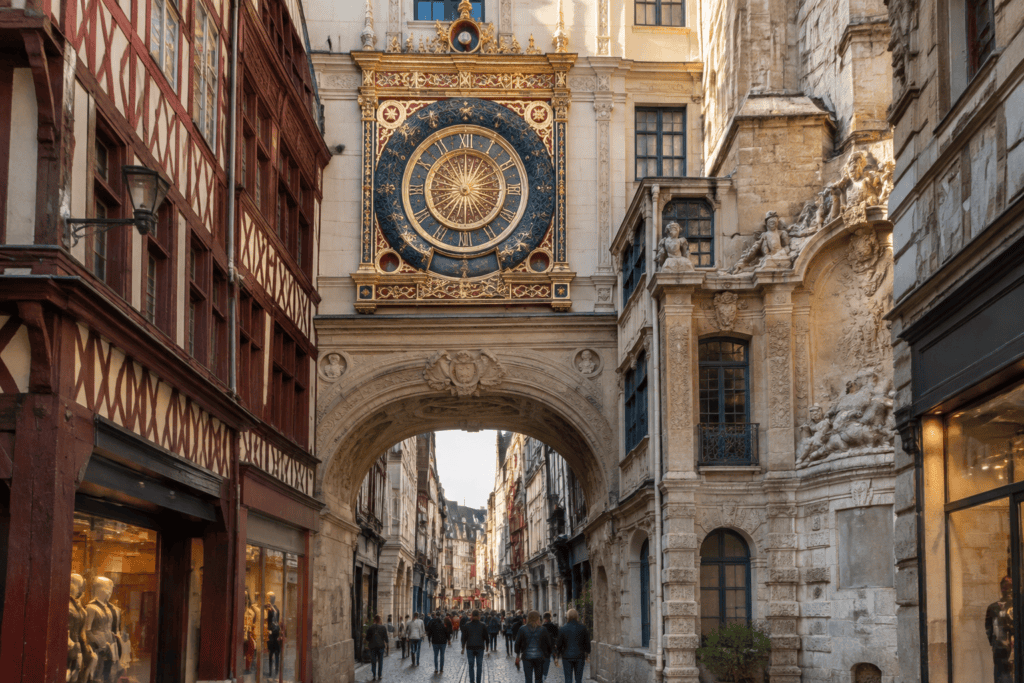
Rue du Gros-Horloge is one of Rouen’s best-known passages. Connecting Place de la Cathédrale with Place du Vieux-Marché, it combines lively modern shopping with a remarkable architectural setting. At its center is the Gros-Horloge, a complex comprising a medieval belfry, a Renaissance arch and a half-timbered pavilion bearing the polychrome clock face. The clock mechanism dates back to the late 14thth century, while the arch and visible alterations reflect a later period.
From the street, take time to look at the two clock faces, the decorative motifs and the design of the arch. The fountain attached to the monument completes the ensemble and recalls the historic importance of water in the city. The view is especially photogenic when looking toward the cathedral, but it is also worth turning around to appreciate the succession of façades.
An interior visit to the Gros-Horloge may be available depending on current opening conditions. For opening hours, prices and any restrictions, always check the tourist office or official website before your visit.
Understanding Rouen’s half-timbered houses
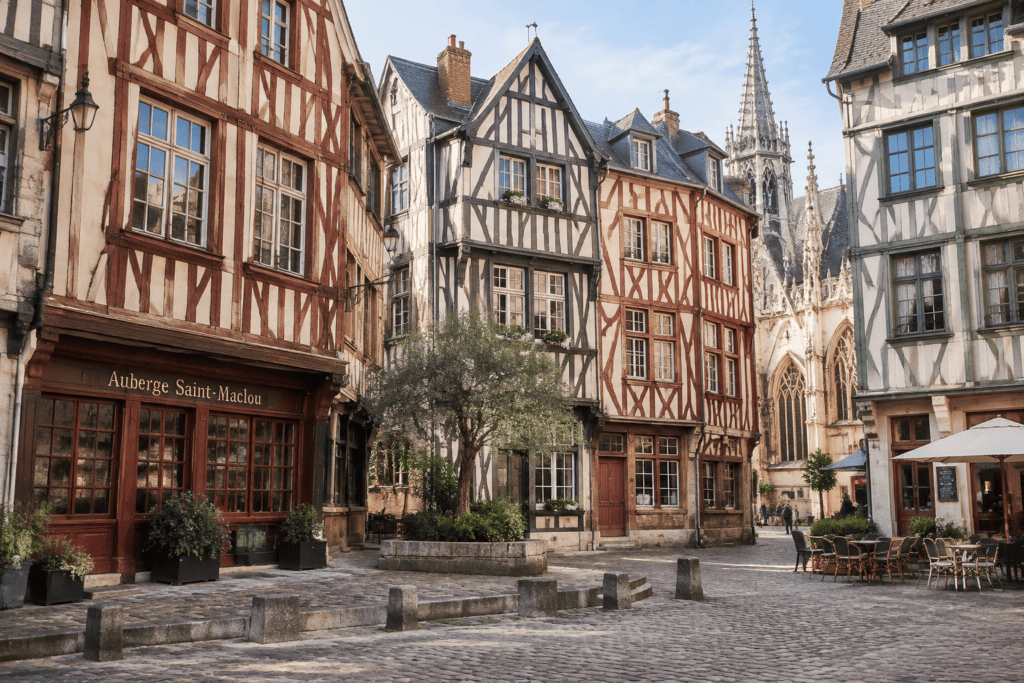
Half-timbered houses are one of the most recognizable features of historic Rouen. Their façades combine exposed timber frames, sometimes colorful infill and irregular volumes that give the streets a lively silhouette. Some houses appear to lean, jut forward or press up against one another; these effects result from the evolution of the buildings, successive alterations and the constraints of an old urban fabric.
To see them, step slightly away from the busiest routes. Rue Damiette, the Saint-Maclou area, rue Eau-de-Robec and the surroundings of rue Beauvoisine offer many opportunities to compare façades. Look at the overhangs, timber joints, colors, added floors and door details. Place Barthélémy, near Saint-Maclou Church, is also known for its distinctive houses.
However, this heritage should not be reduced to a uniform medieval backdrop. The houses have been restored at different times, and some feature reconstructions or more recent adaptations. This diversity is precisely part of the walk’s appeal: it shows how an old city continues to be lived in and transformed.
From Saint-Maclou to the medieval streets of the East
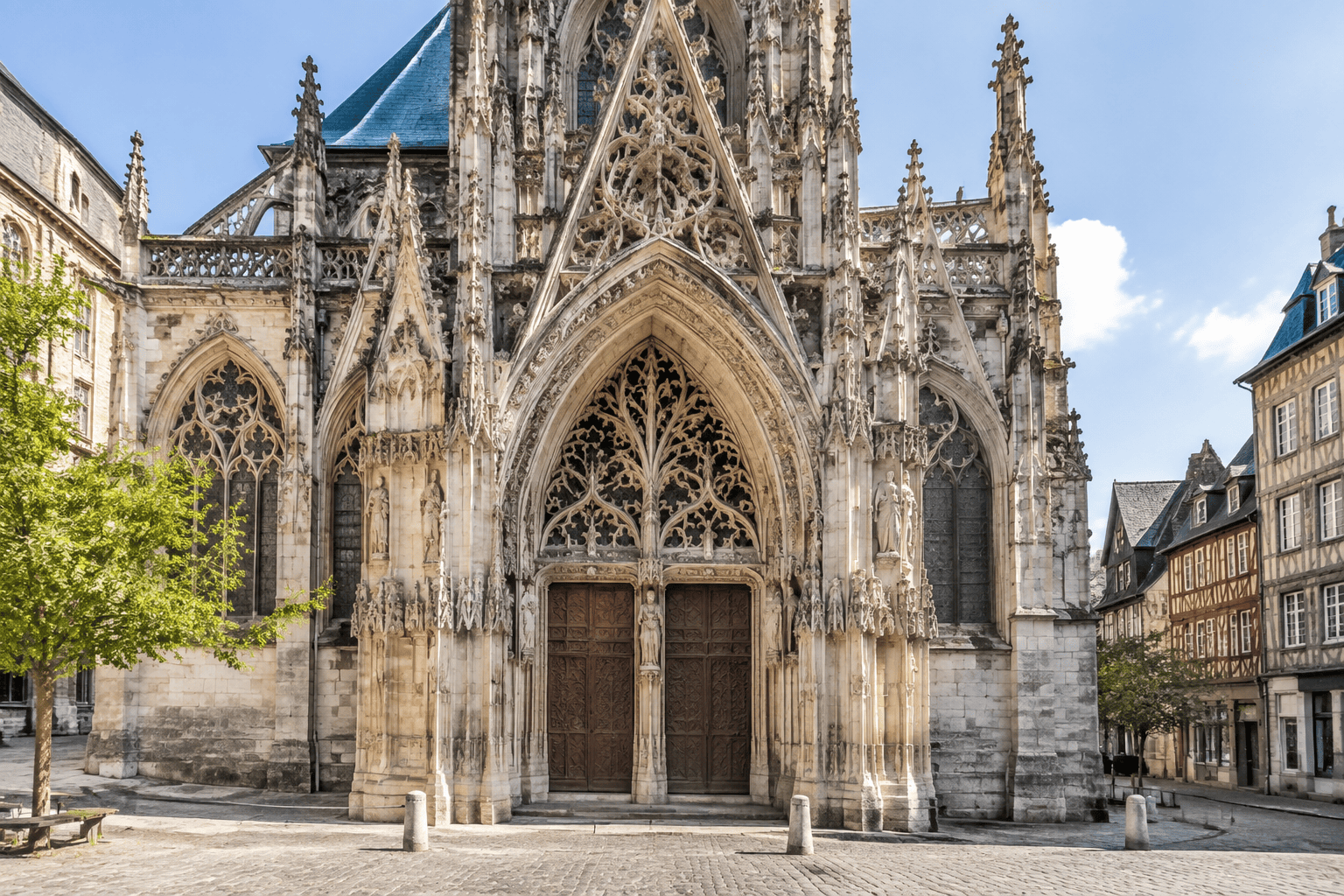
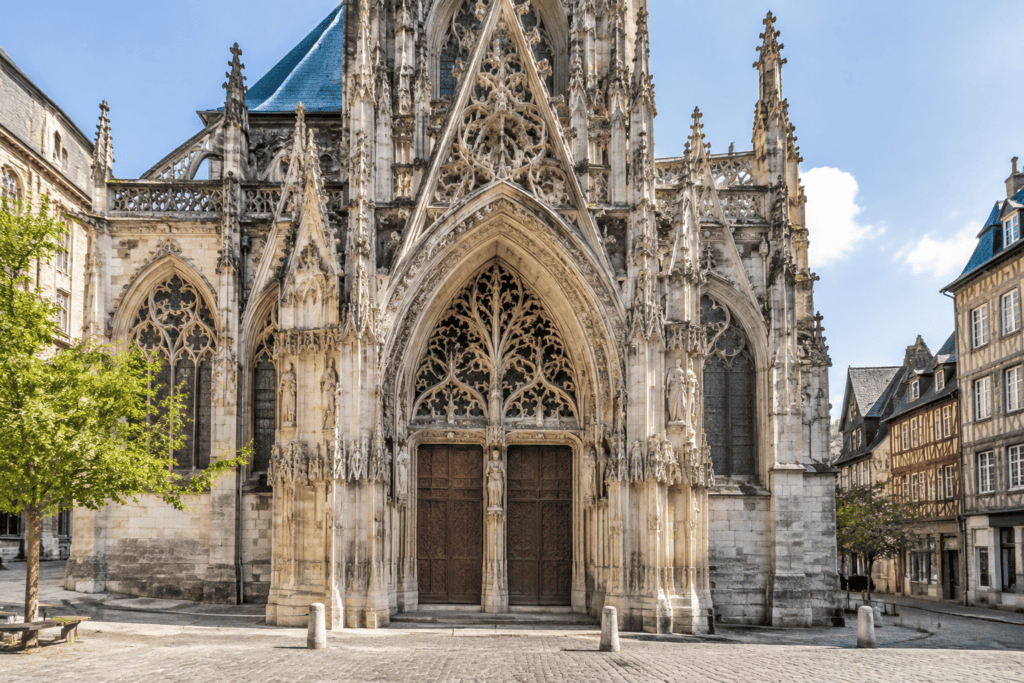
From the Gros-Horloge, head east toward Saint-Maclou Church and the antiques district. The route gradually leaves the shopping thoroughfare behind, leading to narrower streets lined with old houses and small passageways. Saint-Maclou Church is a major landmark, with its Flamboyant Gothic façade and exceptionally well-preserved urban setting. Even without going inside, its portal and finely detailed decoration deserve a careful stop.
The area around rue Damiette is enjoyable to explore without following too strict a route. The ground floors sometimes house workshops, shops or restaurants, but the main interest lies in looking at the buildings’ forms. Farther north, rue Eau-de-Robec also recalls Rouen’s historic relationship with its waterways, offering a different atmosphere from the major central streets.
This part of the city is well suited to a leisurely walk, especially in the morning. The cobblestones and sidewalks can be uneven; people with strollers, wheelchairs or mobility difficulties should plan an appropriate route by consulting local accessibility information.
Historic squares and the memory of Rouen
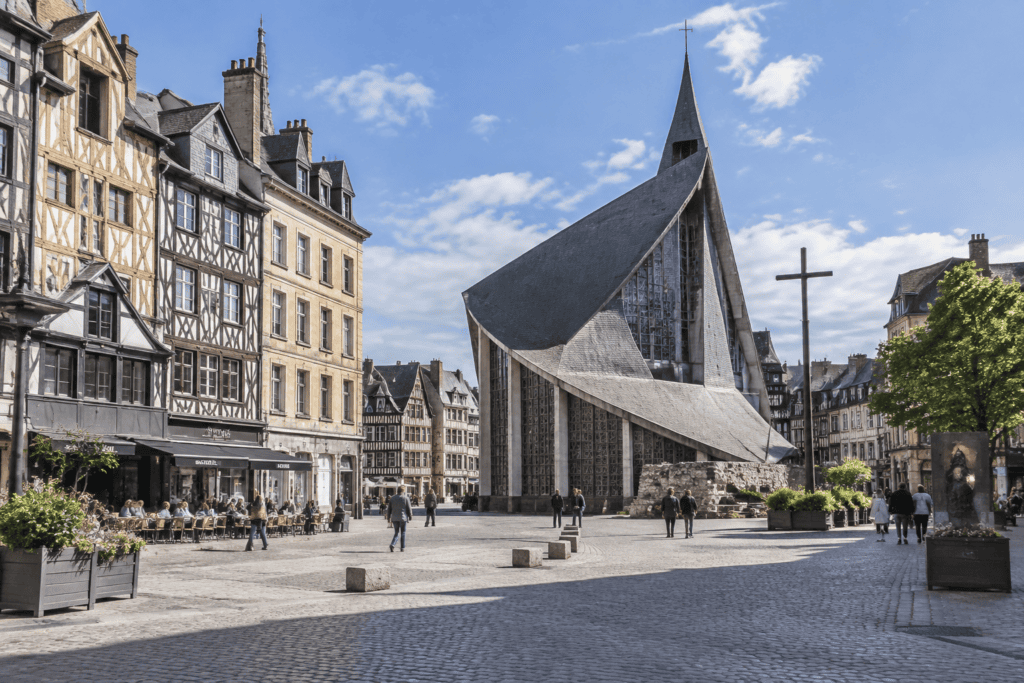
Rouen’s squares offer a welcome sense of space after the narrow streets. Place du Vieux-Marché is one of the most important stops, thanks to its history, lively atmosphere and architecture. It is associated with the memory of Joan of Arc and is home to Sainte-Jeanne-d’Arc Church, whose contemporary silhouette engages in dialogue with the old houses surrounding the square. Today, the area is lively, with terraces, shops and a market on certain days.
Place de la Pucelle, Place Barthélémy and the spaces around Saint-Maclou offer other atmospheres. They are interesting places to understand how monuments still shape everyday life in the city center. Sit down for a few minutes, observe the movement around you and compare the views with those of the neighboring streets: squares are not merely stops, they help reveal the city’s layout.
For a more personal visit, use these spaces to take a break rather than trying to see everything quickly. The center’s cafés and restaurants may change; to find out which establishments are open and learn about any events, consult up-to-date local information.
A recommended half-day walking route
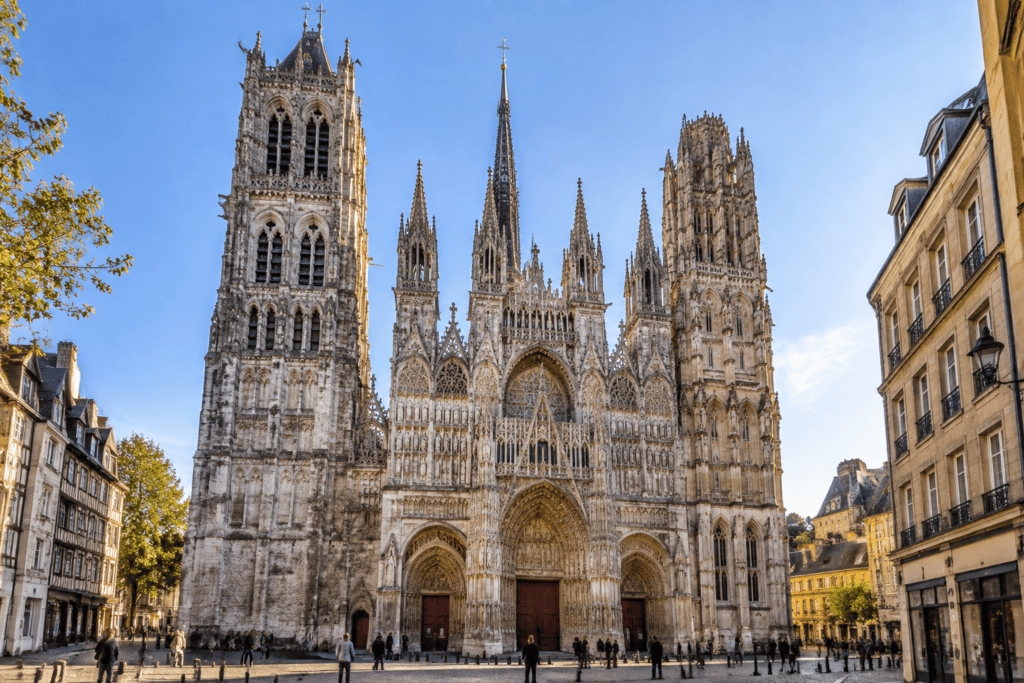
A simple itinerary can begin in front of Rouen Cathedral. Then take rue Saint-Romain and continue toward rue du Gros-Horloge, taking time to admire the façades and details above street level. After the monument, continue to Place du Vieux-Marché, then return toward the Saint-Patrice area or head to Saint-Maclou, depending on your energy.
To extend the walk, take the side streets toward rue Damiette, rue Eau-de-Robec or rue Beauvoisine. This detour adds a more residential and architectural dimension to the route. A complete loop can easily fill half a day if you include a break, an interior visit and a few photo stops.
The route is more enjoyable when kept flexible. Some streets may be temporarily occupied by a market, construction work, an event or a seasonal installation. If so, simply adjust the loop: the old town is dense enough to offer several alternatives. If you are traveling with children, turn the visit into an observation game by asking them to spot façade colors, sculptures, old signs and timber-frame patterns.
Practical tips for making the most of your visit
Historic Rouen is best explored in good walking shoes, as the cobblestones, gentle slopes and uneven surfaces can make walking tiring. Also allow extra time: there are many monuments visible from public spaces, but their interiors may have opening hours, access conditions or occasional closures that vary by season and programming.
The best photographs are not limited to the Gros-Horloge. Look for diagonal views down narrow streets, rows of façades, contrasts between light stone and colored wood, and views toward the bell towers. Morning light brings out the relief of the timber framing; toward the end of the day, the squares become warmer and livelier.
To prepare for your visit, consult the official information from Rouen Tourism and the City of Rouen, particularly for guided tours, events, construction work and access arrangements for monuments. As the center is home to many shops and residents, respect building entrances, avoid blocking passageways and favor attentive exploration over simply hunting for photos.
Useful sources
Frequently Asked Questions
How long does it take to visit historic Rouen?
Where can you see half-timbered houses in Rouen?
Is rue du Gros-Horloge pedestrianized?
Can you visit the Gros-Horloge?
Is the route suitable for people with reduced mobility?
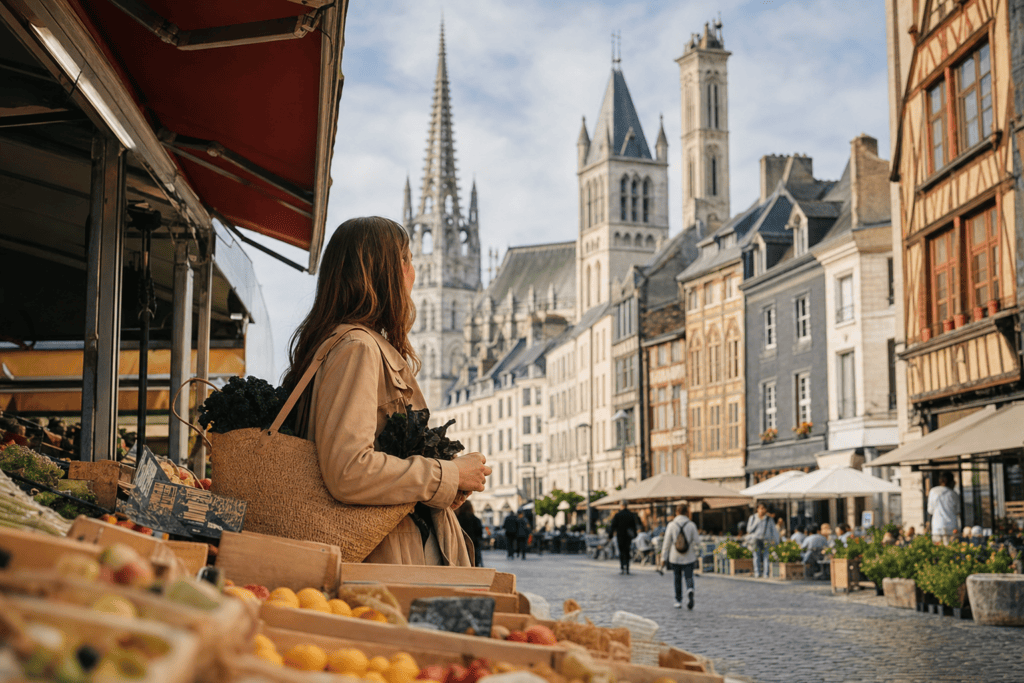 What to do in Rouen: a food-focused itinerary through markets and Norman specialties A food-focused route through Rouen, including Saint-Marc Market, Place du Vieux-Marché, Norman cheeses, apples, and sweet treats…
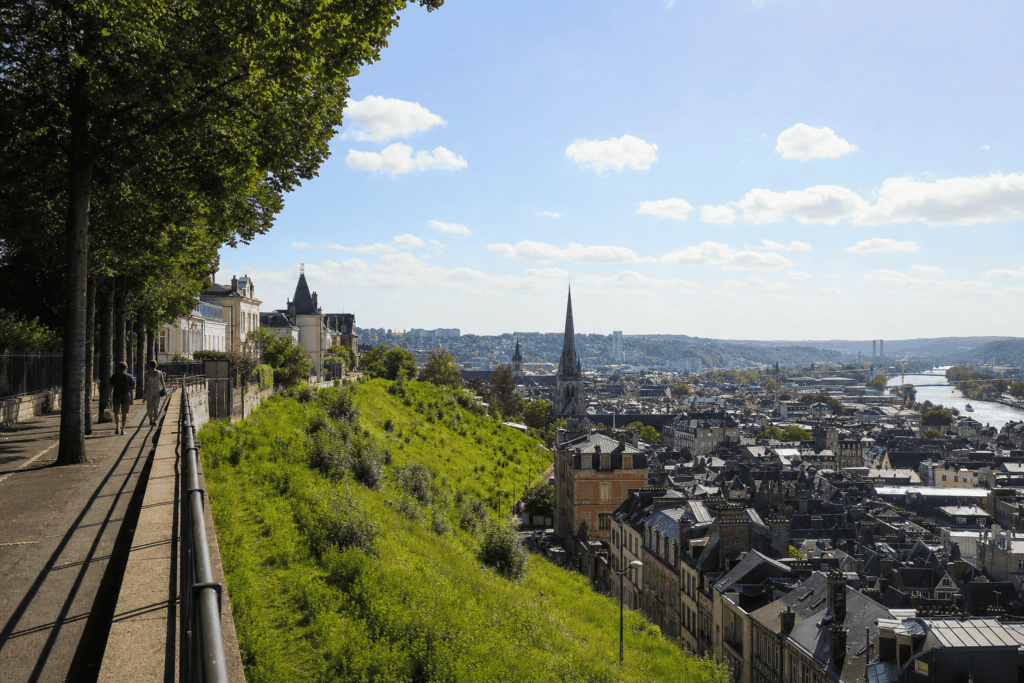 Panorama of Sainte-Catherine Hill An iconic viewpoint in Rouen, offering a remarkable view over the Seine, the cathedral and the…
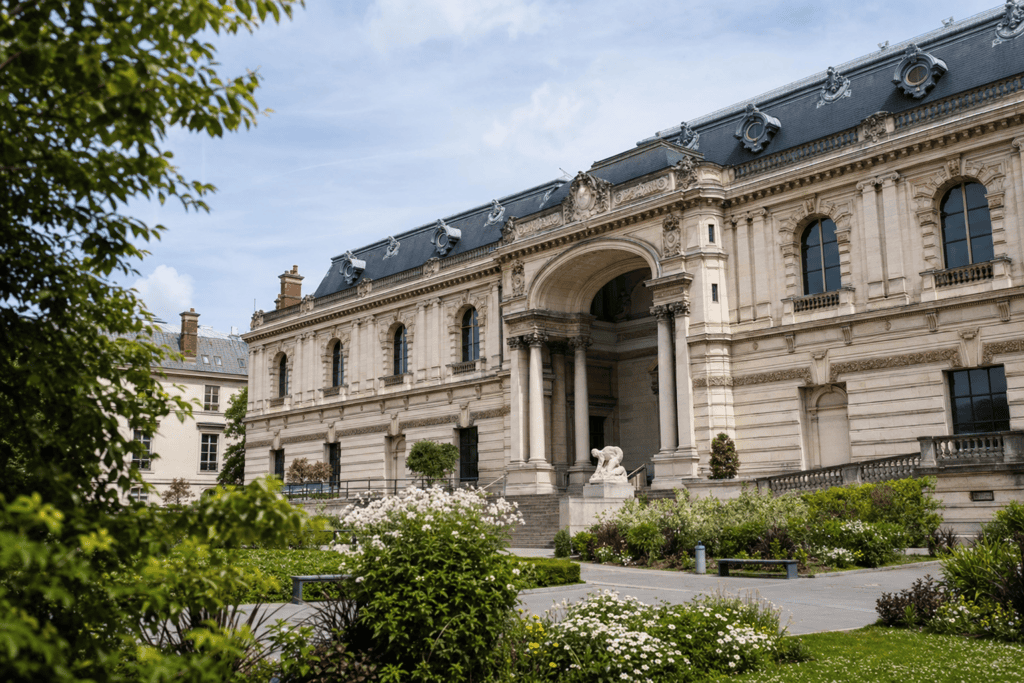 Rouen Fine Arts Museum A major museum in Normandy, from the Renaissance to modern art, featuring Poussin, Delacroix, Géricault, Monet…
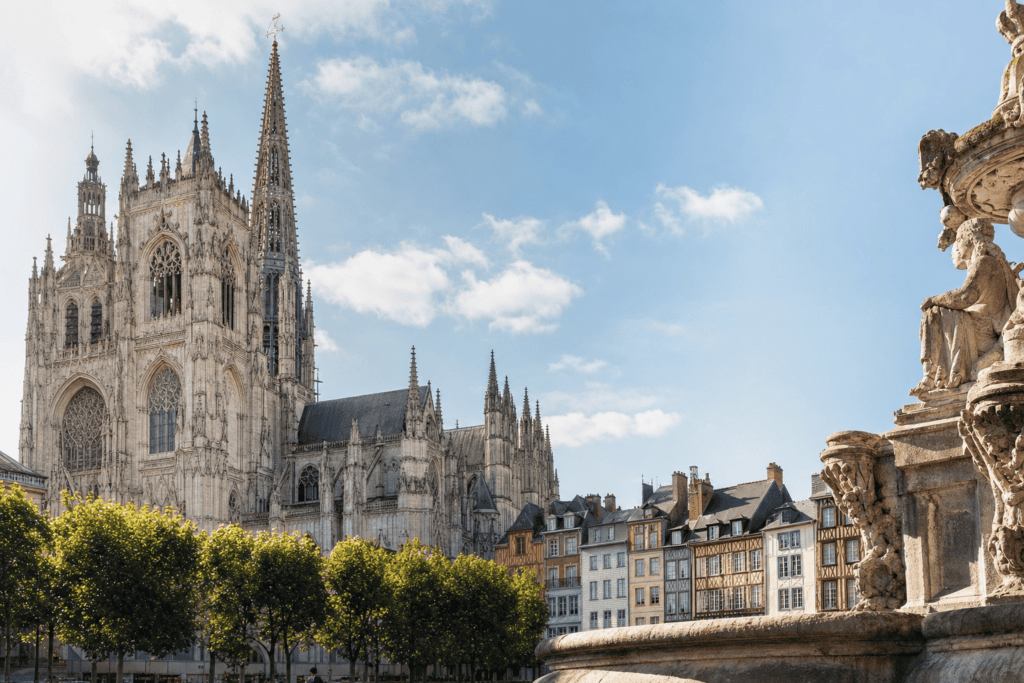 Notre-Dame Cathedral of Rouen A Gothic masterpiece in the heart of Rouen, famous for its façade, stained-glass windows and the series…
Online booking · Paris → Historic Rouen, 76000 Rouen, Normandy, France
Choose your pickup date and time
Your departure and arrival details are already pre-filled. You can adjust them in the fare calculator before viewing the vehicles and fare.