



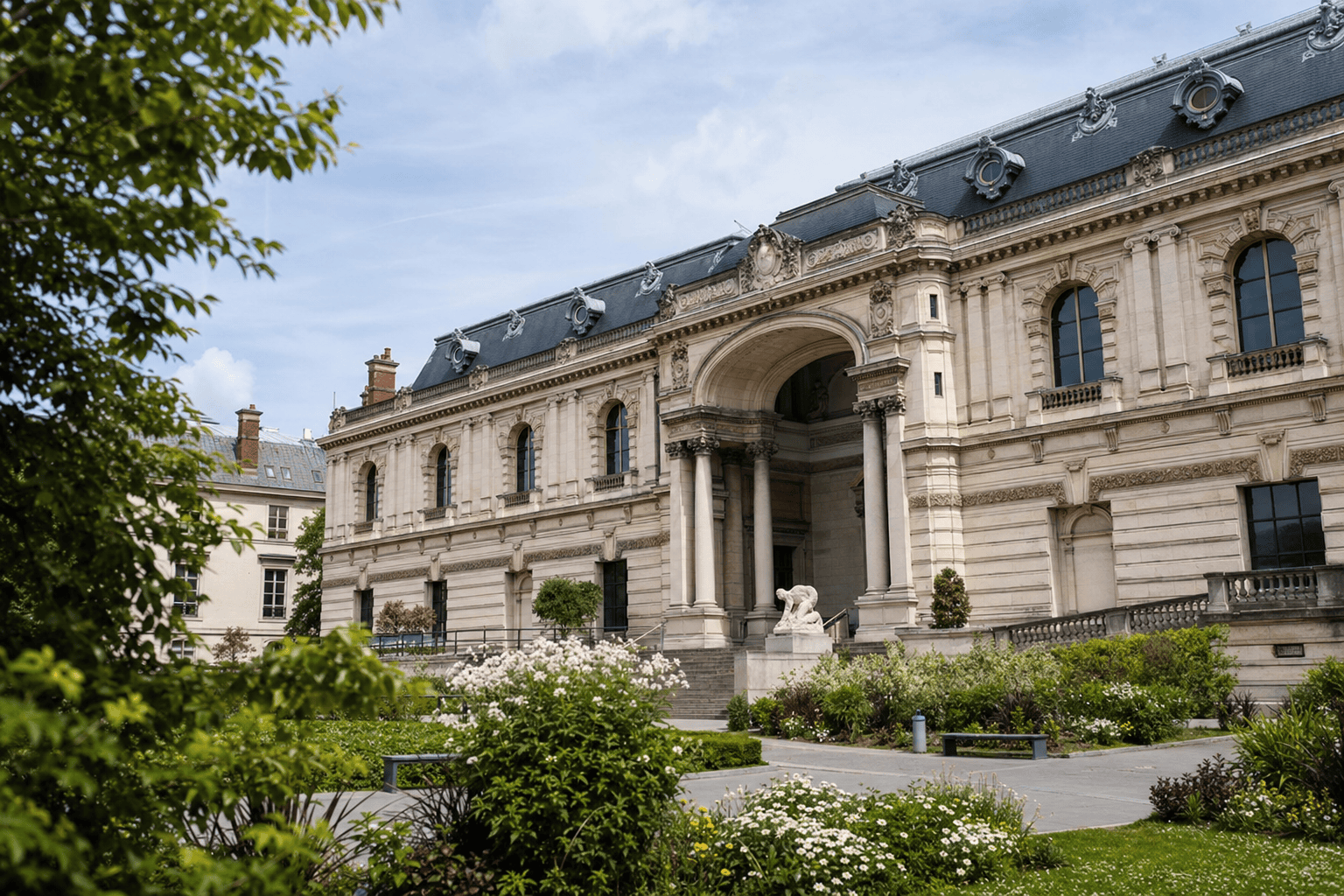
Musée des Beaux-Arts de Rouen: Visitor Guide
Rouen
In the heart of Rouen, the Musée des Beaux-Arts de Rouen offers a rich journey from the Renaissance to modern art. Paintings, sculptures, drawings, and decorative arts include works by Poussin, Rubens, Delacroix, Géricault, Monet, Sisley, Renoir, and Modigliani. The Impressionist collection is one of the museum’s highlights, but it does not alone represent the institution’s diversity. To plan your visit, here are the works and periods to prioritize, practical information to check, and ideas for exploring the area around the museum.
Practical information
Choose a focus before entering—Impressionism, classical painting, Rouen artists, or modern art—then round out your visit with Notre-Dame Cathedral, Rue du Gros-Horloge, and the Musée Le Secq des Tournelles.
Getting to the Museum from Paris with a Private Driver
For a cultural excursion to Rouen, Booking Paris Transfer can arrange transportation from Paris, a Paris hotel, Charles de Gaulle Airport, or Orly Airport. The service covers transportation only, not museum ticket reservations or sales. A same-day round trip or a broader Normandy itinerary may be arranged depending on your schedule, plans, and traffic conditions.
Private transportation departing from Paris, Île-de-France, CDG, or ORY; return to Paris available. Admission, guided tours, and museum tickets not included.
A Museum at the Heart of Rouen’s Heritage
The Musée des Beaux-Arts de Rouen is particularly well located for exploring Normandy’s historic capital. Set on the Esplanade Marcel-Duchamp, it is in the city center, near the Palais de Justice, the train station, and the main walking routes. Its location makes it easy to plan a well-balanced day combining art, architecture, and city life without unnecessary travel.
The current building is part of the institution’s modern history. Official sources date its inauguration to the late 19th century, in 1888. The museum’s public collections have their roots in the period after the French Revolution and were shaped in particular by state deposits, acquisitions, and donations. This history explains the variety of the collection, which is not limited to one artistic school or period.
Before your visit, consult the official overview to distinguish the permanent collections, temporary exhibitions, and activities offered on the day. This check is useful because the program, access arrangements, and hours may change.
Renaissance, European Painting, and the Baroque Era
The historic collections offer visitors an introduction to European painting from the Renaissance through the classical centuries. The galleries allow you to observe the evolution of religious compositions, portraits, mythological scenes, and landscapes. Rather than looking only for the most famous names, take time to compare the formats, the construction of figures, and the treatment of light.
The museum presents works attributed or associated with artists including Gérard David, Perugino, Veronese, François Clouet, Rubens, Caravaggio, Velázquez, Vouet, La Hyre, Le Sueur, and Poussin. The wall labels and curatorial notes remain the best reference for precise attributions, which may be revised as art-historical research progresses. This measured approach allows you to appreciate the paintings without reducing a complex collection to a simple list of signatures.
This section of the visit is especially suited to visitors who want to understand the main conventions of historic painting: the hierarchy of figures, depth, gestures, symbols, and the relationship between drawing and color. It also provides a good introduction before exploring the changes of the 19th century.
Poussin, Delacroix, and Géricault’s Romanticism
The Musée des Beaux-Arts de Rouen offers valuable reference points for tracing the shift from classical painting, based on balance and clear storytelling, toward a more dramatic and expressive style. Nicolas Poussin introduces the rigor of composition, the organization of gestures, and the role of landscape in narrative. His works encourage you to look at the overall structure before focusing on details.
With Eugène Delacroix, color, movement, and emotional tension take on a different importance. The museum also presents a significant group of works devoted to Théodore Géricault, an artist born in Rouen. The gallery dedicated to him helps explain the breadth of his work, from studies and portraits to scenes marked by great intensity.
Because attributions and titles may depend on updated curatorial notes, refer to the information displayed in the galleries and in the official catalog. For a family visit, this section lends itself to a simple comparison: look at how each artist creates movement, directs the eye, and evokes emotion. This approach makes art history accessible without requiring prior knowledge.
An Impressionist Collection Connected to Normandy
Impressionism is one of the museum’s major attractions, with a remarkable group of paintings from the period and its later developments. The collections include works by Claude Monet and Alfred Sisley, along with other artists associated with explorations of light, atmosphere, and landscape. The exact display may vary depending on loans, conservation work, and the program, so check which works are on view when you visit.
Rouen offers a particularly evocative setting for this approach. The quays, bridges, mist, and cathedral have inspired many artists, although each painting should be understood within its own creative context. The museum allows you to compare brushwork, framing, and effects of light rather than reducing Impressionism to a single series of landscapes.
To get the most from the paintings, first view them from a distance to take in the overall impression, then move closer to examine the brushwork and optical mixing. Renoir, Pissarro, Sisley, and other artists add to this exploration. The visit thus becomes an appreciation of Impressionism’s diversity rather than a simple search for familiar names.
From Modern Art to 20th-Century Creations
The collection does not end with the 19th century. The 20th-century holdings show how artists renewed forms, colors, framing, and the relationship between abstraction and representation. Works associated with Modigliani, Raoul Dufy, the Duchamp brothers, Maria Helena Vieira da Silva, Jean Dubuffet, and Geneviève Claisse illustrate this diversity.
This section deserves special attention after the historic and Impressionist galleries. It shows that the museum is not only devoted to the masters of the past, but is also a place where visitors can follow the transformation of modern painting. Start by describing what you see: lines, rhythms, areas of flat color, silhouettes, contrasts, or geometric shapes. Only then is it easier to consider the subject and the artist’s intention.
Children and teenagers often find a direct point of entry here, as some works seem less dependent on a specific historical narrative. If a temporary exhibition is on view, look at its theme before planning your route: it may affect the time required and the recommended order of the galleries.
Planning Your Visit and Getting to the Museum
For a first visit, allow about 1½ to 2 hours, not including a temporary exhibition or activity. A thematic route makes the visit more enjoyable: Impressionism, French painting, Rouen artists, the evolution of portraiture, or the birth of abstraction. If you are traveling with children, alternate well-known works with paintings chosen for their colors or formats.
Check the museum’s official page or the City of Rouen’s website for regular hours, closing days, free-admission conditions, and exhibition rules. Information may change for a public holiday, event, exhibition installation, or maintenance work.
The museum is within walking distance of the train station and historic center. Rouen also has a public transportation network including metro and buses. To choose a stop and check real-time schedules, use the official Astuce network website rather than relying on a general indication. Visitors arriving by car should plan ahead for parking in the city center, while cycling routes can be checked with local services.
Continue Exploring Around the Museum
The museum fits easily into a full day devoted to Rouen’s heritage. After visiting the collections, head to Notre-Dame Cathedral, then take in the views along Rue du Gros-Horloge and the half-timbered houses of the historic center. Comparing the cathedral façade with Monet’s studies of changing light offers a natural continuation of the visit, even though the works should be appreciated in their own context.
Art lovers can continue to the Musée Le Secq des Tournelles, devoted to ironwork, or to the Musée de la Céramique, depending on the day’s hours and program. The Seine quays offer another option for a more open-air walk, especially if you would like to connect the city with its river history and Impressionist imagery.
From Paris, Rouen works well for a cultural excursion or a stop on a Normandy itinerary. Be sure to plan realistically, however: travel time, traffic conditions, and museum hours affect the time actually available. An itinerary starting in Paris can combine the museum with the historic center before returning to the capital.
Useful sources
Frequently Asked Questions
Where is the Musée des Beaux-Arts de Rouen located?
How much time should I allow for the visit?
Which artists can you discover at the museum?
Is the permanent collection free?
How do I get to the museum from Paris?
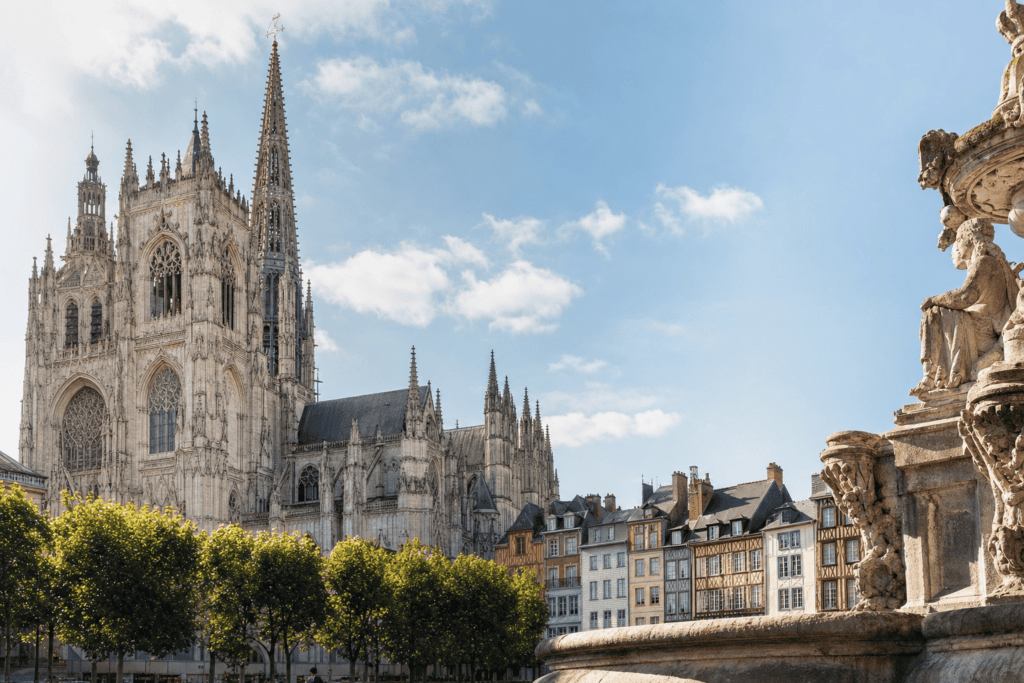 Notre-Dame Cathedral of Rouen A Gothic masterpiece in the heart of Rouen, famous for its façade, stained-glass windows and the series…
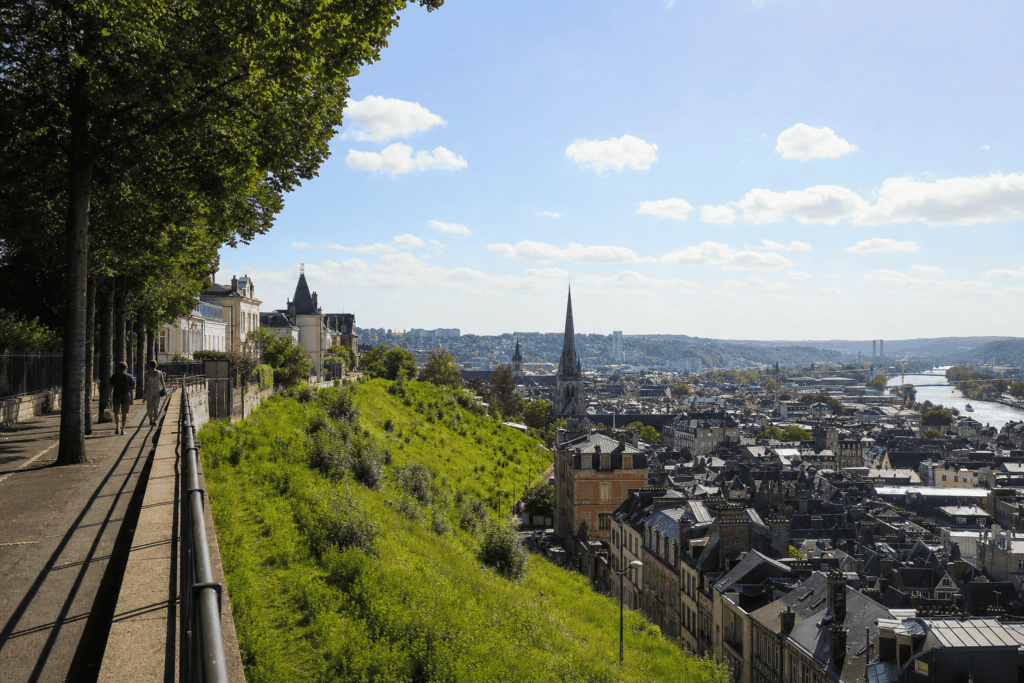 Panorama of Sainte-Catherine Hill An iconic viewpoint in Rouen, offering a remarkable view over the Seine, the cathedral and the…
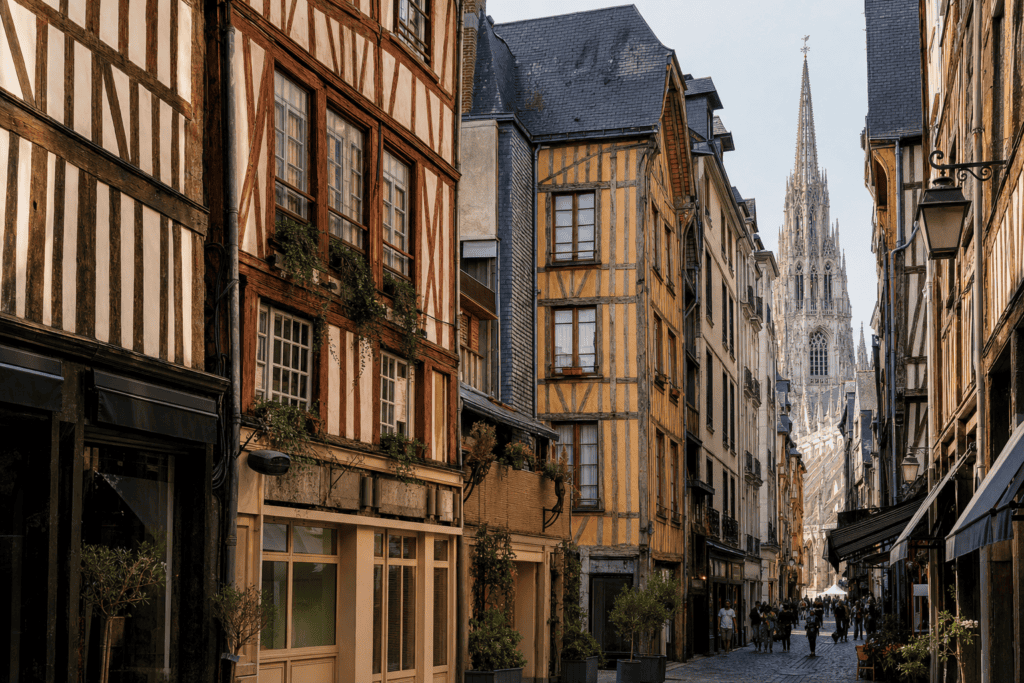 Rouen Historic Center and Half-Timbered House District A walking tour through the heart of Rouen, among the Gros-Horloge, half-timbered houses, squares…
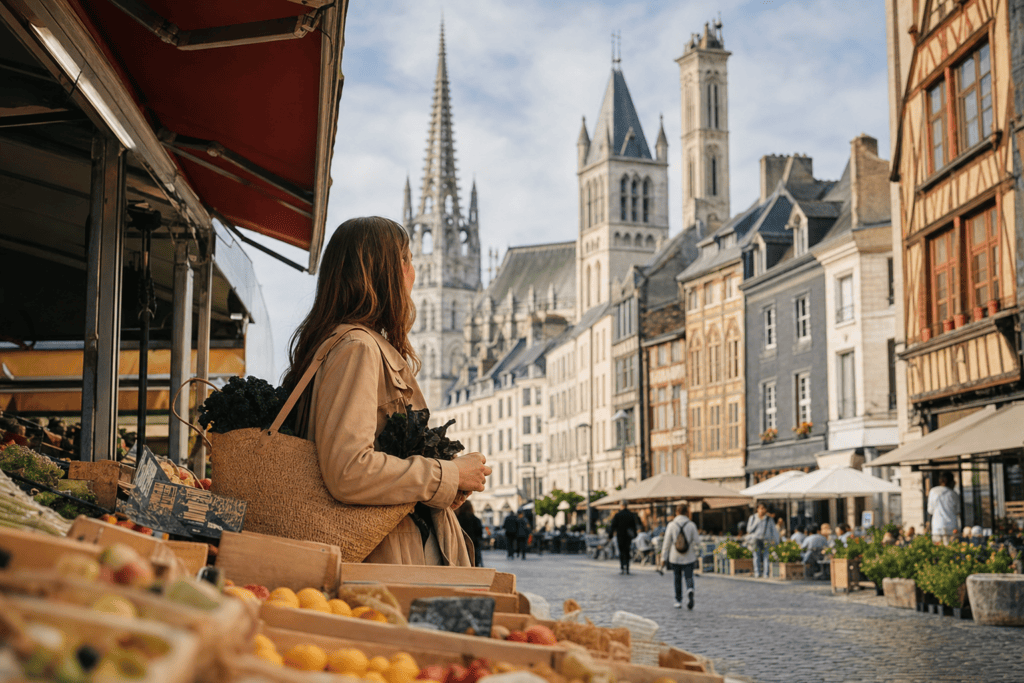 What to do in Rouen: a food-focused itinerary through markets and Norman specialties A food-focused route through Rouen, including Saint-Marc Market, Place du Vieux-Marché, Norman cheeses, apples, and sweet treats…
Online booking · Paris → Esplanade Marcel-Duchamp, 76000 Rouen, France
Choose your pickup date and time
Your departure and arrival details are already pre-filled. You can adjust them in the fare calculator before viewing the vehicles and fare.