



Strasbourg Cathedral Platform: Visitor Guide
Strasbourg
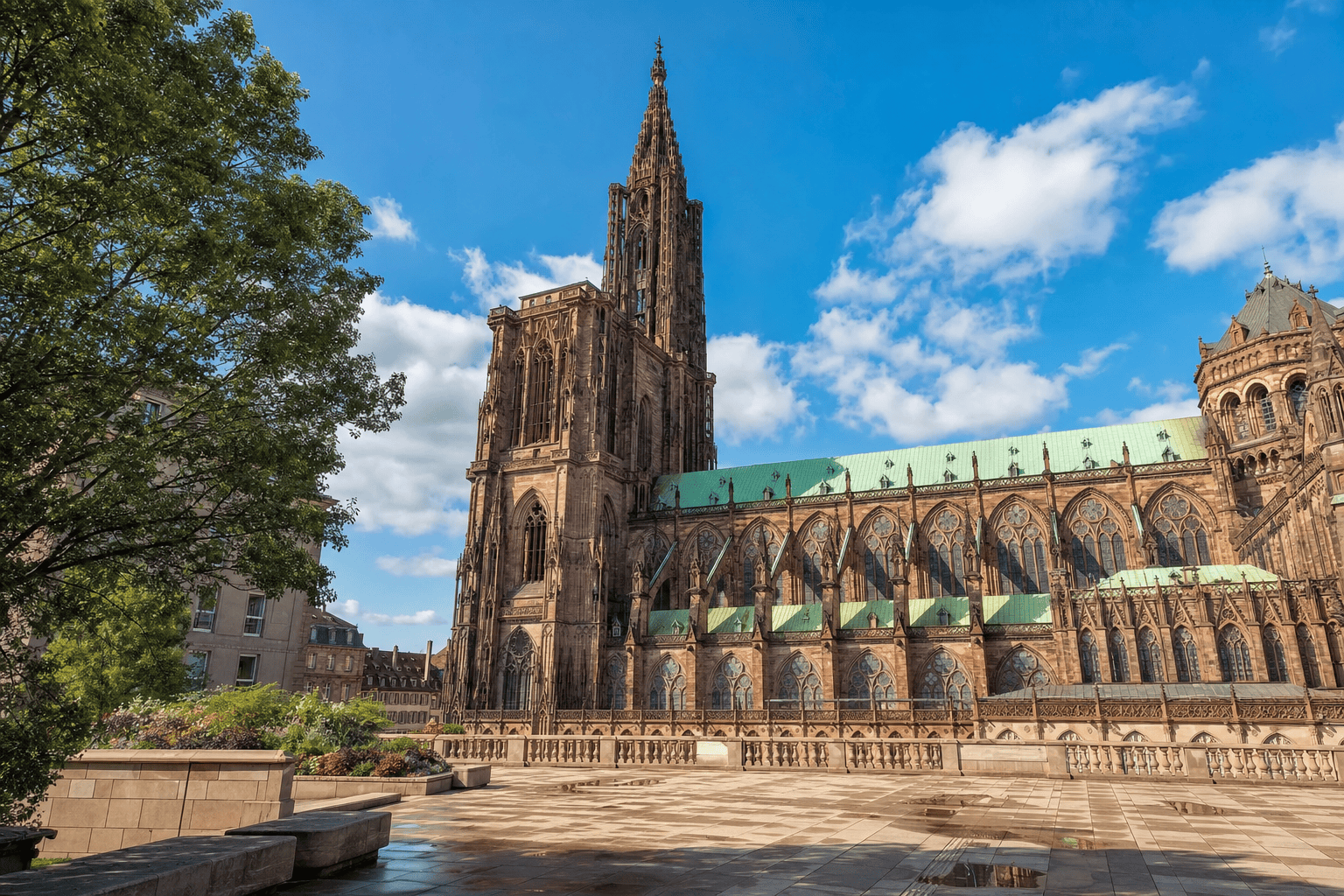
Notre-Dame Cathedral of Strasbourg is one of the most iconic landmarks on the Grande Île. Its pink sandstone façade, single spire, and stained-glass windows already make it worth visiting, but climbing to the platform of Strasbourg Cathedral adds a genuine discovery experience. After approximately 330 steps, visitors enjoy unobstructed views over the rooftops of the historic center and, when visibility is good, across the landscapes of the Alsace plain. This guide covers the monument, the climb, the panorama, key points to note, and ideas for nearby walks. As opening hours, prices, and access conditions may change, check the official information before you travel.
Practical information
Wear comfortable shoes and allow extra time before a train or activity. Respect the cathedral’s religious character and check the official hours on the day of your visit.
Getting to Strasbourg from Paris with a Chauffeur
Booking Paris Transfer can arrange a private journey from Paris, a hotel in the Île-de-France region, Charles de Gaulle Airport, or Orly to Strasbourg, with a return to Paris or onward travel as part of an itinerary in mainland France. Your transportation will drop you off in an area suited to your plans; the cathedral visit and access to the platform are separate and paid directly to the monument.
Transportation service departing from Paris, Île-de-France, CDG, or ORY. No cathedral admission ticket included.
Discover a Strasbourg Landmark
Located in the center of the Grande Île, Notre-Dame Cathedral of Strasbourg dominates the cityscape with its pink sandstone façade and asymmetrical silhouette. Construction began in the Middle Ages and continued over several centuries. The building is primarily Gothic in style, recognizable by its elevations, arches, sculptures, and emphasis on light. Completed in 1439, its spire reaches 142 meters and remains one of the monument’s most remarkable features.
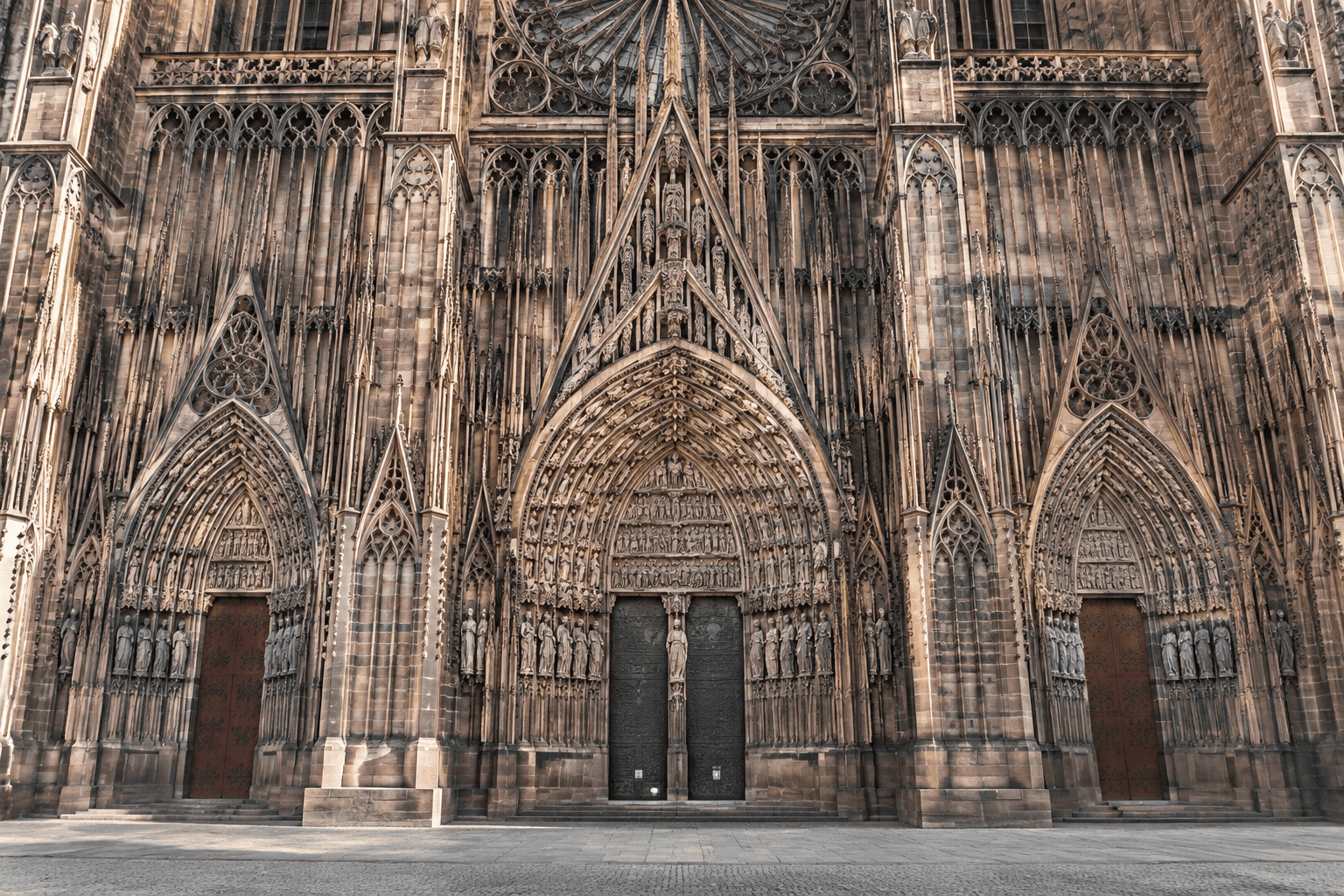
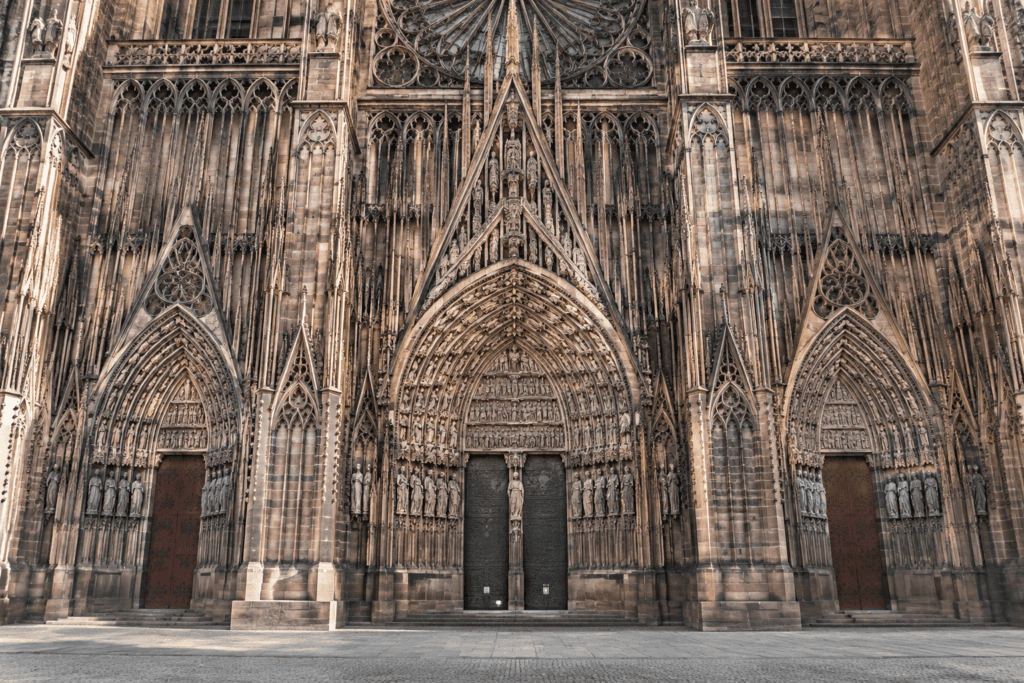
Before thinking about the climb, take time to observe the western façade and its three portals. The statues, archivolts, and sculpted scenes form an especially rich ensemble. Inside, the nave, stained-glass windows, Pillar of the Last Judgment, and astronomical clock each deserve dedicated time. As the cathedral remains a place of worship, some areas may be reserved for services or celebrations. Strasbourg’s historic center, with the cathedral as a central feature, is listed as a UNESCO World Heritage Site.
Understanding the Climb to the Platform
Access to the platform is a different visit from the nave. The route starts at Place du Château, on the right side of the cathedral, and continues up a spiral staircase. Official information indicates approximately 330 steps to the platform, which is 66 meters above the ground. The climb is physically demanding, but it also offers a gradual view of the monument’s volumes, the tower’s structural framework, and angles rarely visible from ground level.
Proceed at your own pace and, whenever possible, let other visitors pass. The staircase can be narrow, and the climb takes longer during busy periods. Anyone prone to vertigo, with limited mobility, or experiencing breathing difficulties should assess the effort before choosing this visit. There is no elevator to the platform. The nave, façade, and nearby squares nevertheless allow visitors to discover the monument without making the climb.
Enjoy the Panorama over Strasbourg
From the platform, the view first takes in Strasbourg’s rooftops, bell towers, quays, and streets across the Grande Île. This height provides an especially clear understanding of the historic center’s layout, organized around the Ill River and its canals. The nearby rooftops, inner courtyards, and historic façades create a cityscape very different from the one seen at street level.
When the sky is clear, the view may extend toward the Vosges and, beyond the Alsace plain, toward the Black Forest. Visibility nevertheless depends greatly on the weather, haze, and light. For photography, morning and late afternoon often cast clearer shadows across the rooftops and sculptures. Hold your phone or camera securely and follow the site’s instructions. The platform is a busy observation area: avoid monopolizing the best viewpoints when crowds are heavy.
Reading the Traces of the Medieval Construction Site
The platform is more than a panoramic terrace. It also helps visitors better understand the construction and upkeep of a major medieval building. The keepers’ house associated with this area recalls the teams responsible for monitoring, maintaining, and operating the cathedral’s facilities. Its location also provides an opportunity to discuss the plan for a second spire, which was ultimately never built and partly explains the monument’s asymmetrical appearance.
Site presentations also mention former lifting systems, including drum wheels sometimes called treadwheel cranes. These devices illustrate the methods used to move and raise heavy materials before modern equipment. Accessible features and interpretive displays may vary depending on visiting conditions. It is therefore best to treat this information as an aid to understanding the site and consult the information provided on-site or official sources for historical details. The main point of interest remains the connection between engineering, stone, and the architecture visible around you.
Prepare for Access and Check the Information
The platform entrance is at Place du Château, immediately next to the cathedral. The platform’s hours are not necessarily the same as those of the nave, and the final climb may take place before closing. Opening periods, prices, discounts, and access conditions may change depending on the season, public holidays, construction work, events, or weather conditions. Before setting out, consult the official website of the City of Strasbourg or the Fondation de l’Œuvre Notre-Dame.
The cathedral area is in the historic center, where vehicle access and parking may be restricted. From a train station, hotel, or another neighborhood, check the current route on Strasbourg’s transit network rather than relying on an outdated line or stop reference. If you arrive by car, plan to use peripheral parking or a suitable parking garage, then continue on foot or by public transportation. This is generally easier than trying to find a drop-off point directly on Place du Château.
Build an Itinerary around the Cathedral
A good visit begins with an exterior circuit around Place de la Cathédrale. View the façade from several angles, then enter the nave when visitor access conditions allow. You can then set aside separate time for the climb, so you do not rush through the interior spaces. This alternation between ground level, the interior, and the heights makes the discovery more complete and helps you understand the building’s proportions.
After the cathedral, several sites are easy to reach on foot across the Grande Île: Maison Kammerzell, Palais Rohan, the Musée de l’Œuvre Notre-Dame, and the narrow streets leading toward Petite France. Check directly with the relevant establishments for any benefits associated with a platform ticket, as their terms may change. During the Christmas market or on a very busy weekend, allow extra time for lines, security checks, and travel between sites. A café break or a walk along the Ill can be a pleasant way to complete the itinerary after the climb.
Include the Visit in an Alsace Trip
The cathedral and its platform can fill half a day when combined with the nearby museums and neighborhoods, or form part of a fuller day devoted to the historic center. Architecture enthusiasts can compare the building with Saint Thomas Church, the historic houses of Petite France, and the buildings along the quays. Those mainly seeking a viewpoint can make the climb the highlight of an urban walk while keeping an indoor alternative in reserve in case access is suspended.
For a trip from Paris, Strasbourg is also an interesting base for exploring other Alsatian landscapes and villages, provided you plan a realistic itinerary. The platform combines physical effort, panoramic views, technical history, and the observation of a monument still used for worship. Before departing, consult the official cathedral and City websites for current information. If weather reduces visibility, the façade, stained glass, clock, and nearby museums remain well worth seeing. The visit is still rewarding even without distant views.
Frequently Asked Questions
How many steps are there to reach the platform?
Is the platform accessible to people with reduced mobility?
What can you see from the platform?
Are the platform’s hours the same as the cathedral’s?
How do you get to the cathedral?
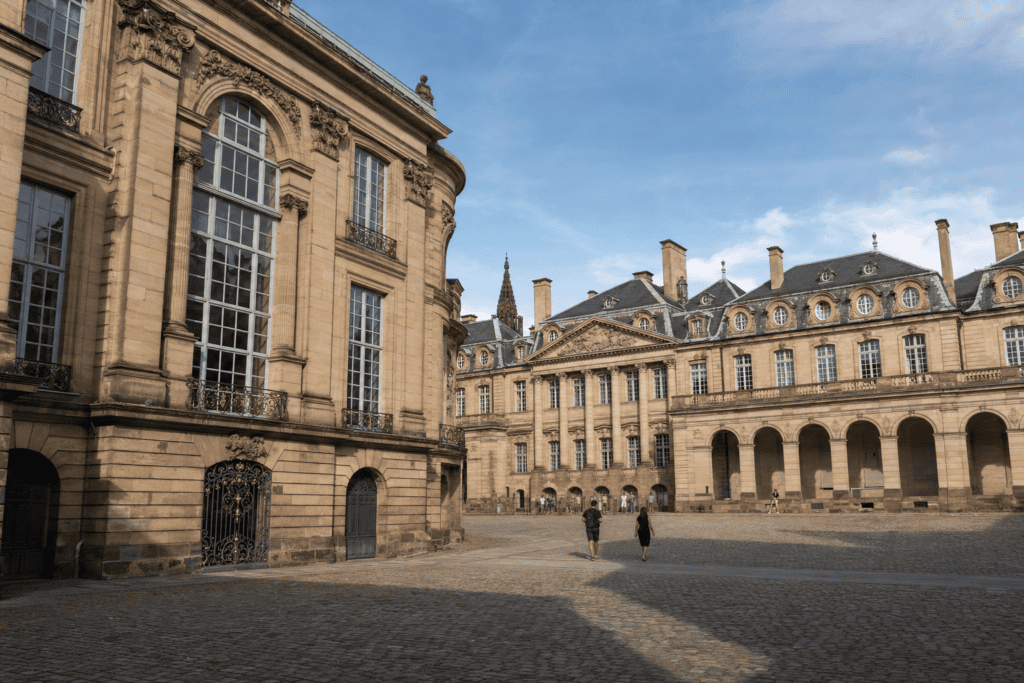 Palais Rohan Museums Three museums in a historic palace, spanning Alsatian archaeology, princely apartments, decorative arts, and European painting.
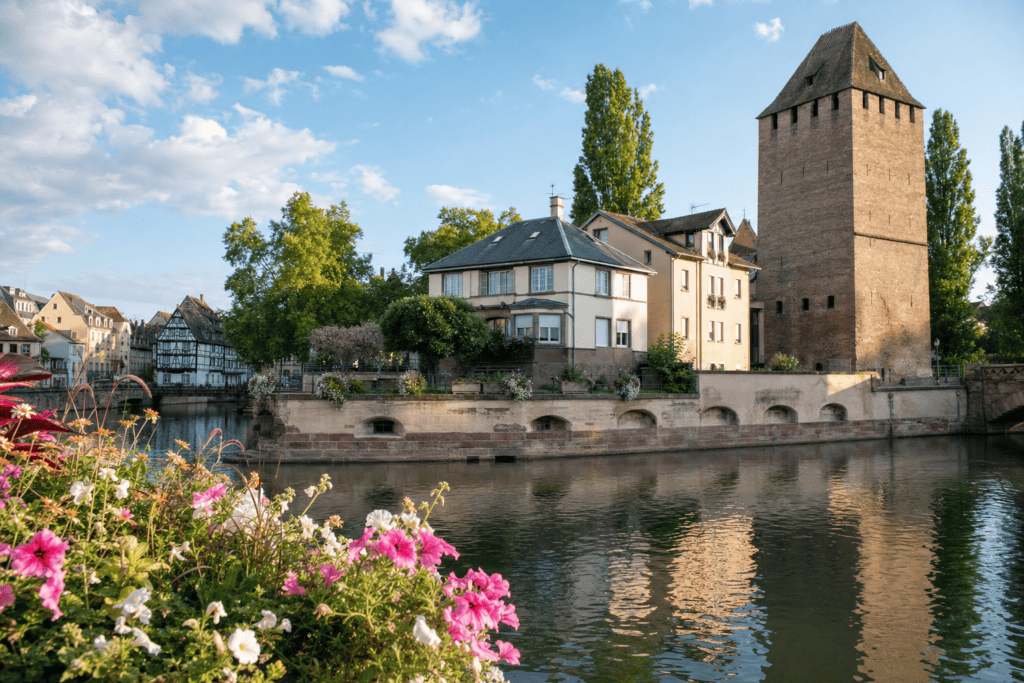 La Petite France and the Covered Bridges An essential Strasbourg route featuring half-timbered houses, canals, medieval towers and the panoramic terrace of the…
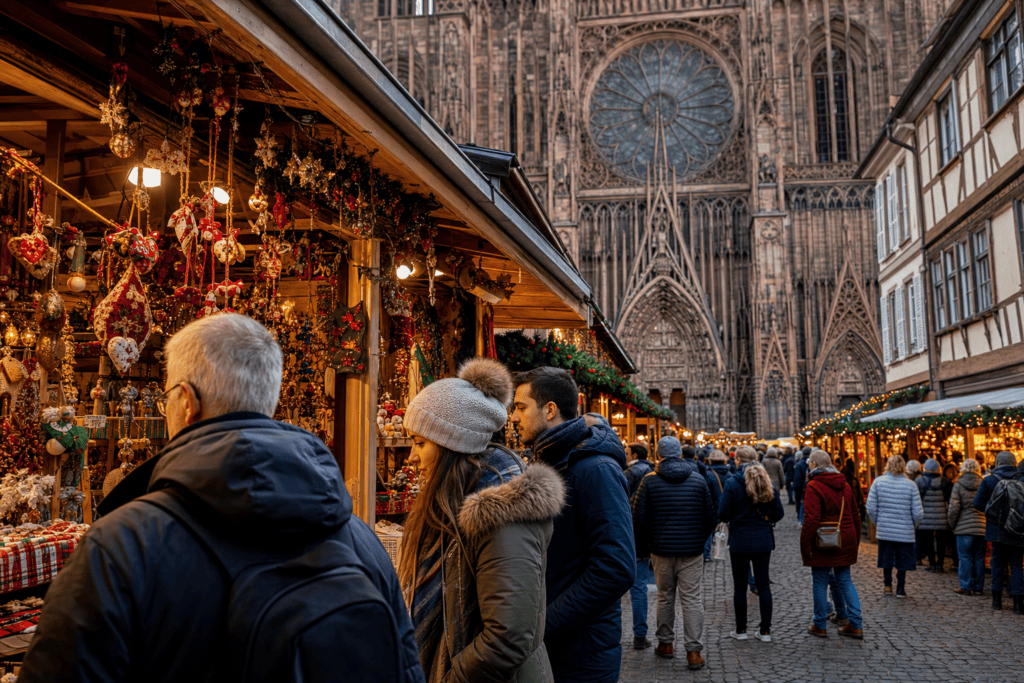 Strasbourg Christmas Market and Alsatian Traditions A winter stroll through the heart of Strasbourg, exploring the history of the Christkindelsmärik, illuminations, crafts, and Alsatian specialties.
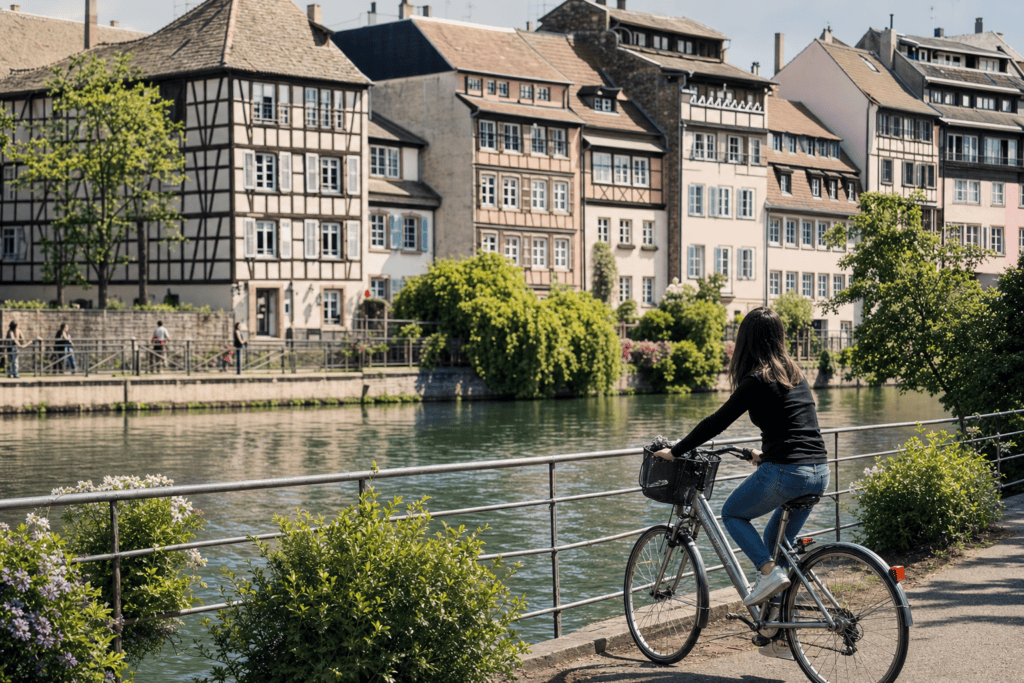 What to Do in Strasbourg by Bike Along the Ill and Canals A bike ride through Petite France, along the Ill quays, canals, parks, and peaceful neighborhoods of…
Online booking · Paris → Place du Château, 67000 Strasbourg, France. Access to the platform is on the right side of the cathedral, from Place du Château.
Choose your pickup date and time
Your departure and arrival details are already pre-filled. You can adjust them in the fare calculator before viewing the vehicles and fare.