



Strasbourg Christmas Market: A Guide to Its Traditions
Strasbourg
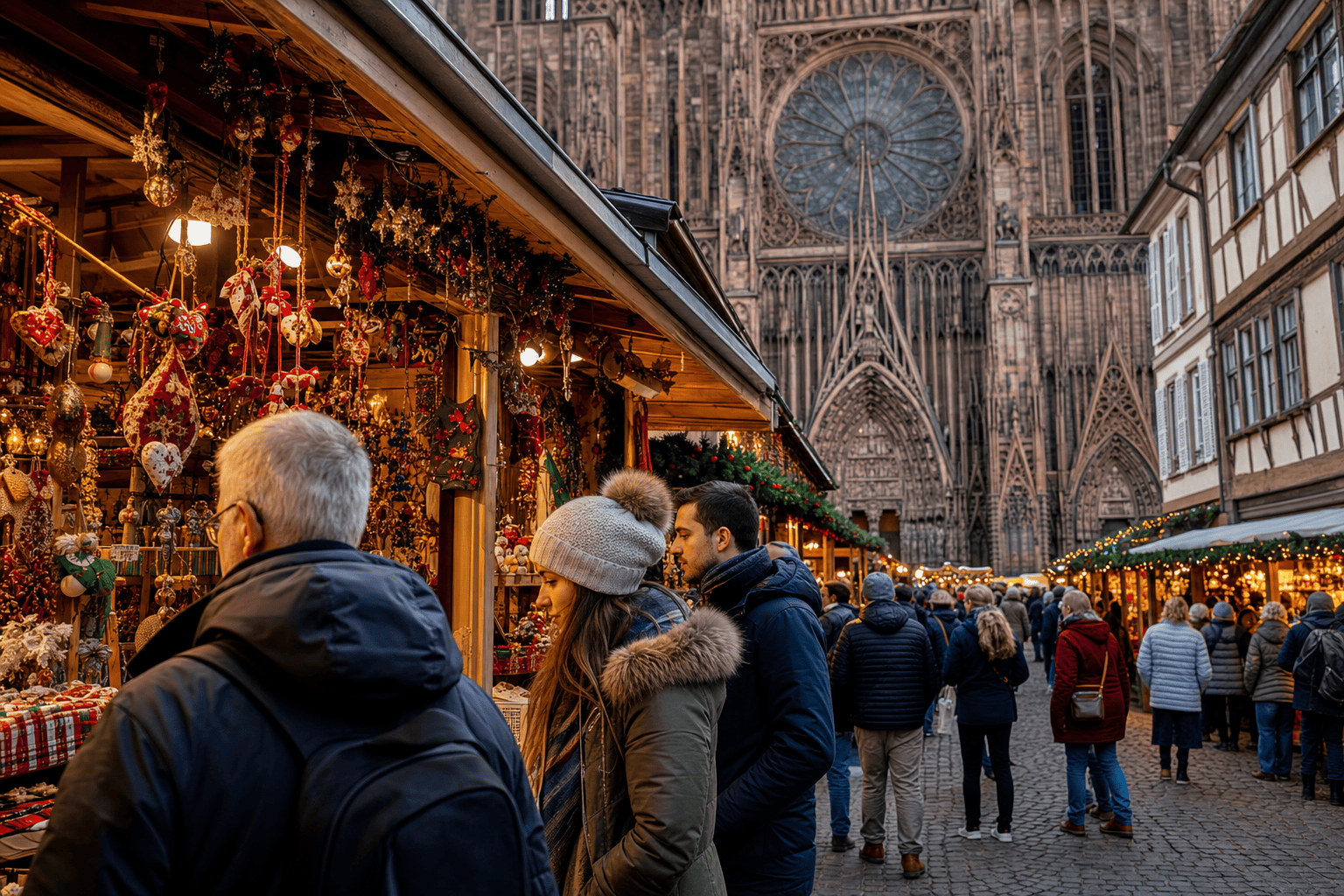
Strasbourg’s Christmas Market transforms the Grande Île into a trail of lights, chalets, decorated fir trees, and Alsatian traditions. It is the modern successor to the Christkindelsmärik, first mentioned in 1570, and now spreads across several squares in the historic center, particularly around the cathedral, Place Broglie, and Place Kléber. A first visit deserves more than a quick stop between purchases: take time to admire the decorations, sample a few specialties, and explore the streets of Petite France. Dates, hours, activities, and traffic measures vary from one edition to the next; check the official information before you leave.
Practical information
Start at Place Kléber, head to the cathedral and Place Broglie, then finish among the decorated lanes of Petite France.
Getting to Strasbourg from Paris for the Christmas Market
For a winter getaway without changing vehicles, request private transportation from Paris, your Paris hotel, CDG, or ORY to Strasbourg. The trip can include a return to Paris or form part of a longer itinerary that began in the Île-de-France region. The service covers transportation only; tickets, guided tours, and purchases must be arranged separately.
Departures from Paris, Paris hotels, CDG, or ORY; return to Paris or continuation of an itinerary begun in the Île-de-France region. Tickets not included.
An Old Strasbourg Tradition
Strasbourg’s Christmas Market has a long history, closely connected to the city’s religious and commercial center. A Saint Nicholas market existed before the tradition evolved in 1570 into the Christkindelsmärik, or Christ Child Market. This transformation took place within Strasbourg’s distinctive religious context in the 16th century and gave rise to a name still associated with Place Broglie.
Over time, the market’s organization changed and it expanded across several areas of the Grande Île. It should therefore not be imagined as a single row of stalls, but as an urban route linking squares, monuments, and shopping streets. This dispersion is part of its appeal: each stop has a different atmosphere and offers a chance to discover the historic center’s heritage alongside Advent traditions.
The Iconic Squares to Explore
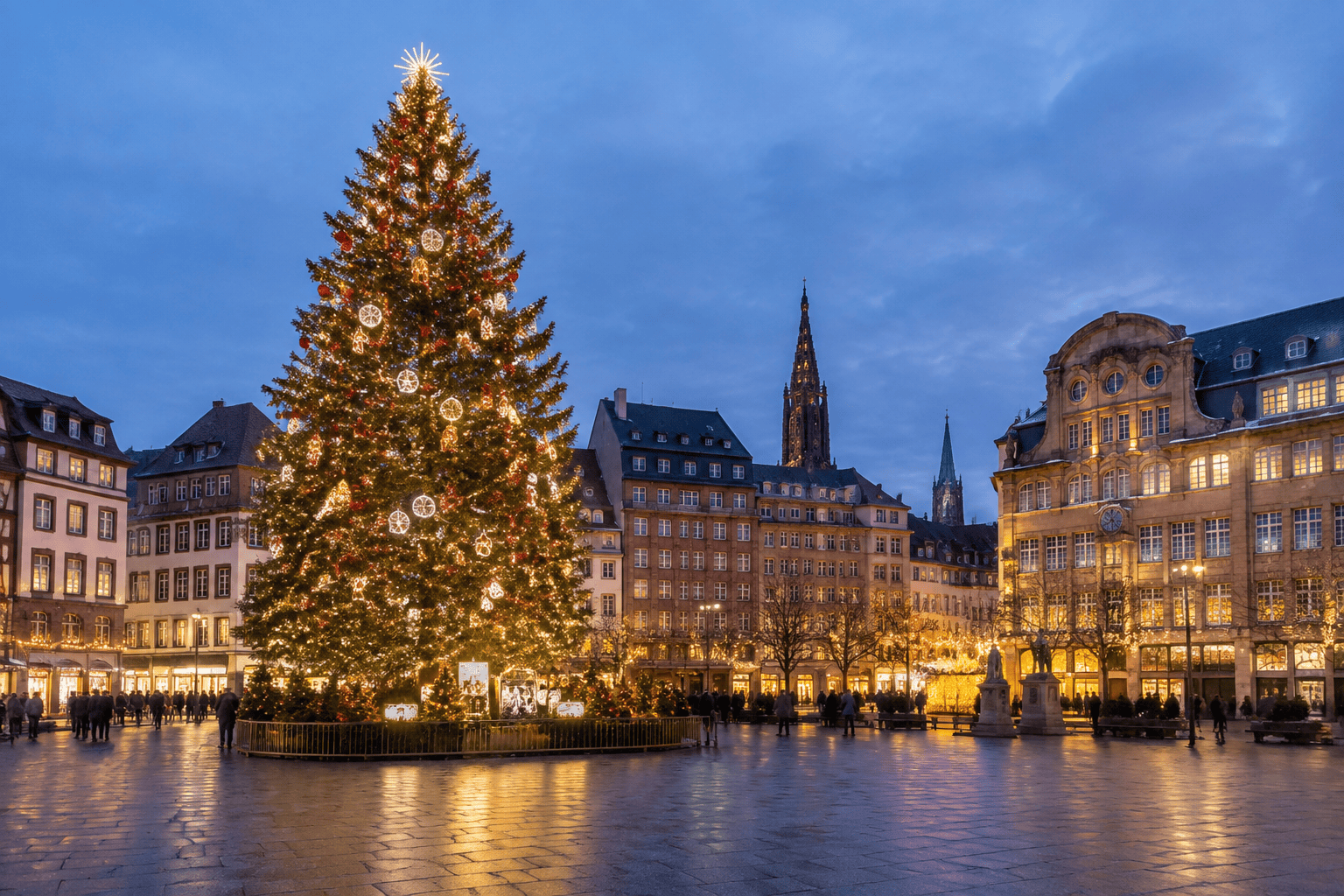
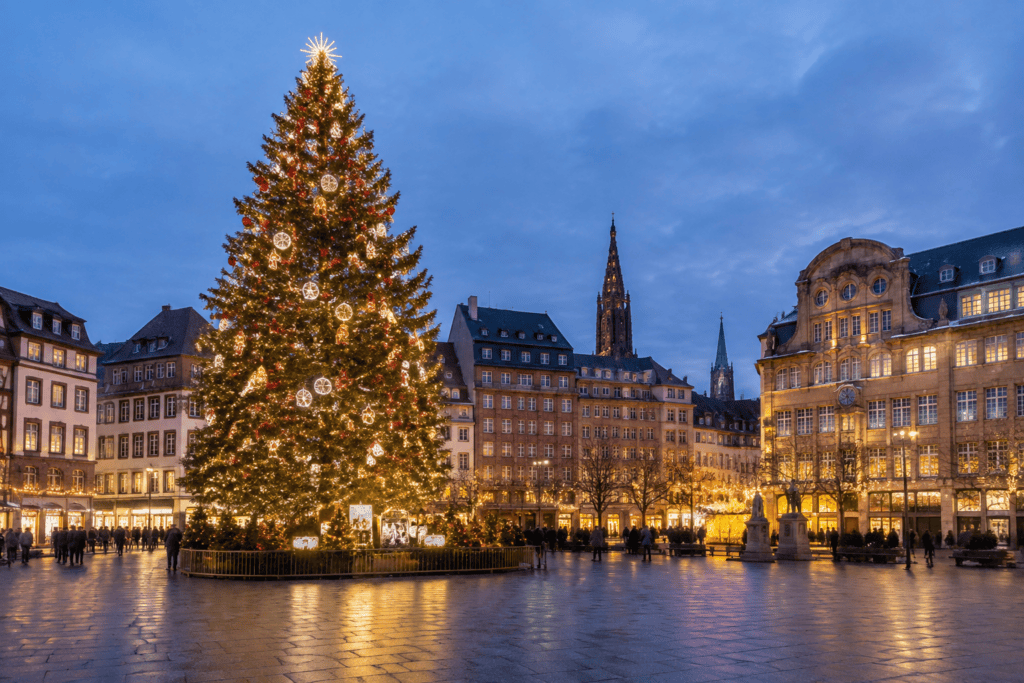
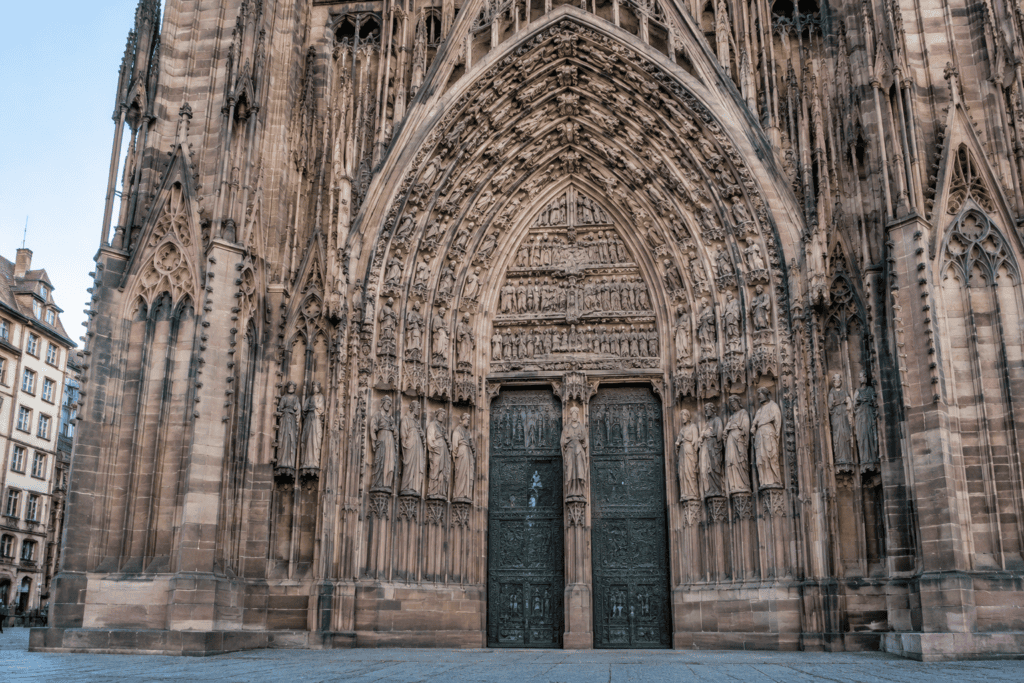
Place Kléber is an obvious starting point for a first visit. Its large fir tree and decorations immediately set the tone, especially when the lights come on. From this central square, the walk can continue toward the cathedral, whose monumental façade stands alongside the nearby chalets and shopping streets.
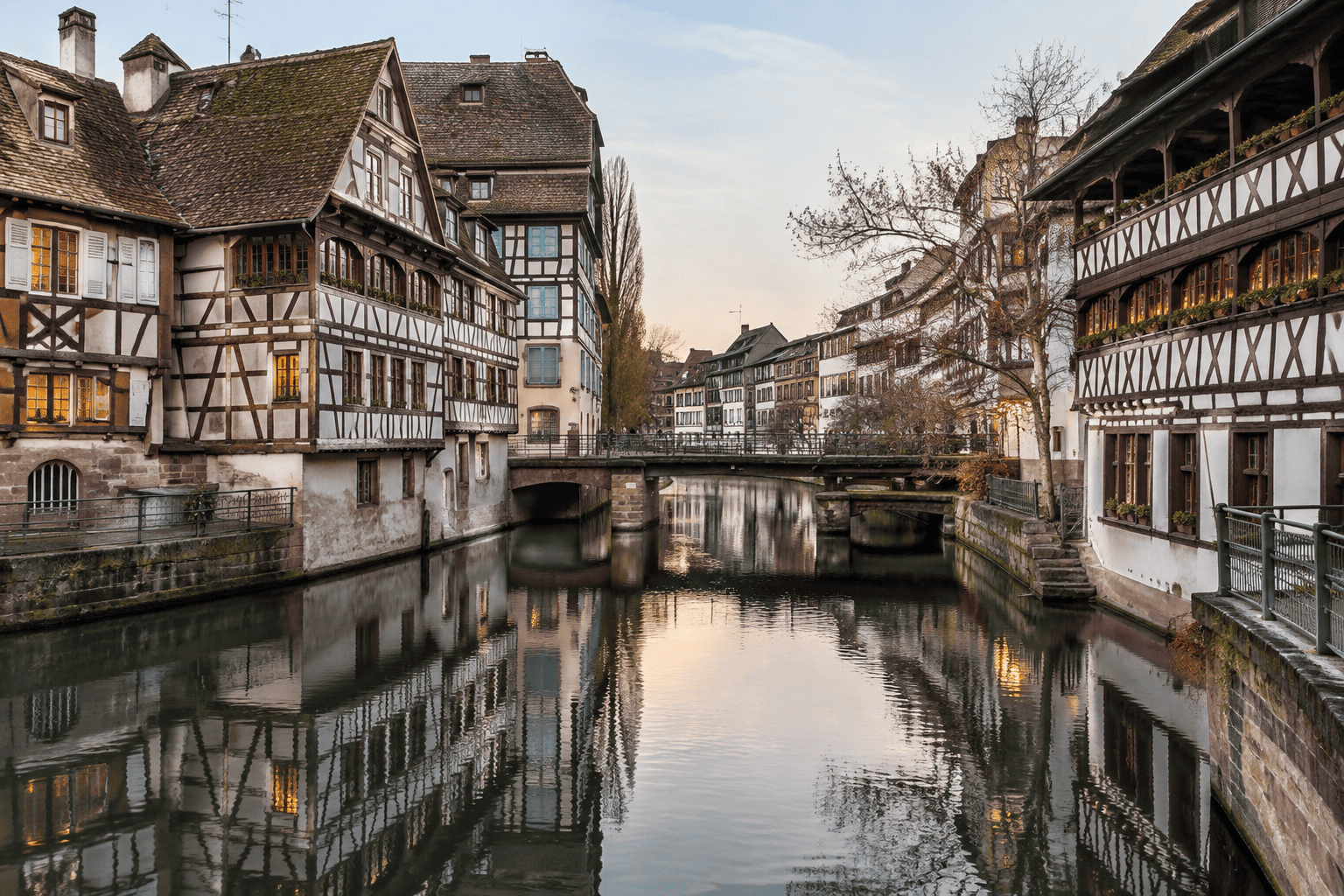
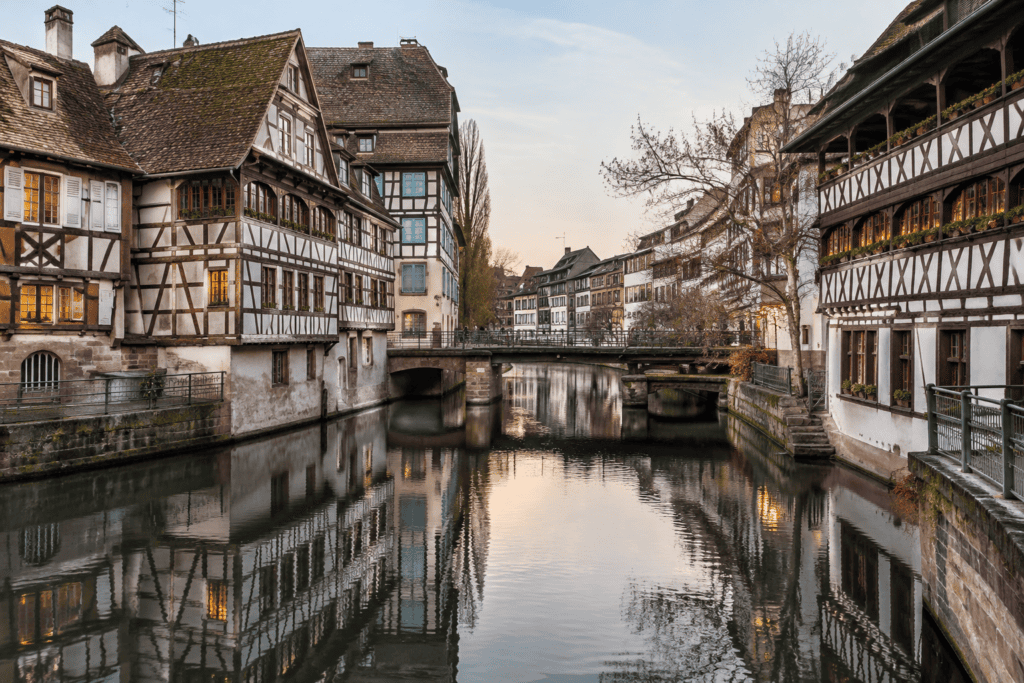
Place Broglie recalls the history of the Christkindelsmärik, while the area around Palais Rohan and Place du Marché-aux-Poissons offers other views of the decorated city. Petite France is also worth a detour: its canals, half-timbered houses, and narrow streets create a quieter setting that is especially enjoyable for photography. Since the exact distribution of the markets may change, use the official map and program for the edition you are visiting.
Understanding Alsatian Christmas Traditions
The Advent season in Alsace is shaped by many family traditions: wreaths, calendars, carols, handmade decorations, and the preparation of small cakes. The fir tree holds an important place in this imagery. A record dating from 1605 already mentions decorated fir trees in Strasbourg, which helps explain the prominence of this tree in today’s displays.
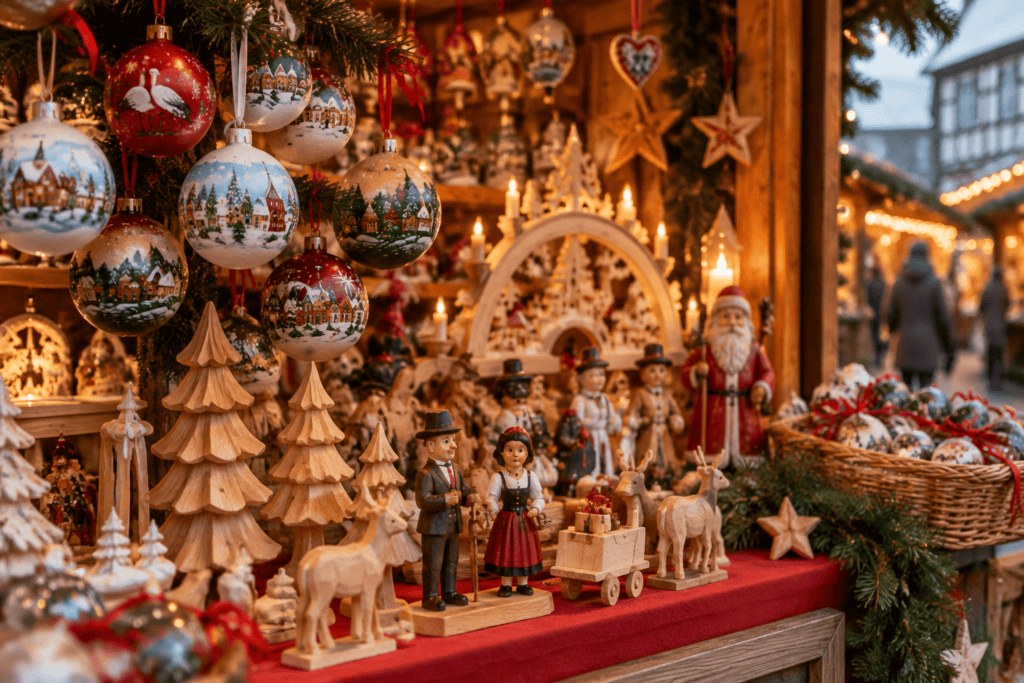
At the markets, these traditions appear in wooden ornaments, painted baubles, figurines, and objects inspired by Christmas stories. The Christkindel is part of this cultural world, along with other figures and symbols of Alsatian Advent. A themed guided tour can help connect the market’s history with religion, gastronomy, and local craftsmanship. It adds depth to a walk that might otherwise be limited to lights and shopping.
Specialties to Taste During Your Visit
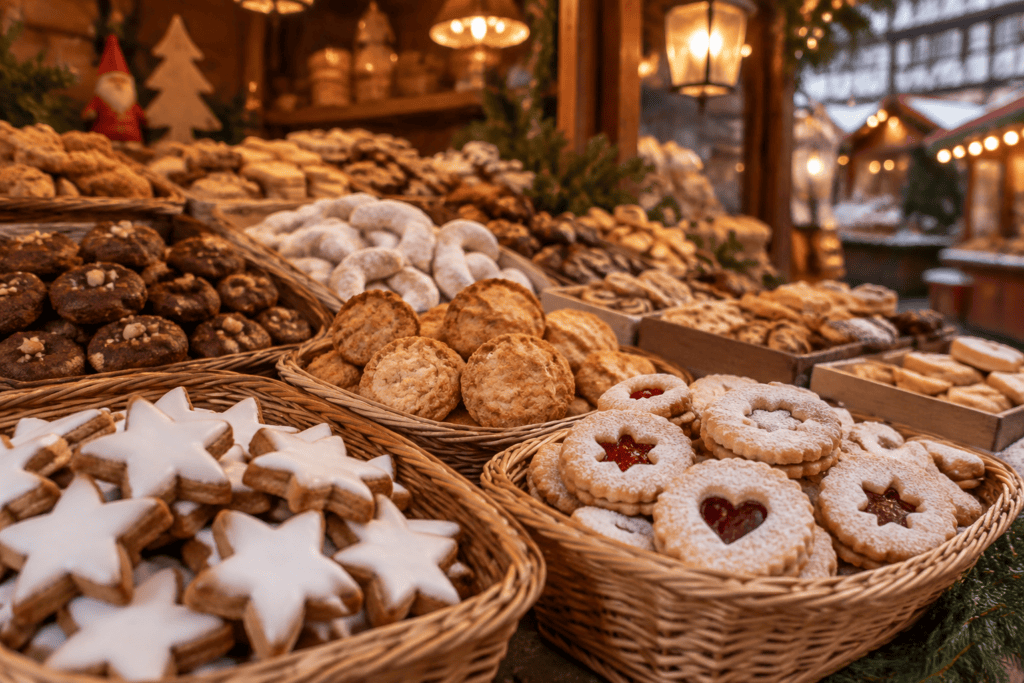
Food is an integral part of the experience. Spiced mulled wine traditionally accompanies winter strolls, but nonalcoholic hot drinks are generally available for children and visitors who prefer another option. Bredle, small Christmas cookies, come in many varieties, including butter, almond, cinnamon, and anise, depending on the recipe.
Gingerbread, kougelhopf, and christstolle round out the sweet discoveries. Some stalls also offer savory dishes or regional products to take home. For a more substantial meal, do not limit yourself to the chalets: Strasbourg’s winstubs offer Alsatian cuisine in a traditional setting. Check the ingredients, product origins, and displayed information before buying, especially if you need to account for allergies or dietary preferences.
Crafts, Gifts, and Thoughtful Shopping
The chalets and shopping areas offer a wide variety of gifts: wooden decorations, candles, textiles, pottery, creations from small workshops, and gourmet products. To prioritize a genuinely regional purchase, take time to read the labels and ask where the item was made. The origin may vary from one stall to another, even when the product is presented in an Alsatian setting.
A short list prepared in advance helps avoid impulse purchases: cookies to give as gifts, a Christmas tree decoration, a handmade item, or a specialty that is easy to transport. A reusable bag and a sturdy box are useful for protecting fragile products. Depending on the year, community-focused areas, independent makers, or associations may enrich the route. Check the program before visiting if you want to seek out a themed market or a particular activity.
Practical Tips for a Comfortable Visit
Crowds generally increase on weekends and as the holidays approach. When your schedule allows, choose a weekday and arrive before nightfall. This will make it easier to find your way around the squares, admire the illuminated façades afterward, and shop without rushing. The city center is explored mainly on foot: wear comfortable shoes and bring clothing suitable for cold weather.
Access and traffic rules may be tightened during the event. If you arrive by car, check on park-and-ride facilities, drop-off areas, and any restrictions before heading into the center. In very busy areas, keep your belongings close to you. With children, choose an easy-to-identify meeting point. Finally, do not spend your entire visit at the chalets: the lanes, quays, and monuments are an integral part of the experience.
Extend Your Stay in Strasbourg and Alsace
The market can serve as a starting point for a more complete exploration of Strasbourg. Set aside time for the cathedral, Petite France, the quays along the Ill, and the other neighborhoods of the Grande Île. Pastry shops, specialty stores, and winstubs let you continue discovering Alsatian traditions once the squares become busier.
A stay of several days can also include other Alsatian towns, such as Colmar, Kaysersberg, Riquewihr, Ribeauvillé, Eguisheim, or Obernai. Each has its own architecture and schedule; check dates, hours, restrictions, and parking conditions separately. From Paris, Booking Paris Transfer can arrange private transportation from Paris, a Paris hotel, CDG, or ORY to Strasbourg, with a return to Paris or continuation of an itinerary begun in the Île-de-France region. The service covers transportation only; tickets, tours, and purchases must be arranged separately.
Useful sources
Frequently Asked Questions
When does Strasbourg’s Christmas Market take place?
Where is Strasbourg’s Christmas Market located?
Which Alsatian specialty should I try first?
Can you drive onto the Grande Île?
Can I travel from Paris to Strasbourg with a private driver?
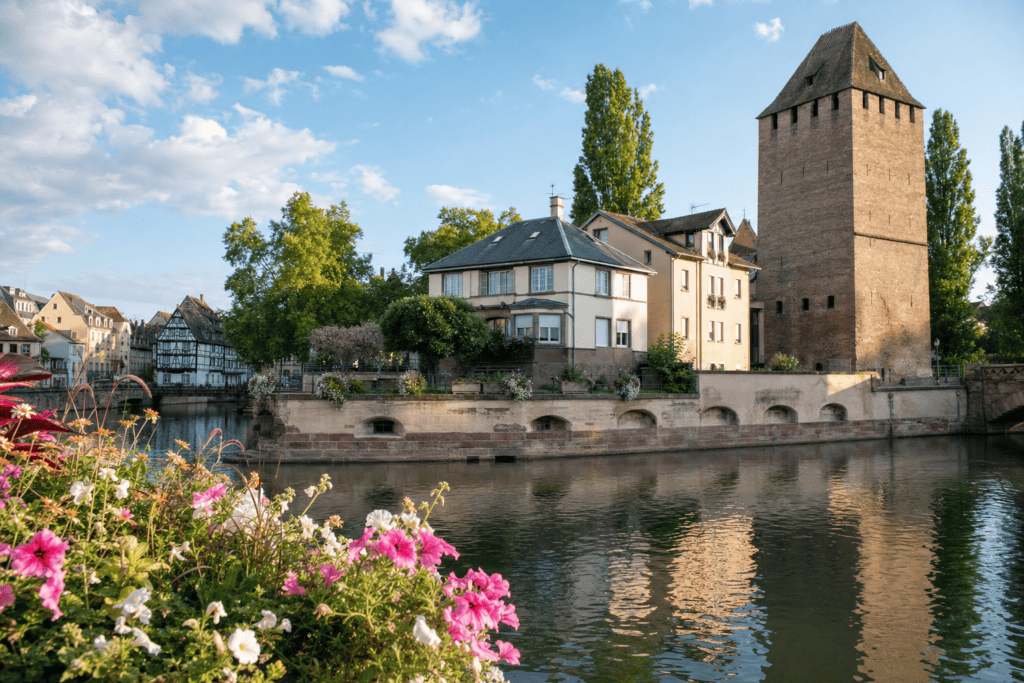 La Petite France and the Covered Bridges An essential Strasbourg route featuring half-timbered houses, canals, medieval towers and the panoramic terrace of the…
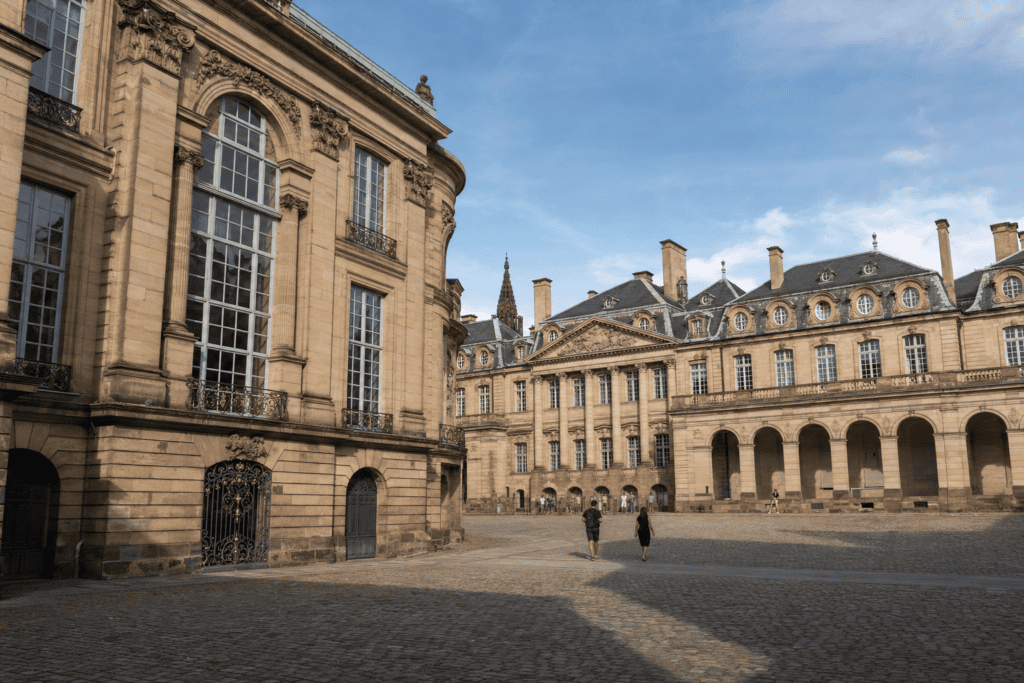 Palais Rohan Museums Three museums in a historic palace, spanning Alsatian archaeology, princely apartments, decorative arts, and European painting.
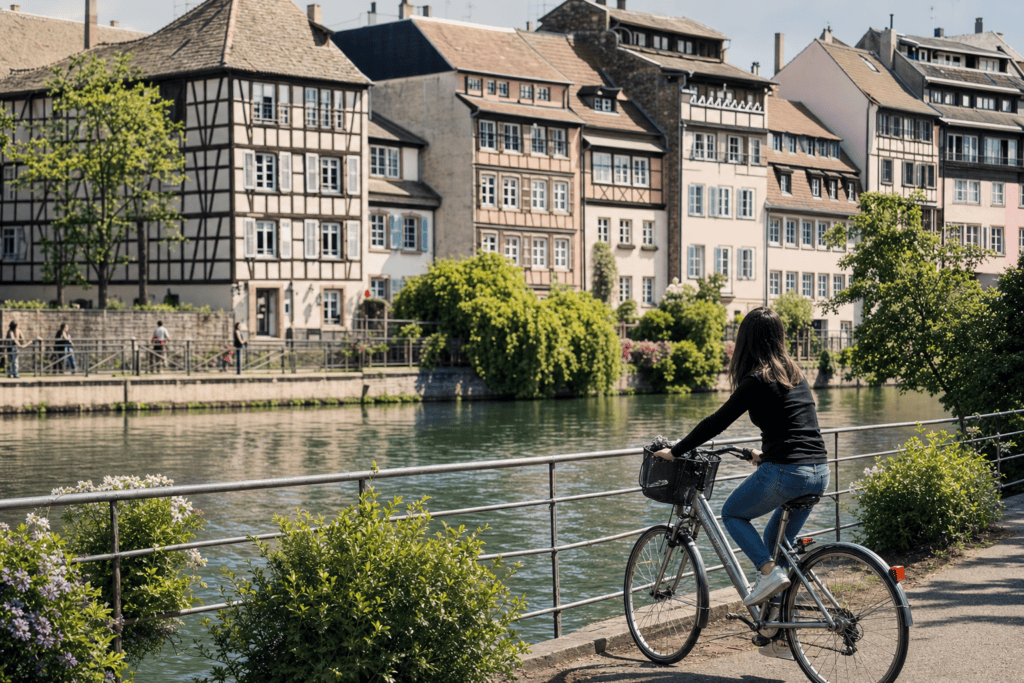 What to Do in Strasbourg by Bike Along the Ill and Canals A bike ride through Petite France, along the Ill quays, canals, parks, and peaceful neighborhoods of…
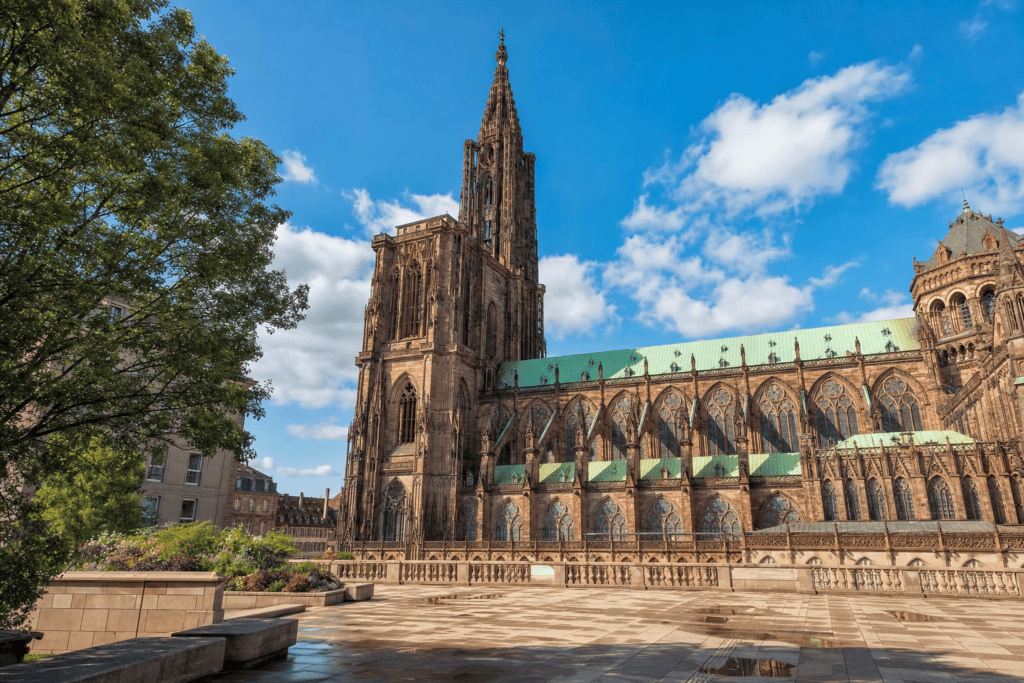 Strasbourg Cathedral and Its Viewing Platform A Gothic masterpiece in the heart of Strasbourg, a climb of about 330 steps and a remarkable panorama…
Online booking · Paris → Strasbourg’s Grande Île, with sites spread around the cathedral, Place Broglie, and Place Kléber
Choose your pickup date and time
Your departure and arrival details are already pre-filled. You can adjust them in the fare calculator before viewing the vehicles and fare.