



Strasbourg by Bike: the Ill River, Canals and Parks
Strasbourg
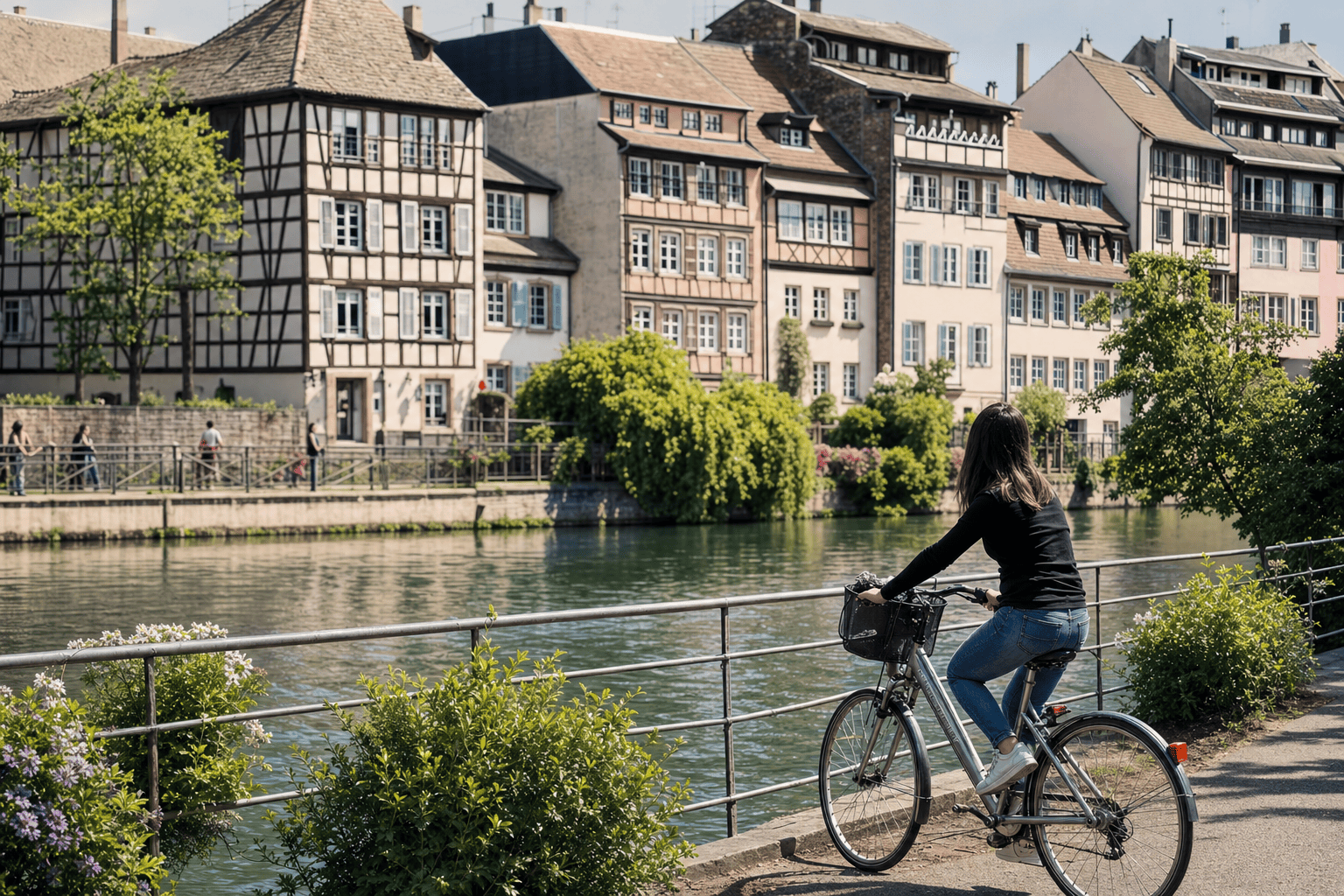
Strasbourg is particularly well suited to cycling: the Grande-Île is compact, the banks of the Ill offer beautiful views, and several routes quickly lead to quieter neighborhoods. For a first ride, start at Strasbourg train station or in Petite France and allow about two hours for a central loop, including breaks. You can then choose one extension toward the Bruche Canal, the Rhône–Rhine Canal, the Orangerie or the Ill-Bruche Urban Nature Park. Routes and traffic conditions may change depending on construction, events and crowds. Check official information before setting out, especially for cycling routes and bike rentals.
Practical information
Choose just one extension before setting out, bring water, and check your return route on the official cycling map before leaving the city center.
Getting to Strasbourg from Paris
To include this ride in an Alsace trip, Booking Paris Transfer can arrange a private transfer from Paris, the Île-de-France region, CDG or ORY to Strasbourg, with a return trip to Paris also available. Transportation is separate from bike rentals and activities at the destination. No admission tickets or rental services are sold.
Private transportation from Paris, the Île-de-France region, CDG or ORY to Strasbourg, with a return trip to Paris available. No tickets or bike rental included.
Why Explore Strasbourg by Bike Along the Ill
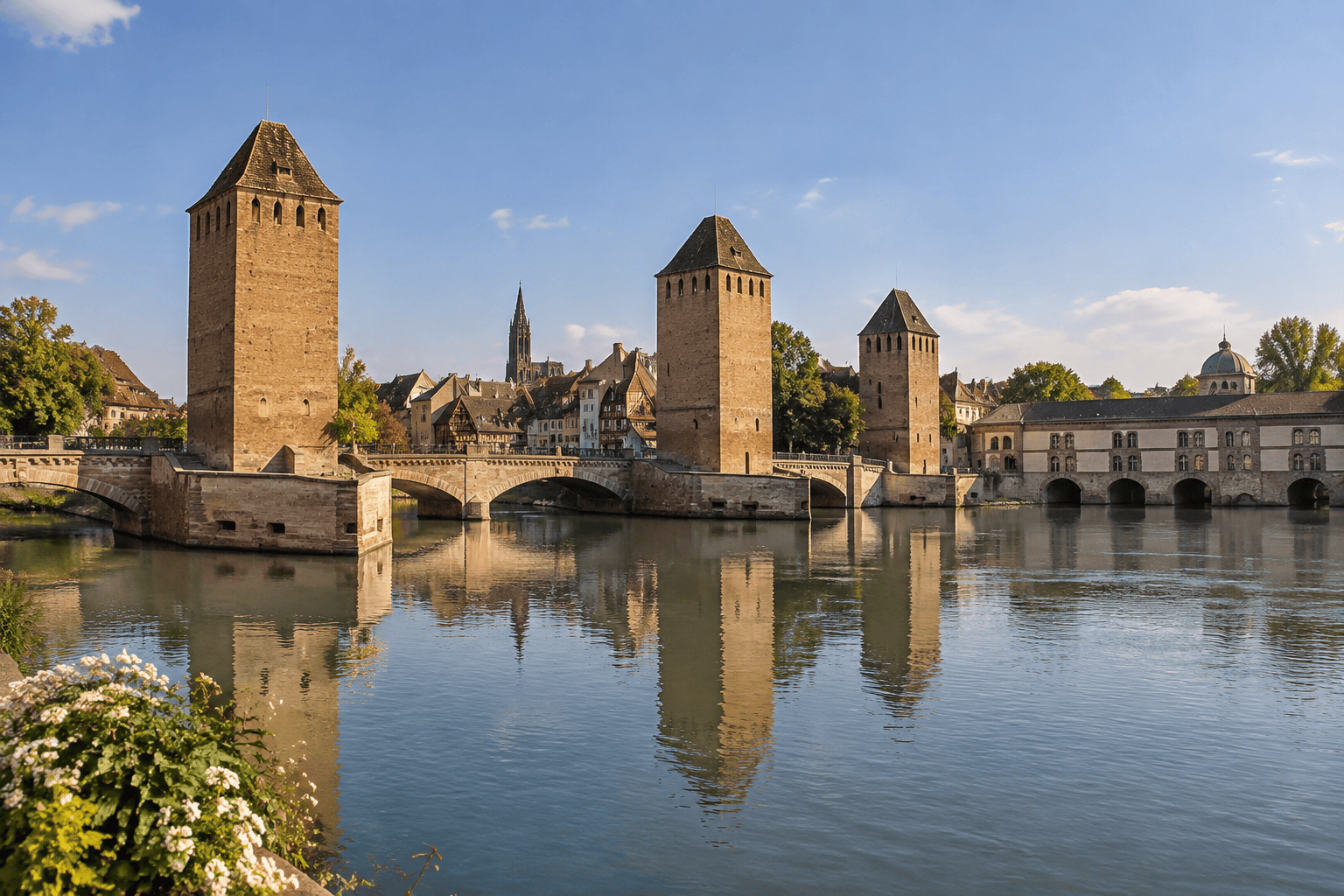
Cycling in Strasbourg lets you change settings quickly. Within minutes, you can go from the narrow streets of the Grande-Île to the open banks of the Ill, then from lively quays to greener paths. The water provides a pleasant thread without turning the ride into a strenuous workout. For a first visit, the central loop can take in Petite France, Vauban Dam, the Covered Bridges, the banks of the Ill and the Quai des Bateliers.
This is not one official, fixed route: the distance and streets used depend on your starting point, traffic conditions and any detours. The official Strasbourg cycling map helps distinguish bike paths, shared lanes and more challenging areas. You can then choose an extension suited to the weather, the group’s ability and the time available, rather than trying to visit every site in one ride.
From the Train Station and Petite France to the Banks of the Ill
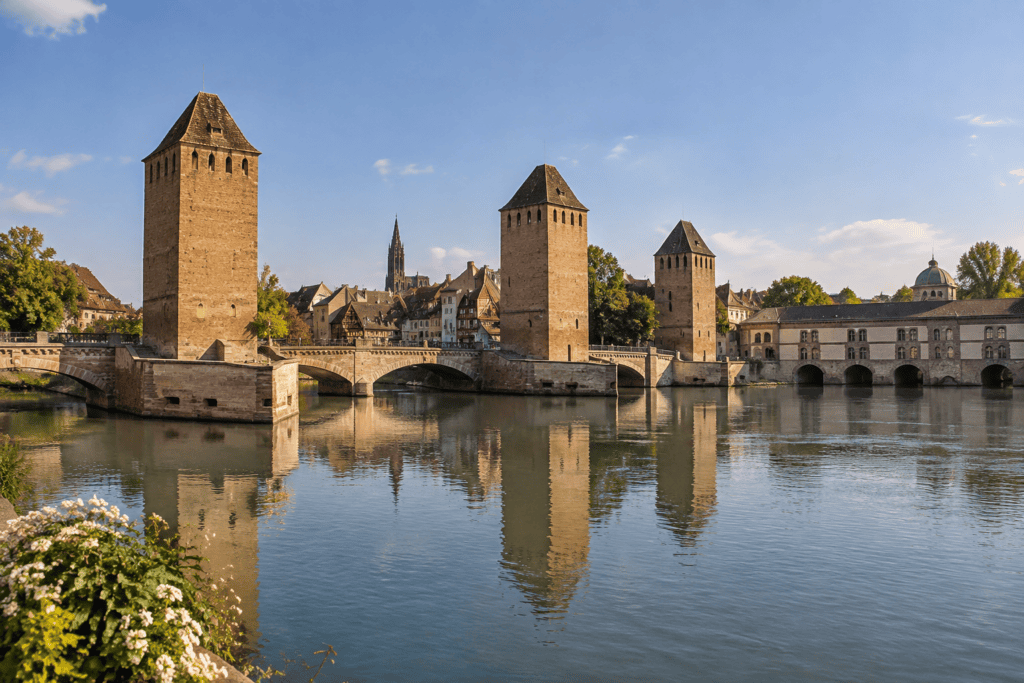
Strasbourg train station is a convenient starting point for reaching Petite France and beginning your ride amid the city’s heritage. If you are already staying downtown, start directly in Petite France, near Vauban Dam and the Covered Bridges. The branches of the Ill, half-timbered houses, footbridges and former river facilities create the most iconic scenery of the ride here.
To structure this first section, head toward Vauban Dam first, take time to look at the Covered Bridges, then make your way to the banks of the Ill, following connections marked by cycling signs where possible. The Quai des Bateliers then offers a change of atmosphere and a useful decision point: return to Petite France for a short loop, or continue toward the Orangerie and the eastern neighborhoods.
Take this section slowly. Cobblestones, terraces, photographers and pedestrians make some stretches unsuitable for fast riding. Alternate between riding and walking so you can enjoy the historic center without getting in other people’s way.
Choosing the Bruche Canal or the Rhône–Rhine Canal
The Bruche Canal offers a natural extension westward from the Petite France area. The route gradually leaves the most urban spaces behind and enters a quieter setting defined by trees, locks and open-country landscapes. For a short ride, follow the canal along an out-and-back section and choose a turnaround point before setting out. This makes it easy to adjust the distance to the group’s energy level.
The Rhône–Rhine Canal offers a different direction, southward, toward the Meinau area and Illkirch-Graffenstaden in particular. This option is better suited to a half-day, since the miles add up with urban crossings, breaks and the return journey. Surfaces, crossings and the degree of separation from traffic may vary by area.
The Bruche Canal is therefore generally the simplest choice for a first, peaceful extension; the Rhône–Rhine Canal is better for cyclists who want to ride longer. In either case, bring water and do not combine several canals on your first outing.
The Marne–Rhine Canal as a Destination
The Marne–Rhine Canal expands the riding options north and east of Strasbourg. It is not necessarily the most direct continuation of a short loop around Petite France: depending on the connection you choose, you may need to cross several urban areas before reaching a more linear waterside route. Treat it as the main objective of a ride rather than routinely adding it to every other detour.
From the city center, find a suitable connection on the cycling map, then choose a bridge, lock or other clearly identifiable landmark as your turnaround point. Surfaces and traffic conditions are not the same everywhere. A loop that includes this canal can take well over two hours, especially with stops and a leisurely pace.
This option suits visitors who already know the Grande-Île or have half a day available. With children or a group of mixed abilities, keep the return route simple and avoid making the canal an additional stop after a long loop through the city center.
Ill-Bruche Urban Nature Park and Greenways
The Ill-Bruche Urban Nature Park offers a glimpse of a more everyday, green side of Strasbourg. Depending on the route chosen, the ride may pass through Montagne Verte, Elsau or the area around the Muhlbach. Meadows, gardens, tree-lined paths and traces of former water uses gradually replace the monumental façades of the Grande-Île.
From Petite France, choose one specific area first rather than aiming to cover the entire park. A loop toward Montagne Verte works well for an introductory ride; a longer variant toward Elsau requires more time and greater attention at intersections. Some paths are narrow or shared with other users and should not be treated as fast bike routes.
Natural areas offer fewer shops and refreshment stops than the city center. Bring water, check the battery on an electric bike and identify your return route before leaving the urban quays. The official page for the Strasbourg Urban Nature Park provides additional planning information.
Orangerie, European Quarter and Robertsau
Another route leads from the Quai des Bateliers toward the European Quarter and the Orangerie park. It combines urban scenery, wider avenues, green spaces and contemporary architecture. From the city center, follow the marked cycling connections east and use the park as an intermediate destination. This ride requires more attention than canal-side sections, particularly at intersections and when changing direction.
Routes toward Robertsau extend this exploration through residential areas, gardens and fringe landscapes. They are worthwhile if you have already explored Petite France and want to spend several hours discovering a less touristy side of Strasbourg. However, they involve more miles and crossings, which can tire a family group.
For a first visit, keep it simple: take the central loop, then choose just one extension toward the Orangerie, the Bruche Canal or the urban nature park. Save Robertsau and the Marne–Rhine Canal for a second ride if you enjoy cycling without time constraints.
Bike Rental, Preparation and Safety
Vélhop is the local service to consult for available bikes, rental locations and current terms. Hours, inventory and equipment may vary by season and demand. Check the service’s information directly before heading out, especially if you need an electric bike, a children’s bike or a family option. The best starting point will depend on your accommodations and chosen extension.
Before setting out, identify pedestrian areas, shared paths, bike parking and any possible detours. A city bike works well for the central loop; electric assistance can be helpful for a half-day ride or a group with mixed abilities. Bring water, a light layer, a charged phone and a lock. Services are farther apart along the canals and in natural areas.
Adjust your speed to the number of people around you, signal turns and keep your distance from children. Do not block access to bridges or locks. Construction and events may alter routes: check the information just before departure and be prepared to walk through narrow or crowded sections. The best goal is a comfortable ride that respects the heritage, the water and other users.
Useful sources
Frequently Asked Questions
How much time should you allow for cycling in Strasbourg?
What distance should you choose for a first ride?
Which canal should you choose from the city center?
Can you take this ride with children?
Where can you rent a bike in Strasbourg?
Are the banks of the Ill reserved for bikes?
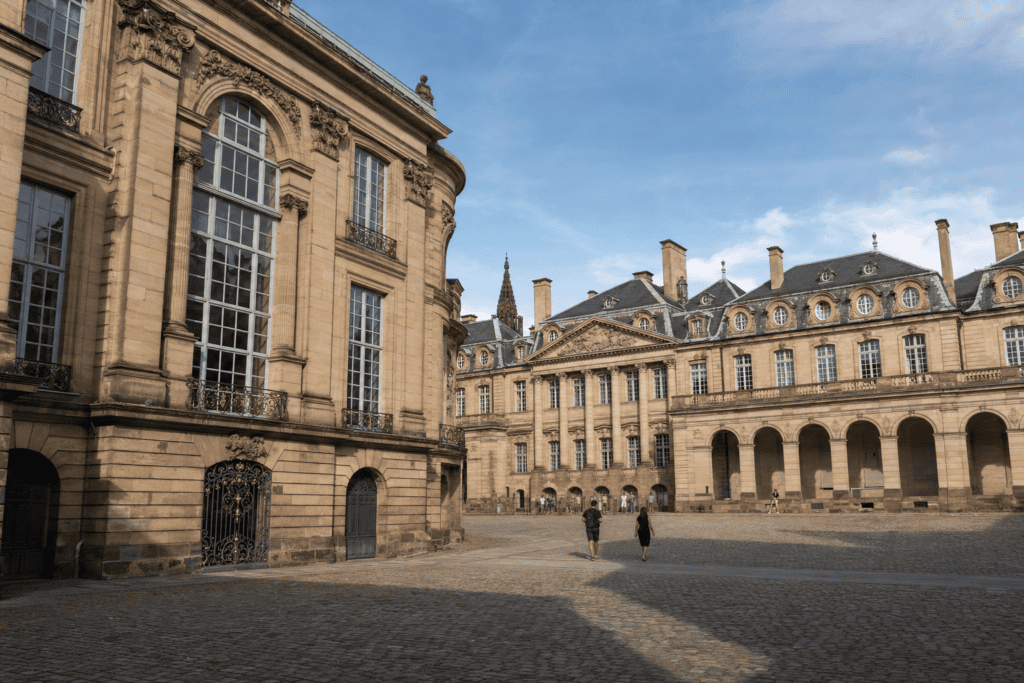 Palais Rohan Museums Three museums in a historic palace, spanning Alsatian archaeology, princely apartments, decorative arts, and European painting.
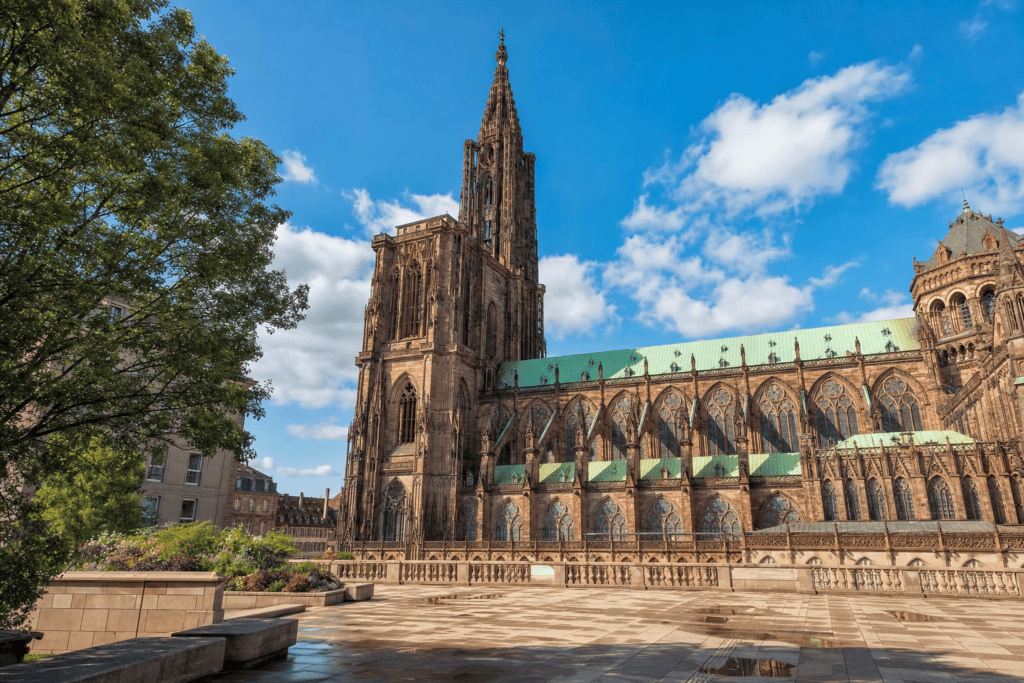 Strasbourg Cathedral and Its Viewing Platform A Gothic masterpiece in the heart of Strasbourg, a climb of about 330 steps and a remarkable panorama…
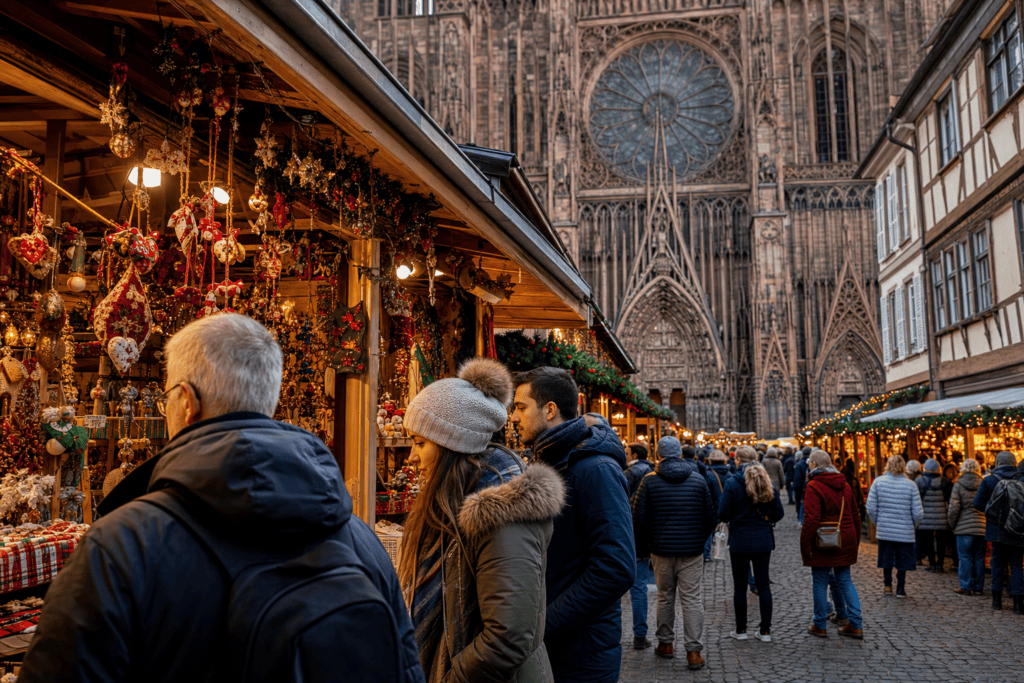 Strasbourg Christmas Market and Alsatian Traditions A winter stroll through the heart of Strasbourg, exploring the history of the Christkindelsmärik, illuminations, crafts, and Alsatian specialties.
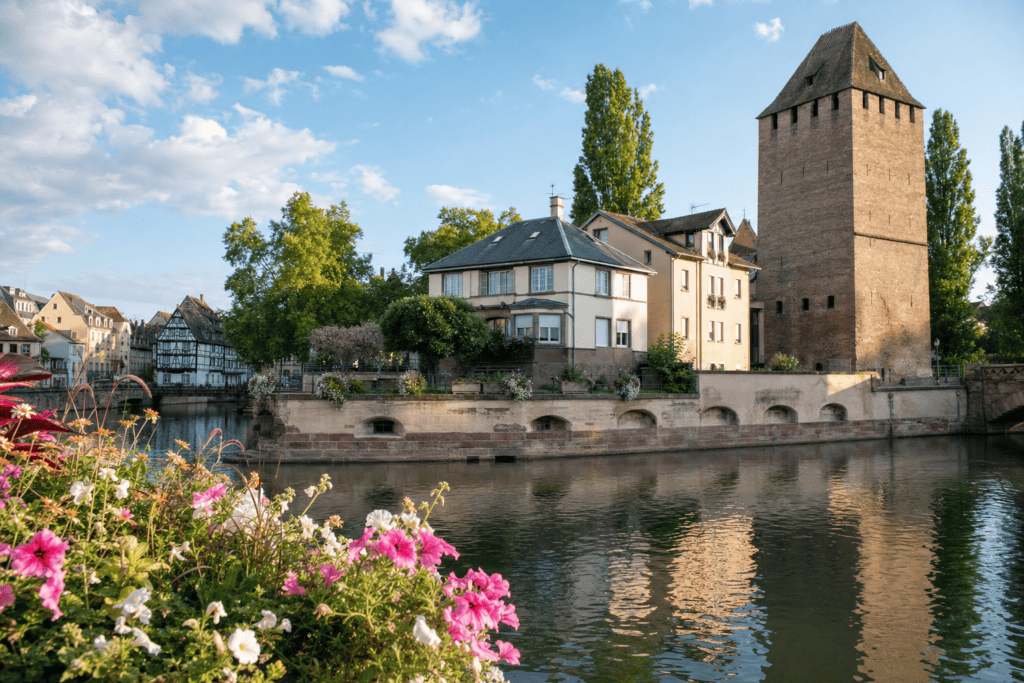 La Petite France and the Covered Bridges An essential Strasbourg route featuring half-timbered houses, canals, medieval towers and the panoramic terrace of the…
Online booking · Paris → Strasbourg, Bas-Rhin, Grand Est, France
Choose your pickup date and time
Your departure and arrival details are already pre-filled. You can adjust them in the fare calculator before viewing the vehicles and fare.