



Old Tours and Place Plumereau: Visitor’s Guide
Caen
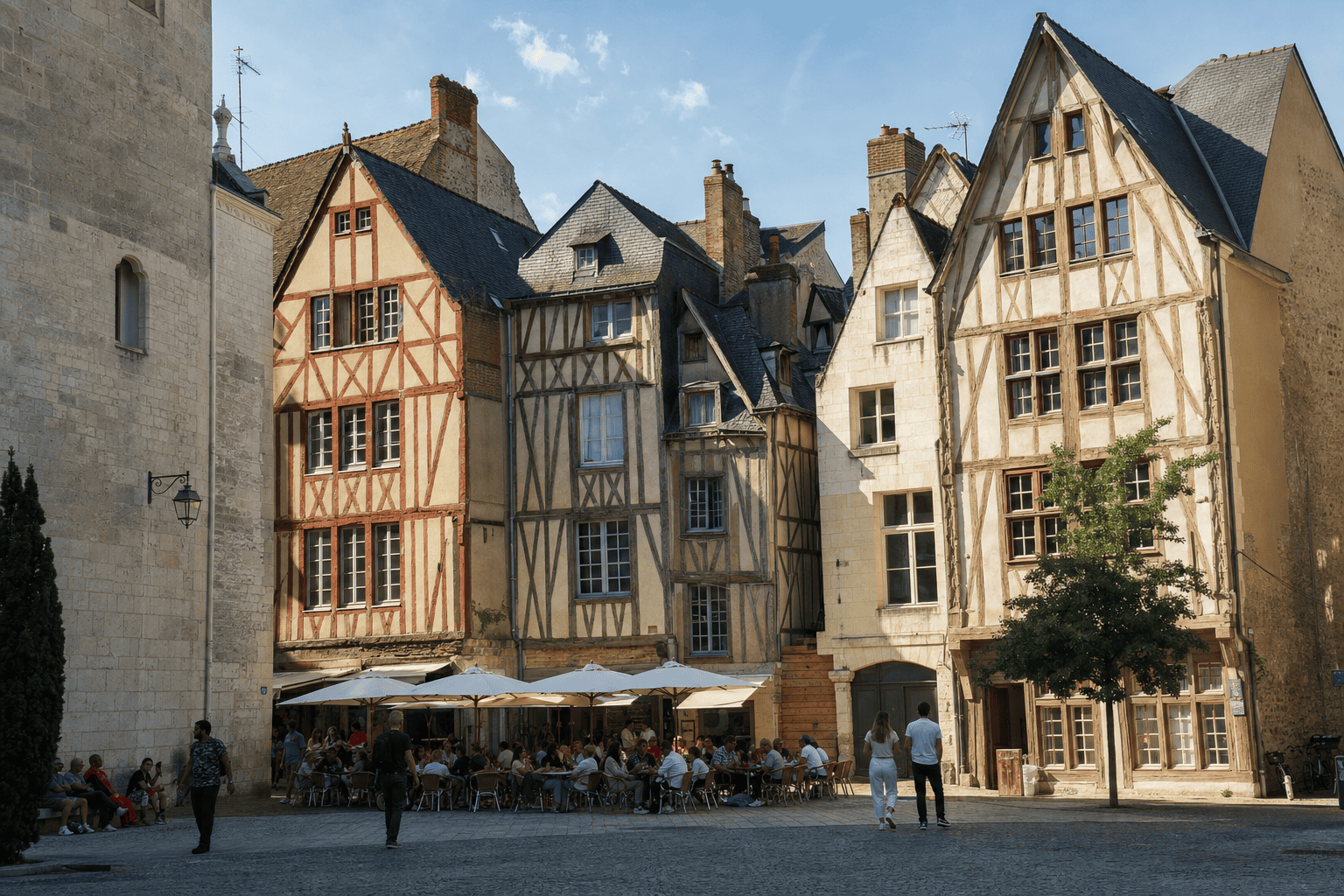
In the heart of Tours, Old Tours and Place Plumereau form one of the most pleasant urban areas in the Loire Valley. Visitors come to admire the half-timbered houses, explore the old streets, stop at a terrace, and easily reach Saint Martin Basilica, the Charlemagne Tower, or the Hôtel Goüin. The district is best explored on foot, through a leisurely stroll without a fixed route, taking time to notice the details of the façades and the changing atmosphere from day to evening.
Practical information
Don’t limit yourself to Place Plumereau: extend your walk along Rue du Commerce, Rue Colbert, Rue du Grand-Marché, and the squares of Châteauneuf and Victoire.
Getting to Old Tours from Paris
For an organized excursion from the capital, Booking Paris Transfer can provide round-trip transportation between Paris and Tours, a departure from your Paris hotel, or pickup at Paris-CDG or Paris-Orly. You can then enjoy Old Tours and Place Plumereau at your own pace, with transportation clearly separate from admission tickets.
Private transportation from Paris, the Île-de-France region, CDG, or ORY; no site admission or guided tour included.
Understanding Old Tours
Old Tours is the city’s historic center, around the former town of Châteauneuf and Saint Martin Basilica. Its present-day identity reflects a long urban history shaped by the development of the pilgrimage connected to Saint Martin, commercial activity, and successive changes to the city center. The district underwent a major restoration policy beginning in the 1960s and was later incorporated into Tours’ Remarkable Heritage Site. This protection explains the care given to its volumes, materials, and façades.
Place Plumereau is its best-known landmark, but it does not represent the entire district. Around it lies a network of narrow streets, small squares, townhouses, shops, and religious buildings. The best way to understand Old Tours is therefore to alternate between busy landmarks and quieter passages. Look at the lines of the façades, window surrounds, and differences in height: they tell the story of the district’s evolution better than a simple photo walk.
Admiring the Half-Timbered Houses
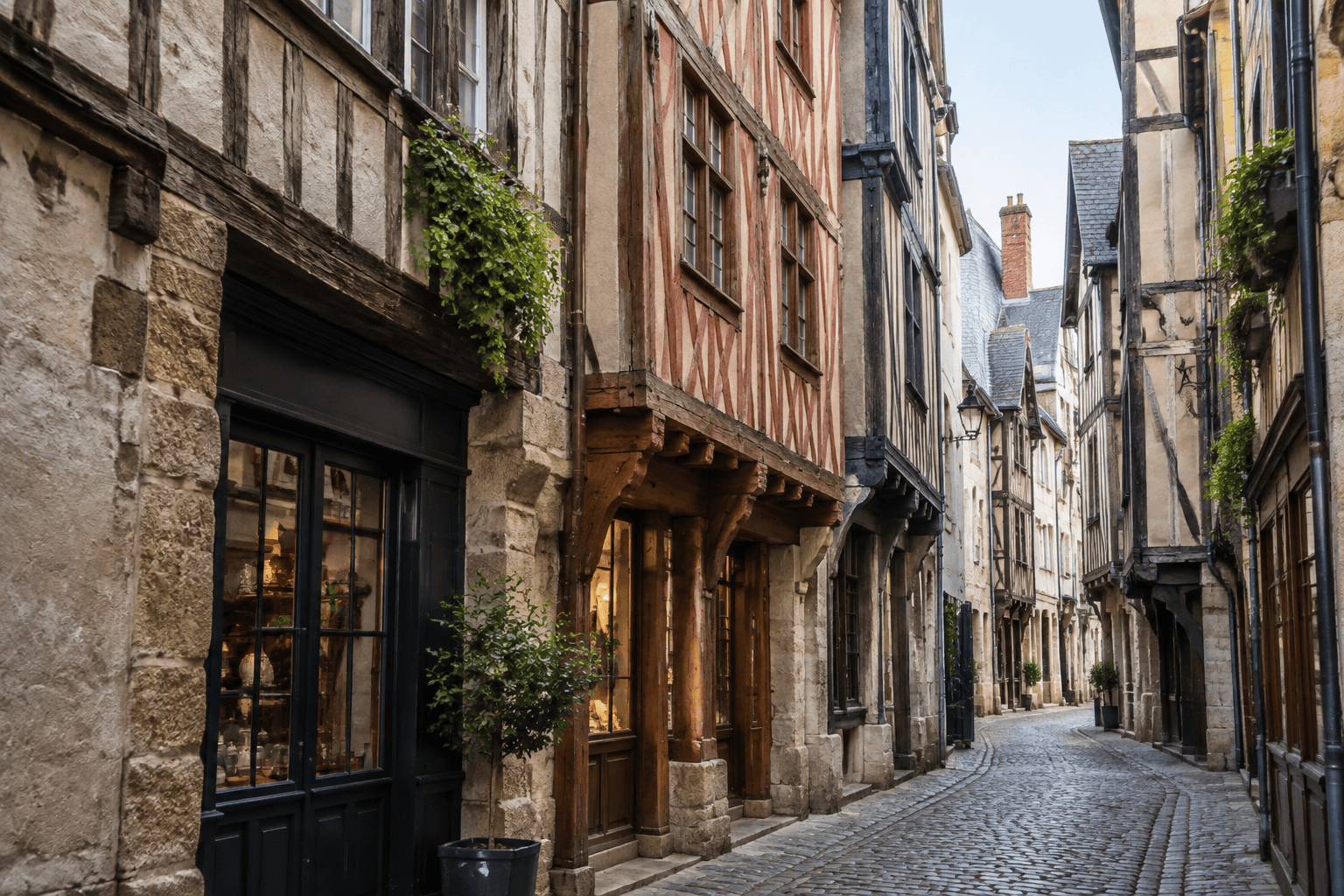
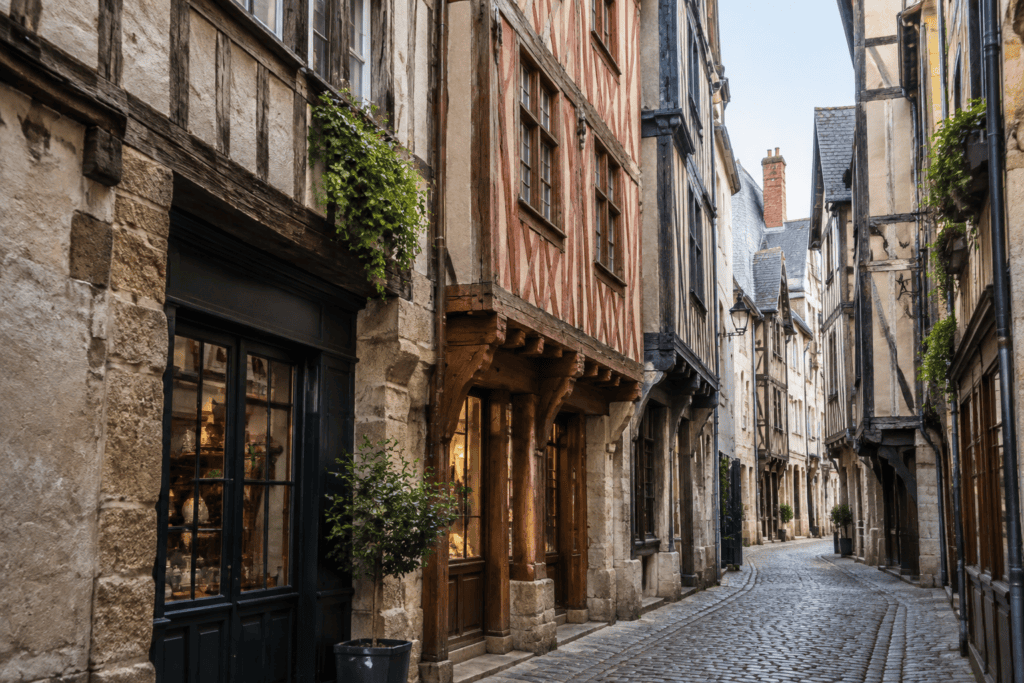
The half-timbered houses, or timber-framed houses, are one of Old Tours’ main attractions. Their exposed structures create vertical and diagonal lines, while colored plaster gives the streets a warm palette. Some façades have been carefully restored; others feature simpler forms or visible alterations, reminding visitors that these buildings have changed over the centuries. Take time to look up: the upper floors, overhanging sections, and roofs often reveal the most interesting details.
From Place Plumereau, leisurely follow Rue du Change, Rue du Commerce, or the nearby streets toward Saint Martin Basilica. Rue Colbert, in particular, extends the visit toward a more commercial area with varied architecture. Don’t look only for a spectacular façade: the district’s appeal lies in the succession of buildings, the contrasts between stone and wood, and the way ground floors now accommodate cafés, restaurants, shops, and services. Be considerate of residents and avoid blocking passageways while taking photos.
Place Plumereau, the Lively Heart of Tours
Place Plumereau is the liveliest meeting place in Old Tours. Lined with historic houses and terraces, it functions as a true urban stage: visitors stop for a break, students meet up, and residents pass through the district every day. Its charm comes as much from its architecture as from its lively atmosphere. During the day, it offers a chance to observe the façades and movement around the square; in the evening, it becomes especially busy.
To fully appreciate the square, step back a little into the streets that lead to it. The perspectives make it easier to understand its shape and admire the upper floors of the houses, which are often more expressive than the ground-floor storefronts. A terrace break can be enjoyable, but it’s also worth planning a walk before or after your meal to discover the adjoining streets, which are less open and sometimes quieter. Depending on the season, activity, temporary installations, and terrace seating may vary: check local information if you’re looking for a specific atmosphere or event.
A Heritage Walk Around Plumereau
A well-rounded walk can begin at Place Plumereau, continue to Saint Martin Basilica and the Charlemagne Tower, and then proceed to Place de Châteauneuf. The latter lies at the foot of the Charlemagne Tower and offers a more open space from which to observe the historic buildings. Continue toward Rue du Commerce and the Hôtel Goüin, notable for its Renaissance façade and its importance to Tours’ heritage. Depending on opening hours and the current program, some sites may host exhibitions or tours; check the arrangements with the establishments concerned.
You can then return toward Place du Grand-Marché, head to the Tours market halls, or turn toward Saint-Julien Church. Another option is to extend the walk to the Loire, completely changing perspective after the mineral streets of the old center. The city’s heritage services sometimes offer guided tours of Old Tours and themed walks. This is a good way to understand the restorations, the former functions of the streets, and the architectural details you might not always notice on your own.
Museums, Monuments, and Cultural Breaks
Old Tours is well suited to a visit combining a walk with cultural discoveries. Saint Martin Basilica recalls Tours’ major role in the history surrounding Saint Martin, while the Charlemagne Tower is one of the visible remains of the former medieval basilica. The Fine Arts Museum is nearby, in the former bishop’s palace, on the cathedral side of Saint Gatien Cathedral. Its collections span several periods and offer an artistic complement to exploring the city.
The Natural History Museum, located near Place Plumereau, can be an interesting stop with children or in less favorable weather. Depending on the period, the Hôtel Goüin hosts exhibitions and heritage events. Since opening hours, prices, closing days, and access conditions may change, always check the official pages before setting out. For a first visit, alternating an hour of wandering, a monument, and a break helps avoid an overly packed itinerary. The district has enough cafés and restaurants to make the outing flexible for families and travelers on a tight schedule alike.
Practical Tips for an Enjoyable Visit
The historic district is best explored in comfortable shoes: the streets are often cobbled or uneven, and visiting involves many detours. Allow extra time if you’re traveling with a stroller, wheelchair, or luggage, as accessibility may vary from one street to another and depending on the terraces in place. For a photography visit, morning generally offers a quieter view of the façades. Late afternoon is interesting for the light, but Place Plumereau and the nearby streets can be very lively.
Don’t reduce your visit to a quick photo stop: the most interesting details are sometimes found on a parallel street. In rainy weather, nearby museums and monuments make it possible to maintain an enjoyable itinerary, subject to their opening conditions. If you’re driving, find out in advance about parking and permitted access to the historic center; don’t assume a vehicle can reach the square directly. From a train station, hotel, or drop-off point, the final part of the journey may be easier on foot or by public transportation.
When to Visit and How to Extend Your Excursion
Old Tours can be visited year-round, with different atmospheres depending on the season. In spring and summer, the terraces and streets give the district a particularly lively feel, while fall highlights the stonework and colors of the façades. In winter, visitor numbers may be lower and the walk more peaceful, but be sure to check the opening hours of cultural sites, which often vary by season. Days with events or festivals may also affect traffic and how the squares are used.
If you have a full day, combine Old Tours with a walk along the Loire, a visit to Saint Gatien Cathedral, or a trip to the market halls. Tours is also a convenient base for exploring the Loire Valley and its châteaux, provided you plan a realistic itinerary. From Paris, a private chauffeur excursion can be arranged as a round trip between Paris and Tours, a departure from a Paris hotel, or pickup at Paris-Charles-de-Gaulle or Paris-Orly. Transportation does not include admission fees or guided tours on site; these must be booked separately with the relevant sites.
Useful sources
Frequently Asked Questions
How long does it take to visit Old Tours and Place Plumereau?
Is Place Plumereau accessible by car?
Where can you see half-timbered houses in Tours?
Can you visit Old Tours with children?
Are guided tours of Old Tours available?
 Tours Market Halls A food-focused stop in the heart of Tours to discover Touraine products and continue your…
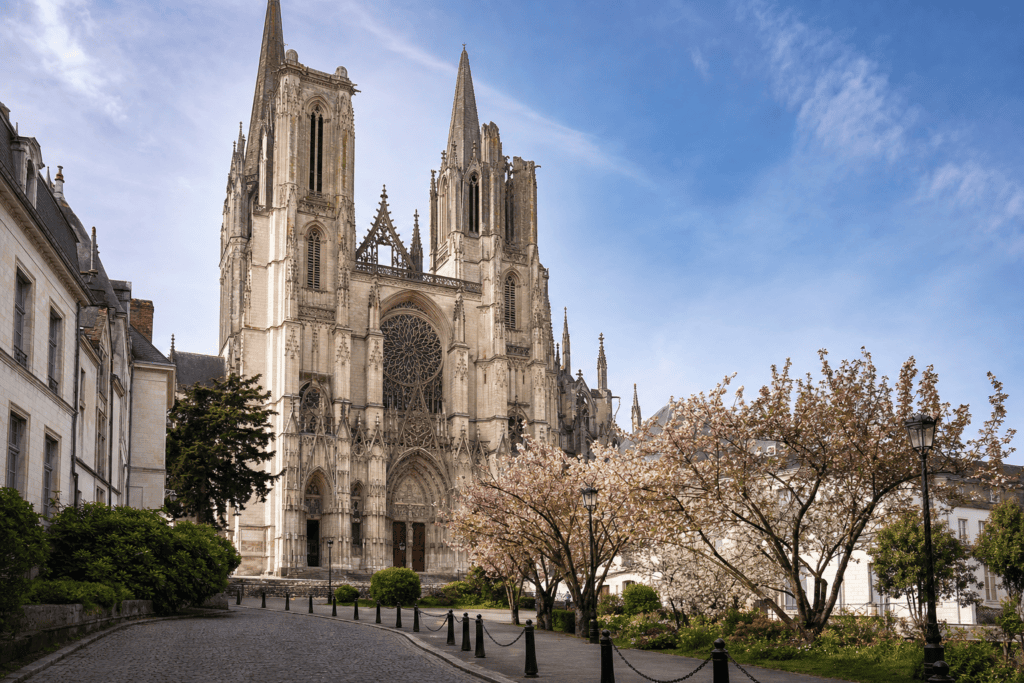 Saint-Gatien Cathedral A remarkable cathedral showcasing the evolution from Gothic architecture to the early Renaissance, its stained glass, and…
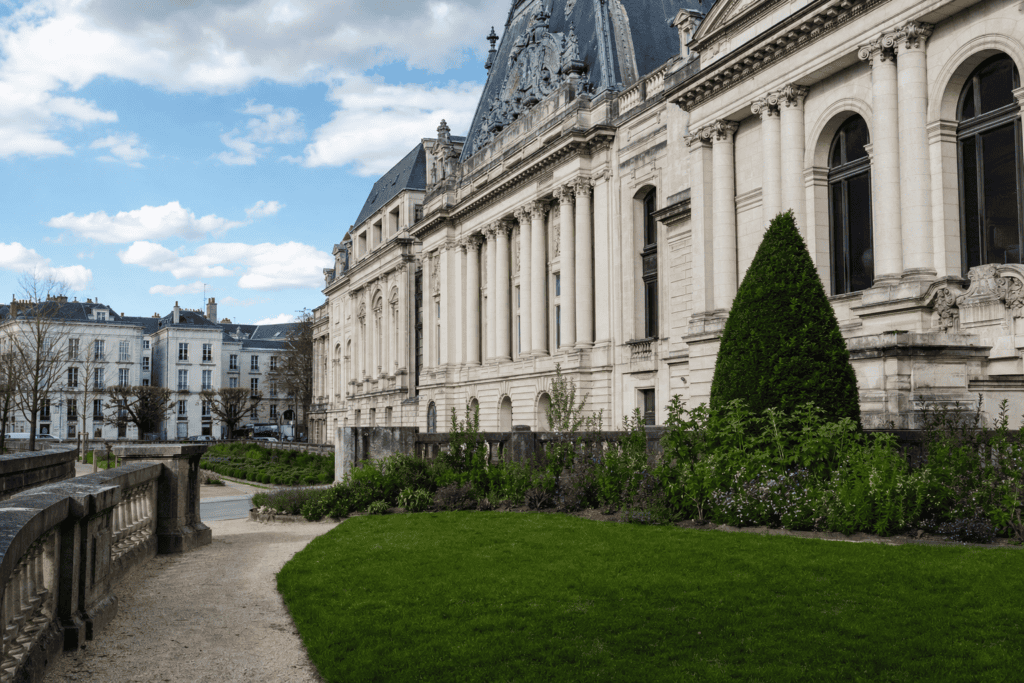 Tours Fine Arts Museum In Tours’ former archbishop’s palace, discover collections ranging from the Middle Ages to modern art, historic rooms…
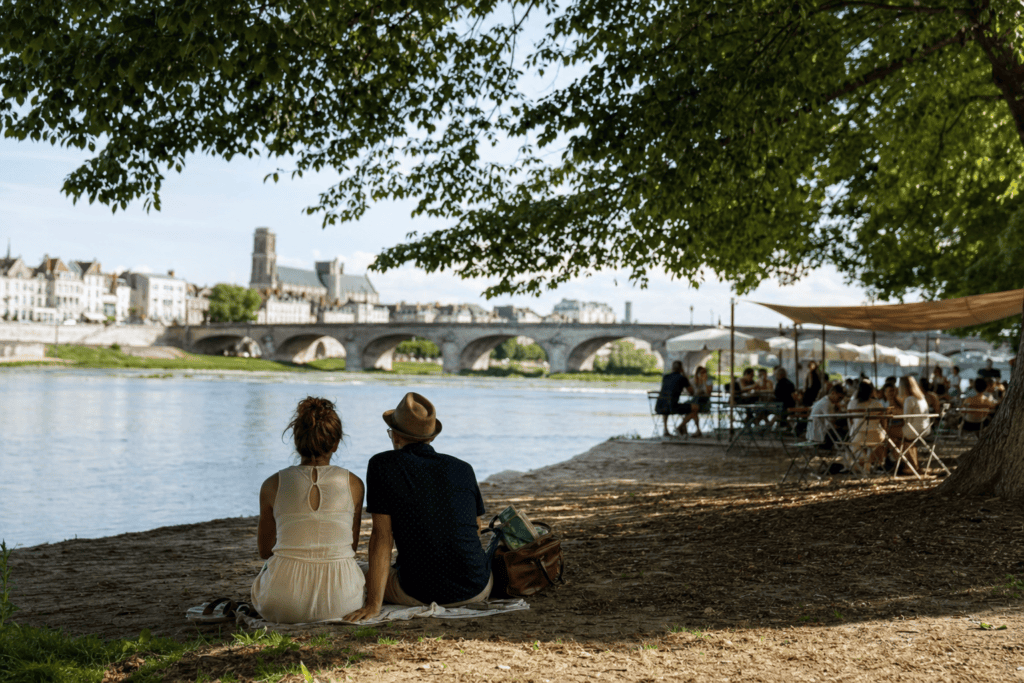 Walk Along the Loire and Visit a Tours Guinguette A leisurely walk along the Loire, between Wilson Bridge, river views, and…
Online booking · Paris → Place Plumereau, 37000 Tours, France
Choose your pickup date and time
Your departure and arrival details are already pre-filled. You can adjust them in the fare calculator before viewing the vehicles and fare.