



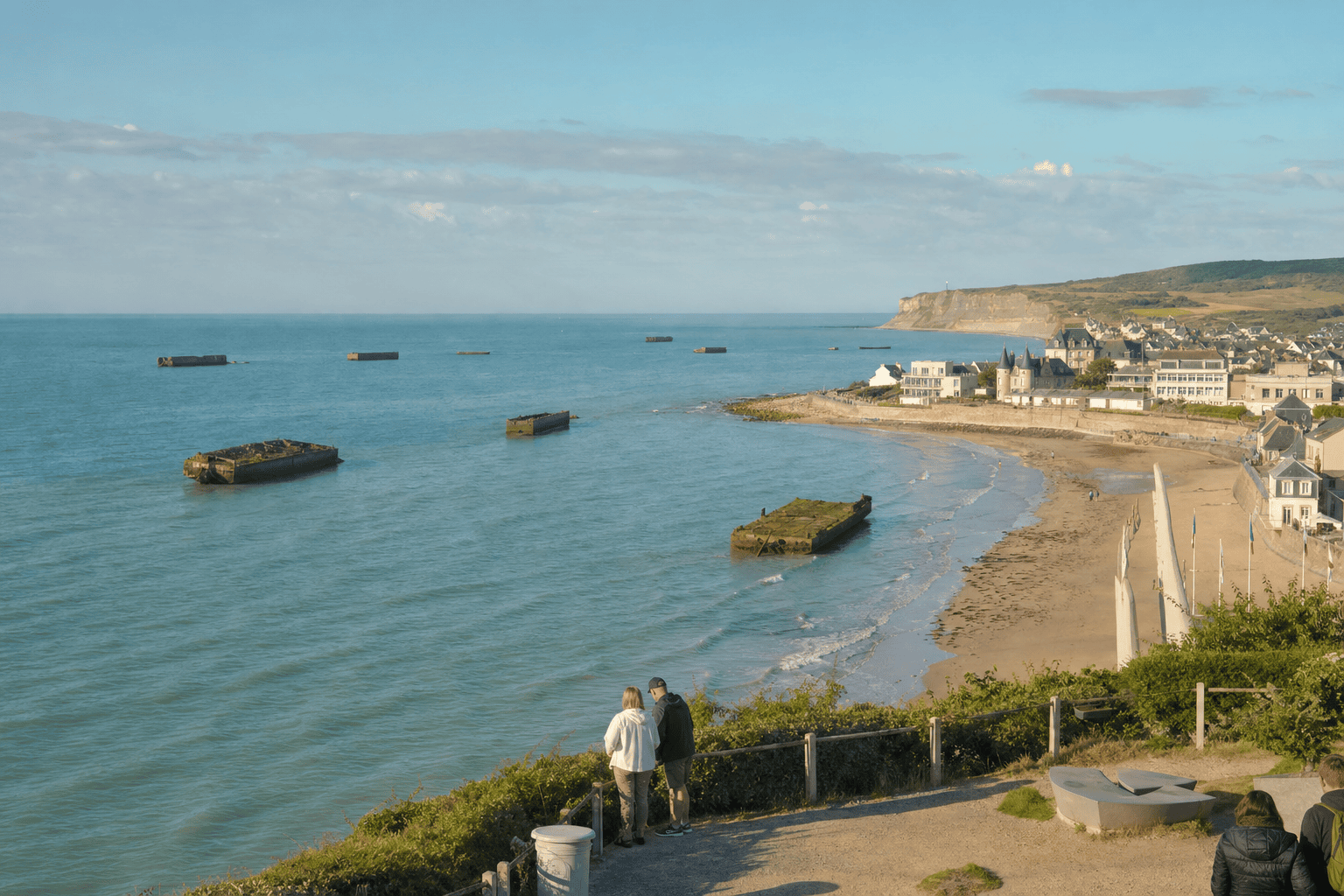
The Arromanches artificial harbor and Gold Beach
Arromanches-les-Bains
In Arromanches-les-Bains, the Arromanches artificial harbor can be viewed from a Gold Beach shoreline where Phoenix caissons and the remains of Mulberry B are still visible offshore. The tide constantly transforms the landscape: at low tide, the structures seem closer to shore; at high tide, they blend into the bay. The D-Day Museum and the viewpoint at Arromanches 360 help explain the strategic role of Port Winston, built to supply Allied forces after June 6, 1944. This stop combines remembrance, technical history, coastal views, and a visit to a Calvados village that can easily be included in an itinerary from Bayeux or Paris.
Practical information
Bring a windbreaker and sturdy shoes. View the remains from designated areas and never climb onto the caissons or submerged structures.
Paris → Arromanches-les-Bains, in the heart of Gold Beach
From Paris, an Île-de-France hotel, CDG, or ORY, Booking Paris Transfer can arrange a private ride to Arromanches-les-Bains, with a return to Paris or an itinerary focused on the D-Day beaches. Private transportation makes it easier to plan a program including Bayeux, Longues-sur-Mer, or Ver-sur-Mer, depending on the time available. Tickets for the D-Day Museum, Arromanches 360, and other sites must be booked separately with the relevant venues.
Transportation service departing from Paris, Île-de-France, CDG, or ORY. Booking Paris Transfer is neither a ticketing service nor a local driver based in Arromanches-les-Bains.
A military harbor designed for D-Day
The Arromanches artificial harbor addressed a major logistical challenge of Operation Overlord. After the first troops came ashore, the Allies needed to transport vehicles, fuel, ammunition, food, and reinforcements into France. Existing major ports were still controlled by German forces or too badly damaged to be used quickly. The solution was to manufacture prefabricated, dismantlable harbor components in Great Britain, tow them to the Normandy coast, and assemble them off Arromanches.
The system, known as Mulberry B or Port Winston, included Phoenix concrete caissons, floating breakwaters, pontoons, and metal roadways. The caissons protected against waves, while the piers connected ships with the beach. Arromanches was liberated on June 6, 1944, and the first installations were put in place quickly. The harbor remained in use for several months, until captured or repaired port facilities gradually took over.
The visit is best approached as an engineering achievement as well as a site of remembrance. The blocks visible offshore are fragments of a temporary infrastructure on an exceptional scale, designed to support the advance of the Allied armies in Normandy.
Reading the landscape from Gold Beach
From Arromanches’s seafront, you look directly toward the remains of Mulberry B. The Phoenix caissons appear as large concrete structures spread across the bay. Their shape and apparent distance change with the water level, light, and mist. At low tide, some lines of structures stand out more clearly, making the former harbor’s overall layout easier to understand. At high tide, the blocks appear isolated in a more open seascape.
The best viewing area is along the seafront and in the accessible sections around the esplanade. Binoculars can help you identify the different elements without trying to get closer. Do not walk on the caissons, even when the tide is out: these remains are unstable, affected by currents, and sometimes surrounded by slippery areas. The beach is also a living coastal environment, where pebbles, seaweed, and changing water levels can make walking difficult.
For a fuller understanding, take time to look across the bay before entering the museum, then go back outside after your visit. The historical explanations will give concrete meaning to the silhouettes seen from the shore.
Visit the D-Day Museum
Located opposite the beach, the D-Day Museum focuses on the construction and operation of the artificial harbor. It directly complements the view of the remains with models, maps, objects, and explanations of the logistics network established after June 6, 1944. The exhibits show how the caissons were built, transported, sunk, and incorporated into a system of pontoons and floating roads.
The models are especially helpful for understanding the scale of the system. From the shore, the caissons may seem scattered; inside the museum, their connection to the breakwaters and quays becomes clear again. Visitors interested in military history will also find an introduction to the role of supply in the Battle of Normandy. For families, the exhibits provide a way to approach the subject through engineering, maps, and the story of the operations rather than through combat alone.
Opening hours, admission prices, and visitor arrangements may change depending on the season. Check the museum’s official website before your visit. An effective plan is to visit the museum, then explore the beach and compare the actual landscape with the models displayed inside. This approach keeps Arromanches from being reduced to a simple photo stop.
Get a higher view at Arromanches 360
On the heights above Arromanches, Arromanches 360 offers another way to understand the area. The viewpoint broadens the perspective over the bay, village, and harbor remains. From here, the relationship between the beach, the curve of the coastline, and the sea becomes clearer. In clear weather, the panorama helps explain why Arromanches was a suitable location for a protected installation while remaining directly connected to Gold Beach.
The circular cinema provides context about the Battle of Normandy and the events surrounding D-Day. It can be useful to begin with this overview before going down to the museum and seafront. The reverse order works as well: after viewing the caissons up close, the film and broader perspective help place the harbor within the scale of the Normandy coastline.
Allow time to travel between the heights and the seafront, especially if you are traveling with young children or have limited mobility. Check the official website for the schedule and opening hours before setting out, as they may vary depending on the season and site operations.
Getting to Arromanches from Paris or Bayeux
For arrival by public transportation, Bayeux is generally the most convenient gateway. Trains connect Paris with this Calvados town, and a regional bus connection may continue to Arromanches when operating. Since operating days, stops, and frequencies vary by period, check the network’s latest information before planning your route. Allow extra time for the connection and for walking between the stop, museum, and seafront.
By car, Arromanches fits easily into a loop connecting Bayeux, Longues-sur-Mer, Ver-sur-Mer, and Courseulles-sur-Mer. The area is also accessible by road from Caen, although travel times depend on traffic and summer visitor numbers. Around June 6, ceremonies and gatherings may affect parking and traffic conditions.
For a private ride from Paris, CDG, or ORY, Booking Paris Transfer can arrange transportation with drop-off in Arromanches, a return to Paris, or an itinerary focused on the D-Day beaches. The service covers transportation only: museum, cinema, and other site tickets must be booked separately with the relevant venues.
Plan a D-Day itinerary in Calvados
Arromanches can be the centerpiece of a day focused on Gold Beach. Start at the D-Day Museum, continue along the seafront, then head up to Arromanches 360. This sequence already takes several hours and leaves time to observe the changing bay. To extend the day, Ver-sur-Mer is home to the Normandy British Memorial, while Longues-sur-Mer preserves a German coastal battery with positions facing the sea. Check opening hours and access conditions for each site.
Courseulles-sur-Mer offers an introduction to the Canadian sector at the Juno Beach Centre. Bayeux complements the itinerary with its cathedral, historic center, and museums devoted to local history. It is better to choose two or three coherent stops than to add too many and spend the day in the car. Distances may look short on a map, but coastal roads, visits, and visitor numbers can easily extend the schedule.
In spring and around commemorations, book accommodations and transportation early enough. In summer, arriving in the morning or visiting late in the day often makes for a more pleasant experience on the seafront.
Tides, safety, and respect for the site
The tide is one of the essential elements of a visit to Arromanches. Check a reliable tide table before arriving, but do not try to reach the remains as the water recedes. The caissons are historic structures degraded by time, storms, and corrosion. They may have sharp surfaces, unstable passages, and areas surrounded by currents. The best views are from accessible areas along the shore, on the heights, and along the seafront.
Wind is common on the coast, even on a sunny day. Bring a jacket, water, and shoes suitable for pebbles and sloping paths. Weather conditions can also affect views, travel, and any maritime activities offered in the area. Families should keep children away from the structures and monitor rapid changes in water level.
Arromanches is both a seaside village and a place of remembrance. Follow local instructions, do not remove any fragments, and avoid loud behavior near memorial areas. Finally, take time to discover the village’s shops and restaurants: stopping locally offers a better sense of the relationship between everyday life today and the exceptional history of this bay.
Frequently Asked Questions
What can you see from Arromanches beach?
Which tide is best for visiting Arromanches?
How can you get to Arromanches without a car?
How much time should I allow?
Can you walk on the Phoenix caissons?
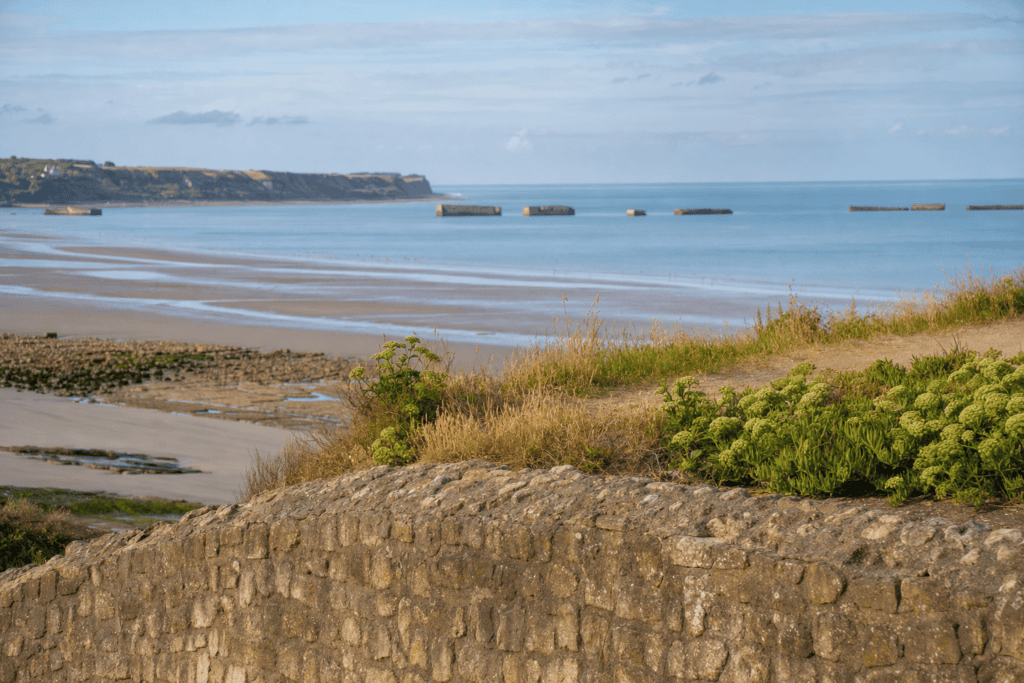 D-Day Beaches from Arromanches From Arromanches-les-Bains, explore Gold, Juno, and Omaha Beaches with a realistic itinerary, access tips, and…
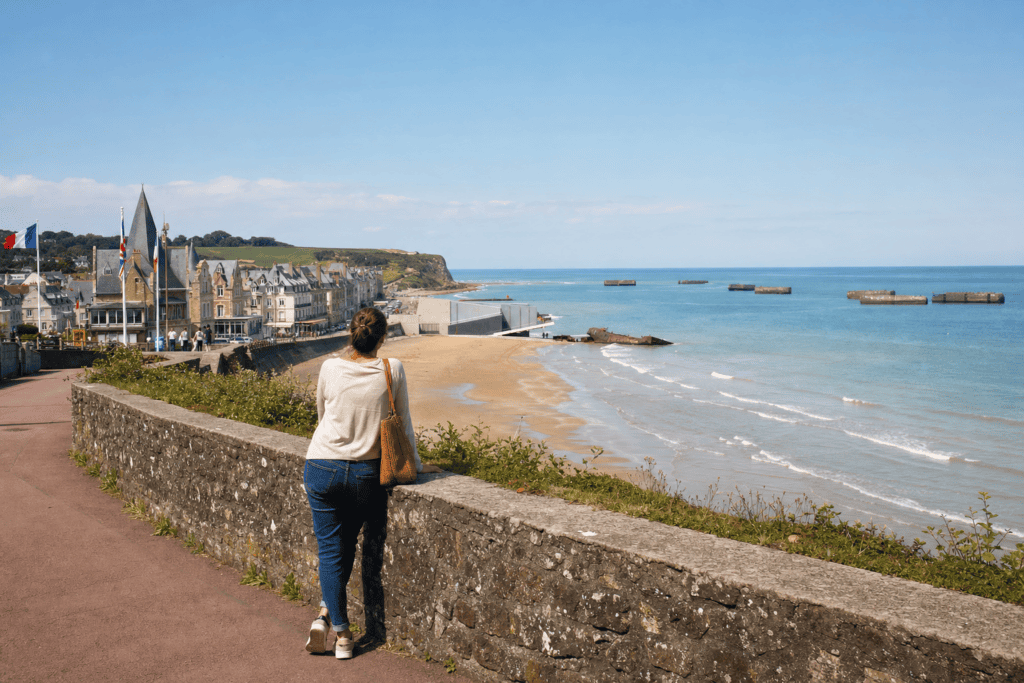 Bayeux and the D-Day sites from Arromanches From Arromanches, Bayeux combines medieval heritage and museums with convenient access to the main D-Day sites.
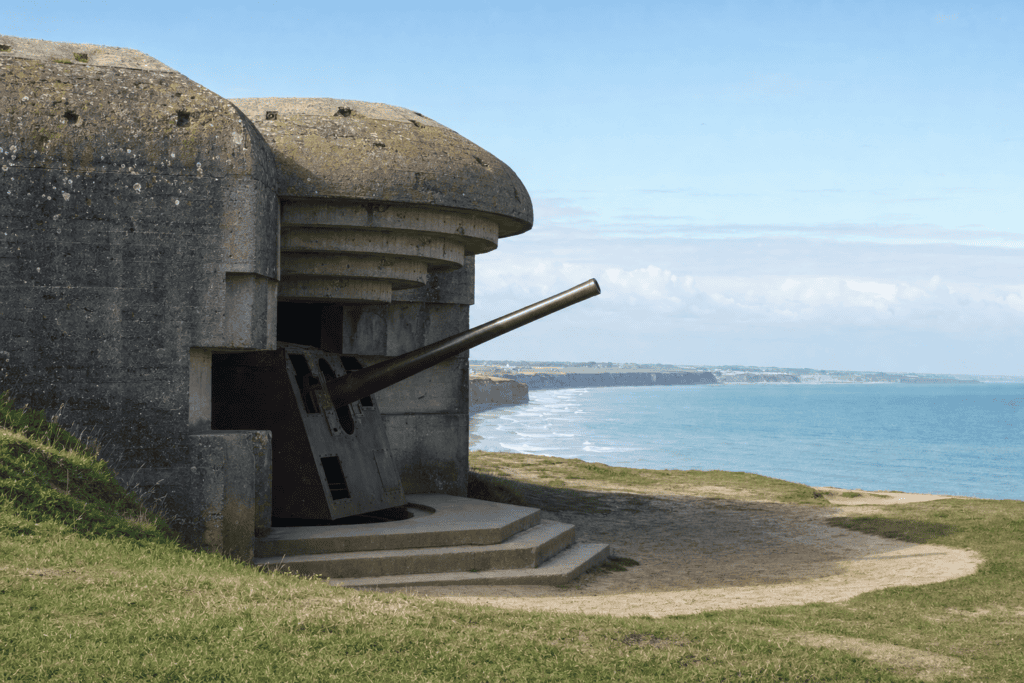 Longues-sur-Mer German Battery Explore the bunkers, guns, and fire-control post at a major D-Day site between…
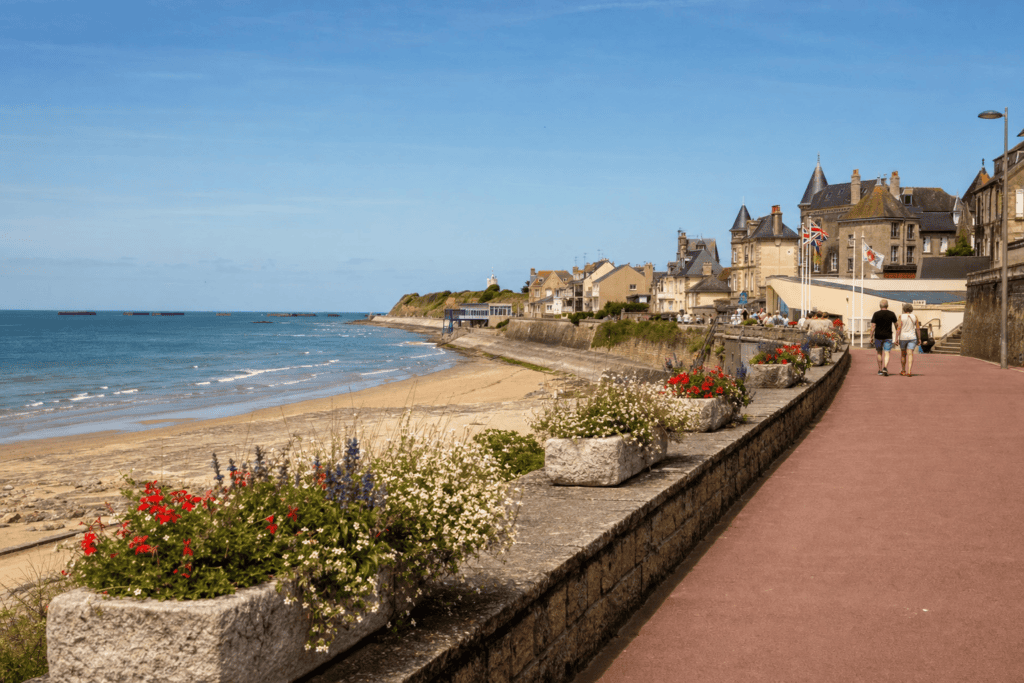 Arromanches-les-Bains Coastal Walk and Heritage A route covering Gold Beach, the remains of Mulberry B harbor, the D-Day Museum, and…
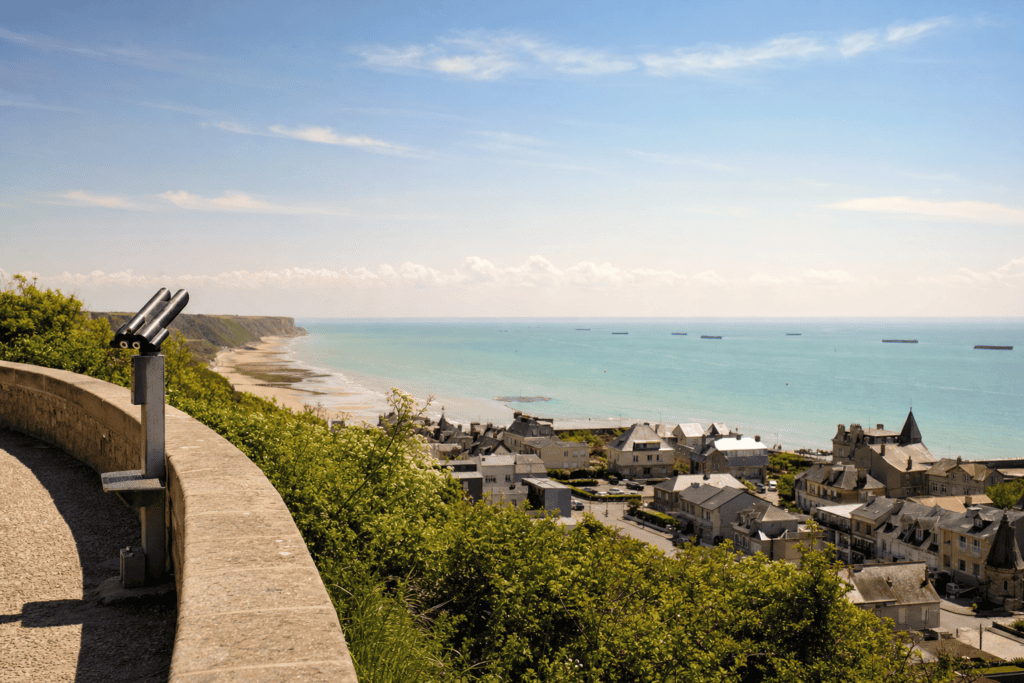 Arromanches Viewpoint and Bay Panorama A historic panorama over Gold Beach and the remains of the Mulberry B artificial harbor in Arromanches-les-Bains.
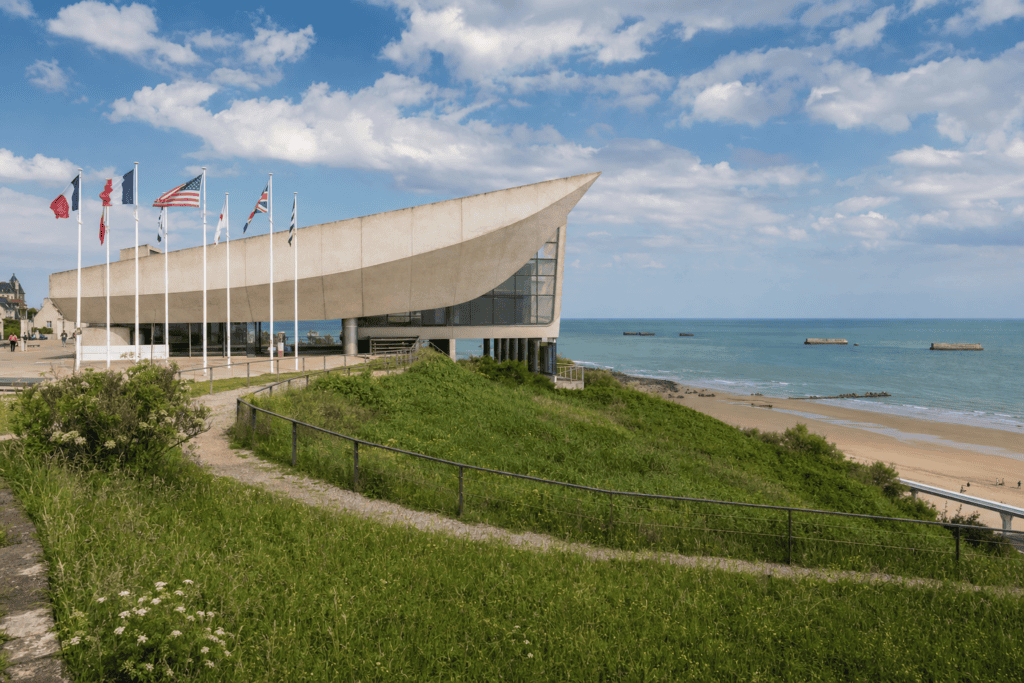 Arromanches D-Day Museum An essential museum for understanding Mulberry B, the Allied artificial harbor installed off Arromanches after…
Online booking · Paris → Seafront and D-Day Museum area, Arromanches-les-Bains, Calvados, Normandy
Choose your pickup date and time
Your departure and arrival details are already pre-filled. You can adjust them in the fare calculator before viewing the vehicles and fare.