



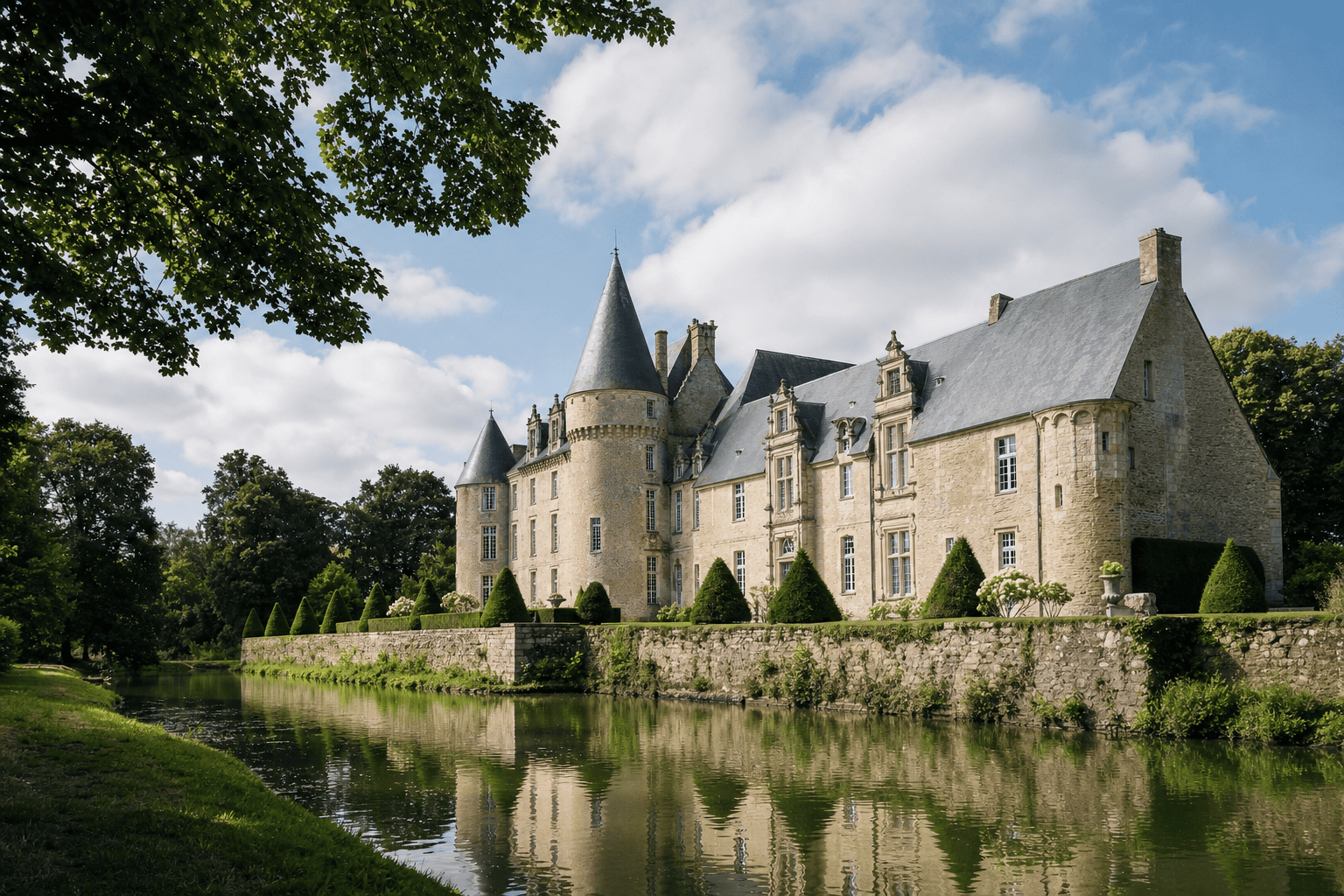
Château de Colombières near Bayeux: Visitor Guide
26 km
About thirty kilometers west of Bayeux, Château de Colombières is located in the rural village of Colombières, in the heart of the Bessin area of Calvados. This medieval fortress, surrounded by a water-filled moat, combines defensive architecture, domestic spaces, and memories of World War II. It makes for an unusual stop between Bayeux, the Bessin marshes, and the D-Day beaches. Since the site is outside Bayeux, it is best considered a complementary excursion rather than a city-center visit. Opening periods, hours, access conditions, and visiting arrangements may change, so check the official information before setting out.
Practical information
From Paris, allow approximately 3 to 3½ hours each way, depending on your starting point, traffic, and route. For a well-balanced day, combine the château with Bayeux or just one major memorial site.
Getting to Château de Colombières from Paris
Booking Paris Transfer can arrange private transportation from Paris, a hotel in the Île-de-France region, Charles de Gaulle Airport, or Orly Airport. The château can be included in a Normandy excursion with a return to Paris, or in an itinerary combining Bayeux with a D-Day site. Transportation does not include an admission ticket: check opening hours and conditions separately with the estate.
Transportation available from Paris, Île-de-France, CDG, or ORY. Booking Paris Transfer is not a local driver based in Colombières and does not sell admission tickets.
A Fortress in the Bessin Landscape
Château de Colombières is set in a rural part of the Bessin, away from Bayeux’s center but close enough to include in an itinerary focused on historic Normandy. The meadows, narrow lanes, and wetlands give the estate a setting very different from that of an urban monument. As you approach, the water-filled moat and towers gradually come into view, reinforcing the impression of a fortress designed to control its surroundings.
The first view is best taken from outside. Reflections in the moat, the height of the walls, and the arrangement of the buildings help you understand the site’s overall layout before going inside. The château is sometimes described as a lookout over the marshes, a phrase that highlights its connection to the open Bessin landscape. This setting also explains why the experience is not limited to architecture: the subtle terrain, water, and meadows all contribute to the monument’s identity.
Moat, Towers, and Defensive Architecture
The moat is one of the most immediately recognizable features of Château de Colombières. It creates a separation between the fortress and its surroundings and illustrates a defensive design based on controlling access. The towers, curtain walls, and openings built into the masonry also provide clues for understanding how the approaches were monitored. Depending on which areas are accessible and what explanations are provided, visitors can consider the circulation routes, crossing points, and ways such a complex was protected.
The visit also goes beyond the image of a purely military castle. The kitchen, bread oven, well, chapel, and spiral staircase evoke the daily lives of its occupants. These details make the monument more tangible: supplies had to be stored, meals prepared, prayers organized, and people moved through spaces suited to an earlier society. The guide’s commentary is valuable for distinguishing between defensive, residential, and domestic functions.
A Norman History to Read with Care
The château’s history is part of that of the Bessin, a region shaped by Normandy’s transformations and by close ties between the shores of the English Channel. Accounts of the estate refer to medieval origins and links with the noble families that helped shape regional history. For an accurate visit, it is best to rely on the site’s explanations and official sources rather than condensing several centuries into a single legend.
Like many Norman fortresses, Colombières evolved in response to changes in warfare, political rivalries, and changing residential uses. The Hundred Years’ War, the Wars of Religion, and the upheavals of the modern era provide useful context, although not every period is necessarily visible in the same way in the buildings today. The French Revolution also changed the status of many noble estates. This layering of periods explains the château’s interest today.
The Memory of 1944 in a Medieval Monument
Château de Colombières has a connection to World War II. After the D-Day landings on June 6, 1944, the estate housed an American psychological warfare center. This use is a reminder that an old building could still serve a modern military purpose, with functions far removed from those of a feudal fortress. It adds a contemporary layer to the way the monument can be understood.
This history takes on particular meaning in the Bessin, near the D-Day beaches and numerous sites dedicated to the Battle of Normandy. Colombières does not replace a specialized museum or military cemetery; instead, it offers a complementary perspective on the reuse of a historic estate in 1944. Visitors wishing to explore this period further can combine the château with Bayeux, a museum, or a coastal site, while limiting the number of stops to leave enough time for visiting and reflection.
An Interesting Visit for Families
The site can appeal to several types of visitors. Military history enthusiasts will observe the relationship between the moat, towers, and access points, while families can turn the visit into an observation game. Why did people need to pass through a controlled entrance? Where were supplies stored? How did people climb a tower? These simple questions help children understand the purpose of the spaces without reducing the visit to a string of dates.
Caution is still necessary in an historic setting. Floors may be uneven, stairways narrow, and some areas close to the water. Children should remain supervised, especially around the moat. Accessibility, tour languages, educational materials, and group arrangements may depend on the season and the route open to visitors. If you are traveling with a stroller, a person with reduced mobility, or a large group, contact the estate before setting out to check the arrangements suited to your situation.
Access and Planning from Paris or Bayeux
The château is located at the place-name Le Château, in the village of Colombières, west of Bayeux. Its rural location makes a car convenient from Bayeux, Isigny-sur-Mer, Le Molay-Littry, or the D-Day beach areas. From Paris, the journey can generally take about three to three and a half hours each way, excluding stops, delays, roadworks, and detours. The exact duration depends on your starting district in Île-de-France and the route chosen.
A Paris–Colombières–Paris round trip is therefore possible, but it often makes for a long day. For a more comfortable itinerary, plan an overnight stay in Bayeux or the Bessin, or limit your other visits to one major stop. Hours, opening periods, any required reservations, and parking conditions should be confirmed with official sources. Comfortable shoes are recommended for the grounds and historic areas, without assuming that all routes are accessible in the same way.
What to See Around Colombières and Bayeux
Château de Colombières fits easily into an itinerary through the Bessin. Bayeux is the most natural complement: its historic center, cathedral, and Bayeux Tapestry extend the exploration of the Middle Ages in an urban setting. Since the château is outside the city, allow time to travel between the two sites and avoid scheduling too many lengthy visits on the same day.
The memory of 1944 can then be explored further along the coast, in a museum, or at one of the D-Day beach sites. The Cotentin and Bessin marshes offer a more landscape-focused alternative, with wet meadows, canals, and country roads. Isigny-sur-Mer may also make a suitable stop depending on your route. To truly enjoy the region, choose two or three coherent stops: Colombières and Bayeux for heritage, or Colombières and one memorial site for a day focused on 1944.
Frequently Asked Questions
Is Château de Colombières located in Bayeux?
How much time should I allow for a visit?
Can the château be visited year-round?
Is the château suitable for children?
Can you make a day trip from Paris?
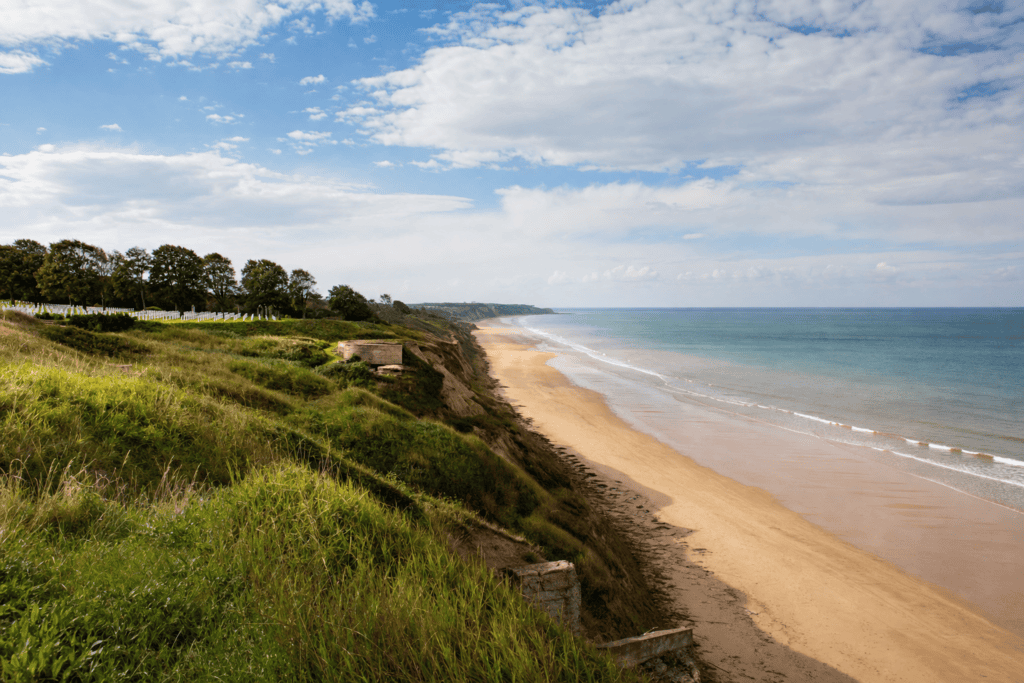 Omaha Beach and the American Cemetery at Colleville-sur-Mer An essential memorial site in Normandy, between Omaha Beach and the American cemetery at…
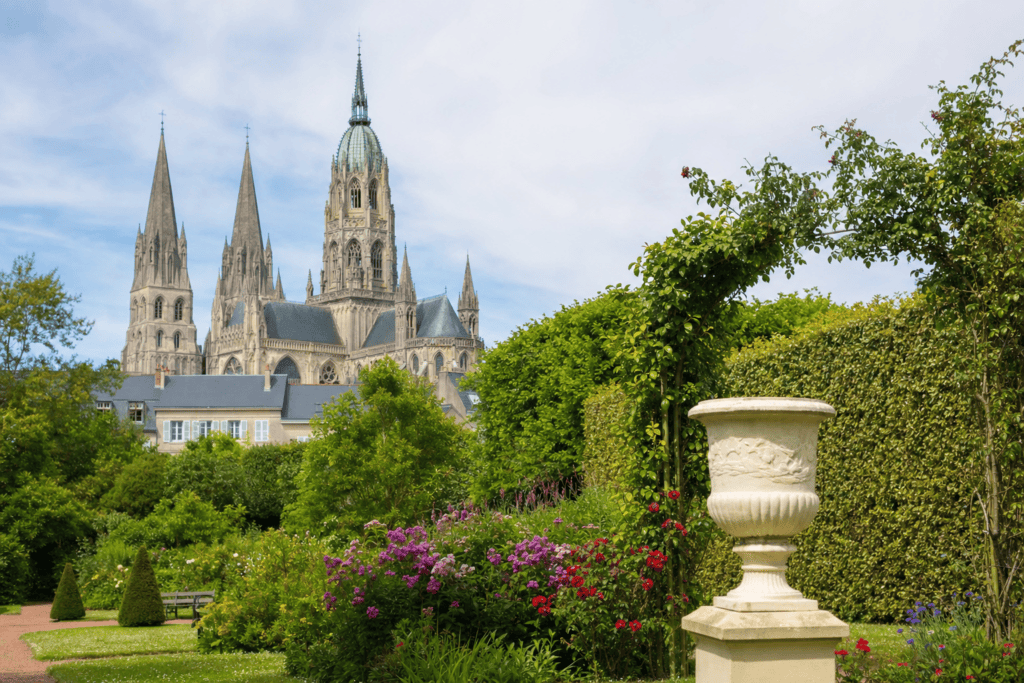 Bayeux Botanical Gardens A 2.6-hectare historic landscaped park known for its weeping beech and botanical walk…
 Bayeux Market Every Saturday morning, the Saint-Patrice Market brings together producers, merchants, and visitors in the heart of Bayeux…
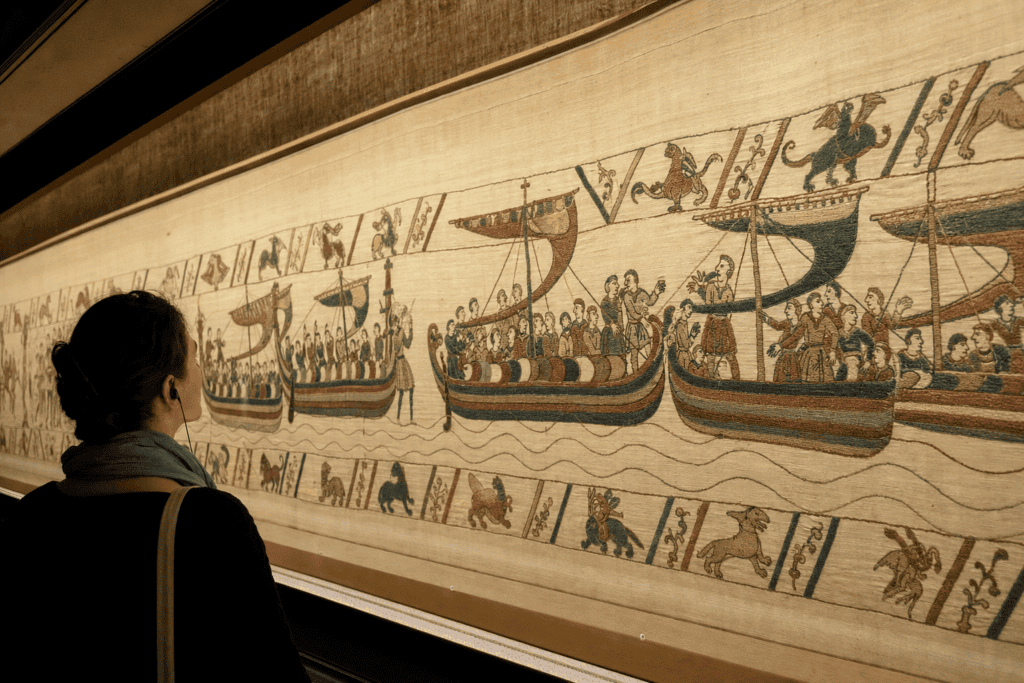 Bayeux Tapestry A narrative embroidery from the 11th century recounts William of Normandy’s conquest of England at…
 Memorial Museum of the Battle of Normandy In Bayeux, a leading museum for understanding the Battle of Normandy before exploring the sites…
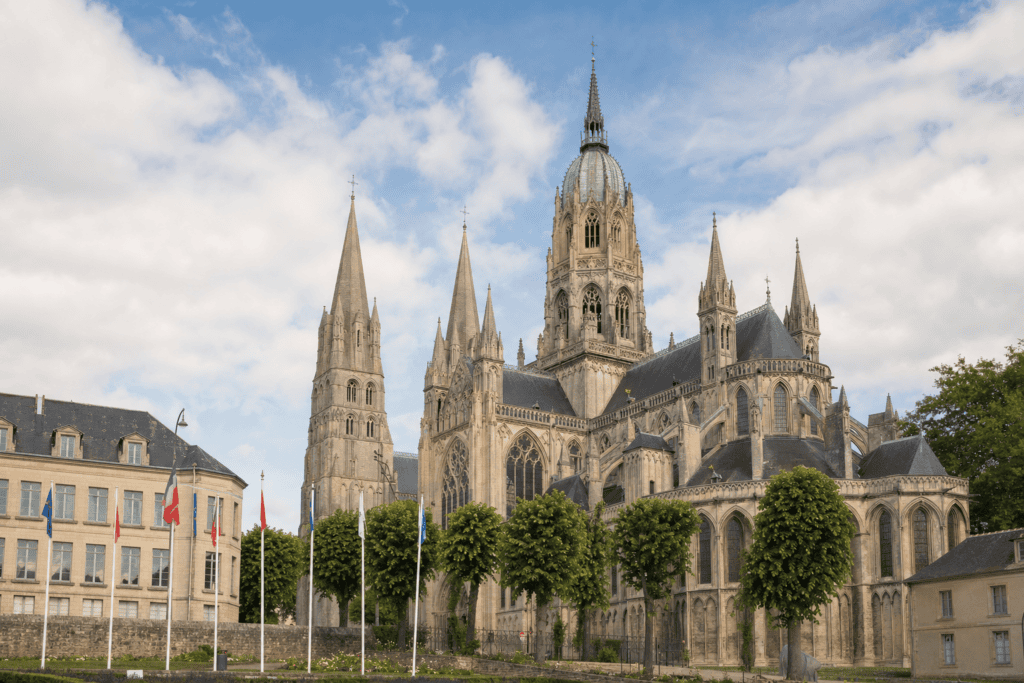 Bayeux Cathedral of Notre-Dame An iconic Bayeux landmark, showcasing Romanesque and Gothic architecture, medieval history, and a stroll…
Online booking · Paris → Le Château, 14710 Colombières, Calvados, Normandy, France
Choose your pickup date and time
Your departure and arrival details are already pre-filled. You can adjust them in the fare calculator before viewing the vehicles and fare.