



Bayeux Tapestry: Understanding the Great Embroidered Story of 1066
26 km
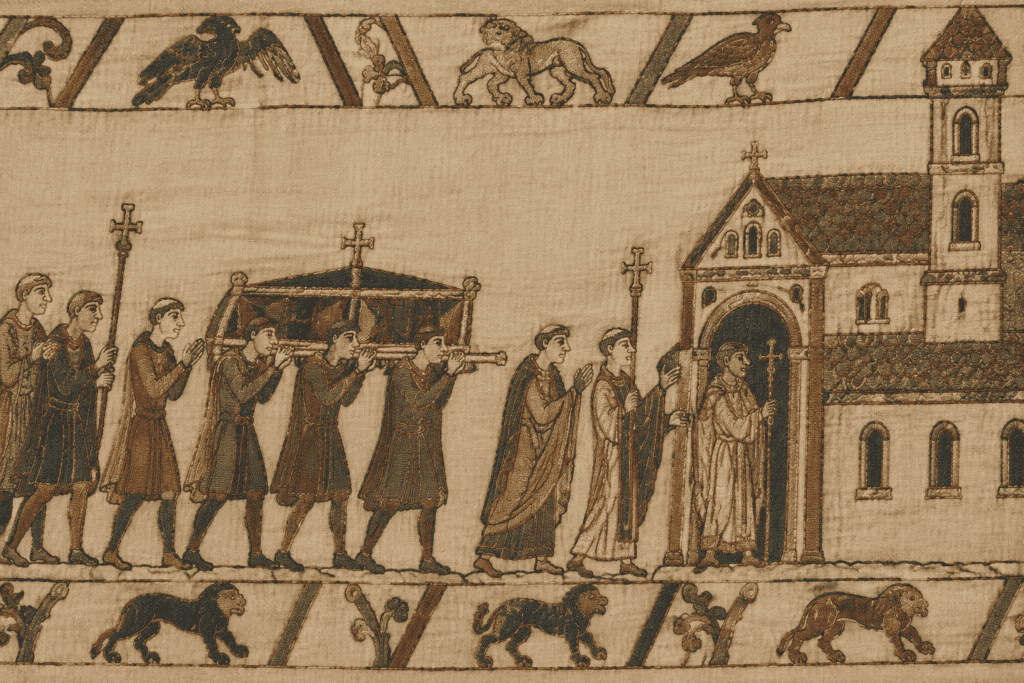
Approximately 68.80 meters long, the Bayeux Tapestry is an 11th-century narrative embroidery depicting the events leading up to William, Duke of Normandy’s conquest of England. Ships, horses, banquets, battles, and Latin inscriptions create an exceptional visual narrative that serves as a historical source, a textile artwork, and a means of legitimizing Norman power. For information about the original’s exhibition conditions and the museum’s opening status during your stay, consult the official Bayeux Museum information.
Practical information
Allow half a day in Bayeux to combine the embroidery, Notre-Dame Cathedral, and the historic center. Children can easily spot the ships, horses, and creatures in the borders; an audio guide or interpretive material helps explain the chronology and the Norman perspective.
Private Transportation from Paris to Bayeux
A private journey from Paris, a Paris hotel, CDG, or ORY can make it easier to plan a day trip or a multi-stop Normandy itinerary. The return journey can be arranged to Paris, depending on your plans. Admission tickets, museum opening status, and exhibition arrangements must still be checked directly with the official sites.
Private transportation only; admission ticket not included. Confirm the museum’s opening status and the original’s presence before finalizing your itinerary.
Why Is the Bayeux Tapestry Famous?
The Bayeux Tapestry is at once a monumental textile artwork, a historical narrative, and a valuable record of 11th-century society.th It is approximately 68.80 meters long and nearly 50 centimeters high, according to UNESCO data. Wool threads are embroidered onto joined strips of linen.
The story begins before 1066, with Harold’s journey to Normandy, then covers the death of Edward the Confessor, Harold’s accession to the English throne, preparations for the Norman expedition, and the Battle of Hastings. The surviving ending breaks off before the coronation and William’s full entry into London.
The work also provides concrete information about clothing, weapons, ships, horses, architecture, and military practices. It is not, however, a neutral account: its narrative is shaped from a perspective favorable to William and should be compared with other sources. UNESCO added it to the Memory of the World Register in 2007.
An Embroidery Rather Than a Tapestry in the Technical Sense
The traditional name “Bayeux Tapestry” is firmly established, but the work is technically a narrative embroidery. The designs are sewn with wool threads onto linen, rather than woven directly as in a traditional tapestry.
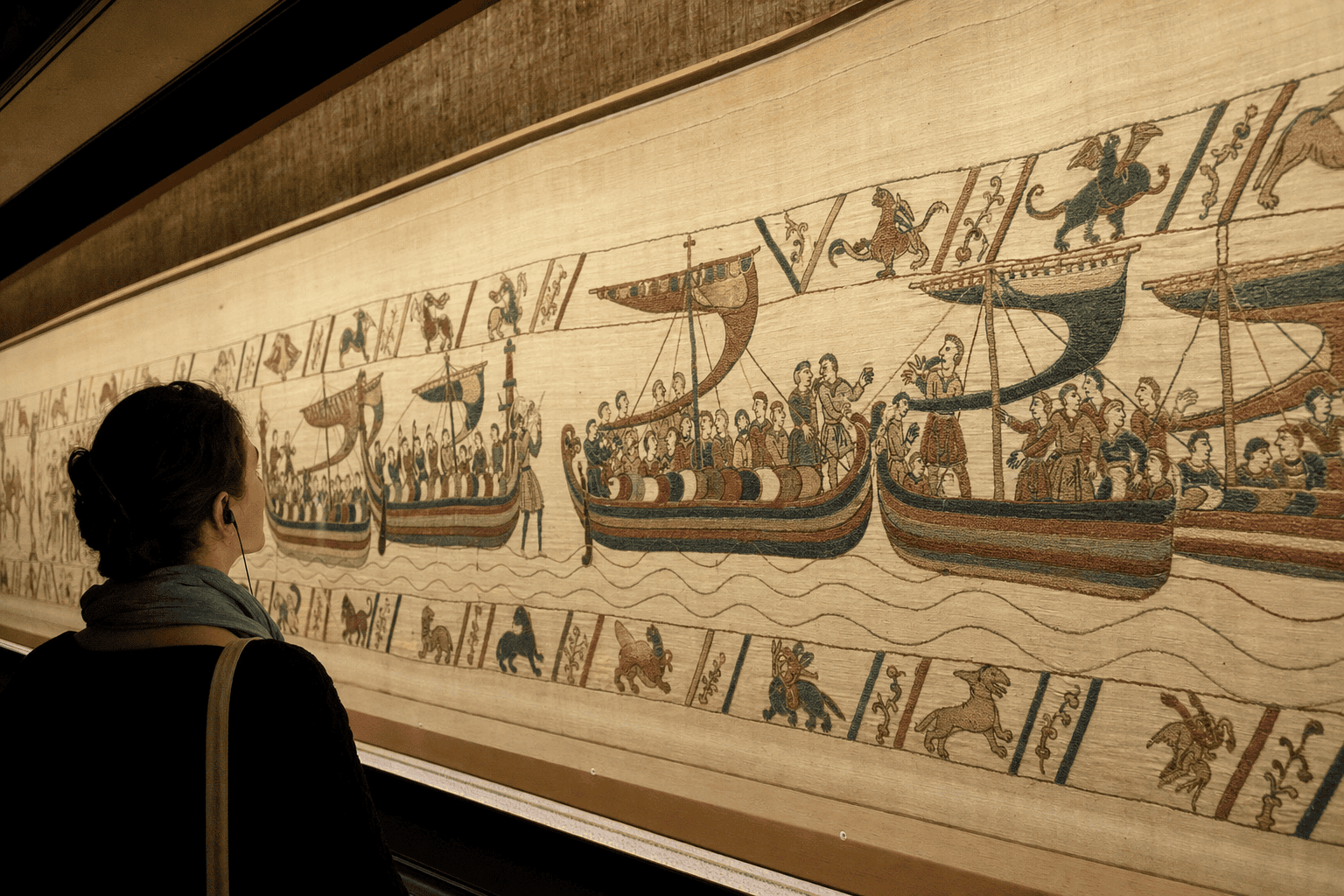
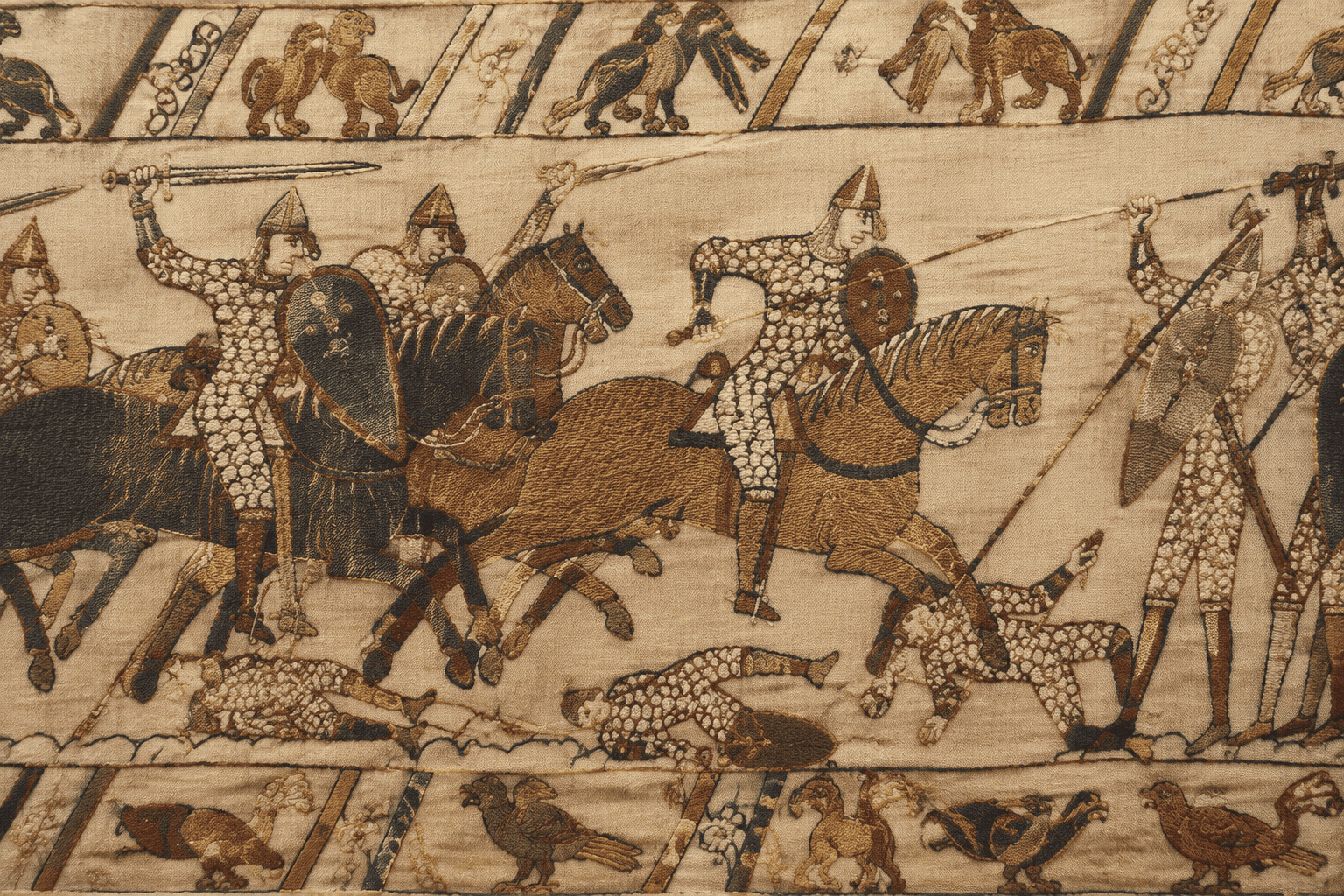
The colors are relatively limited, but the outlines, solid areas of color, and different stitches give movement to the figures, horses, and ships. The borders feature animals, plant motifs, and fantastical creatures that sometimes extend the main scene.
The exact place of production and the identity of all the artisans have not been established with certainty. One widely studied theory places its production in southern England, in a setting familiar with Anglo-Saxon embroidery techniques. The traditional attribution to Queen Matilda should therefore be presented as a tradition, not as a definitively proven fact.
Reading Harold’s Story from Normandy to Hastings
The embroidery can be read as a sequence of scenes connected by Latin inscriptions. Harold travels to Normandy and meets William; after Edward the Confessor’s death, he becomes King of England. The embroidered version then emphasizes the breach of the pledge that supposedly bound Harold to the Norman duke.
Halley’s Comet appears as an omen, after which William prepares a fleet, has ships built, and loads horses aboard. These episodes give considerable attention to the logistics of the expedition, not just the battle.
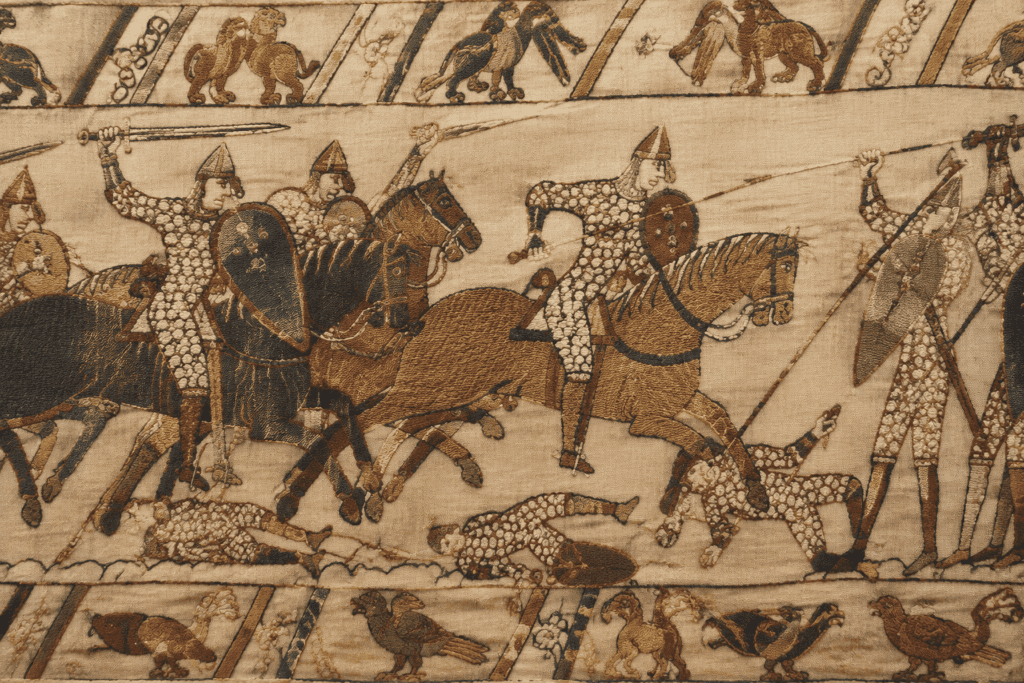
The Battle of Hastings, on October 14, 1066, is the climax. Harold’s death and the Norman victory are depicted in the surviving final section. The work ends before the events that followed the conquest, reminding us that it is a partial and partisan narrative.
From the Cathedral to the Museum
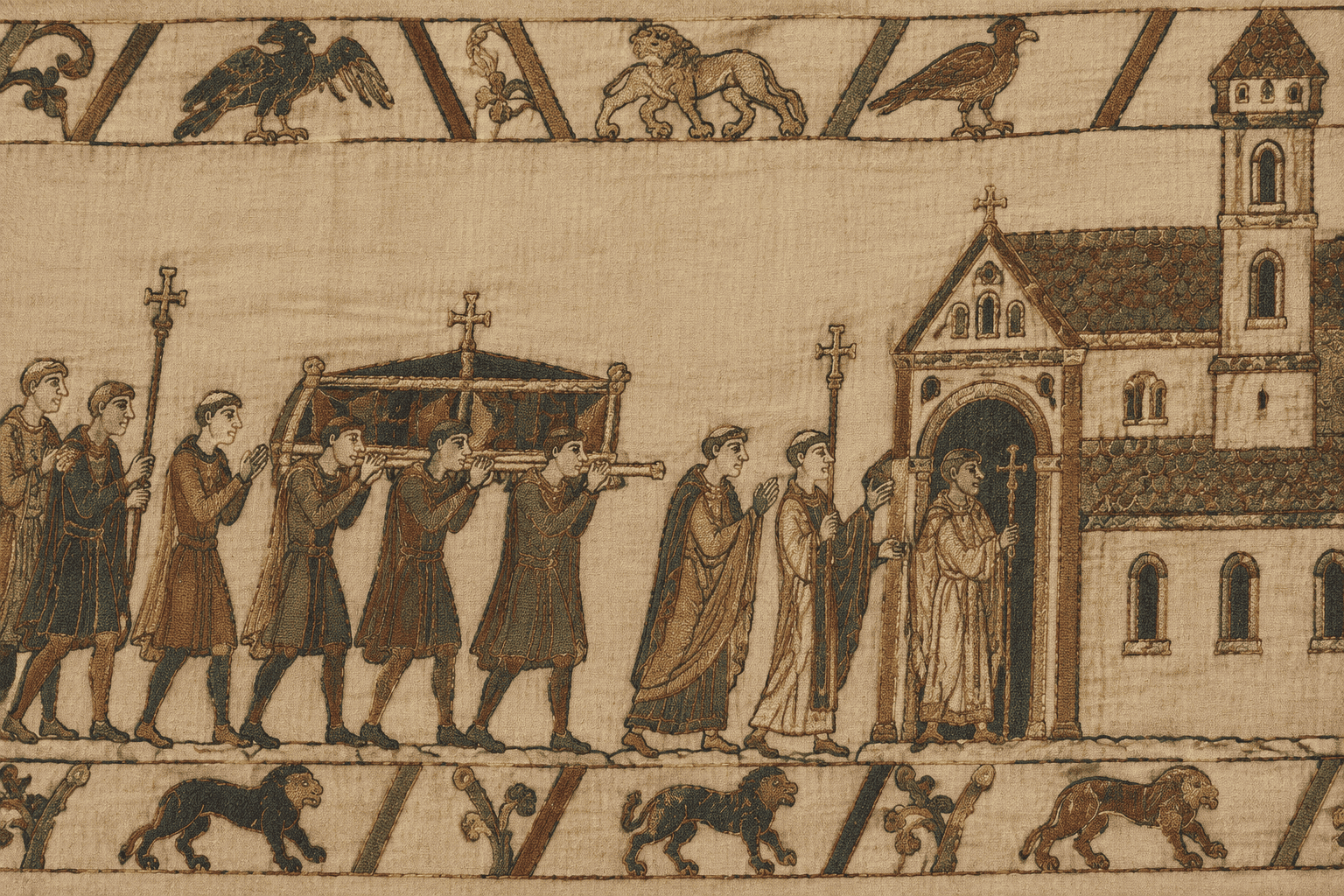
The embroidery was probably associated with Bayeux Cathedral as early as the Middle Ages. An inventory from 1476 mentions a work that may correspond to the embroidery preserved today. It was reportedly displayed periodically in the nave before being stored for the rest of the year.
After the French Revolution, it was seized in the name of the Nation. It subsequently underwent several relocations, including a display in Paris under Napoleon, before returning to Bayeux. Since 1983, it has usually been displayed in the former Grand Seminary, now the Centre Guillaume-le-Conquérant.
Preserving such an old textile requires controlling light, temperature, and humidity, as well as limiting handling. UNESCO estimates its total weight, including its lining, at nearly 350 kilograms. Any information about a loan, closure, or future display route should be checked in the latest official announcements.
Planning a Visit to Bayeux
Before traveling, visit the Bayeux Museum website to check opening status, whether the original is on display, access arrangements, and any restrictions related to construction or temporary exhibitions. The museum’s usual address is only a geographic reference; it does not confirm accessibility.
When the route is open, the display follows the progression of the scenes. An audio guide or explanatory material is useful for understanding the characters, inscriptions, and succession issues that shape the narrative. Follow the photography and visitor-flow rules posted on site.
The visit can be combined with Notre-Dame Cathedral, the old town, and its half-timbered houses. The D-Day beaches and military cemeteries are in the same region, but belong to a different historical period: plan a realistic itinerary rather than trying to see everything in a single stop.
Getting to Bayeux from Paris
From Paris, trains leave Saint-Lazare station for Bayeux. Depending on the date and service selected, the journey may be direct or require a connection; schedules and service should be checked with SNCF or the Normandy rail network before departure. Bayeux station is then connected to the city center by the local transportation options available on your visit date.
By road, Bayeux can be incorporated into a Normandy itinerary from Paris, Caen, or the D-Day beaches. A private journey can be useful with luggage or when combining several stops, but the opening status of each site must be confirmed separately.
Booking Paris Transfer can arrange transportation from Paris, a Paris hotel, CDG, or ORY, with a return to Paris or a Normandy itinerary beginning in the Paris region. The service covers transportation only and does not include museum admission.
What the Work Reveals About the Middle Ages
The embroidery does not depict only a battle. It shows ships being built, horses being loaded, banquets, messengers traveling, and warriors’ equipment. These details make visible the logistical organization of an 11th-century military expedition.th century.
The composition also emphasizes social hierarchy and the power of rulers. Leaders are identified or highlighted, while many fighters remain anonymous. This organization turns a complex political conflict into a narrative of dynastic legitimacy.
The Tapestry is therefore an exceptional but selective source. It does not tell the whole story of the conquest and probably adopts a perspective favorable to the victor. It is precisely this combination of documentary richness and political intent that makes it a major object of study for historians and visitors.
Frequently Asked Questions
Will It Be Possible to See the Original in Bayeux in 2026?
How Long Is the Bayeux Tapestry?
Is It Really a Tapestry?
How much time should I allow for the visit?
Does the Embroidery Tell the Entire Story of the Conquest of England?
How Can You Get to Bayeux from Paris by Private Transportation?
 Bayeux Market Every Saturday morning, the Saint-Patrice Market brings together producers, merchants, and visitors in the heart of Bayeux…
 Memorial Museum of the Battle of Normandy In Bayeux, a leading museum for understanding the Battle of Normandy before exploring the sites…
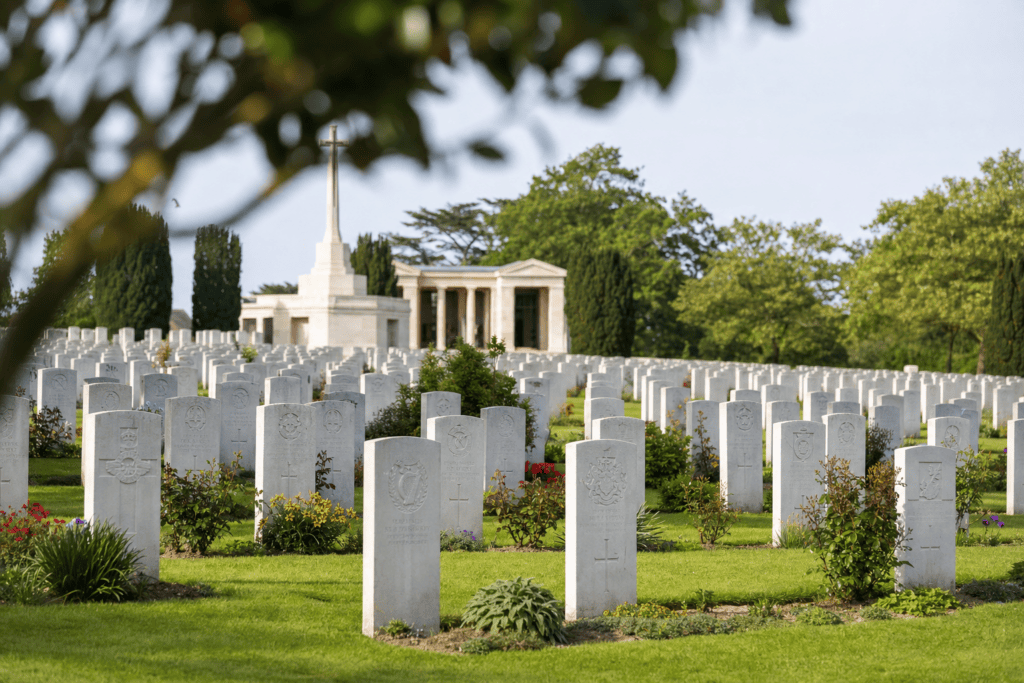 Bayeux British Military Cemetery A major memorial site in Bayeux, with Commonwealth graves, the Bayeux Memorial, and…
 Bayeux Botanical Gardens A 2.6-hectare historic landscaped park known for its weeping beech and botanical walk…
 Bayeux Historic Center A walking tour through Bayeux, taking in the cathedral, historic houses, the Tapestry, the banks of the Aure, and wartime history…
 Bayeux Cathedral of Notre-Dame An iconic Bayeux landmark, showcasing Romanesque and Gothic architecture, medieval history, and a stroll…
Online booking · Paris → Usual museum address: Centre Guillaume-le-Conquérant, 13 bis rue de Nesmond, 14400 Bayeux, France. This address does not guarantee access to the original: the exhibition, museum closures, and renovation schedule must be confirmed on the official website before traveling.
Choose your pickup date and time
Your departure and arrival details are already pre-filled. You can adjust them in the fare calculator before viewing the vehicles and fare.