



Fécamp Trinity Abbey: Visitor Guide
Fécamp
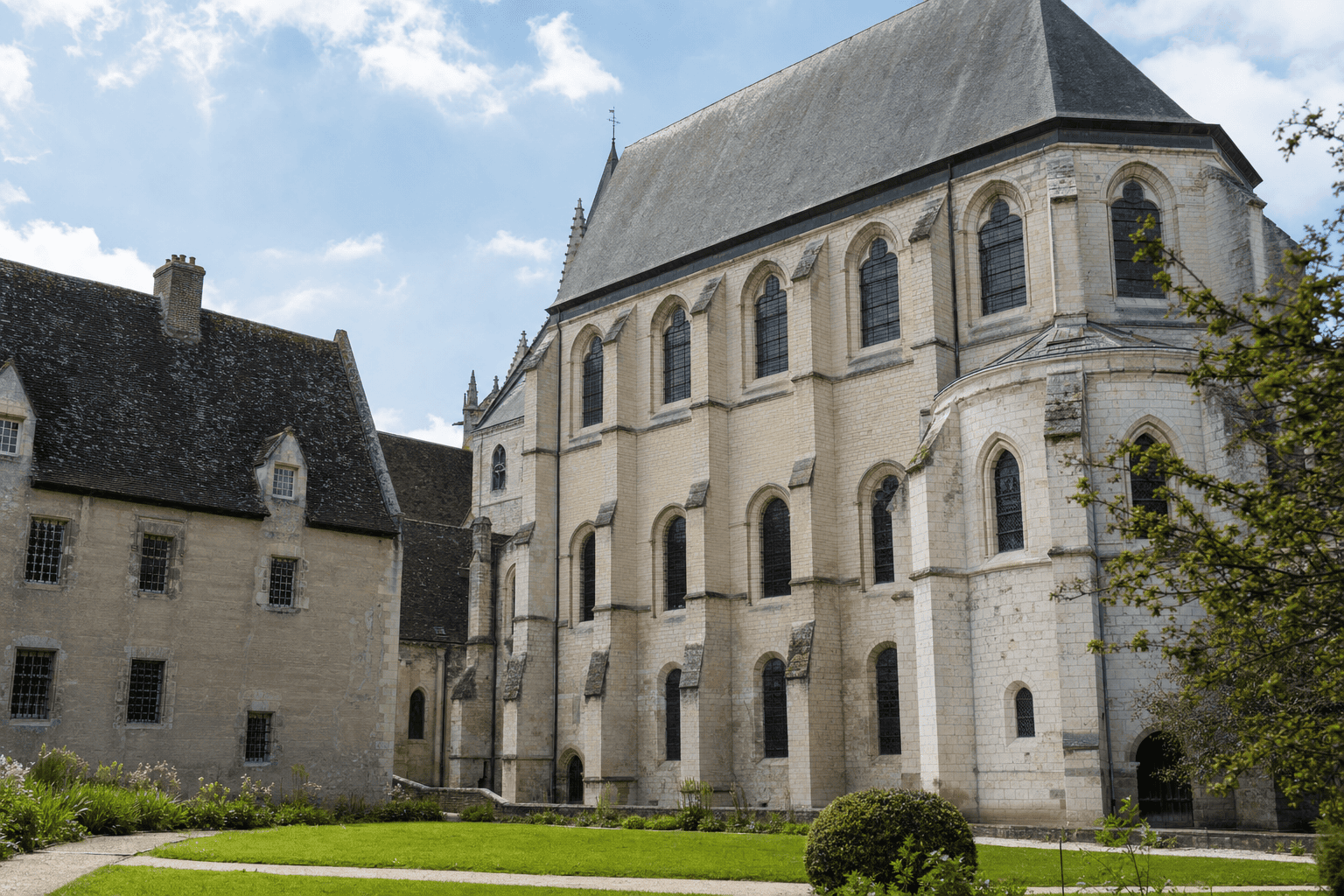
In the heart of Fécamp, Trinity Abbey—also referred to in some sources as Sainte-Trinité Abbey Church—is one of the major religious landmarks on the Alabaster Coast. Its architecture reflects several construction periods, with elements inherited from Norman Romanesque architecture and a strong Gothic expression. The nave, choir, ambulatory, chapels, stained-glass windows, and religious furnishings create a particularly rich experience. The building remains a place of worship: hours, access conditions, and open areas may vary depending on services, concerts, construction, or events. Check the official information before your visit.
Practical information
Combine the abbey church with the Palais Bénédictine, the ducal palace, the port, the Fisheries Museum, and Cap Fagnet to discover several sides of Fécamp.
Discover Fécamp and its abbey church from Paris
Booking Paris Transfer can arrange private transportation from Paris, a Paris hotel, Charles de Gaulle, or Orly to Fécamp, with a return trip to Paris. You can spend the day exploring the abbey church, the historic center, and the Normandy coast. The service covers transportation only: admission, ceremonies, and guided tours must be checked or booked separately with the relevant organizations.
Private transportation from Paris, a Paris hotel, CDG, or ORY, with a possible return to Paris. No admission ticket included.
An abbey at the heart of Fécamp’s history
The history of Trinity Abbey is part of the story of an ancient religious establishment founded in a valley that played an important role in the development of Fécamp. Local tradition traces the earliest foundations to Waneng, a religious figure from the early Middle Ages. After the unrest caused by Viking raids, Fécamp regained a central place in medieval Normandy and became one of the dukes’ favored residences.
At the end of the 10th century, Richard I established a collegiate church there. His son, Richard II, later brought Guillaume de Volpiano, a Benedictine reformer, to Fécamp at the beginning of the 11th century. The abbey then became a major religious and cultural center with significant holdings. The monument visited today is the result of several construction campaigns, alterations, and restorations. This continuity explains the diversity of its forms and allows the building to be read as a succession of periods rather than as a single, uniform creation.
A nave of remarkable proportions
The first impression often comes from the vastness of the interior. From the entrance, the nave naturally draws the eye toward the choir, along a perspective structured by the bays, supports, and arches. Its length and height create a strong sense of depth, while the repetition of architectural elements makes the whole space easy to read, even on a first visit.
To better understand the proportions, move forward slowly instead of stopping at the entrance. First observe the regular rhythm of the nave, then the changes in composition as you approach the transept. Natural light makes it possible to compare the more massive sections with the more open areas. Depending on the season and weather, the atmosphere can be very different. This approach suits architecture enthusiasts as well as visitors simply discovering a large Norman religious building. Also take time to look up at the vaults: your perception of their height changes as you move through the abbey church.
Romanesque and Gothic in a single architectural design
The present abbey church reflects the evolution of Norman religious architecture from its Romanesque heritage to the development of Gothic style. Medieval construction campaigns retained a certain solidity in the walls and supports while seeking greater height, light, and continuity in the lines. The arches, openings, and arrangement of the bays reveal this transformation without reducing the monument to a single period.
The lantern tower draws attention at the crossing of the transept. It emphasizes the building’s verticality and helps illuminate this central area. The ambulatory and radiating chapels recall the layout of major churches visited by worshippers and pilgrims: they allow people to circulate around the choir and reach different devotional spaces. By changing your viewpoint, you can see how the volumes connect with one another. The visit is best experienced by alternating between an overall view and close observation of details, including the supports, ribs, openings, and effects of light.
The Precious Blood: Between Story and Devotion
Fécamp’s religious reputation is closely associated with the tradition of the Precious Blood. According to the Christian account preserved in the abbey’s tradition, drops of Christ’s blood were collected by Nicodemus, placed in a fig tree trunk, and later found on the shore of Fécamp. This account belongs to religious tradition and should be presented as such, without confusing it with historical evidence in the contemporary sense.
Its heritage significance is nevertheless considerable. The relic tradition fostered devotion, ceremonies, and Fécamp’s reputation as a pilgrimage site. It helps explain the layout of the abbey church and the importance given to liturgical furnishings and circulation areas. When visiting the monument, keep this dual dimension in mind: the building is both an architectural work and a living church whose memory has been shaped by stories, religious practices, and successive communities.
Reliquary, sculptures, and a tide clock
An attentive visit goes beyond the view down the nave. The reliquary chest associated with the Precious Blood tradition deserves special attention, as does the Dormition of the Virgin, a polychrome sculptural group preserved in the ambulatory. These works demonstrate the importance of furnishings in understanding a church: they make visible the beliefs, stories, and forms of devotion that accompanied the life of the abbey.
The abbey church also houses a tide-based astronomical clock dating from 1667. Its name refers to the measurement of time, astronomical data, and Fécamp’s maritime setting. However, the visible indications and available explanations may depend on the conditions of your visit; do not necessarily expect to see a working mechanism. The tombs traditionally associated with Richard I and Richard II should likewise be understood within the monument’s history and tradition. The Pas de l’Ange adds another element to this local history, without requiring an overinterpretation of its origin or meaning.
Planning an enjoyable visit to Fécamp
The abbey church is located on Place des Ducs Richard, in central Fécamp, close to several heritage sites. Before you go, check the Tourist Office information and any parish notices: hours may change depending on the season, religious celebrations, concerts, construction, or other events. The name used may also vary between “Trinity Abbey” and “Sainte-Trinité Abbey Church.” In every case, this refers to the same religious monument in the historic center.
Allow about an hour for a self-guided visit and respect the site’s religious character: appropriate attire, quiet voices, and careful movement are recommended. After your visit, walk to the Palais Bénédictine, the ducal palace, the port, or the Fisheries Museum. If the weather is favorable, Cap Fagnet offers another perspective on the town and the Alabaster Coast. Check access and hours for each site separately so you can build a realistic itinerary.
Fécamp on a Normandy itinerary from Paris
Fécamp deserves its own stop on a Normandy itinerary because its heritage brings together several histories. The abbey church evokes the ducal and Benedictine town; the port recalls its maritime activity; and the Palais Bénédictine represents another period and another architectural language. This diversity usefully complements a visit to the cliffs of Étretat or other Alabaster Coast landscapes with a more cultural perspective.
From Paris, Fécamp can be the main stop on a day trip, with a return to Paris and, depending on the time available, a coastal stop. Avoid trying to fit in too many visits, however: an hour in the abbey church, a walk through the center, and a viewpoint over the coast already make a coherent itinerary. Before departing, check the abbey church hours, any guided tours, parking conditions, and travel times. Booking Paris Transfer can provide private transportation from Paris, a Paris hotel, Charles de Gaulle, or Orly, but admission and cultural activities must be arranged separately.
Frequently Asked Questions
What is the monument’s official name?
Is the abbey church open to visitors?
How much time should I allow?
What should I look for first?
Can Fécamp be visited from Paris in one day?
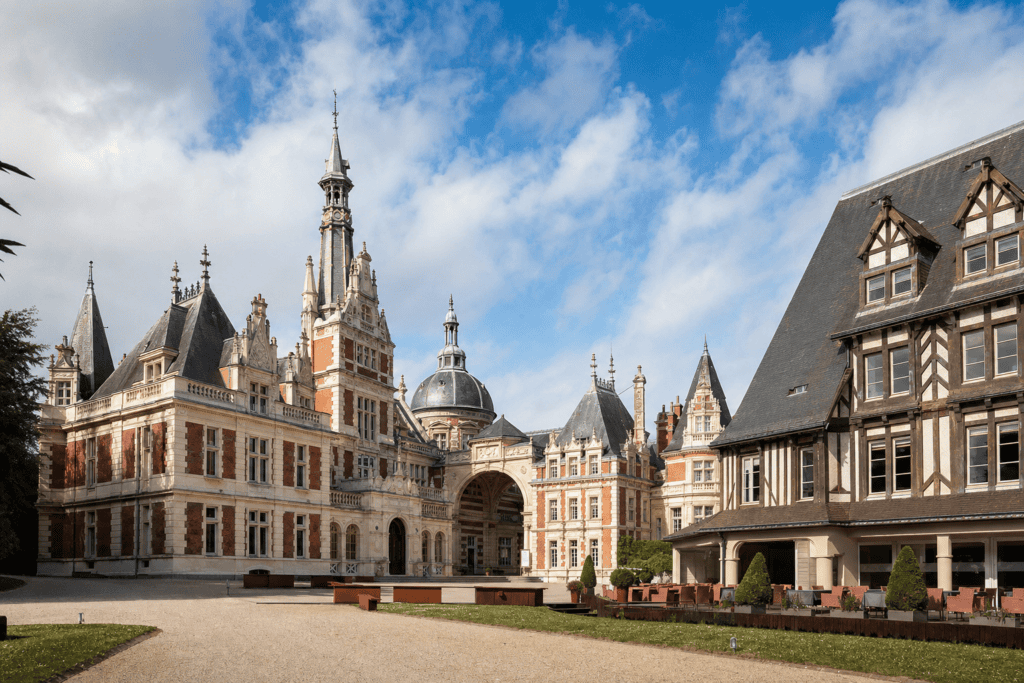 Bénédictine Palace A unique eclectic palace in Fécamp, featuring an art museum, historic distillery, antique collections and an introduction to…
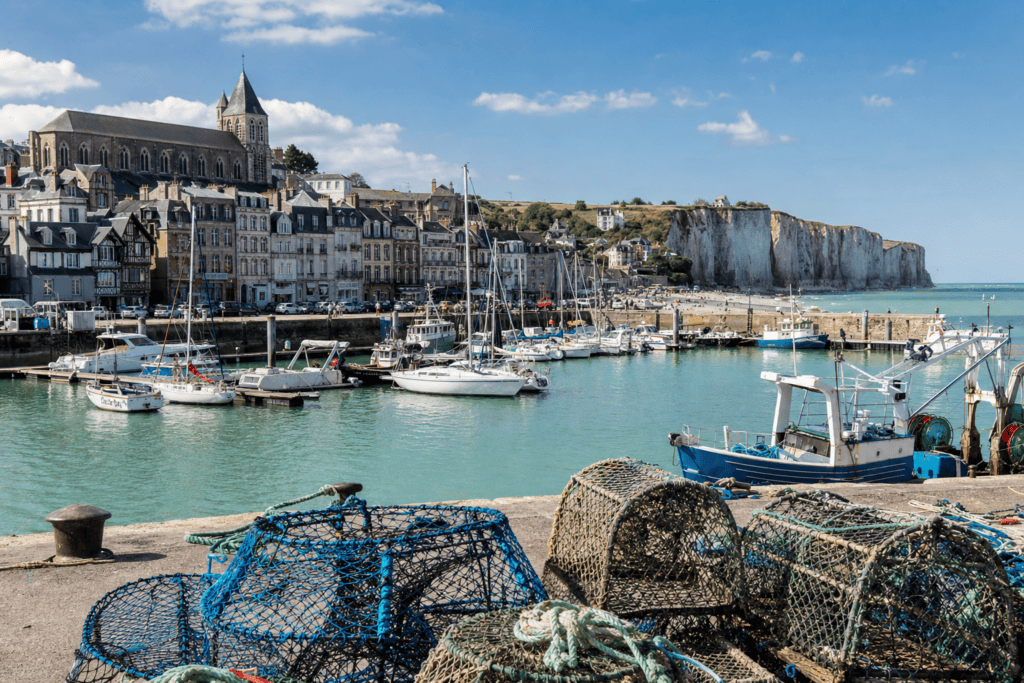 What to do in Fécamp between the harbor, beach, and Côte d’Albâtre A practical itinerary for discovering Fécamp through its port, beach, piers, maritime heritage and coastal panoramas…
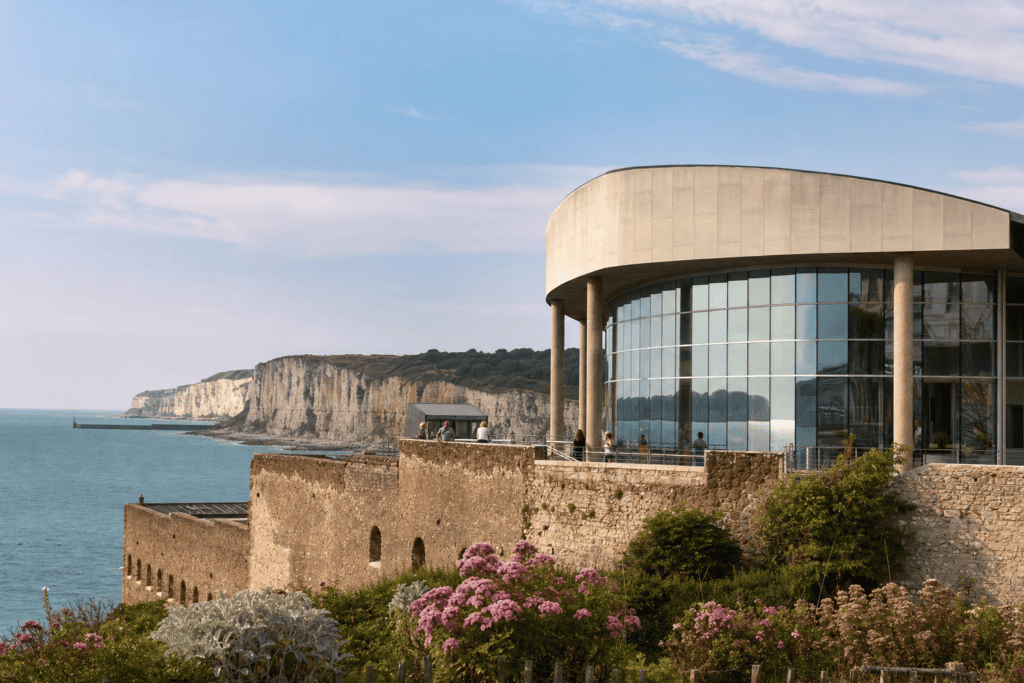 Fisheries Museum In a former cod drying house, discover the deep-sea fishing industry, art collections and the town’s memory…
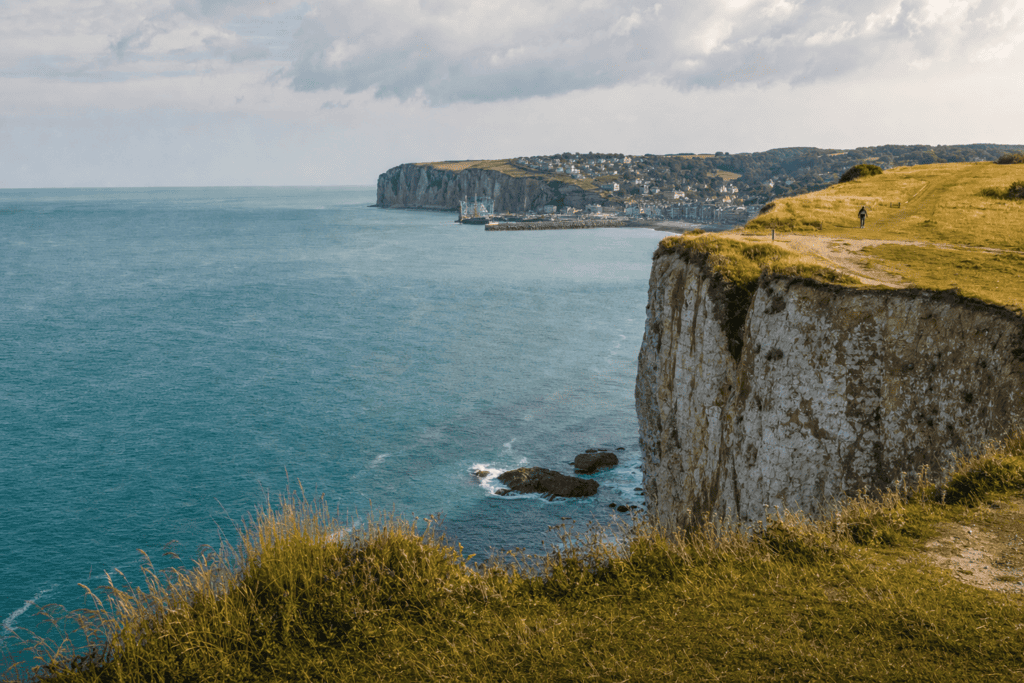 Cap Fagnet A natural viewpoint above Fécamp, with cliffs, the English Channel, a sailors’ chapel, trails, and remains of the…
Online booking · Paris → Place des Ducs Richard, 76400 Fécamp, Normandy
Choose your pickup date and time
Your departure and arrival details are already pre-filled. You can adjust them in the fare calculator before viewing the vehicles and fare.