



Mucem and Fort Saint-Jean: Visitor Guide to Marseille
Marseille
At the entrance to the Old Port, Mucem and Fort Saint-Jean bring together contemporary architecture, military history, Mediterranean gardens, and open views of the sea. The J4 building, footbridges, and ramparts create a unique promenade between Le Panier, La Major Cathedral, and the Old Port basin. You can explore the fort’s outdoor spaces, discover the museum’s exhibitions, or combine both experiences in a single outing. This guide introduces the site, its history, the routes worth taking, and the precautions to consider before you arrive.
Practical information
Travel light and check the rules regarding bags, luggage, security checks, and permitted items before setting out. In summer, bring water, a hat, and comfortable walking shoes.
Getting to Marseille from Paris by private transportation
Vous préparez une escapade au Mucem et au fort Saint-Jean depuis Paris ? Booking Paris Transfer peut organiser un trajet privé depuis Paris, un hôtel en Île-de-France, l’aéroport Charles-de-Gaulle ou Orly, avec une arrivée à Marseille et, selon votre projet, un retour vers Paris. Le service concerne uniquement le transport : les billets, réservations et informations de visite restent à organiser auprès du Mucem.
Departure from Paris, the Île-de-France region, CDG, or ORY, with transportation to Marseille and the option of returning to Paris depending on the chosen itinerary.
A unique setting between the city and the Mediterranean
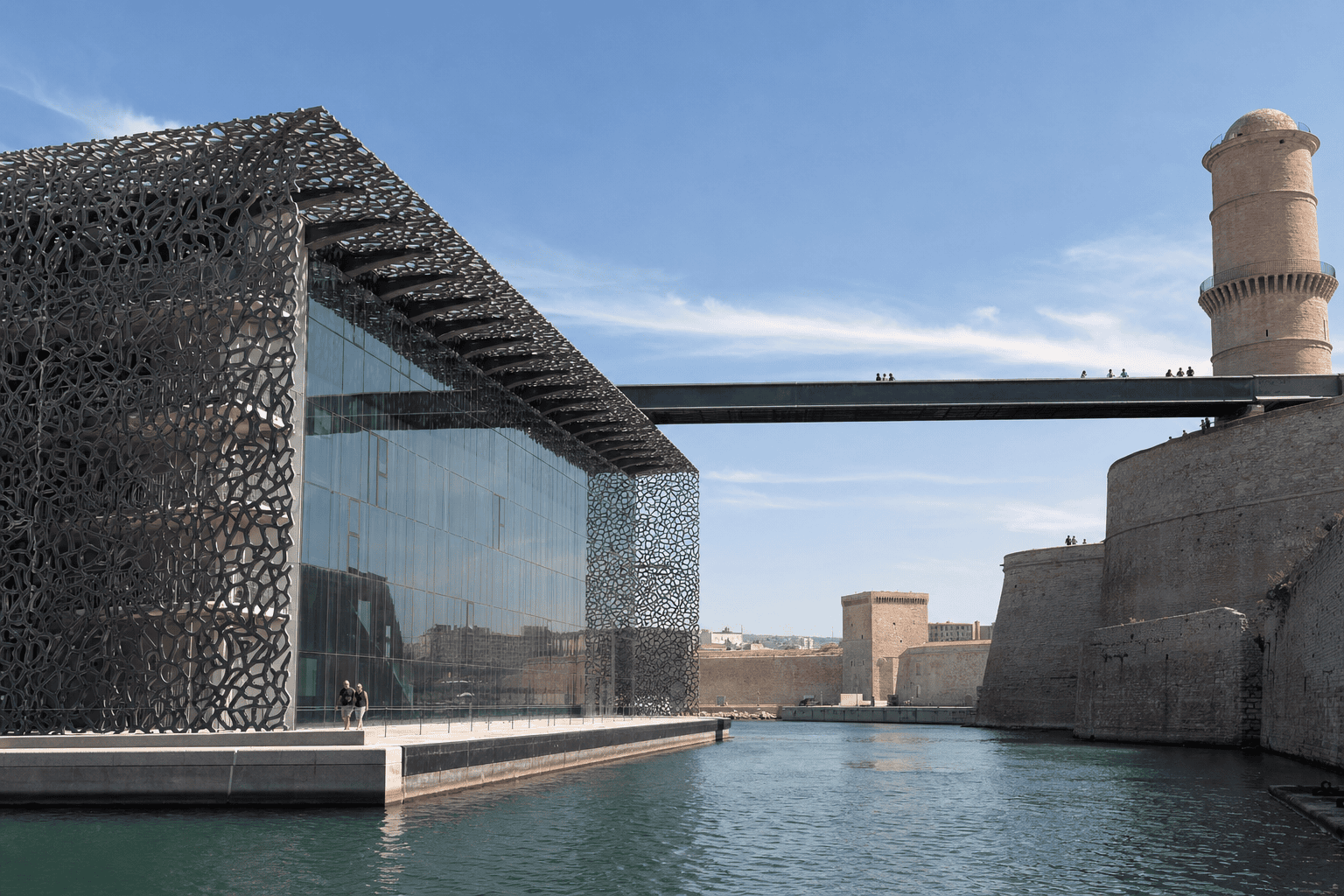
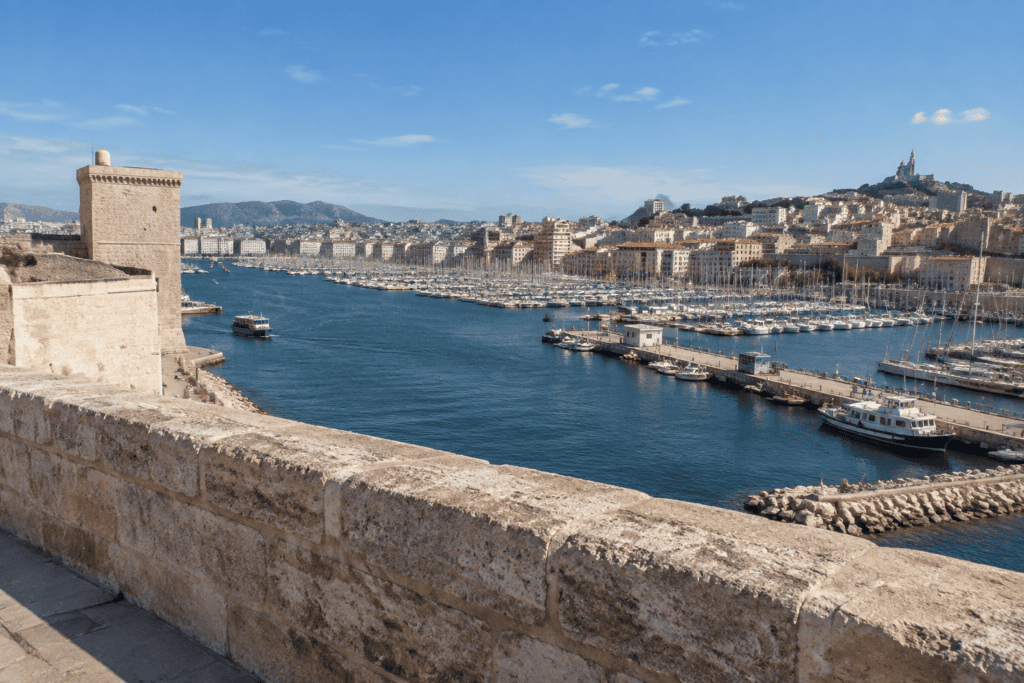
Mucem and Fort Saint-Jean occupy a remarkable location at the entrance to the Old Port, between Le Panier, La Major Cathedral, and the maritime basins. The J4, designed by Rudy Ricciotti with Roland Carta, creates a distinctive contemporary silhouette, while the fort retains its rugged, defensive presence. This proximity makes for an experience very different from a traditional museum visit.
Here, exhibition galleries give way to courtyards, gardens, ramparts, and footbridges open to the sea. The J4’s perforated concrete filters the light and frames the views, while the fort’s walls tell an older story of military transformations and port circulation. The site’s appeal lies precisely in this juxtaposition.
For a first visit, start at the J4 esplanade to understand the site’s overall layout. Then cross to the fort via the footbridge, take time to explore its outdoor spaces, and return to the museum if the program interests you. This progression lets you appreciate the site without reducing it to a simple photo of the building.
Key stages in the fort’s history
The promontory occupied by Fort Saint-Jean has long held a strategic position at the entrance to Marseille’s port. The site is associated with the commandery of the Knights Hospitaller of Saint John of Jerusalem, several historical elements of which are still referenced in the fortress spaces. This connection explains the site’s name and recalls Marseille’s historic role in Mediterranean trade.
The fortress was remodeled in the 17thth century under Louis XIV, at a time when the royal power sought to strengthen the port’s defenses and exert tighter control over the city. Along with Fort Saint-Nicolas, located on the opposite side of the Old Port, it formed part of a military system that protected maritime access while asserting the royal presence.
As you make your way through the site, look for differences in the masonry, levels, towers, vaulted passages, and courtyards. The fort is not a frozen backdrop: its forms result from several periods of development, followed by its contemporary integration into the Mucem project. This layered reading makes the walk especially rewarding for visitors who enjoy connecting architecture and history.
Gardens, ramparts, and viewpoints
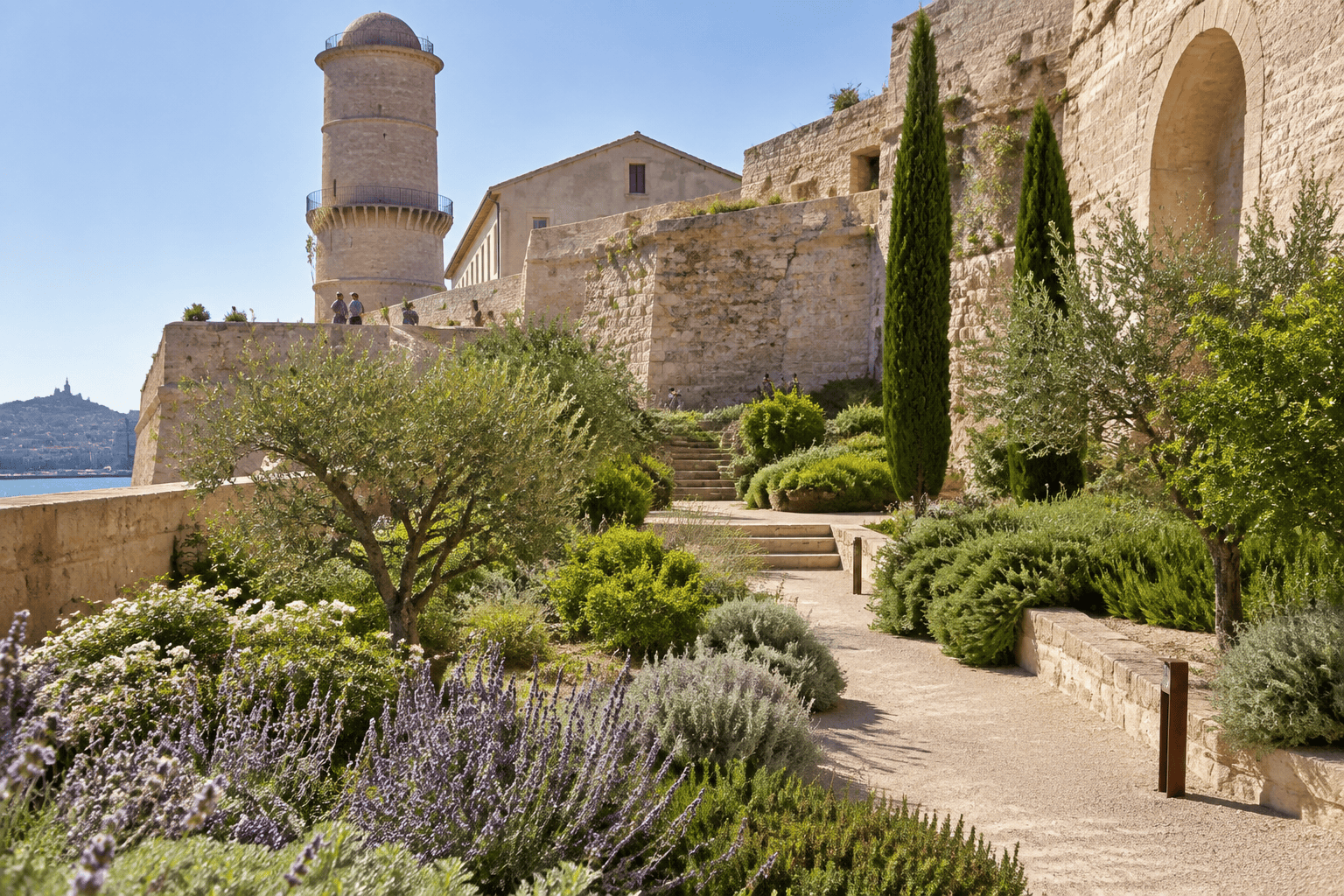
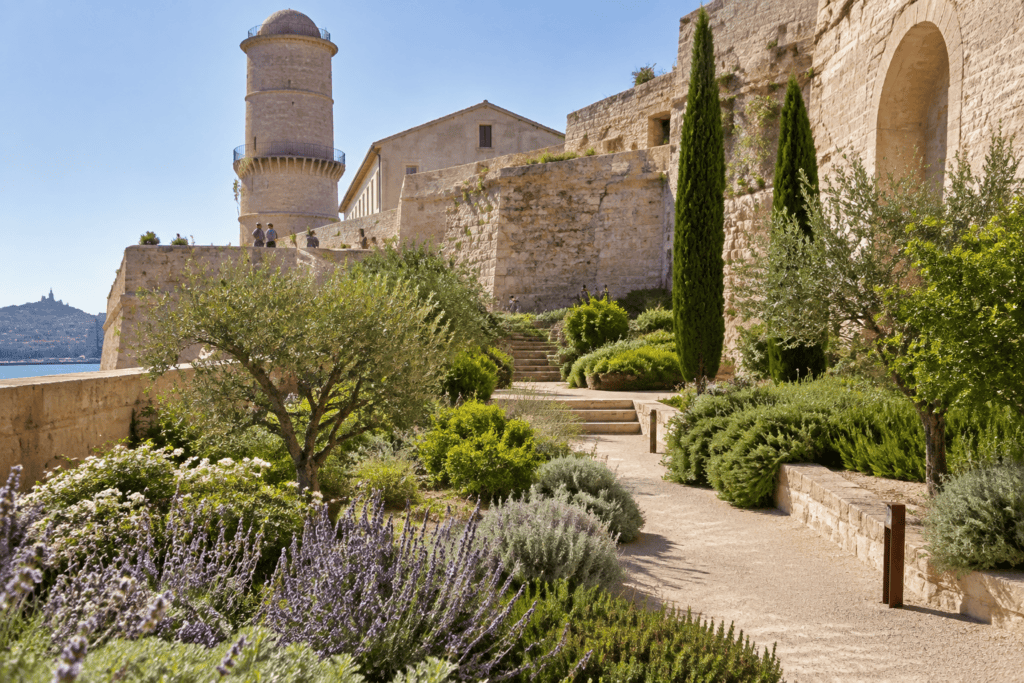
The Jardin des Migrations adds a botanical dimension to Fort Saint-Jean. In the citadel’s outdoor spaces, plantings and landscape features evoke Mediterranean plants, their uses, and movement between the shores of the Mediterranean. The garden is woven between the old walls and is therefore not a separate interlude: it extends Mucem’s exploration of exchange and culture.
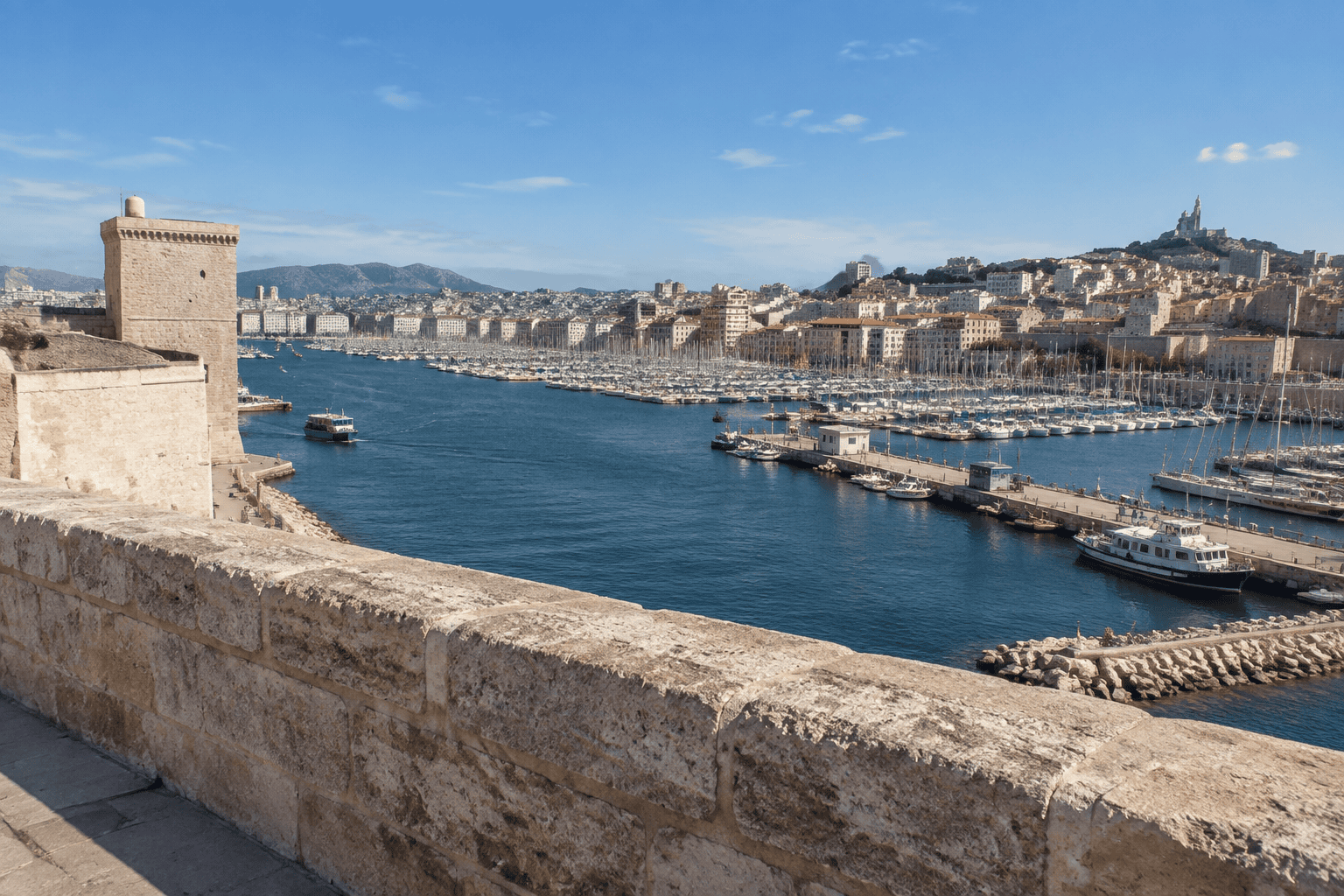
The ramparts offer several perspectives over Marseille. Depending on where you stand, you may see the Old Port, Palais du Pharo, Fort Saint-Nicolas, Le Panier, the port basins, or the coastline. The views change quickly as you move through the fortress. Photographers will find as many subjects in the details of the stonework and vegetation as in the panoramas.
The sun can be intense on the terraces and outdoor paths. Comfortable shoes are recommended, as some sections include stairs, slopes, or uneven ground. Allow plenty of time for your visit: the benches, courtyards, and openings onto the sea invite you to pause several times.
The footbridges: an architectural promenade
The footbridges are among Mucem’s most memorable features. They connect Fort Saint-Jean to the J4 building and make the visit a route above the water. Another link connects the site with Le Panier and the Old Port area. These structures therefore do more than provide passage: they shape a gradual experience between the city, fortress, and museum.
As you cross, notice the contrasts between the old stone, the J4’s perforated concrete, the boats, and Marseille’s façades. The light changes with the time of day and the weather; the concrete shadows can be especially striking, while windy days make the height feel more pronounced. Visitors sensitive to the sun should bring sunglasses and suitable protection.
The best route depends on where you arrive and what you want to prioritize. From the Old Port or Le Panier, you can start with the fort’s outdoor spaces before heading to the J4. If you want to see an exhibition at a specific time, start at the museum instead. Access routes may change for safety reasons, construction, or events: check the official information on the day of your visit.
Mucem’s exhibitions and identity
Mucem explores the civilizations of Europe and the Mediterranean through collections, temporary exhibitions, and interpretation features. Topics may include popular practices, beliefs, exchanges, representations, or social transformations. The program changes, so check the official calendar before choosing your date and confirm which spaces are open.
Tickets, access conditions, and spaces accessible without a reservation may depend on the current program. It is best not to treat access to the fort or gardens as an unchanging rule: arrangements may vary according to events, construction, and safety instructions. Mucem’s official ticket office remains the reference for current prices, reservations, and conditions.
If you visit an exhibition, take time to read the texts and connect the objects on display with the history of the site. The museum provides stories and context, while the fort offers a physical experience of the landscape, circulation routes, and Marseille’s strategic position. The two dimensions complement each other without being interchangeable.
Getting there from Marseille and practical information
The J4 is located at 7 promenade Robert Laffont, on the J4 esplanade. The site is accessible on foot from the Old Port, Le Panier, and La Joliette, but the exact time depends on the entrance and route you choose. From Saint-Charles station, public transportation can take you to the city center, from where you can continue on foot. Use local transit apps and the network’s website for up-to-date connections.
Several bus and streetcar stops serve the Old Port, La Joliette, and La Major areas. Since routes, stops, and itineraries may change, check them before departure rather than relying on outdated information. If traveling by car, find out about available parking, traffic restrictions, and the time needed to walk to the entrance.
Mucem publishes accessibility information. Some museum entrances may be adapted, while the fort’s stairs, slopes, uneven surfaces, and changes in elevation may limit the route. If you have a specific need, contact the institution before your visit to confirm the accessible route, any available assistance, and the day’s access conditions.
Planning an enjoyable and responsible visit
Before setting out, check Mucem’s official website for opening hours, the program, any partial closures, and reservation procedures. This information may change with the season, construction, events, or security measures. Also check the rules regarding bags and luggage; if you arrive directly from a train station or airport, do not assume that lockers will be available.
Mucem combines easily with Le Panier, La Major Cathedral, the Old Port, or Fort Saint-Nicolas, without trying to do everything too quickly. In summer, bring water and sun-protective clothing. Children should be supervised near stairs, narrow passageways, and ramparts. Respect planted areas and marked zones to help preserve the gardens and historic structures.
For a balanced visit, alternate indoor and outdoor spaces. Start with an exhibition if you want to enjoy a cooler period, then continue through the fort as the light becomes softer. Visitors with only two hours can prioritize the footbridges, gardens, ramparts, and a selection of J4 spaces rather than trying to cover the entire program.
Useful sources
Frequently Asked Questions
How much time should I allow for Mucem and Fort Saint-Jean?
Is Fort Saint-Jean part of Mucem?
Can I visit the fort without seeing an exhibition?
How do I get to Mucem from the Old Port?
Is Fort Saint-Jean accessible to people with reduced mobility?
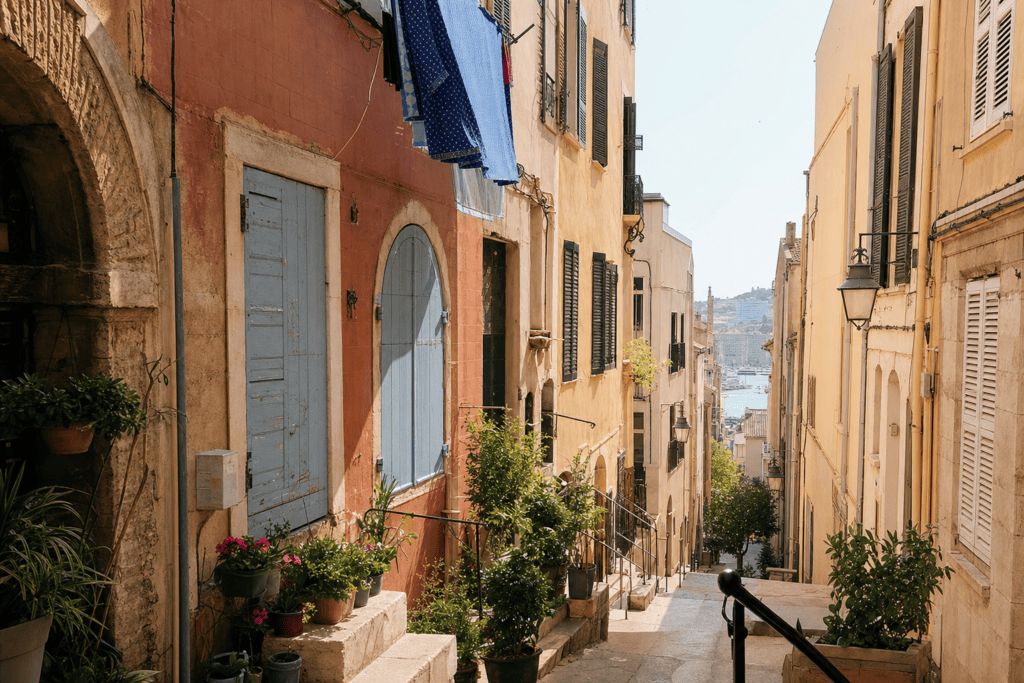 Le Panier Le Panier is best explored on foot, through sloping lanes, small squares, colorful façades, the Vieille Charité, street…
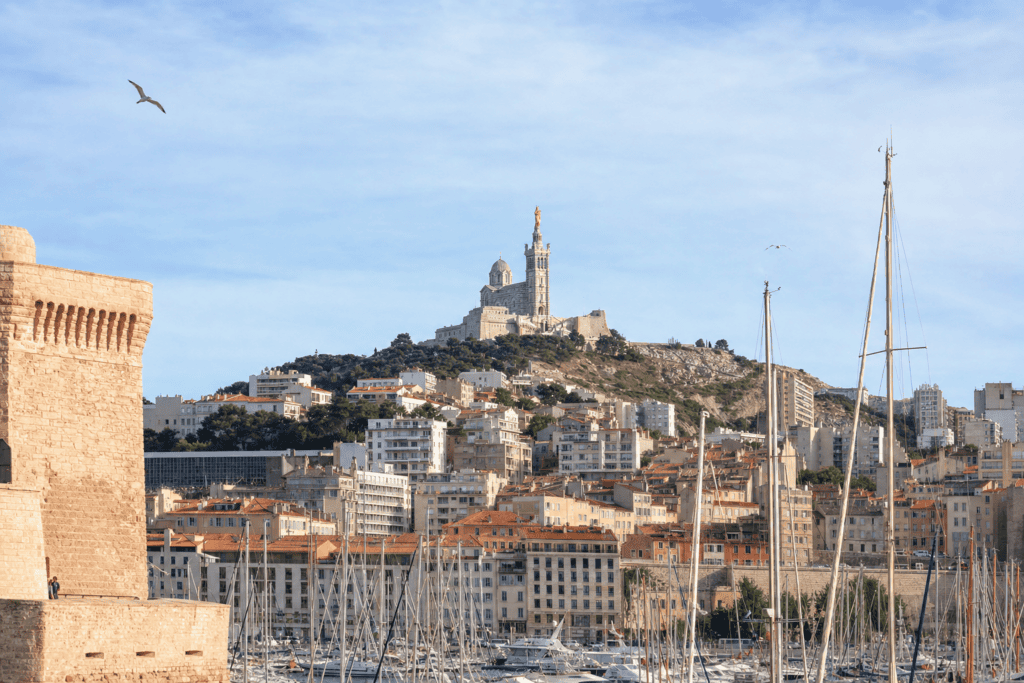 Notre-Dame de la Garde La Bonne Mère overlooks Marseille from a 154-meter hill. Discover its history, its basilica…
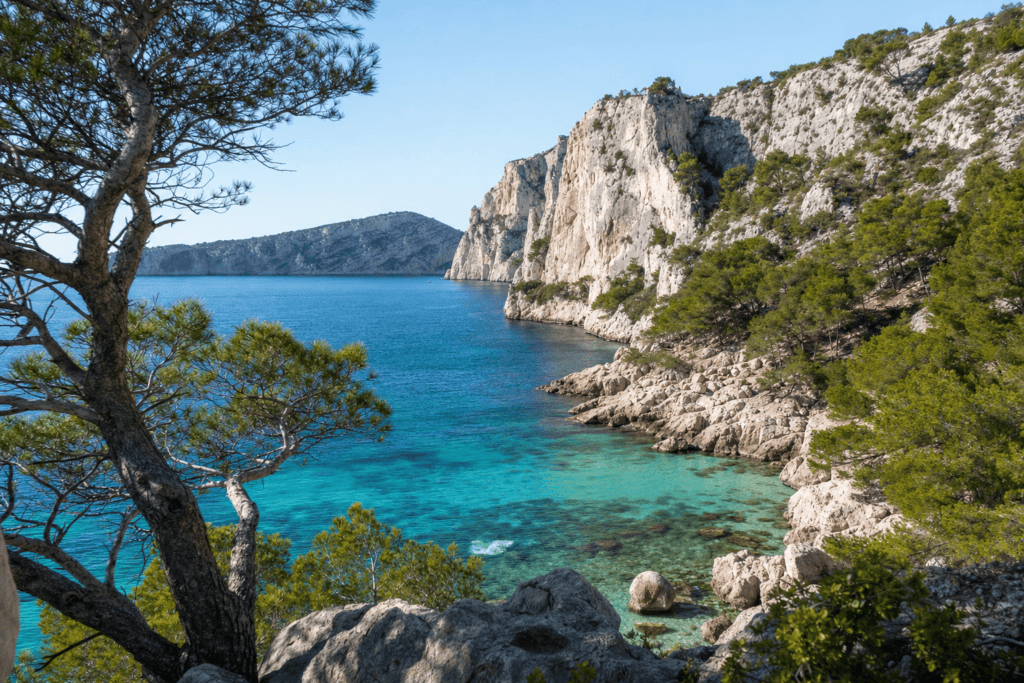 Calanques National Park A practical guide to discovering the landscapes, hiking trails, and access rules of Calanques National Park…
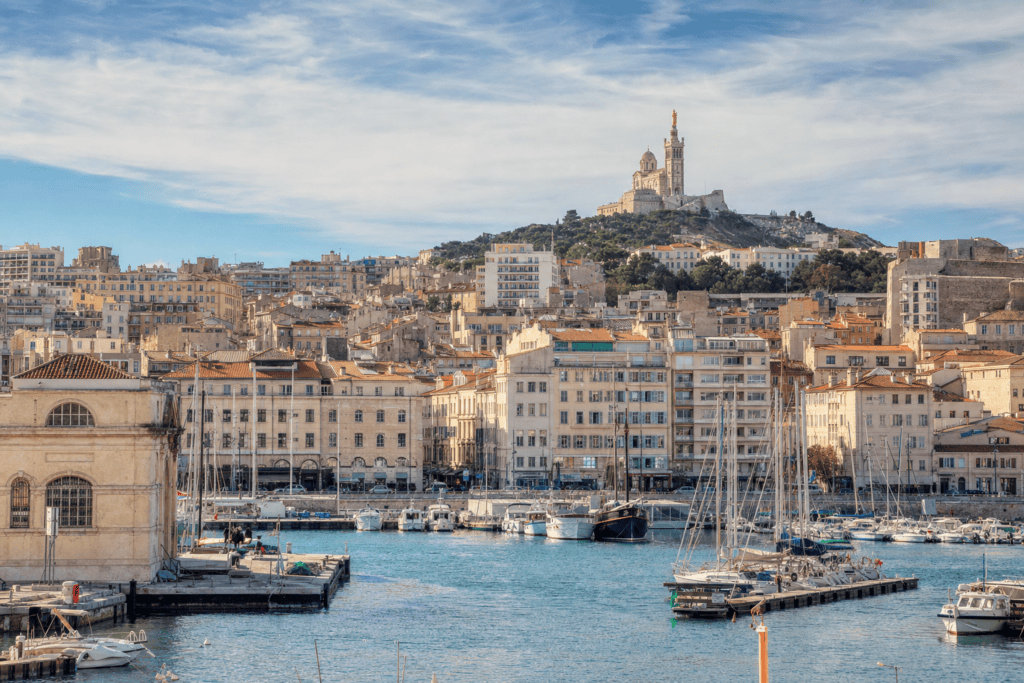 Marseille’s Old Port The Old Port captures the essence of Marseille’s atmosphere: the fish market, quays, boats, sunshade, access to…
Online booking · Paris → Mucem, 7 promenade Robert Laffont, Esplanade du J4, 13002 Marseille. For Fort Saint-Jean, check the access information provided by the Mucem before your visit.
Choose your pickup date and time
Your departure and arrival details are already pre-filled. You can adjust them in the fare calculator before viewing the vehicles and fare.