



Notre-Dame de la Garde: Marseille’s Good Mother
Marseille
Overlooking Marseille from La Garde hill, Notre-Dame de la Garde is a religious sanctuary, historic monument, and one of the city’s best viewpoints. Affectionately known as the “Good Mother,” the basilica offers remarkable views of the Vieux-Port, the Mediterranean, the Frioul Islands, and the hills surrounding Marseille. A visit reveals richly decorated Romanesque-Byzantine architecture, mosaics, sailors’ ex-votos, and traces of a long military and spiritual history. Here’s what you need to know to plan your visit to Notre-Dame de la Garde, from its history to the different ways to get there.
Practical information
The climb is genuinely steep on foot. Wear comfortable shoes and bring water and protection from the sun or wind, especially in summer.
Getting to Notre-Dame de la Garde from Paris
Planning a trip to Marseille from Paris? Booking Paris Transfer can arrange private transportation from a Paris hotel, Charles de Gaulle Airport, or Orly Airport, with transport to Marseille and the option of returning to Paris. The service covers transportation only: basilica admission, tours, and activities on site must be arranged separately.
Transportation service from Paris, the Île-de-France region, CDG, or ORY to Marseille, with the option of returning to Paris. No admission ticket is included.
Why visit Notre-Dame de la Garde?
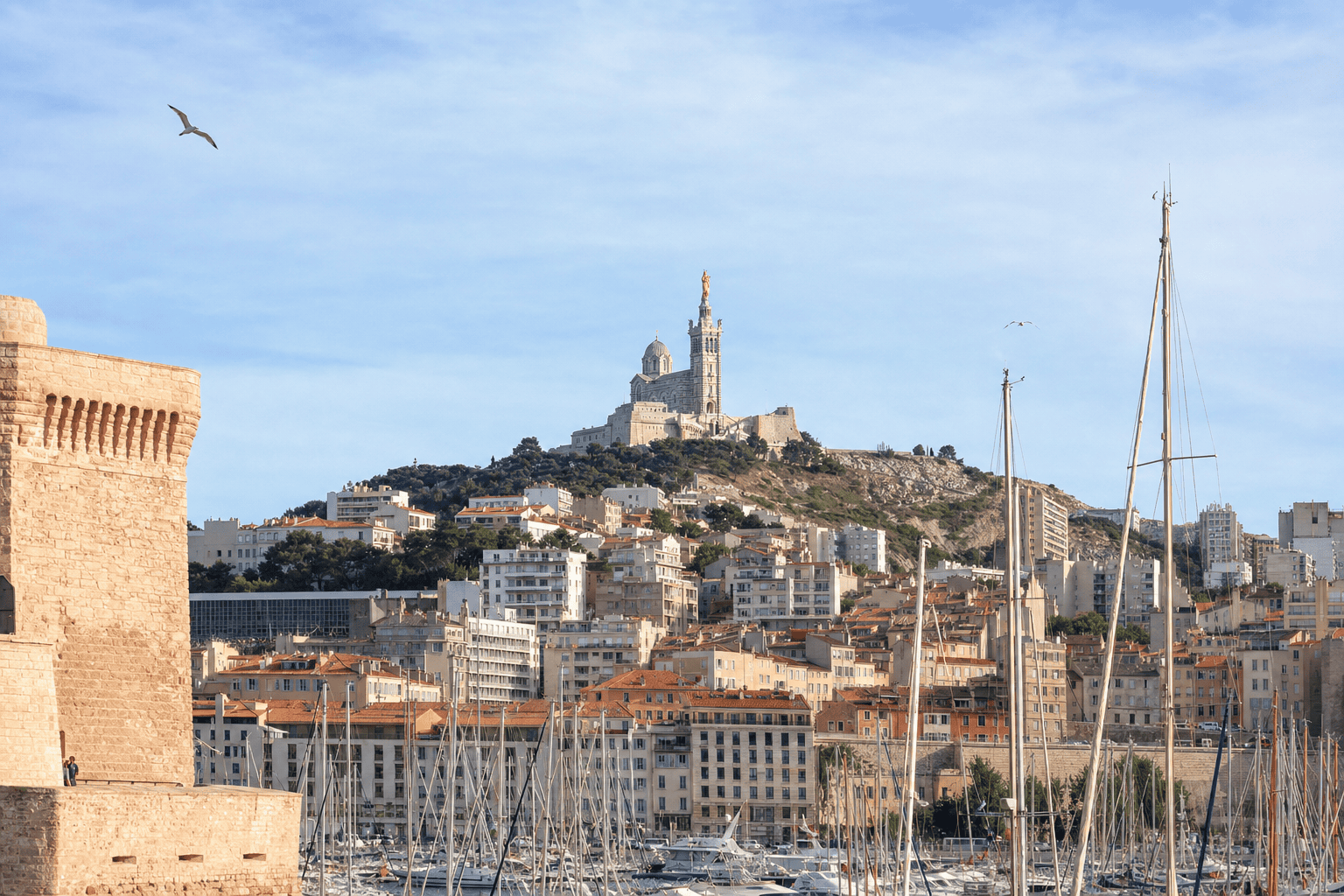
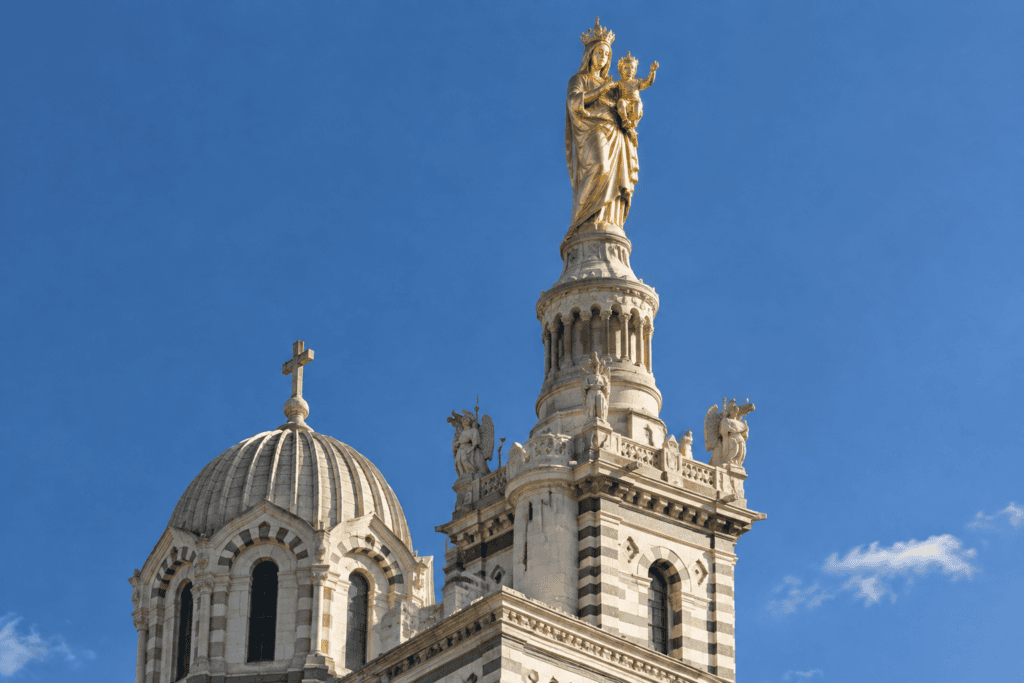
Notre-Dame de la Garde is the monument most immediately associated with Marseille. From the Vieux-Port, the Corniche, or the city’s northern neighborhoods, its silhouette crowned by a golden statue naturally draws the eye. Yet the visit is about more than panoramic photographs. The basilica is a place of memory and devotion deeply connected to Marseille’s identity, particularly the history of its sailors, fishermen, and families.
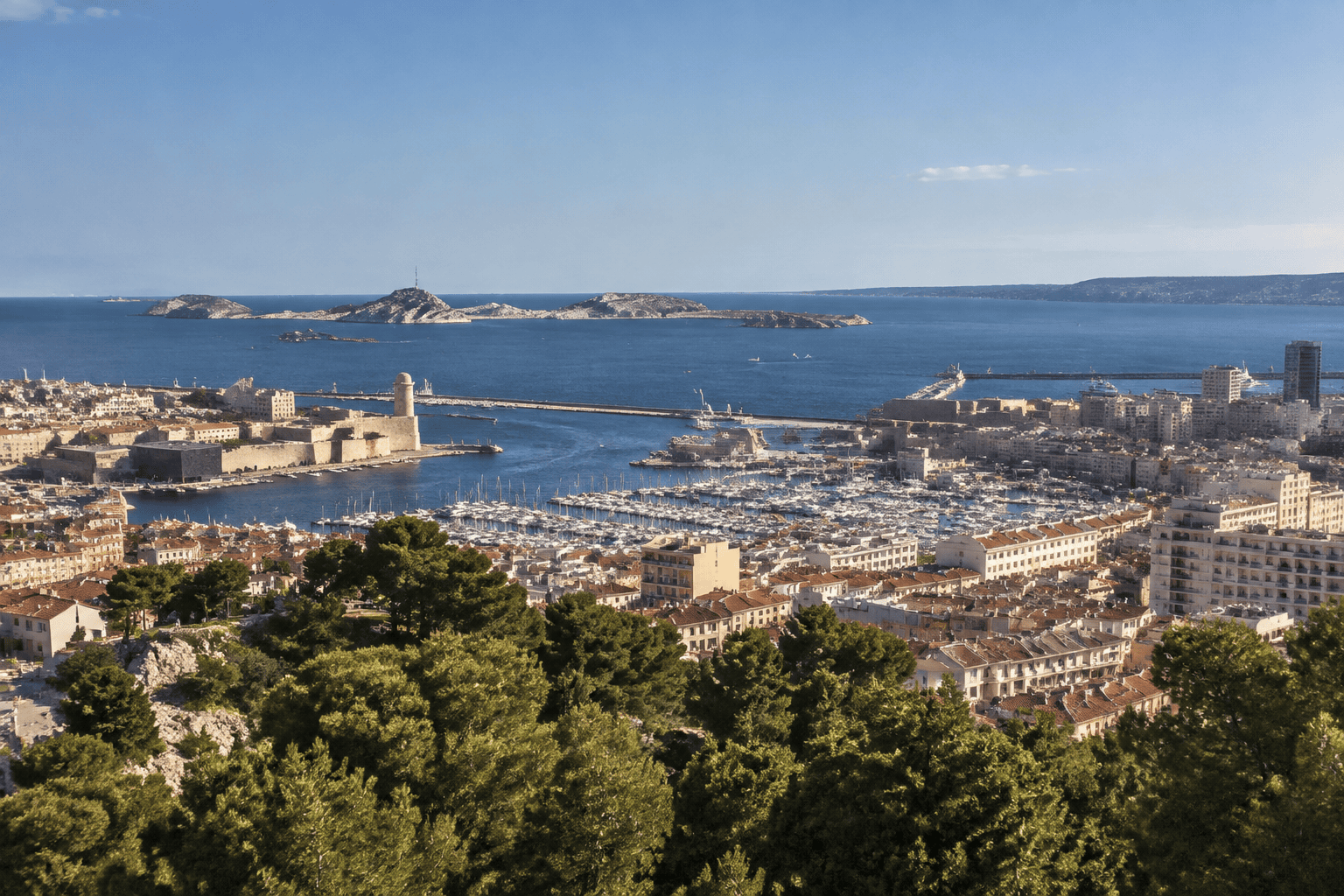
The hill rises to around 154 meters and forms a true balcony above the Mediterranean. From the esplanade, you can see the Vieux-Port, Le Panier, Mucem, Fort Saint-Jean, the Frioul Islands, and Château d’If. On clear days, the hills surrounding Marseille create a vast backdrop. Inside, the mosaics, polychrome marble, and ex-votos give the visit a more intimate dimension. It is therefore a site worth choosing as much for its heritage as for its views.
A hill that served as lookout, fortress, and sanctuary
The history of Notre-Dame de la Garde began long before the current basilica. Thanks to its commanding position over Marseille’s harbor, the hill long served as a natural lookout point. In the Middle Ages, a chapel dedicated to the Virgin was documented on the site. Over time, it also became a sanctuary visited by sailors, who came to leave tokens of gratitude after escaping the dangers of the sea.
The summit’s military purpose became more prominent in the 16thth century. In 1524, Francis Iand had a fort built to strengthen Marseille’s defenses, as part of a complex that also included Château d’If. Elements of this fortification remain in the foundations and layout of the present-day site. This layering explains the hill’s special appeal: it brings together a former lookout post, a defensive structure, and a place of pilgrimage. When visiting Notre-Dame de la Garde, you can read several centuries of Marseille’s history in a single landscape, between maritime openness and the protection of the city.
The basilica and its Romanesque-Byzantine architecture
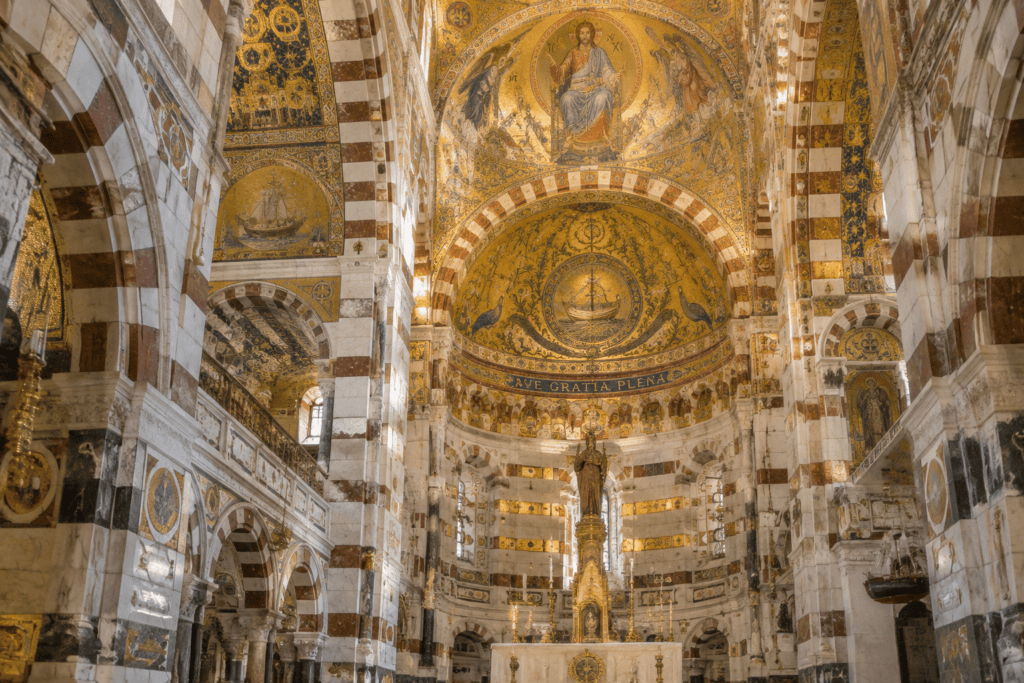
The current basilica was built in the 19thth century, at a time when Marseille was undergoing major urban and port development. The foundation stone was laid on September 11, 1853, following plans by architect Henri-Jacques Espérandieu. The building was consecrated in 1864. Its Romanesque-Byzantine style is recognizable in its massive forms, domes, arches, contrasting stonework, and particularly elaborate interior decoration.
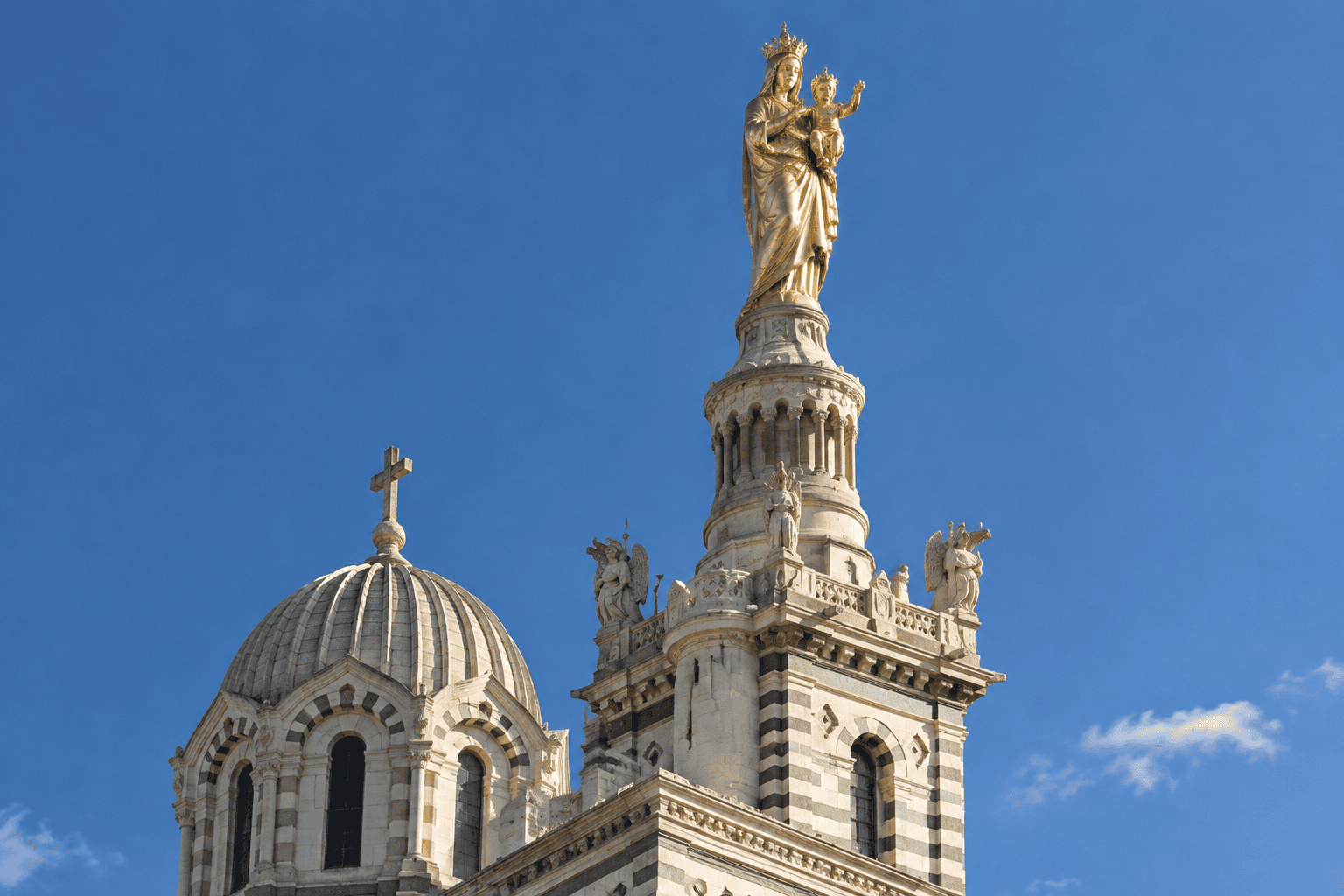
The visit is organized around two areas. The more understated crypt contains works and objects connected to the sanctuary’s history. The upper church impresses with its gold-background mosaics, polychrome marble, and wealth of decorative detail. At the top, the monumental statue of the Virgin and Child, visible from many points around Marseille, reinforces the monument’s iconic character. Take time to look at the capitals, inscriptions, and interplay of light rather than passing quickly through the building. The basilica remains a place of worship, so respectful behavior and suitable attire are recommended during your visit.
Ex-votos and the memory of sailors
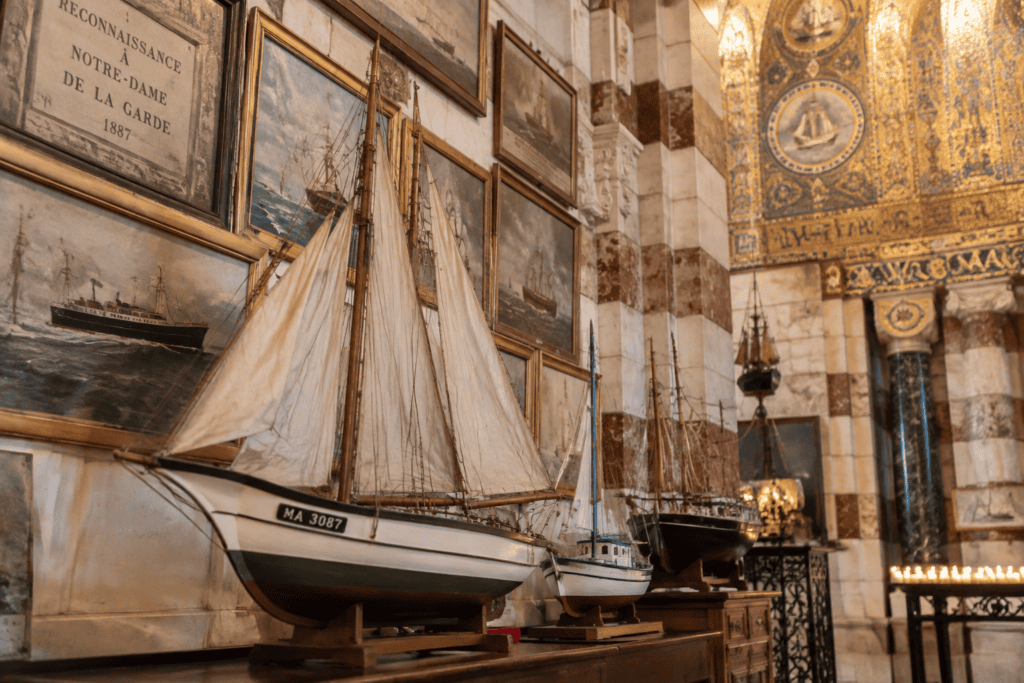
One of the most moving aspects of Notre-Dame de la Garde is its ex-votos. These objects, paintings, and models were offered in gratitude for protection, a rescue, or the granting of a wish. Many testimonies refer to the sea, storms, narrowly avoided shipwrecks, or journeys. They remind us that the basilica is more than a monument admired for its architecture: it remains a living sanctuary associated with the hopes and anxieties of local residents.
The ex-votos also help illustrate the historic role of the port of Marseille and the importance of sailing in local life. Some depict ships with astonishing precision; others tell stories of family or military situations. To appreciate them, move slowly and let the details guide you rather than viewing the space solely as a monument. Photography may be subject to specific rules depending on the area and celebrations taking place. If you are unsure, ask on site. This memorial dimension gives the visit a depth that goes beyond that of a simple tourist viewpoint.
Panoramic views of Marseille and the Mediterranean
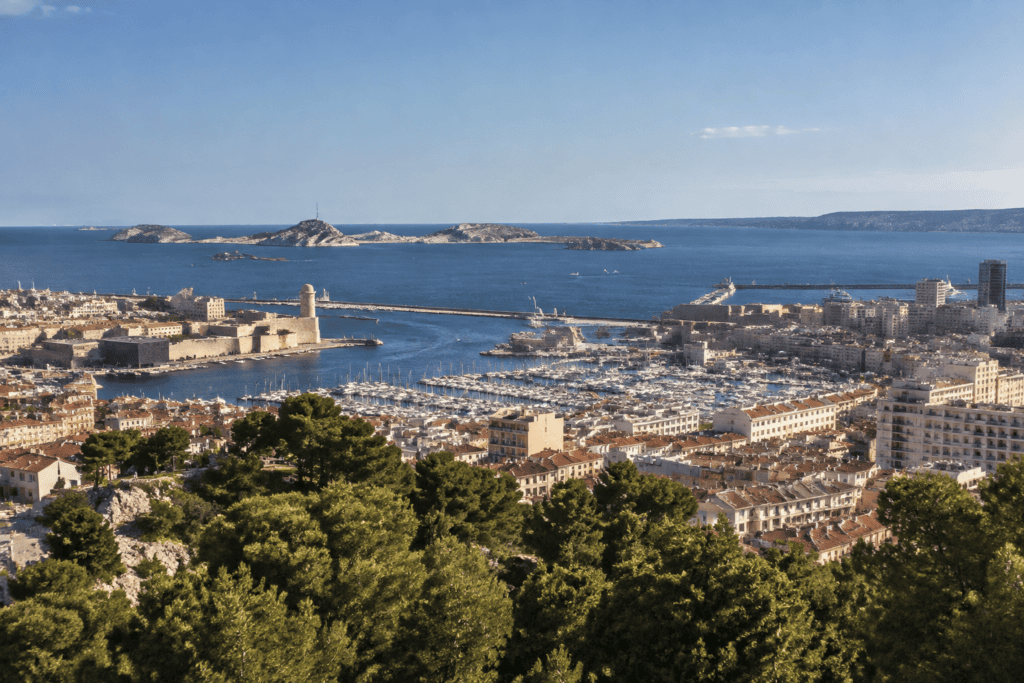
The panorama is the great reward for making the climb. From the hill, Marseille unfolds in an amphitheater around the sea. The Vieux-Port appears in the foreground, framed by Fort Saint-Jean and Fort Saint-Nicolas. Farther away, you can make out the coastal neighborhoods, port basins, the Frioul Islands, and Château d’If. Looking south, the hills and beaches remind you that the city extends all the way to the edge of the Calanques.
To get your bearings, observe the city before taking photographs. Mucem and the outline of Le Panier are useful reference points, as is the long line of the Corniche. The light changes quickly: a clear morning often provides a precise view of the harbor, while late afternoon creates warmer contrasts on the facades and hills. The mistral can make the air especially clear, but it can also make the esplanade feel quite chilly. Avoid approaching exposed areas or edges not intended for stopping, especially with young children.
How do you get there from central Marseille?
From the Vieux-Port, walking uphill generally takes around 45 minutes, depending on the route, pace, and breaks. The route passes through the sloping streets of the Vauban neighborhood and offers an interesting way to discover a residential side of Marseille, with its stairways, small streets, and views of the basilica. This option suits visitors who enjoy walking, but it can be demanding in hot weather.
Bus route 60 serves the area from several central points, including around the Vieux-Port and Mucem; check routes and traffic conditions on the official network before setting out. Tourist transportation also connects the Vieux-Port with Notre-Dame de la Garde according to its schedule. A car can be convenient for drop-off, but traffic and parking around the sanctuary may be regulated or congested. People with reduced mobility should inquire in advance about drop-off in front of the main entrance and elevator access. Don’t rely solely on outdated information: schedules, routes, and traffic rules may change.
Tips for Planning Your Visit
Allow at least one hour to combine the basilica interior, the crypt, and the outdoor viewpoints. If you want to take photographs, read the historical information, or extend your visit through the streets of Vauban, allow more time. A morning visit often lets you start the day with the panorama before heading back down toward the Vieux-Port. Conversely, late afternoon suits visitors seeking softer light, subject to current opening hours.
As the basilica is a religious site, services or events may occasionally change access to certain areas. Check official information before setting out, particularly for opening hours, visiting conditions, and any specific guidelines. Wear sturdy shoes if you are walking up and bring an extra layer in case of wind. After heading back down, you can continue to the Vieux-Port, Le Panier, Mucem, or Fort Saint-Jean. For a fuller day, combine Notre-Dame de la Garde with a seaside walk or exploration of Marseille’s historic central neighborhoods.
Useful sources
Frequently Asked Questions
Is admission to Notre-Dame de la Garde free?
How much time should you allow to visit Notre-Dame de la Garde?
Can you walk up to Notre-Dame de la Garde?
Which bus should you take to reach the basilica?
Is Notre-Dame de la Garde accessible to people with reduced mobility?
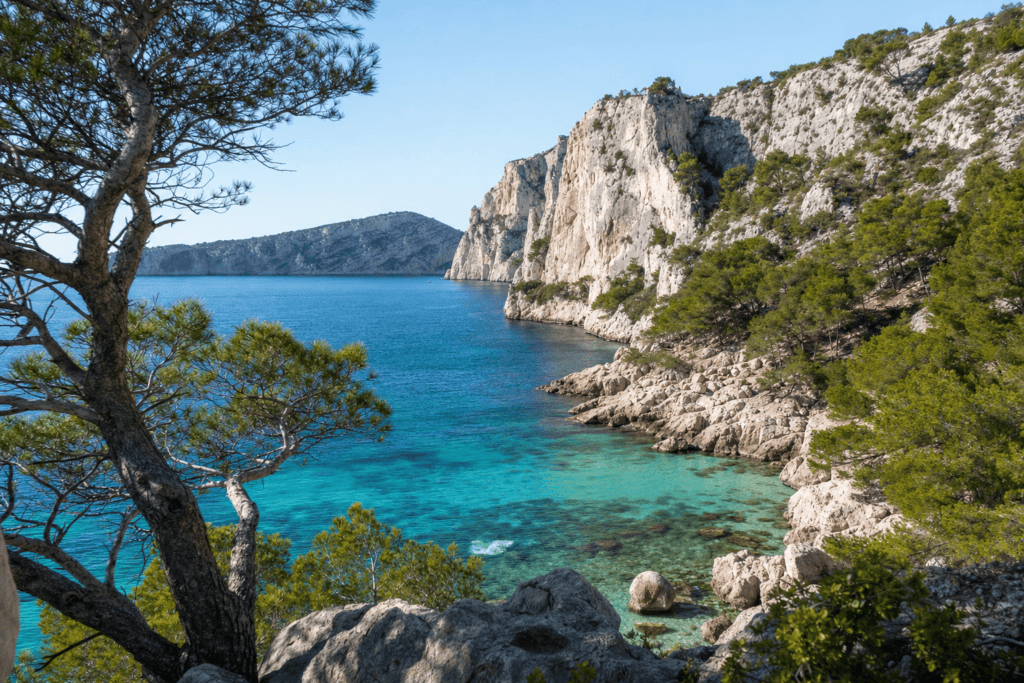 Calanques National Park A practical guide to discovering the landscapes, hiking trails, and access rules of Calanques National Park…
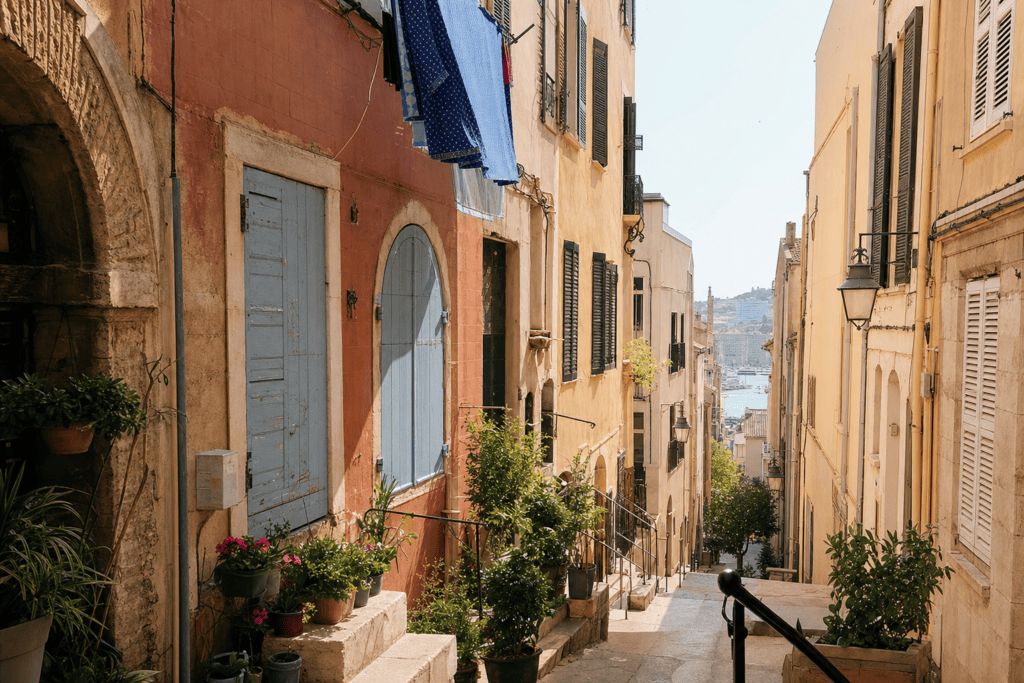 Le Panier Le Panier is best explored on foot, through sloping lanes, small squares, colorful façades, the Vieille Charité, street…
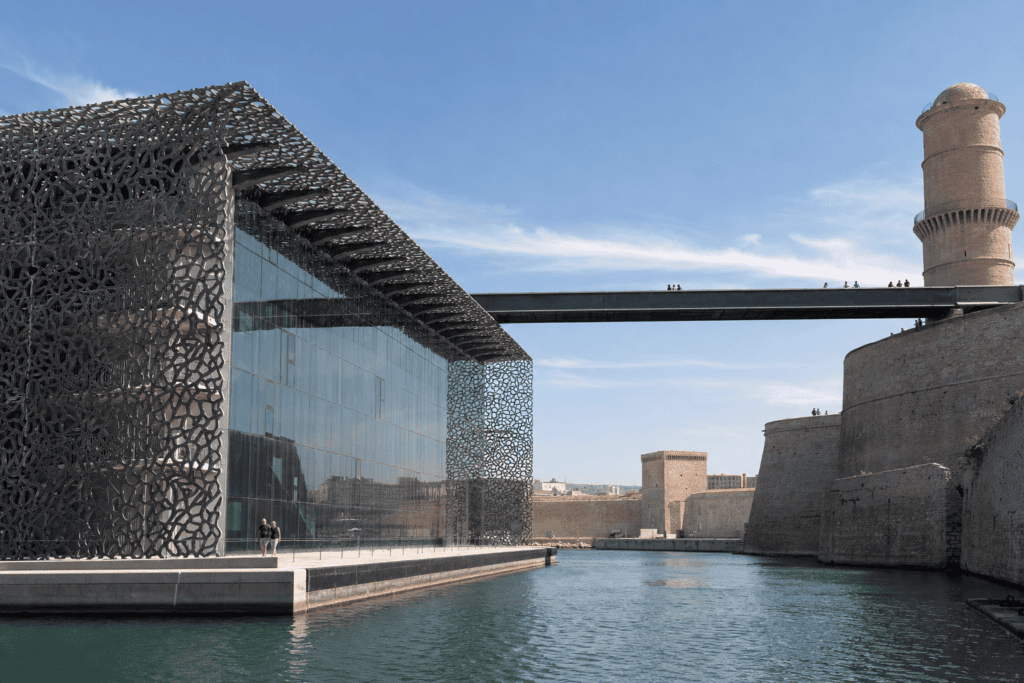 Mucem and Fort Saint-Jean A Marseille walk combining a contemporary museum, historic fortress, Mediterranean gardens, and views over the Old Port.
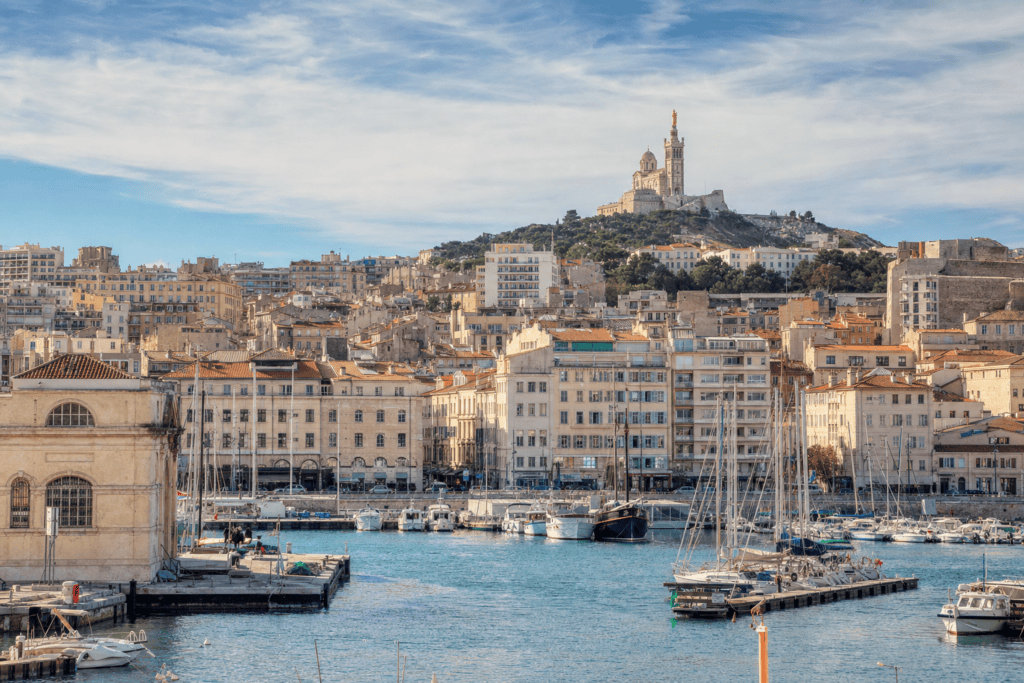 Marseille’s Old Port The Old Port captures the essence of Marseille’s atmosphere: the fish market, quays, boats, sunshade, access to…
Online booking · Paris → Rue Fort du Sanctuaire, 13006 Marseille
Choose your pickup date and time
Your departure and arrival details are already pre-filled. You can adjust them in the fare calculator before viewing the vehicles and fare.