



Calanques National Park: A Guide from Marseille
Marseille
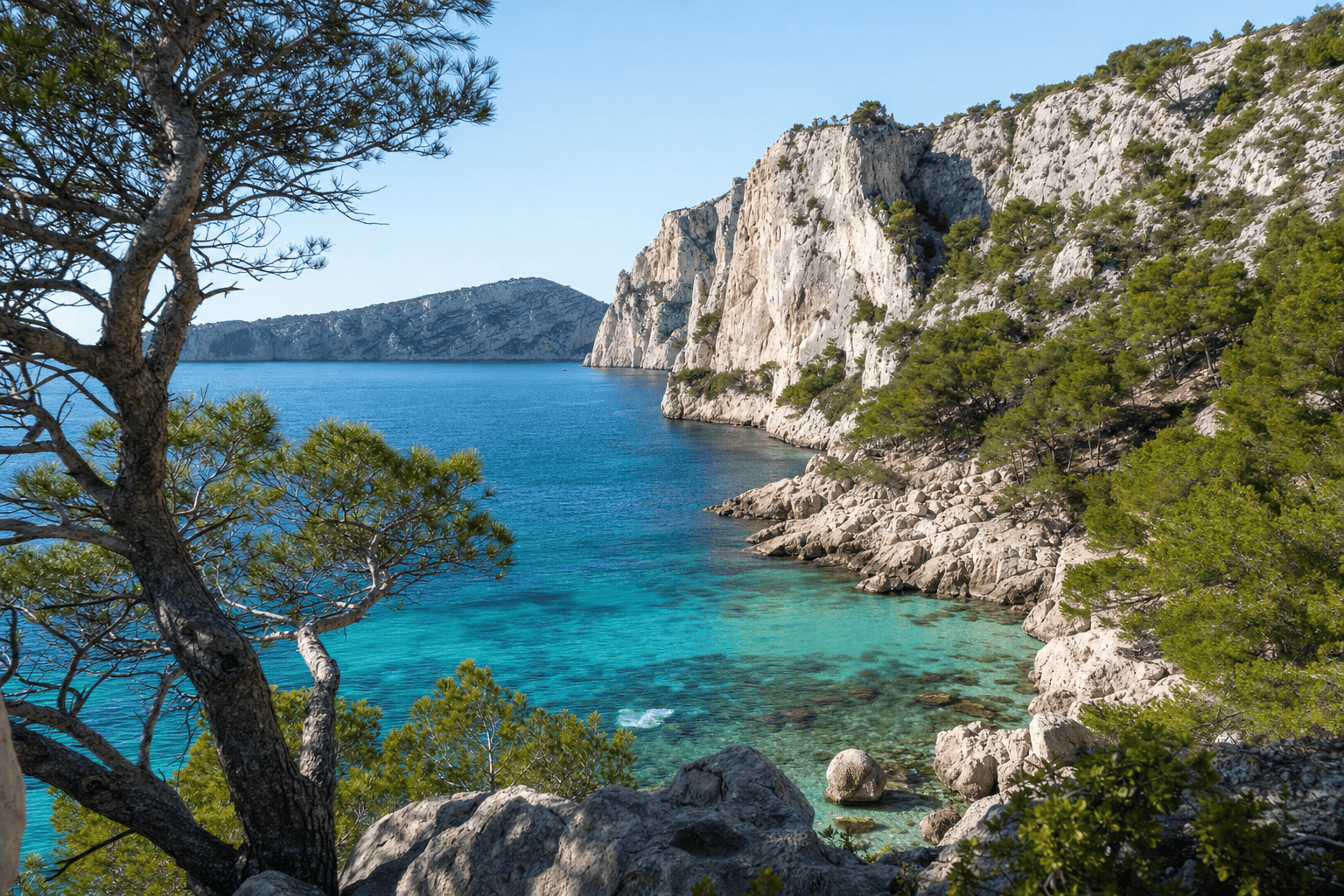
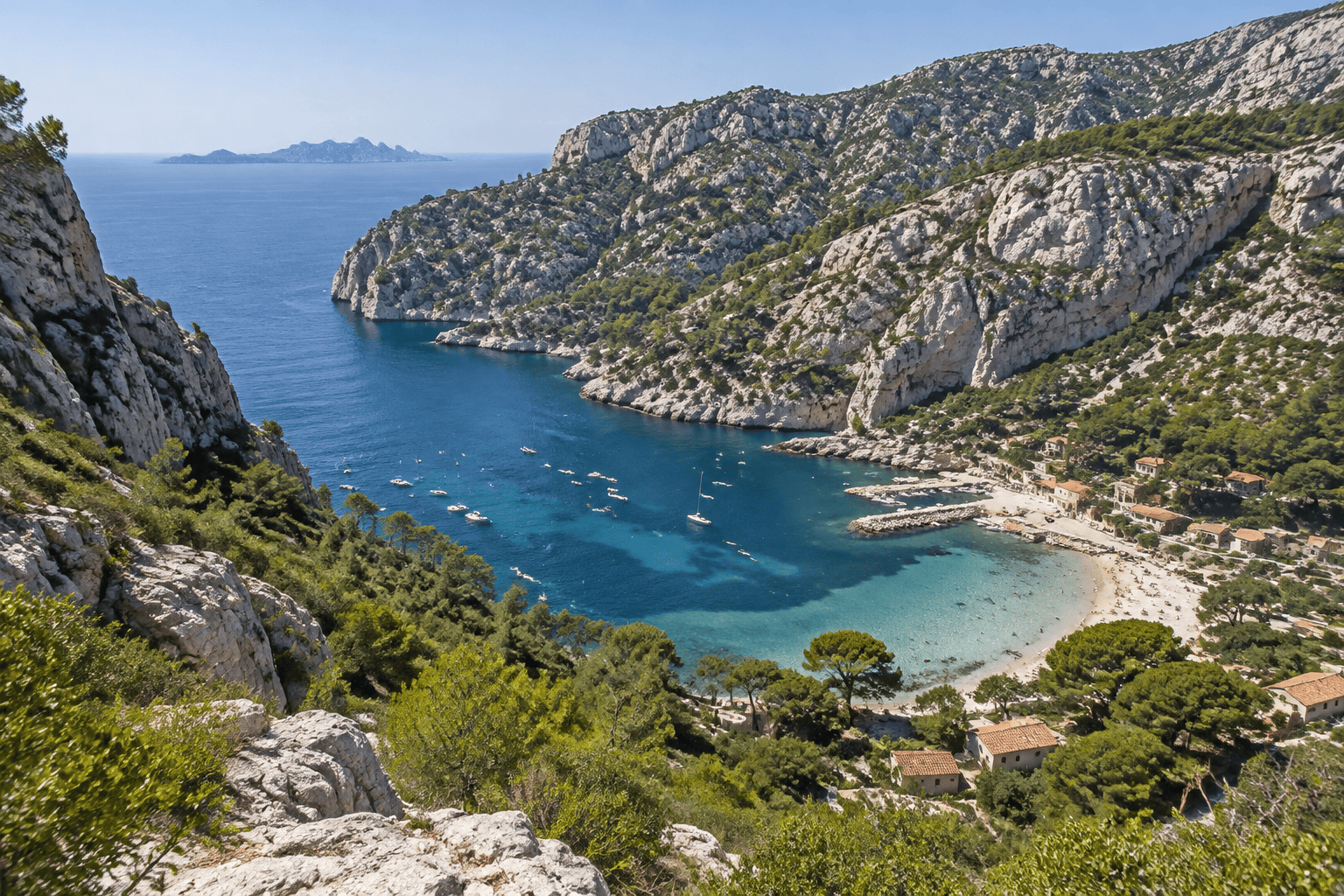
Between Marseille, Cassis, and La Ciotat, Calanques National Park forms a spectacular landscape of limestone cliffs, turquoise waters, pine forests, and wild coves. Created in 2012, it protects a terrestrial, marine, and island territory marked by remarkable biodiversity and heavy visitor numbers. Sormiou, Morgiou, Sugiton, En-Vau, Port-Pin, and Callelongue each offer a very different atmosphere, but exploring them requires planning your route and checking access conditions. In summer, the risk of wildfires may lead to the entire massif being closed, while some access points are regulated or require reservations. This page helps you choose your starting point, plan a realistic hike, and enjoy the Calanques responsibly. ([marseille-tourisme.com](https://www.marseille-tourisme.com/decouvrez-marseille/calanques-plages-et-nature/les-calanques-de-marseille/comment-acceder-aux-calanques/regles-pour-acceder-au-parc-national-des-calanques/?utm_source=openai))
Practical information
Proper footwear, plenty of water, sun protection, and a fully charged phone are essential. Take public transportation to the park entrances whenever possible, as parking is limited.
Getting to Marseille from Paris with peace of mind
To start a Calanques itinerary from Paris, Booking Paris Transfer can arrange private transportation from a Paris hotel, CDG, or ORY to Marseille. The service covers transportation only: it does not include an admission ticket, hiking reservation, or local driver service in the Calanques. Depending on your itinerary, a return trip to Paris can also be arranged.
Private transportation from Paris, CDG, or ORY to Marseille, with a possible return to Paris depending on the itinerary.
A national park between city, sea, and mountains
Calanques National Park is an exceptional natural area located just outside Marseille, extending toward Cassis and La Ciotat. Its defining feature is the meeting of several environments: limestone terrain, cliffs plunging into the Mediterranean, dry valleys, pine forests, caves, islands, and seabeds. This diversity accounts for the richness of its landscapes, but also the fragility of the area. The park protects terrestrial and marine habitats home to many rare and protected species.
The contrast with the nearby major city is striking. Within minutes, you can go from a Marseille neighborhood to a rocky trail with expansive views over the sea. This proximity makes the Calanques highly accessible, but it also creates significant human pressure. Litter, trampling, noise, anchoring, and wildfires can quickly damage the natural environment. Visiting the park therefore means enjoying a spectacular site while agreeing to follow rules designed to preserve it.
Which calanque should you choose from Marseille?
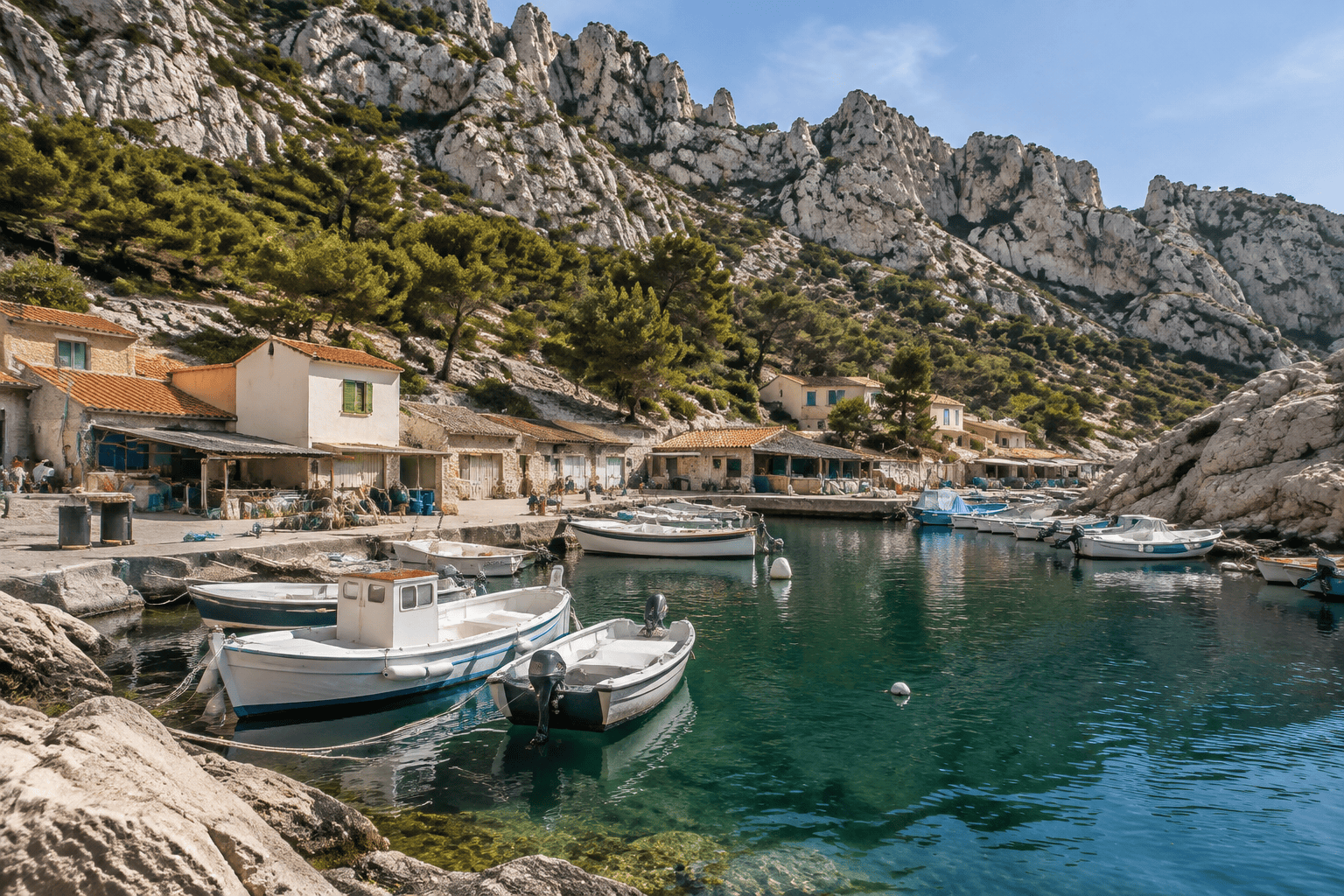
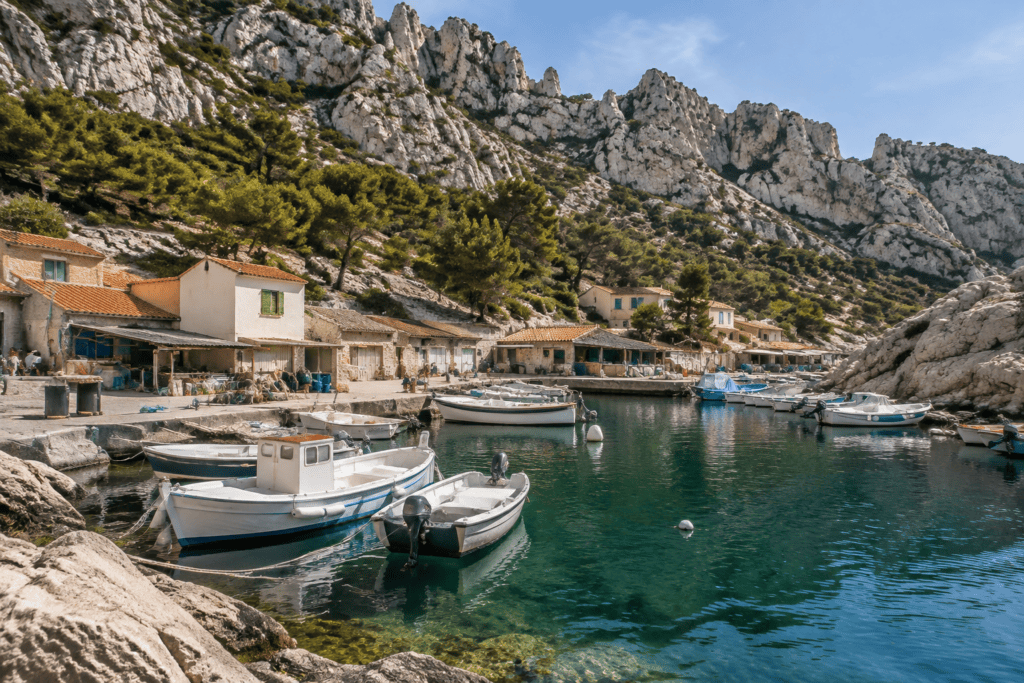
The choice depends on the time you have, your fitness level, and the experience you’re looking for. Sormiou is known for its deep cove, cabins, and clear water. Morgiou has a more rugged atmosphere and a small harbor shaped by its maritime history. Sugiton, accessible from Luminy, is popular for its viewpoints and small coves, but access may be regulated during the high season.
To the west, Callelongue is a gateway to the Marseilleveyre massif and the landscapes around Les Goudes. Port-Pin and En-Vau are often visited on an excursion from Cassis: the route offers beautiful views but includes rocky and sometimes steep sections. It’s better to choose one area rather than trying to visit several calanques in a single day. Distances shown on a map do not always reflect the true difficulty of the terrain or the elevation gain.
Hiking: Plan a realistic route
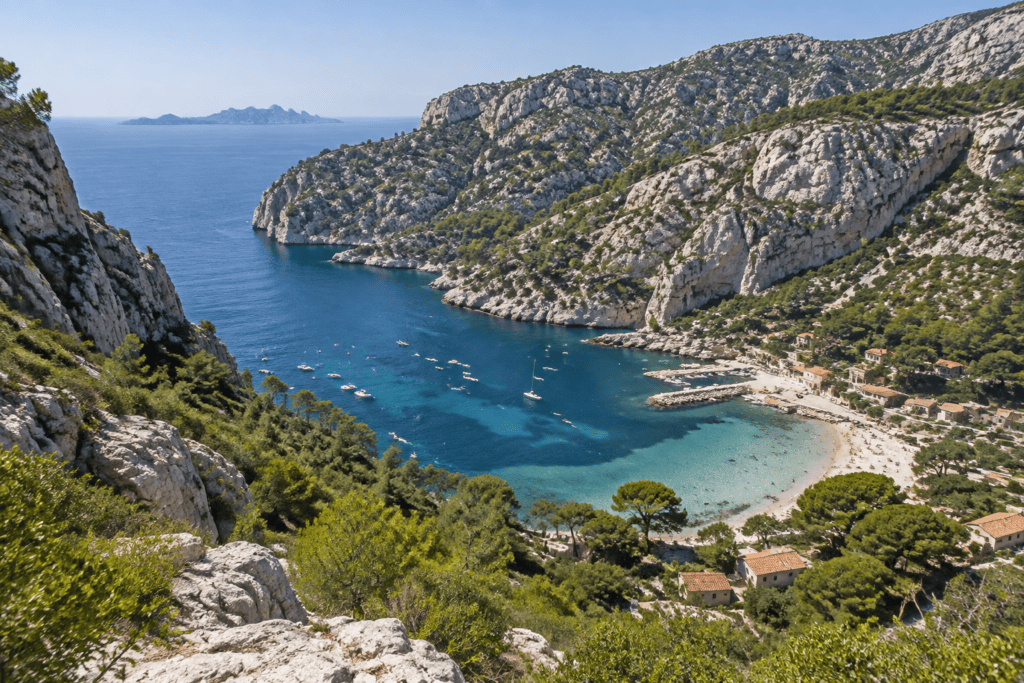
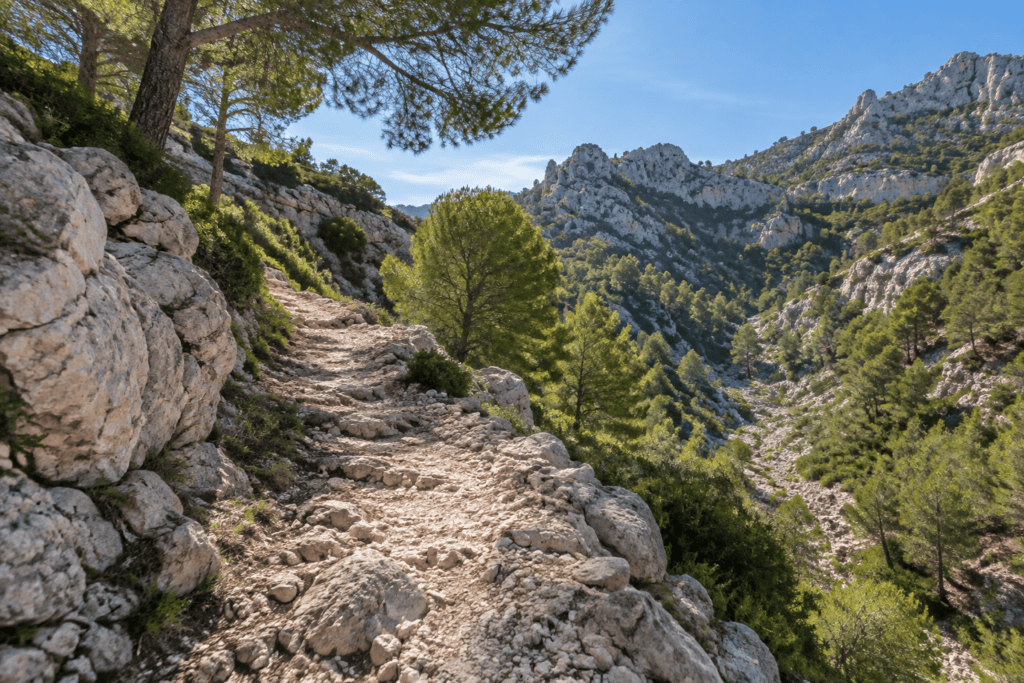
The Calanques trails are not simple coastal walks. Some sections are rocky, steep, or exposed to the sun, and descending to a calanque must be followed by an often demanding climb back up. Before setting out, identify the access point, estimated duration, elevation gain, possible escape routes, and any potentially difficult sections. An offline map can be useful, as cell service is inconsistent in the valleys.
For a first visit, start early, especially when temperatures rise quickly. Wear closed-toe shoes with good-grip soles and bring more water than you think you’ll need, as water sources are rare or nonexistent on the trails. Avoid taking young children on a coastal route without checking its difficulty first. In strong mistral winds, extreme heat, or unstable weather, adjust your plans: a nearby viewpoint may be preferable to a long crossing.
Access, transportation, and planning from Marseille
The Calanques can be accessed from several neighborhoods in Marseille. For Luminy and routes toward Sugiton, public transportation can take you to the trailheads. The Baumettes, Sormiou, and Morgiou areas are also served by bus routes, with a section to be completed on foot. To reach Callelongue and Les Goudes, you can take the urban transit network, then continue along coastal paths and marked trails.
A car is not always the most practical option: parking is limited, some roads are closed or regulated depending on the season, and traffic can be heavy. The Tourist Office recommends approaching the massif by public transportation and then walking. From Paris, a chauffeured trip to Marseille can simplify arrival with luggage, but it does not replace local hike planning. Once there, check the exact starting point and current conditions with official sources.
Access rules and wildfire risks
Access to the Calanques is subject to regulations that may change depending on the season and weather conditions. From June 1 through September 30, wildfire risk is closely monitored in the Bouches-du-Rhône department. A color-coded system indicates whether access to the massif is permitted; on a red-alert day, access may be prohibited, including on foot. Check the official map or dedicated app before setting out, and do not rely solely on the weather you observe in Marseille.
Some roads, particularly those leading to Sormiou, Morgiou, and Callelongue, are subject to additional restrictions for motor vehicles. Access to Sugiton may require a reservation during the summer season. These rules are not minor formalities: they help limit fire outbreaks, congestion, and trail degradation. If an area is closed, never look for an alternative route around the closure. Postpone your outing or choose an authorized activity in another area.
Swimming, boating, and exploring the sea
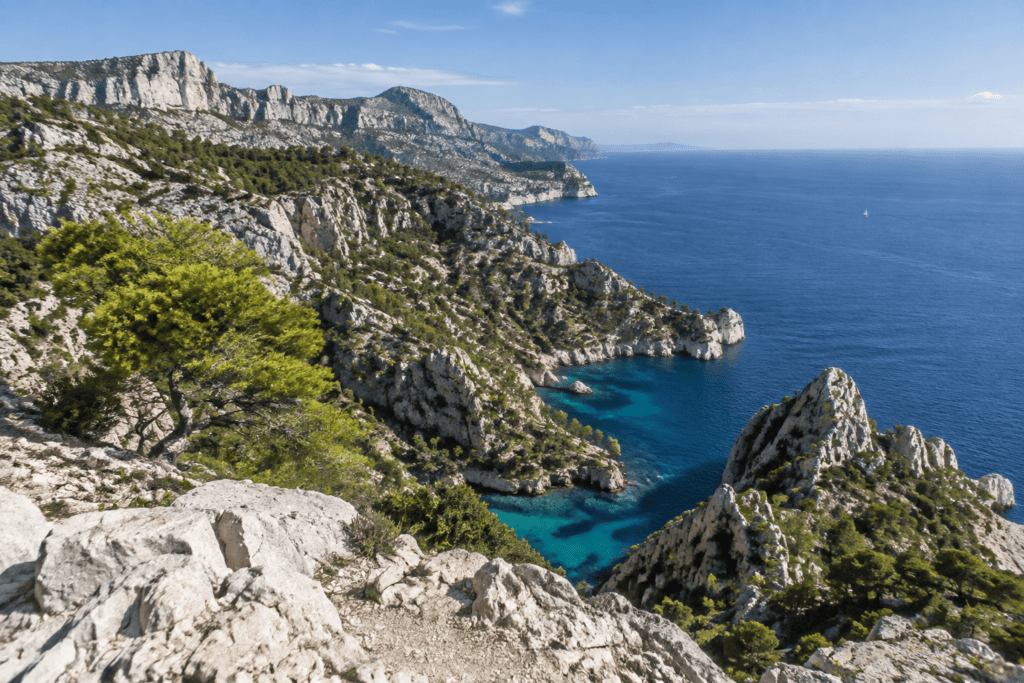
The sea offers another way to experience the Calanques. From Marseille, boat excursions let you see the cliffs, coves, and islands without taking the trails. This option is especially suitable for visitors with limited time or those who want to minimize walking. However, trips depend on sailing conditions, wind, and sea conditions. It’s best to choose an authorized operator and check the exact embarkation point.
Swimming is tempting in the clear waters, but not all coves are supervised and some are difficult to access. Slippery rocks, waves, boats, and rapidly changing weather require caution. At sea, navigation, anchoring, and passenger transport are regulated within the heart of the park. Respect marked zones, avoid touching the seabed, and do not take shells, plants, or stones. Responsible exploration favors quiet observation over searching for a natural souvenir.
How to help preserve the Calanques
The beauty of the Calanques depends on a fragile balance. Stay on marked trails to limit erosion and trampling of vegetation. Close gates when requested, keep your dog under control, and never light a fire, even in a spot that seems isolated. Take all trash with you, including tissues, packaging, and leftover picnic food. Toilets are scarce: plan ahead and respect the area.
Silence is also a form of protection. Avoid amplified music and observe wildlife from a distance without feeding animals or disturbing nesting birds. For photographs, choose a stable viewpoint rather than stepping off the trail. The Calanques are home to remarkable terrestrial and marine biodiversity, but it is vulnerable to human visitation. By moving at a calm pace and staying out of closed areas, you directly contribute to preserving this shared heritage.
Useful sources
Frequently Asked Questions
Can you visit the Calanques year-round?
Which calanque is easiest to reach from Marseille?
Do you need a reservation to visit Sugiton?
Can you drive into the Calanques?
Can you swim in the Calanques?
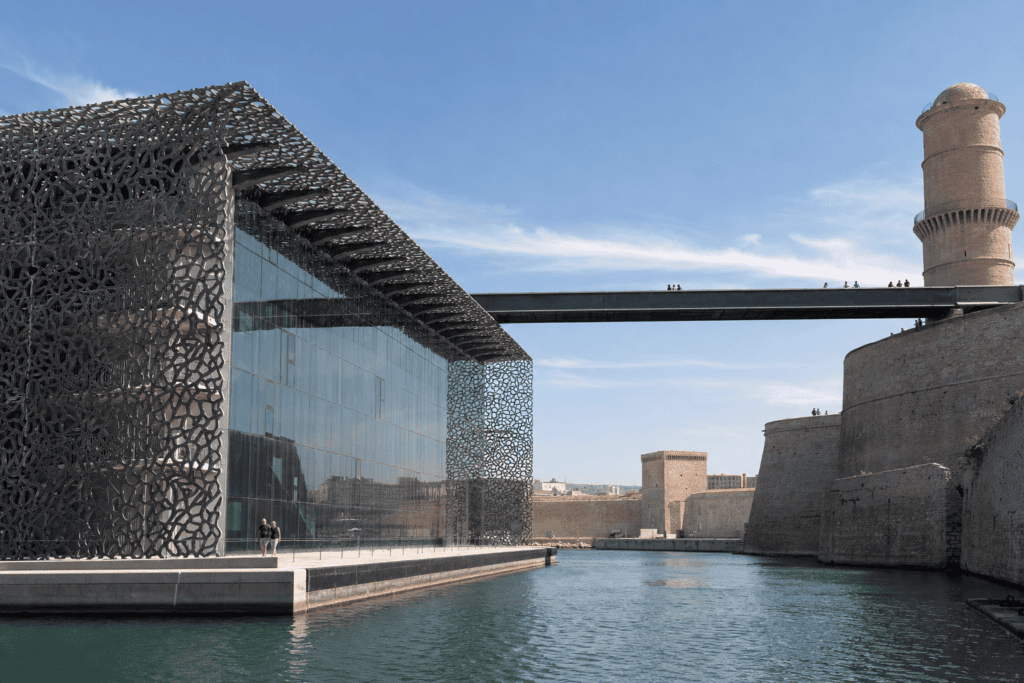 Mucem and Fort Saint-Jean A Marseille walk combining a contemporary museum, historic fortress, Mediterranean gardens, and views over the Old Port.
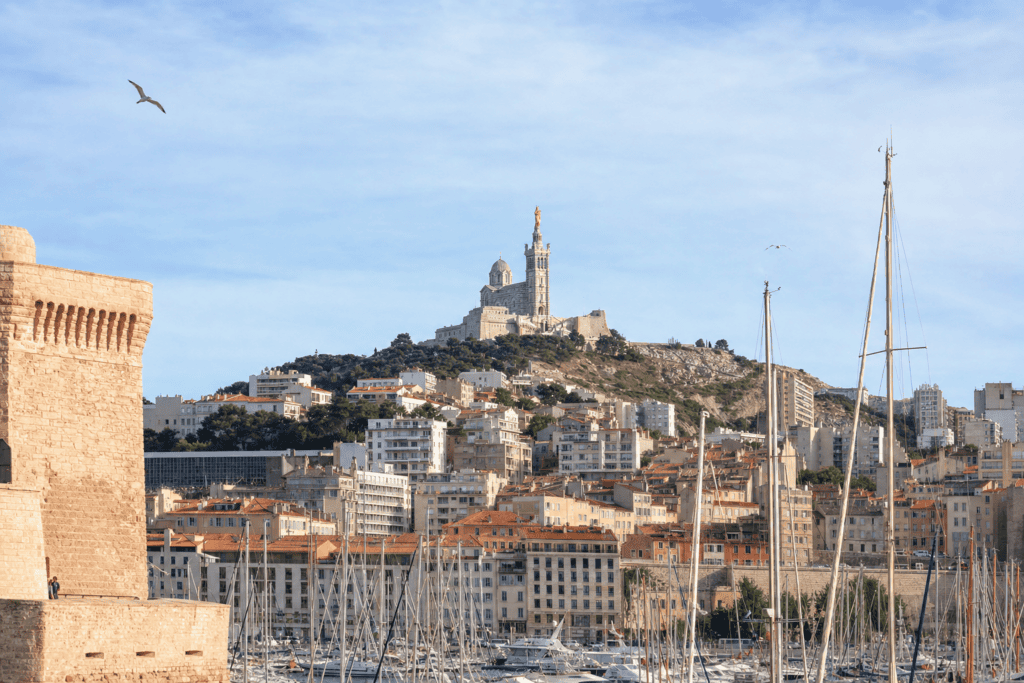 Notre-Dame de la Garde La Bonne Mère overlooks Marseille from a 154-meter hill. Discover its history, its basilica…
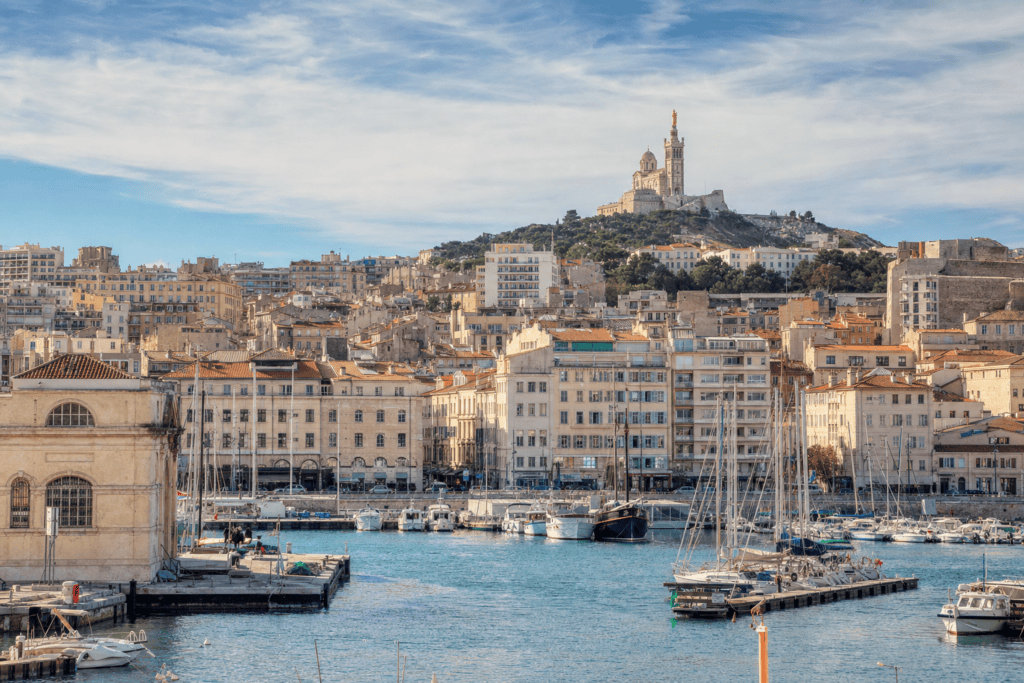 Marseille’s Old Port The Old Port captures the essence of Marseille’s atmosphere: the fish market, quays, boats, sunshade, access to…
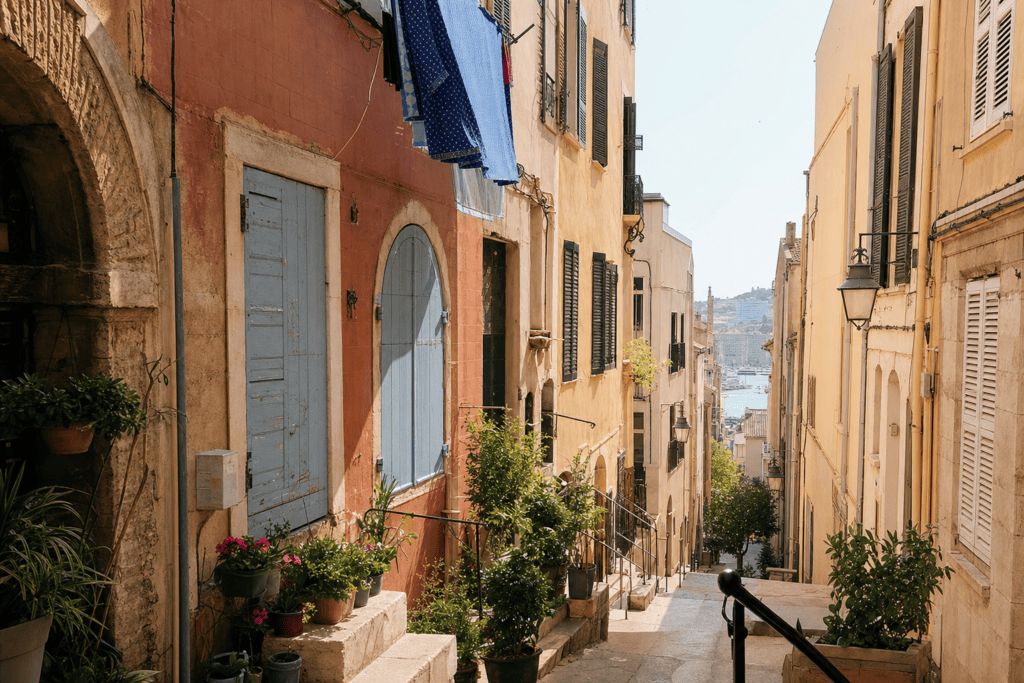 Le Panier Le Panier is best explored on foot, through sloping lanes, small squares, colorful façades, the Vieille Charité, street…
Online booking · Paris → Calanques National Park, spread across Marseille, Cassis, and La Ciotat; access varies depending on the calanque you choose.
Choose your pickup date and time
Your departure and arrival details are already pre-filled. You can adjust them in the fare calculator before viewing the vehicles and fare.