



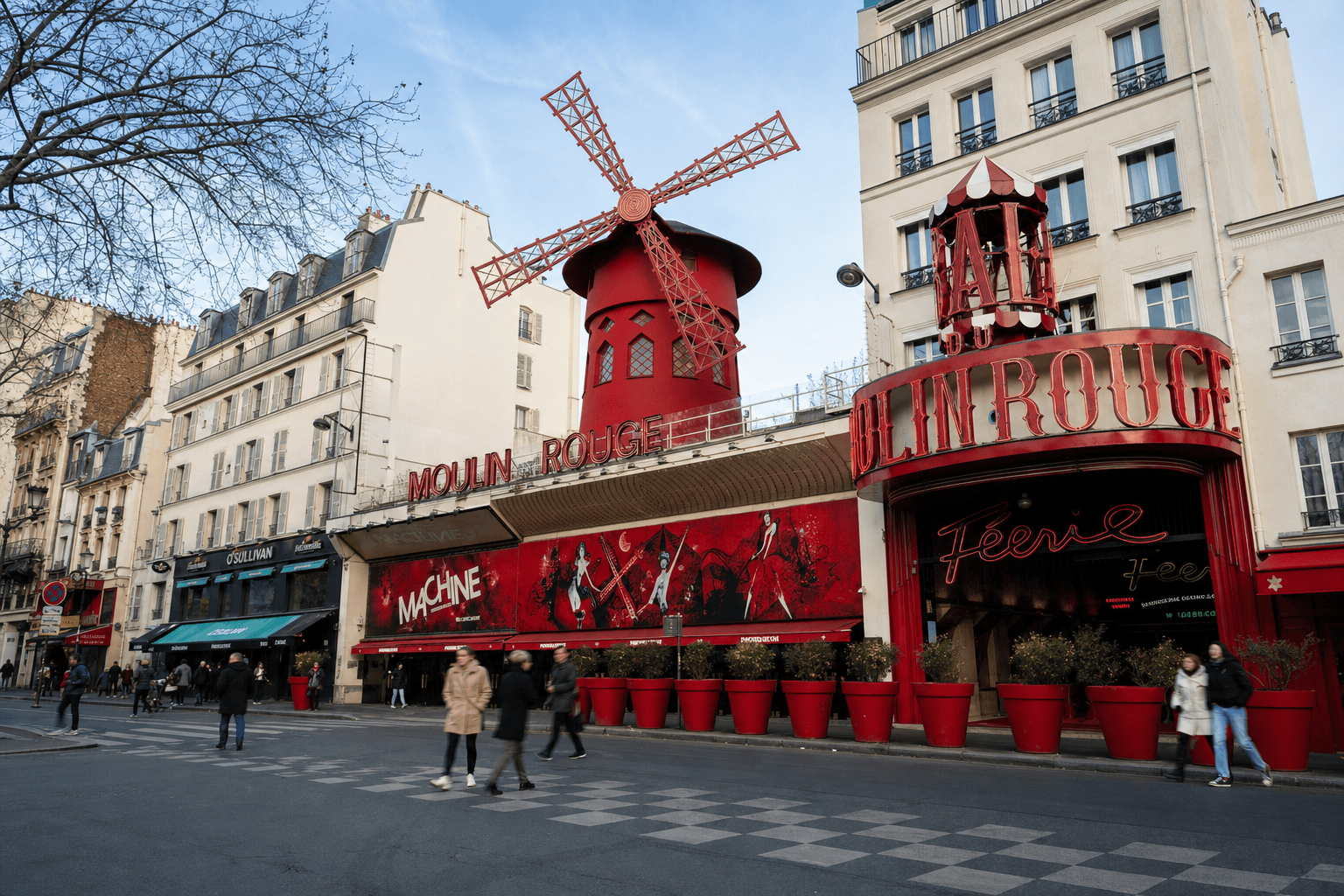
Moulin Rouge in Paris: How to Plan a Successful Evening
Paris
Located at 82 Boulevard de Clichy, near Place Blanche, Pigalle, and Montmartre, the Moulin Rouge is one of Paris’s most iconic cabarets. Founded in 1889, it continues the music-hall tradition with the Féerie revue, its costumes, sets, and the legacy of the French Cancan. An evening here should be planned like a cultural outing: choose the right package, allow plenty of time for arrival, and plan ahead for getting back after a late performance.
Practical information
Arrive early enough for check-in and security screening. Before leaving, check the guidelines regarding dress, luggage, photography, phones, and access requirements for your showtime.
Getting to the Moulin Rouge from Paris
Booking Paris Transfer can arrange transportation from a Paris hotel, train station, CDG, or ORY to the Moulin Rouge, with a return trip to Paris after the performance. The service covers transportation only: book your ticket directly with the cabaret and provide your exact showtime.
Possible departure from Paris, the Île-de-France region, CDG, or ORY, with a return to Paris depending on your itinerary.
An iconic address in Parisian history
The Moulin Rouge opened its doors on October 6, 1889, in a Paris shaped by the World’s Fair and the rise of new forms of popular entertainment. Located at the foot of Montmartre hill, near Place Blanche, it quickly became a venue for dances, shows, and social gatherings where artists, socialites, and night owls crossed paths. Its red windmill, positioned at the top of the façade, immediately became part of its visual identity.
The venue is also closely associated with the history of posters and Paris’s artistic life. Toulouse-Lautrec’s works fixed the silhouettes of the dancers, the energy of the auditorium, and the cabaret atmosphere in the public imagination. Artists such as Mistinguett later contributed to its fame. This history gives the venue a heritage dimension that goes beyond simply taking a photo in front of its façade.
Over the decades, the cabaret has undergone changes and artistic developments while preserving the concept of a revue built around dance, music, costumes, and staging. For travelers interested in live performance, the Moulin Rouge represents a meeting point between Parisian heritage and contemporary entertainment.
Understanding the Féerie Revue
The Féerie revue is the show currently associated with the Moulin Rouge. It is presented as a succession of visual tableaux combining choreography, costumes, sets, music, and lighting effects. The French Cancan remains the house’s most famous symbol, but the performance is not limited to this number: it creates a broader universe carried by the troupe and various stage moments.
It is best to arrive expecting a live performance rather than a historical tour or museum visit. The experience relies primarily on dance, staging, costumes, and the atmosphere of the auditorium. This approach can appeal to an international audience, since much of the show is accessible through imagery, rhythm, and staging rather than lengthy dialogue.
The program, artists, packages, and showtimes may change. Check the information for your chosen date before booking. Depending on the showtime, you may be able to choose the show only or a package that includes dinner. Check the exact conditions with the Moulin Rouge, particularly the advertised duration and included services.
Getting to the Moulin Rouge from Paris
Le Moulin Rouge se trouve au 82 boulevard de Clichy, dans le 18e arrondissement de Paris, à la jonction des secteurs de Montmartre et de Pigalle. La station Blanche, sur la ligne 2 du métro, constitue l’accès le plus directement associé au cabaret. La place Blanche et le boulevard de Clichy sont très fréquentés en soirée ; une marge de temps est donc utile pour la marche, les traversées et l’arrivée devant l’établissement.
From a Paris hotel, the metro is often convenient, but the actual journey depends on transfers, walking, and any disruptions. Bus routes serving the area can provide an alternative, but it is unwise to rely on a specific route without checking the network that day. From a train station, use your accommodation’s exact address to avoid an overly theoretical estimate.
From Charles de Gaulle or Orly, going to your hotel first with your luggage may make the evening easier. A chauffeured car is especially useful for coordinating a couple or group, dropping travelers off nearby, and avoiding the need to find parking in a busy area. It does not replace booking the show and does not include admission to the cabaret.
Discovering Montmartre Before the Show
The Moulin Rouge’s location makes it easy to build an evening around Montmartre. In the late afternoon, start near Place Blanche, then walk up Rue Lepic before gradually making your way toward the streets on the hill. Place du Tertre, the area around Saint-Pierre de Montmartre church, and the forecourt of Sacré-Cœur offer different atmospheres, with shopping streets, studios, stairways, and views over Paris.
This walk suits travelers who want to combine the cabaret with a first look at the artists’ quarter. The hill is steep, however, some streets are cobbled, and the most famous areas can be very crowded. Comfortable shoes are preferable, especially if the evening includes dinner or a long period of standing.
To avoid arriving in a rush, choose a short route and set a departure deadline for Boulevard de Clichy. A nearby restaurant can simplify planning, but check the service time and distance to walk. A measured stroll leaves more flexibility than an itinerary covering several neighborhoods before the show.
Dinner, Dress Code, and Preparing for the Show
The Moulin Rouge offers various packages, including options that combine dinner and a show. Menus, showtimes, seating categories, and included services depend on the booking selected. Information published on third-party websites may be outdated, so check the conditions for your date directly with the venue before confirming your evening.
Elegant city attire is better suited to the cabaret atmosphere than beachwear, very casual clothing, or shoes unsuitable for a night out. Read the access rules before leaving, as they may cover clothing, items brought in, or certain equipment. Avoid suitcases and large bags, which can make entry more difficult and may not be accepted as they would at a standard luggage storage facility.
Arriving early allows you to handle check-in, security screening, and seating calmly. Keep your booking confirmation and show information readily available. Photography, phones, and permitted items may be subject to specific guidelines. If you have a request related to a special occasion, mobility, or dietary needs, contact the venue before the performance rather than assuming a solution will be available on-site.
Planning Your Return After the Show
Your return deserves as much attention as your arrival. A show may end late, and the time needed to leave varies depending on crowds and how the evening is organized. The metro does not run at all hours: check service status and your route after reviewing the information for your date. If the network is closed or unsuitable, consider a night bus, taxi, or pre-booked vehicle.
Night buses do not necessarily follow the same routes as daytime lines and may require additional walking. Do not choose a stop based only on its name: check the route all the way to your hotel’s full address. In the Pigalle and Place Blanche areas, agree on a clearly identifiable pickup point and account for traffic, pedestrians, and any restrictions.
For a group or an early departure to CDG, ORY, or a train station, staying in Paris after the performance is often easier than traveling a long distance with luggage. A transfer booked from the Moulin Rouge to a Paris address, followed by an airport transfer the next day, can simplify coordination. Transportation remains separate from the cabaret ticketing: admission and show reservations must be arranged directly with the Moulin Rouge.
Who Is This Evening Best Suited For?
The Moulin Rouge suits travelers looking for a spectacular Parisian evening rather than a simple monument visit. It can fit into a couples’ trip, a celebration, a group vacation, or an itinerary focused on the performing arts. Its international reputation also makes it a natural choice for a first visit to Paris, provided you enjoy the cabaret atmosphere and late-night schedule.
Because the revue is largely based on music, dance, sets, and costumes, it can appeal to audiences who do not speak French. However, the duration and late schedule may not suit young children or travelers who need to get up very early. People with specific mobility, health, sound-comfort, or accessibility needs should contact the venue before booking to learn about the available arrangements.
This is not a self-guided visit: the experience depends on a specific showtime and the terms of the booking. By combining a manageable walk through Montmartre, a well-planned meal, and an arranged return, you give the outing real coherence. The cabaret then becomes the highlight of a Parisian evening rather than a last-minute addition.
Useful sources
Frequently Asked Questions
Where is the Moulin Rouge located?
Which metro station should I use?
Should I arrive early?
Can I have dinner at the Moulin Rouge?
How can I get back after the show?
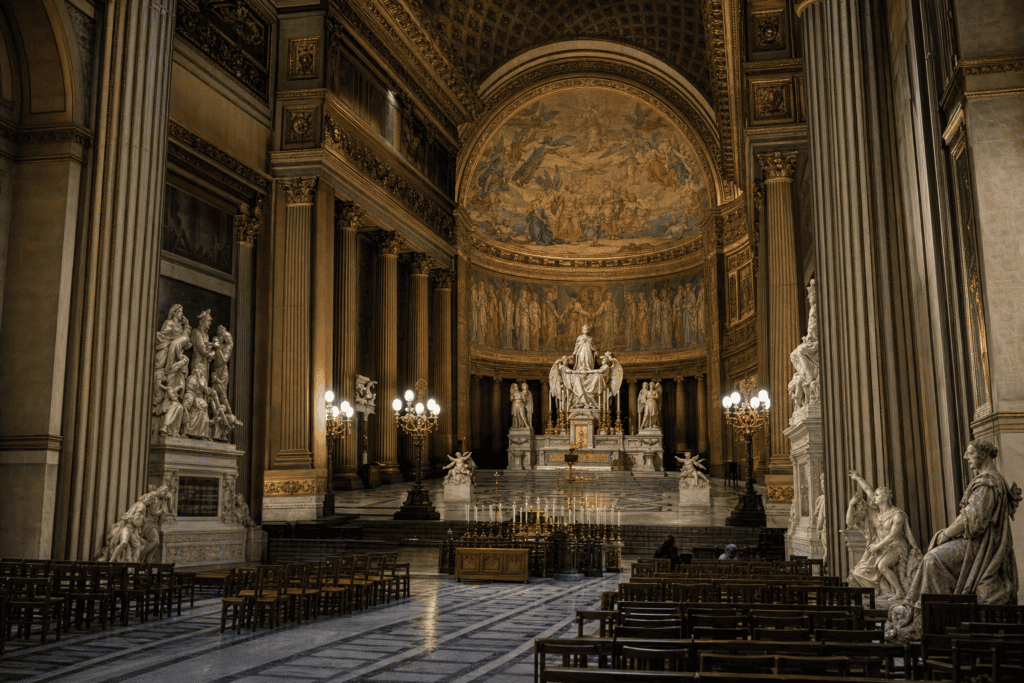 La Madeleine Church A major neoclassical monument, ideal for a stop between Place de la Concorde, the Palais Garnier, and the grand…
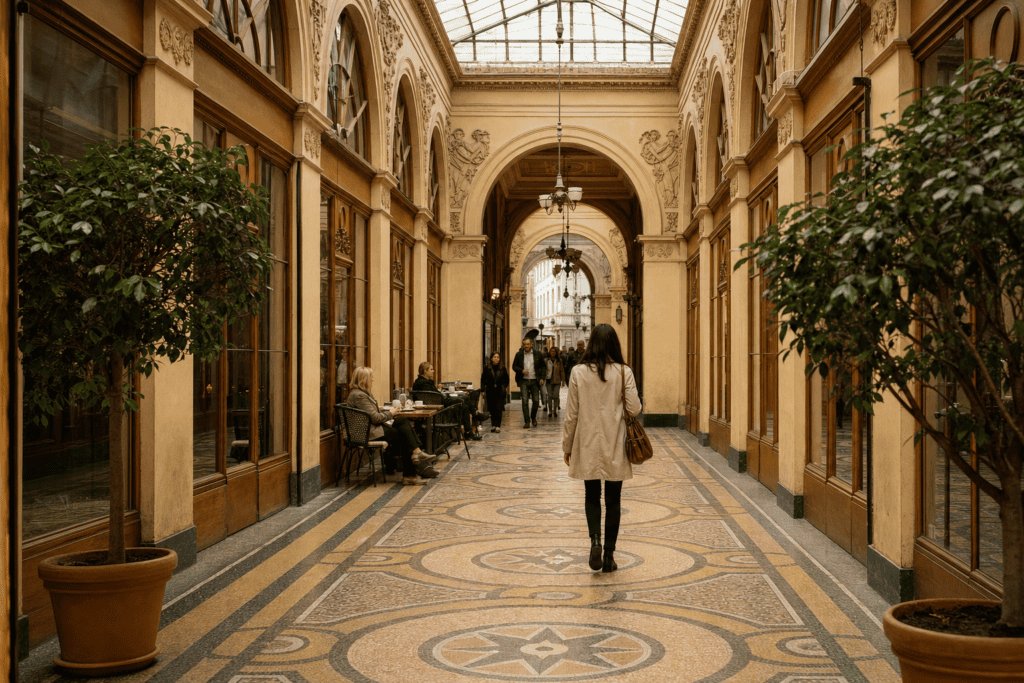 Galerie Vivienne A historic Parisian covered passage where mosaics, a glass roof, an old bookshop, and refined boutiques create an elegant stroll…
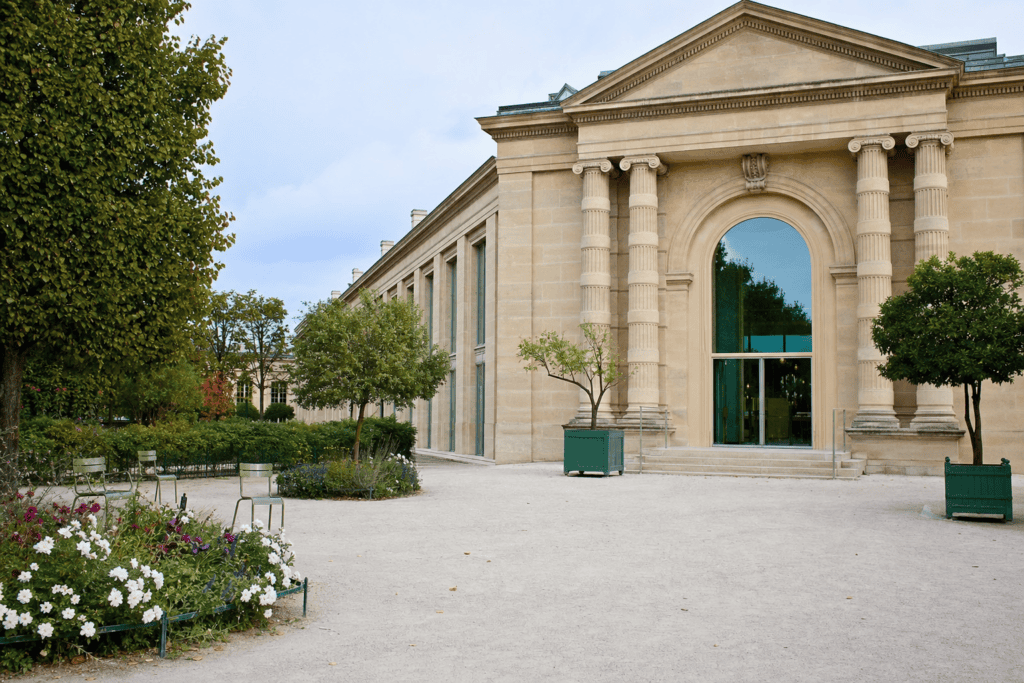 Musée de l’Orangerie A small-scale Paris museum where Monet’s Water Lilies engage in dialogue with the great masters…
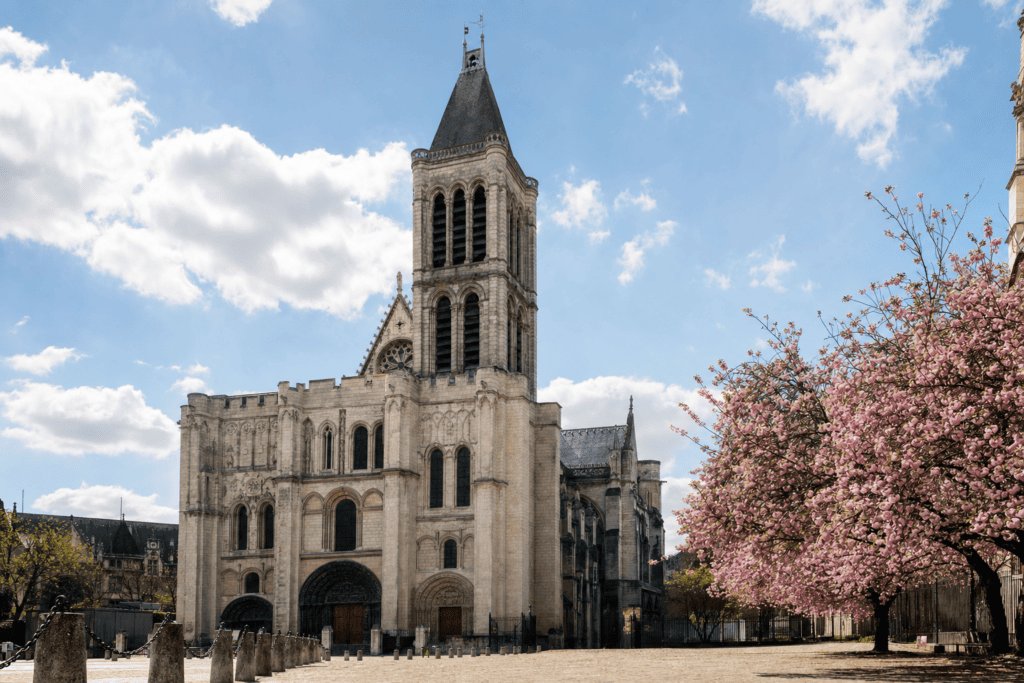 Basilica of Saint-Denis A Gothic cathedral and the necropolis of the kings of France, just a few stops from Paris.
 Parc Astérix In Plailly, attractions, shows, and Gaulish humor make for a family excursion that is easy to organize from Paris…
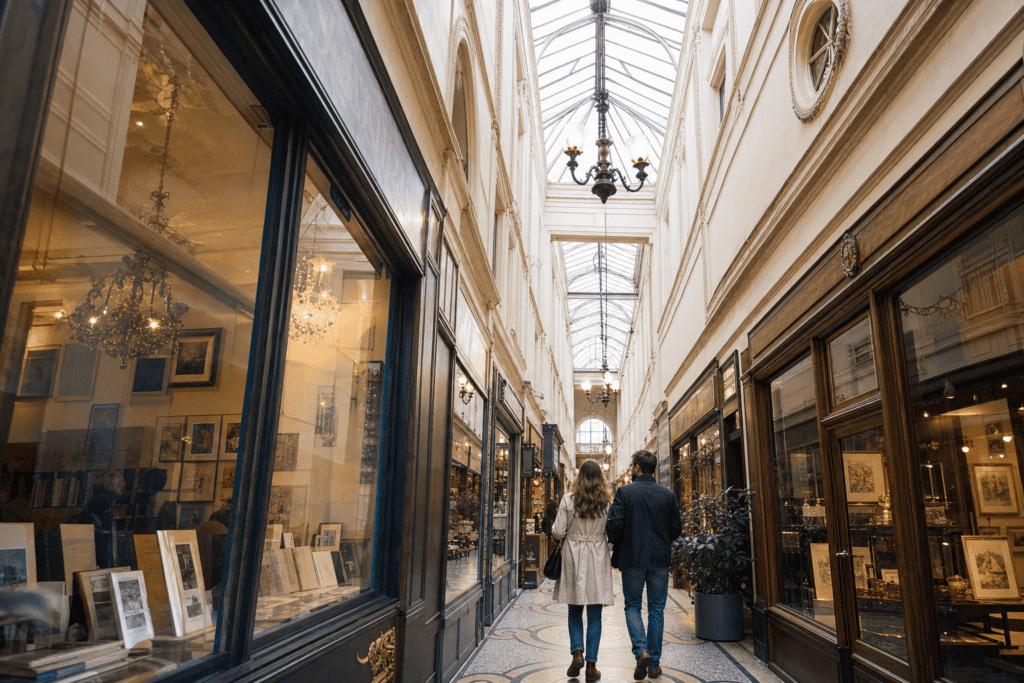 Passage des Panoramas A historic covered arcade in Paris, notable for its glass roof, specialty shops, and side passages…
Online booking · Paris → 82 Boulevard de Clichy, 75018 Paris, France
Choose your pickup date and time
Your departure and arrival details are already pre-filled. You can adjust them in the fare calculator before viewing the vehicles and fare.