



Passage des Panoramas: Visitor’s Guide to Paris
Paris
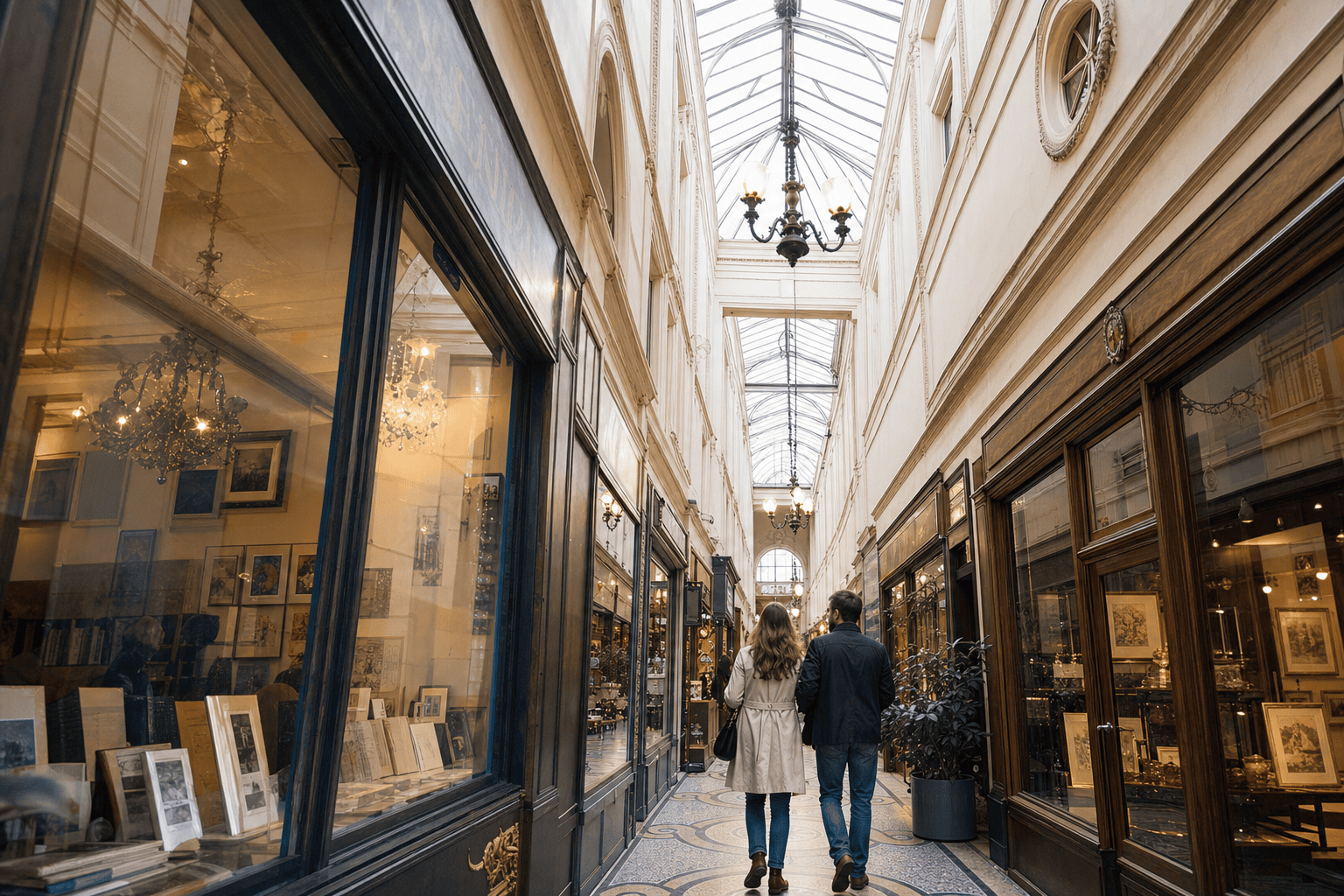
In Paris’s 2nd arrondissement, the Passage des Panoramas offers a sheltered walk beneath a glass roof, with side galleries, collectors’ shops, and places to eat. Opened around 1799-1800, it is part of the history of the covered passages developed in Paris at the turn of the 18th and 19th centuries. Its route connects Boulevard Montmartre, Rue Saint-Marc, and Rue Vivienne, with several branches giving the complex the feel of a small urban maze. Crossing it takes about thirty minutes, but photography, philately, numismatics, and commercial heritage enthusiasts will want to spend longer. The Passage Jouffroy, Passage Verdeau, Musée Grévin, and Théâtre des Variétés make it easy to create a rich itinerary in the Grands Boulevards area.
Practical information
Start at the Boulevard Montmartre entrance, walk through the main gallery at an unhurried pace, then explore the side branches before continuing to the Passage Jouffroy or Musée Grévin. Ask permission before photographing the inside of a shop.
Getting to the Passage des Panoramas from Paris
From a Paris hotel, train station, or Paris-Charles-de-Gaulle and Paris-Orly airports, Booking Paris Transfer can arrange a private ride to central Paris. The service covers transportation only: it does not include admission tickets, restaurant reservations, or a guided tour. Because the passage is pedestrian-only, drop-off takes place nearby depending on traffic and local regulations, followed by a short walk.
Drop-off nearby depending on Paris traffic; a short walk to the entrance may be necessary.
A Gallery Born with Paris’s Theatrical Era
The Passage des Panoramas belongs to the first generation of Paris’s covered galleries. Its opening is generally dated to around 1799-1800, in a neighborhood then animated by boulevards, shops, and entertainment venues. The name refers to panoramas, large circular paintings that recreated landscapes or historical scenes in an immersive setting. The installations that gave the passage its name no longer exist there, but they reflect the period’s enthusiasm for visual attractions and innovations designed for visitors.
The roof served a practical purpose: providing a route protected from rain and mud while encouraging visitors to browse the shops. The nearby Théâtre des Variétés, opened in 1807, reinforced the area’s entertainment identity. Today, the passage remains a lively commercial space rather than a museum-like setting, which makes it an appealing introduction to historic Paris.
Glass Roof, Sightlines, and Protected Features
The glass roof immediately catches the eye, but the architecture is best discovered as you walk. The main gallery extends into the Passages Feydeau, Montmartre, Saint-Marc, and des Variétés. These branches alter the sightlines: some sections are narrow and lined with shops, while others open toward an exit or a notable storefront. Woodwork, signs, moldings, and metal structures form an ensemble that has evolved with the site’s changing uses.
The Passage des Panoramas is listed in the French Ministry of Culture’s Mérimée database under reference PA00085920 and is protected as a historic monument. This designation concerns the built heritage and does not mean that every shop or interior feature has the same status. To help preserve the site’s atmosphere, do not touch historic decorations, lean against display windows, or disregard any posted instructions.
Stamps, Coins, and Specialty Shops
The passage owes much of its reputation to its collection-related shops. Depending on which businesses are open on the day of your visit, displays may feature stamps, coins, postcards, prints, autographs, sheet music, or antique documents. These shops give the route a documentary dimension: behind an object that may be tiny lie an era, a printing technique, a postal story, or a memory of everyday life.
The Stern house is also associated with the passage’s history and the tradition of engravers and printers who worked there. However, it is best to distinguish this historical reference from the current retail offering: a premises’ use, hours, and access may change. Come first for the architectural ensemble, then take time to study the displays. If you would like to go inside, ask before taking photographs and avoid occupying a narrow space when customers are examining the items.
Restaurants and Breaks Beneath the Glass Roof
The passage is home to, or has hosted, various restaurants, cafés, and food shops. Eating beneath the glass roof can be a pleasant break between visits, but the local offering changes quickly: do not assume that a business name, menu, hours, days of operation, or reservation policy is still current. Check the information published by your chosen establishment or contact it directly before going, especially in the evening and on public holidays.
For a short break, the surrounding streets also offer plenty of options in the Grands Boulevards area. Depending on your interests, you can continue toward Rue Montorgueil, Rue Vivienne, or the area around the Bourse. The appeal of the Passage des Panoramas lies less in any one venue than in the combination of heritage, specialty shops, and dining along a compact route. This makes it easy to include in a day focused on central Paris, without planning long journeys between stops.
Metro, Walking, and Arriving in the Neighborhood
For a first visit, Grands Boulevards is generally the most intuitive station. Served by Lines 8 and 9, it allows you to reach the Boulevard Montmartre entrance after a short walk. Richelieu-Drouot, also served by Lines 8 and 9, is another option. Bourse, on Line 3, is especially suitable for an itinerary approaching via Rue Vivienne, but the walk is longer.
Metro exits, construction work, and available elevators may change the route; check the RATP’s official information on the day of your visit. The area is busy, and sidewalks may be crowded. By car, nearby drop-off is more realistic than stopping in front of the entrance because the passage is pedestrian-only. Visitors with reduced mobility should identify an accessible metro exit in advance, confirm that the route has no impassable steps, and plan an alternative if an access point is temporarily closed.
A Route Through the Covered Passages
The Passage des Panoramas is particularly well suited to an itinerary focused on covered galleries. The Passage Jouffroy is nearby and leads to the Passage Verdeau, continuing along the Grands Boulevards. Walking through them in sequence lets you compare several atmospheres: collectors’ shops, bookstores, decorative objects, cafés, and contemporary displays. The distances are short, but the visit is best taken slowly, as details are often found in the storefronts and side branches.
Musée Grévin and Théâtre des Variétés naturally extend the theme of shows and entertainment. Southward, Rue Vivienne leads to Galerie Vivienne and then the Palais-Royal; eastward, Rue Montorgueil offers a more food-focused, everyday atmosphere. Choose two or three stops rather than trying to see everything. Since the hours, admission conditions, and opening days of nearby attractions vary, check their official websites before planning your route.
Practical Tips for a Successful Visit
Wear comfortable shoes and allow extra time to stop without obstructing traffic. The passage remains a place of business: keep entrances clear, do not block storefronts, and be considerate of the people working in the galleries. Ask permission before photographing the inside of a shop or a collectible item. Light beneath the glass roof changes with the time of day and weather; it can be interesting for photography, but the galleries sometimes become narrow as crowds increase.
In rainy weather, the site provides welcome shelter, but this does not guarantee that every entrance or shop will be open. Visitors using a wheelchair, cane, or stroller should check the exact route before arriving: some entrances may have a raised threshold, and the surface may not be even in every branch. Consult official information for the passage, transportation network, and establishments you plan to visit just before departure. This preparation helps you fully enjoy a place where protected heritage and commercial activity remain closely connected.
Useful sources
Frequently Asked Questions
Where is the Passage des Panoramas located?
Which metro station should I choose?
Is the Passage des Panoramas accessible to people with reduced mobility?
How much time should I allow?
What can you see around the passage?
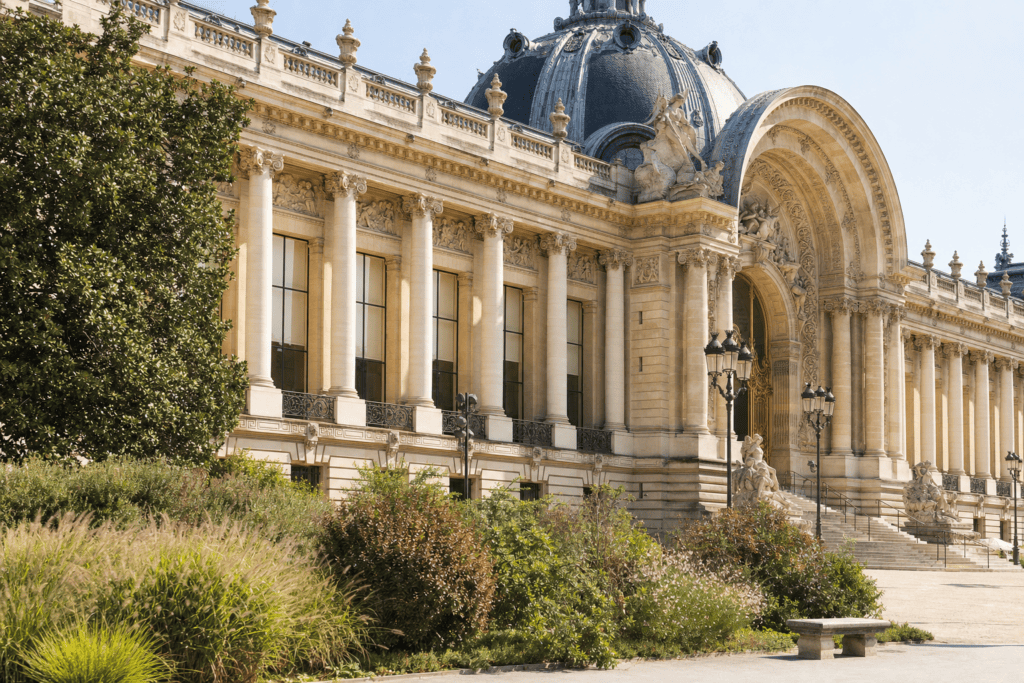 Petit Palais A free Paris museum renowned for its 1900 architecture, varied collections and interior garden.
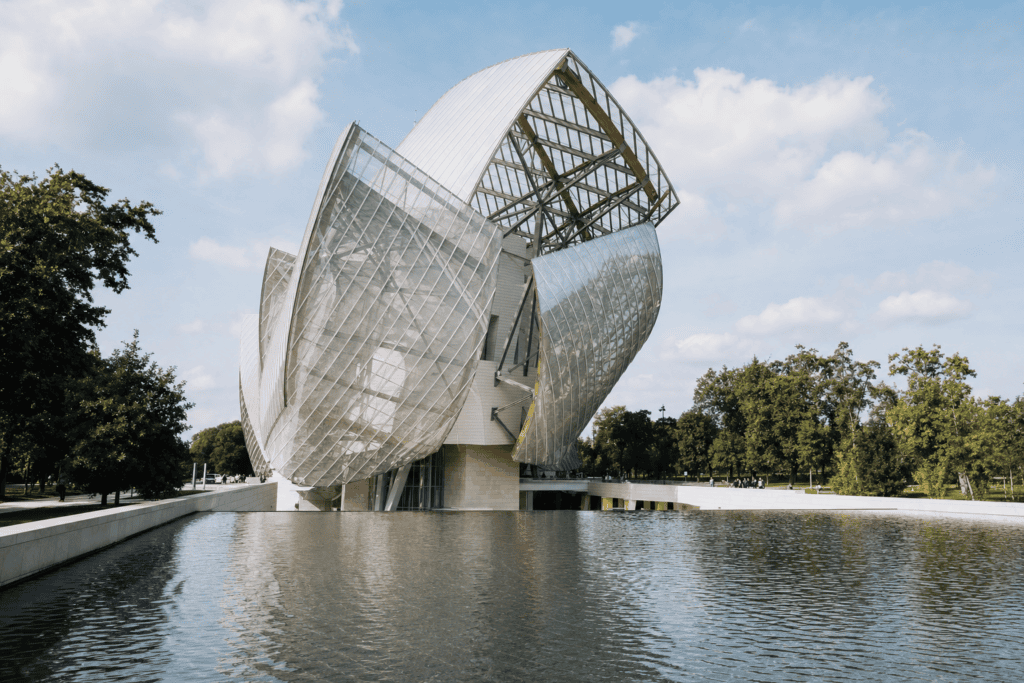 Fondation Louis Vuitton A remarkable Paris cultural venue where exhibitions engage with Frank Gehry’s architecture and the…
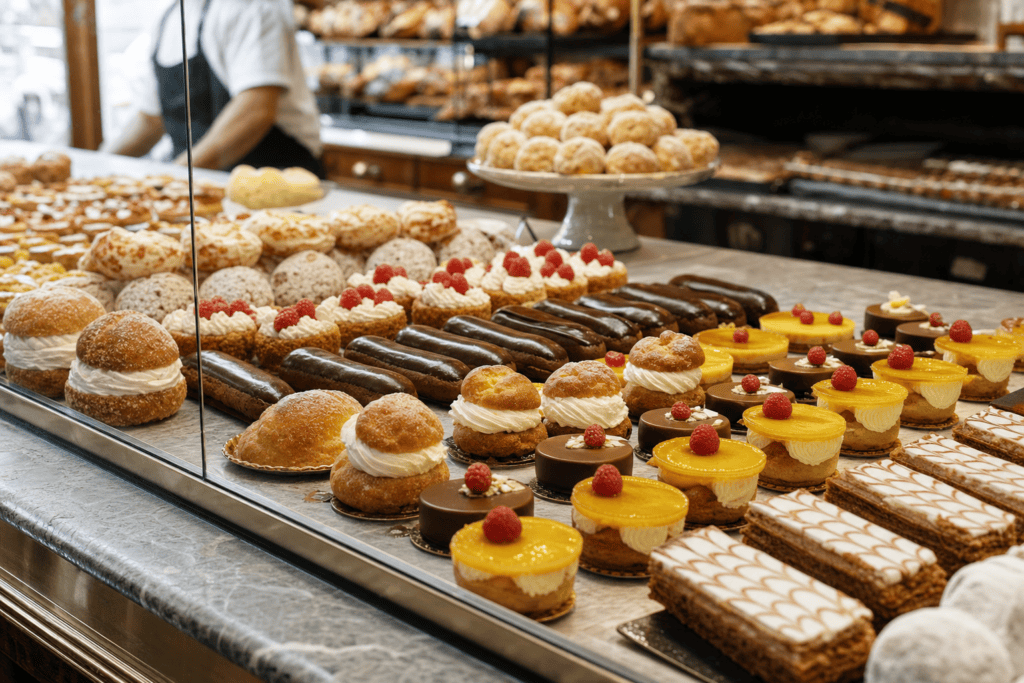 Foodie Paris: pastries, cheeses, and local specialties A practical guide to discovering Parisian bakeries, pastry shops, cheese shops, markets and specialties by neighborhood.
 Le Marais An iconic Paris neighborhood known for its private mansions, Place des Vosges, museums, and more…
 Palais Garnier A monumental opera house worth discovering for its Grand Staircase, foyers, salons, and décor…
 Seine River Cruise Discover Paris’s quays, bridges, and major monuments from the Seine during a…
Online booking · Paris → Main entrances: Boulevard Montmartre, Rue Saint-Marc, and Rue Vivienne, 75002 Paris
Choose your pickup date and time
Your departure and arrival details are already pre-filled. You can adjust them in the fare calculator before viewing the vehicles and fare.