



Le Marais Paris: Heritage, Museums, and the Parisian Art of Living
Paris
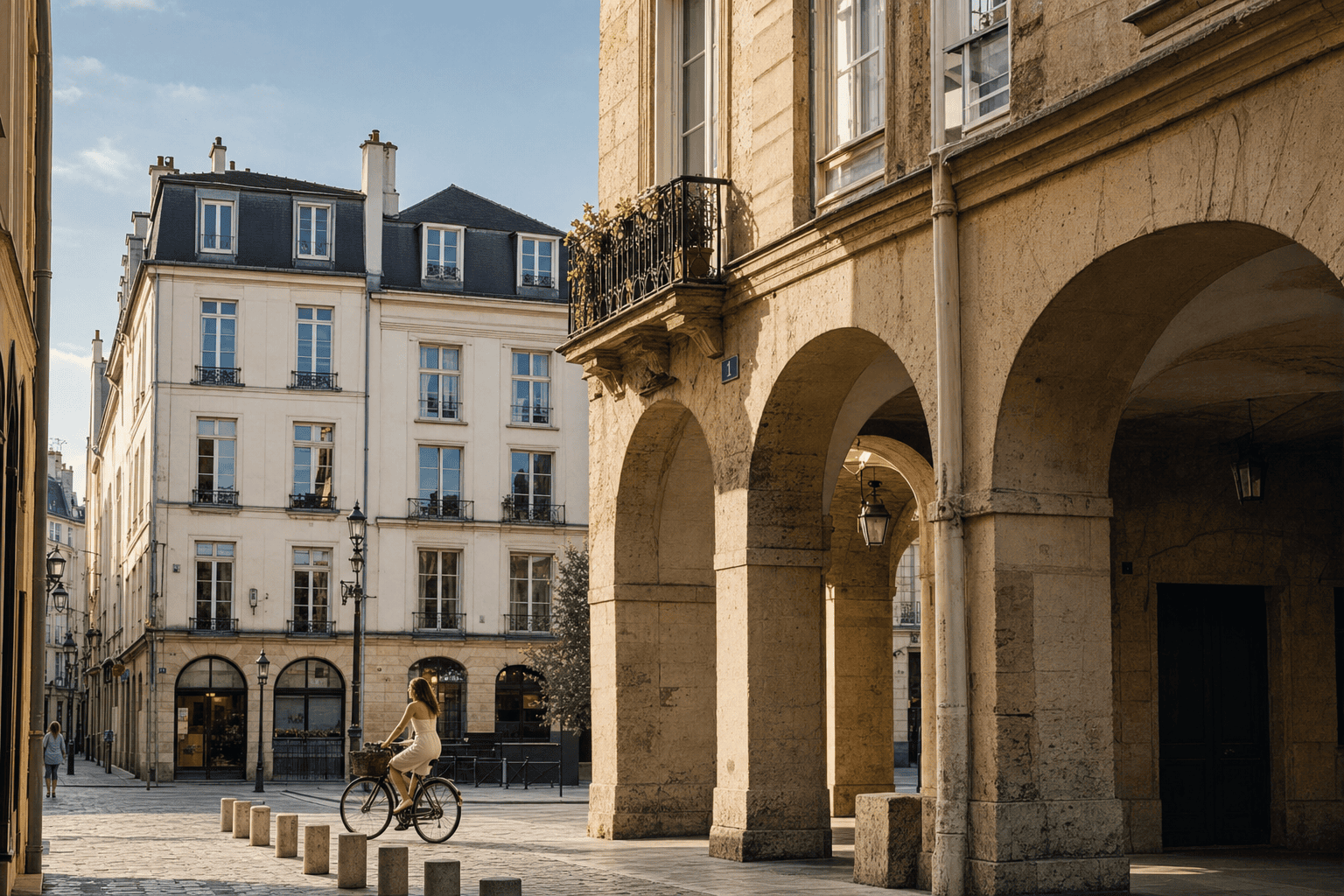
Le Marais Paris unfolds across the 3rd and 4th arrondissements, among private mansions, museums, independent boutiques, and tempting food spots. From Place des Vosges to Rue des Rosiers, this lively neighborhood brings together aristocratic heritage, Jewish history, contemporary creativity, and local life. A first visit is especially well suited to exploring on foot, with a cultural or culinary break along the way.
Practical information
Plan your walk in three stages: Hôtel de Ville and Rue des Archives, Rue des Rosiers and Saint-Paul, then Place des Vosges. Leave time for the side streets, courtyards, and gardens, which are often less crowded.
Getting to Le Marais from Paris or an airport
If you are arriving with luggage, Booking Paris Transfer can arrange a private ride from a Paris hotel, CDG, or ORY to Le Marais, or your return to Paris. The service covers transportation only; tours, reservations, and tickets must be arranged directly with the relevant venues.
Departure from Paris, CDG, or ORY, with a return to Paris depending on your itinerary.
1. Understanding the history of Le Marais
The neighborhood’s name recalls the marshy land that once occupied part of this area on the Right Bank. From the Middle Ages onward, drainage and the establishment of religious communities encouraged its urban development. Le Marais later became a sought-after neighborhood for the aristocracy, particularly in the 16th and 17th centuries, when wealthy families built large private mansions there.
After the nobility gradually moved to other parts of Paris and Versailles, these residences took on new uses. The neighborhood became home to workshops, shops, and artisan businesses. This layering explains its character today: behind a monumental façade, you may find a paved courtyard, a former workshop, or a garden.
The area is protected as part of Paris’s heritage. This preservation has helped safeguard its remarkable architecture while allowing the neighborhood to evolve with its galleries, shops, restaurants, and cultural venues.
2. Private mansions and iconic squares
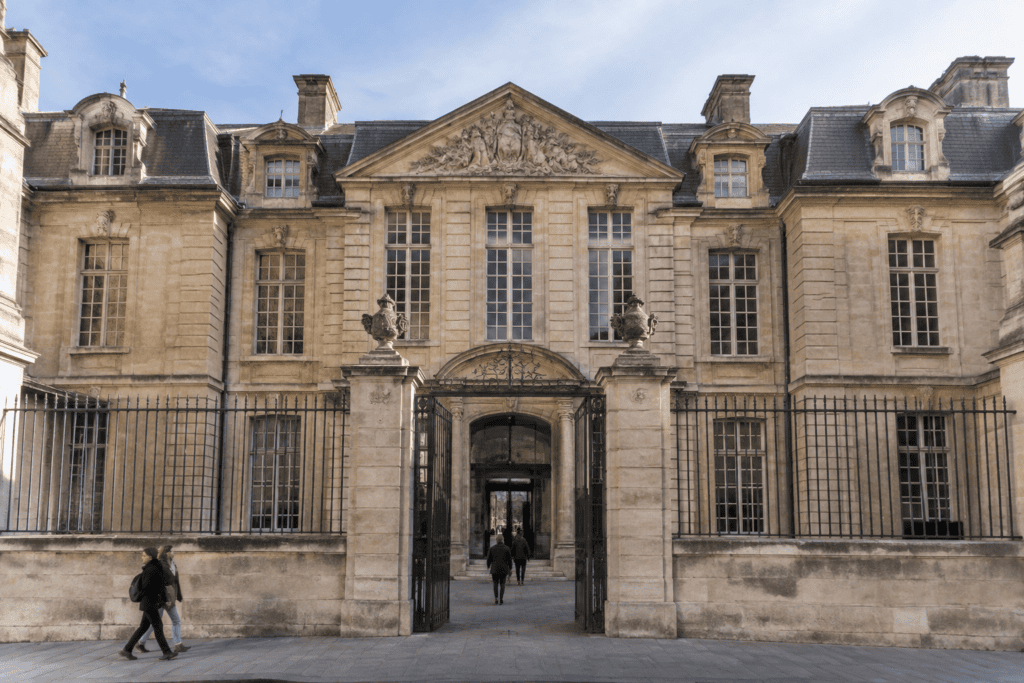
In Le Marais, take time to notice the carriage gates, mascarons, carved surrounds, and the proportions of the façades. Hôtel de Sully, Hôtel de Soubise, and Hôtel Salé are among the most remarkable ensembles. Several former aristocratic residences now house cultural institutions.
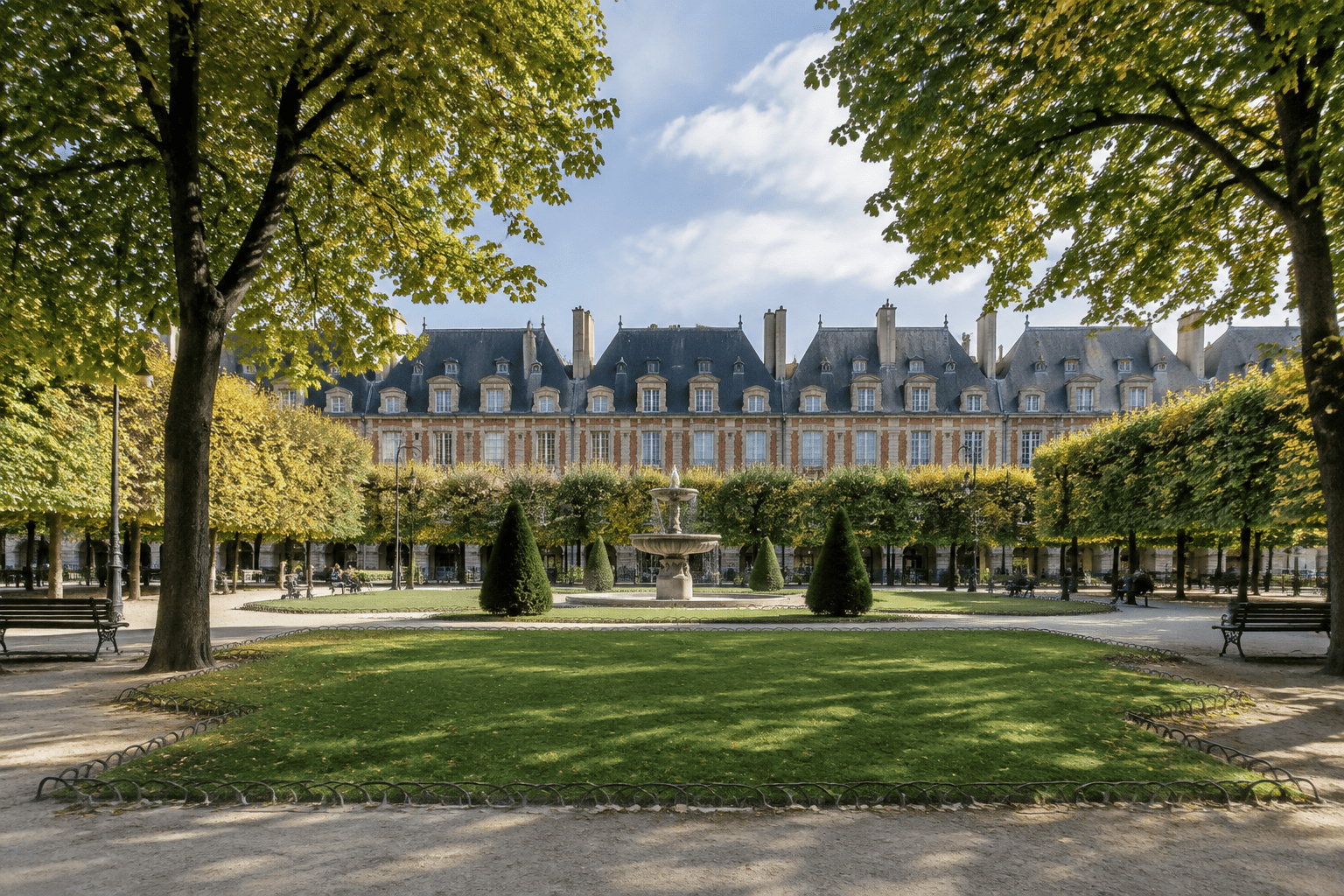
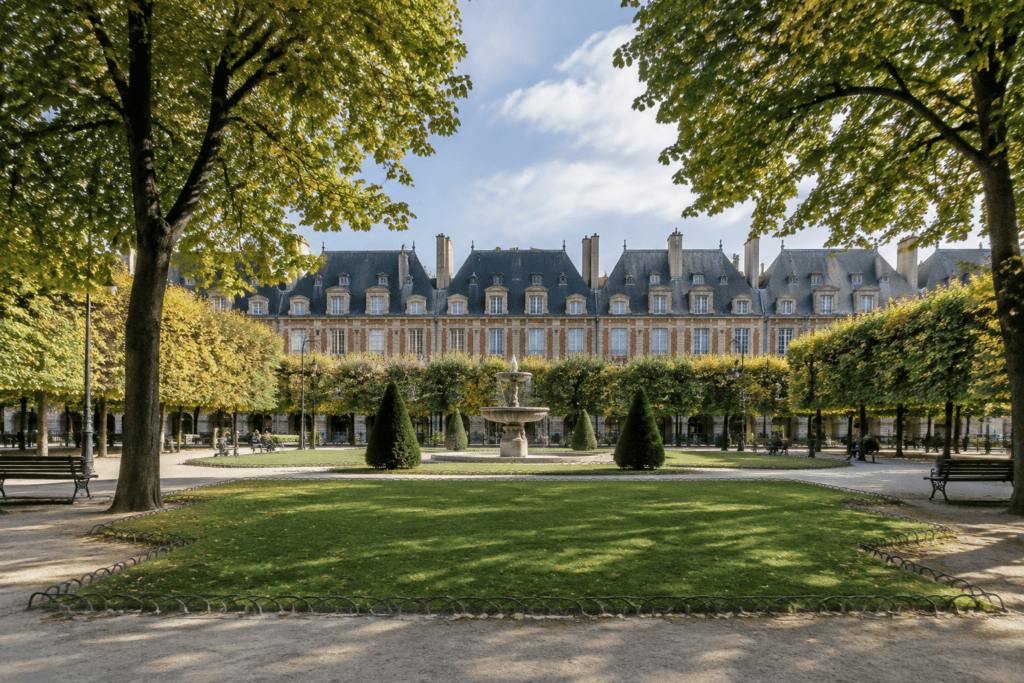
Place des Vosges is an essential stop. Its regular brick-and-stone façades, arcades, and central garden form one of Paris’s most harmonious urban ensembles. Victor Hugo’s house, located beneath the arcades, recalls the square’s connection to literature.
To the north, Carreau du Temple and Marché des Enfants Rouges reveal a more everyday side of the neighborhood. Between these landmarks, Rue de Turenne, Rue des Francs-Bourgeois, Rue Vieille-du-Temple, and Rue des Archives offer plenty of opportunities to wander.
3. Museums to include in your visit
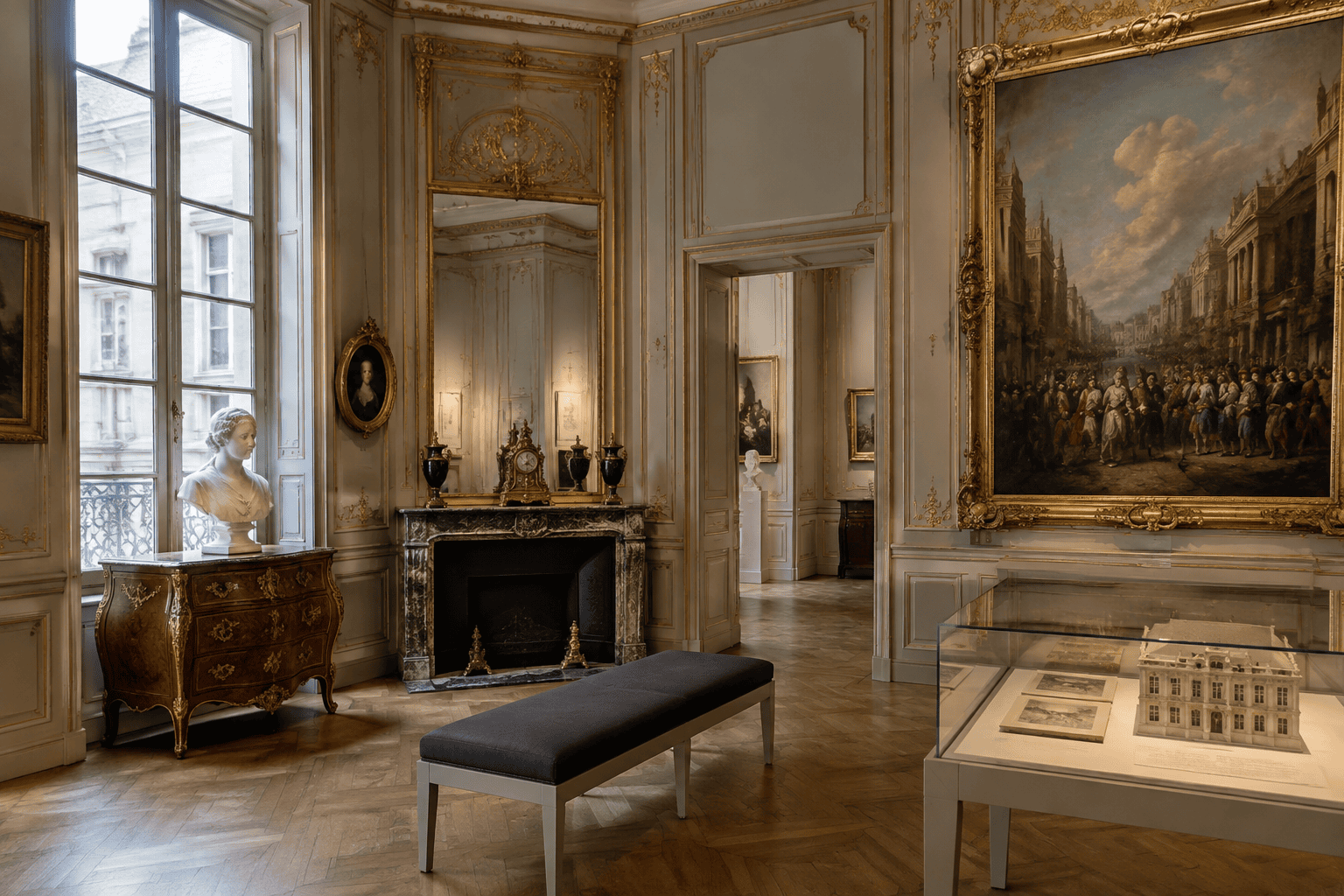
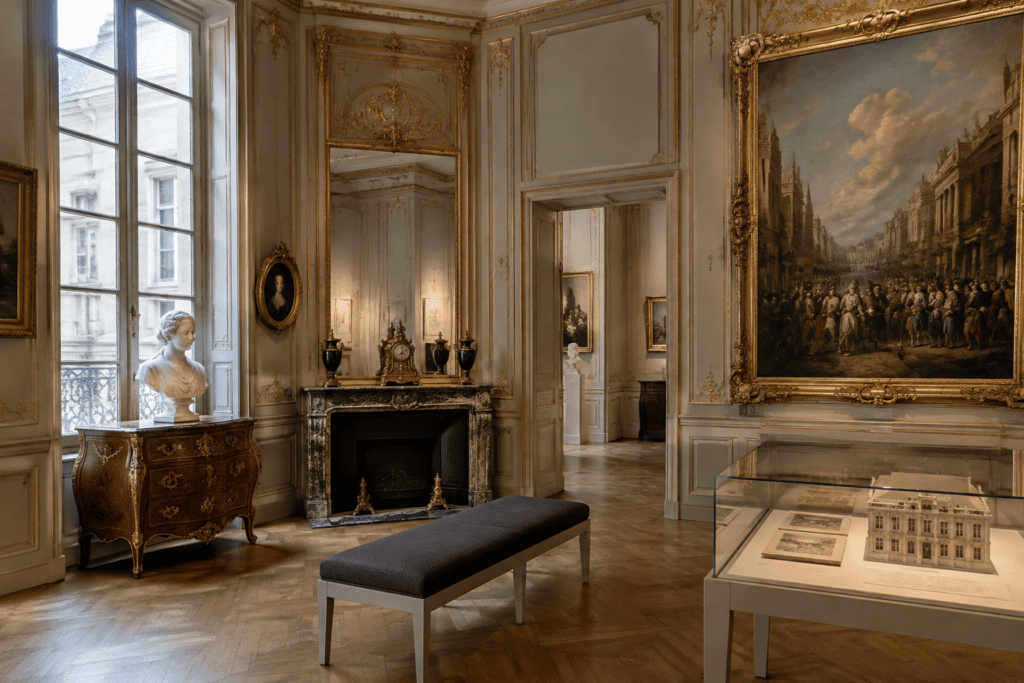
Musée Carnavalet – Histoire de Paris, housed in two private mansions, traces the history of the capital through artworks, objects, interiors, and personal accounts. Its permanent collections are listed as free to access, but admission details, opening hours, and temporary exhibitions should be checked on the official website.
Le musée Picasso Paris occupe l’hôtel Salé et présente une importante collection consacrée à Pablo Picasso. Le musée d’art et d’histoire du Judaïsme, dans l’hôtel de Saint-Aignan, apporte un éclairage essentiel sur les cultures et les histoires juives en France et en Europe. Le musée Cognacq-Jay propose quant à lui une découverte plus intime de l’art du XVIIIe siècle.
Centre Pompidou is very close by, but its building and program are subject to changes related to its renovation. Be sure to check the official website before adding it to your itinerary. For a comfortable day, choose one major museum and complement it with an outdoor walk.
4. Rue des Rosiers and Jewish history
Rue des Rosiers and the surrounding streets form one of the main historic centers of Jewish life in Paris. The signs, bookstores, bakeries, and restaurants reflect a history shaped by migration, generations, and the neighborhood’s transformations.
Musée d’art et d’histoire du Judaïsme helps place the Pletzl within a broader historical context. Nearby, Shoah Memorial also offers historical and memorial resources. Check opening hours, visitor arrangements, and any reservation requirements directly with the institutions concerned.
Rue des Rosiers can be very lively, especially on weekends. Walk without blocking passageways, respect lines, and remember that Le Marais is a residential neighborhood, not simply a tourist backdrop.
5. Boutiques, designers, and local life
Rue des Francs-Bourgeois is home to numerous fashion and home-design stores. Rue Vieille-du-Temple, Rue des Archives, and Rue de Bretagne mix designer shops, concept stores, galleries, and independent businesses. Near Hôtel de Ville, BHV Marais adds a landmark department store to the mix.
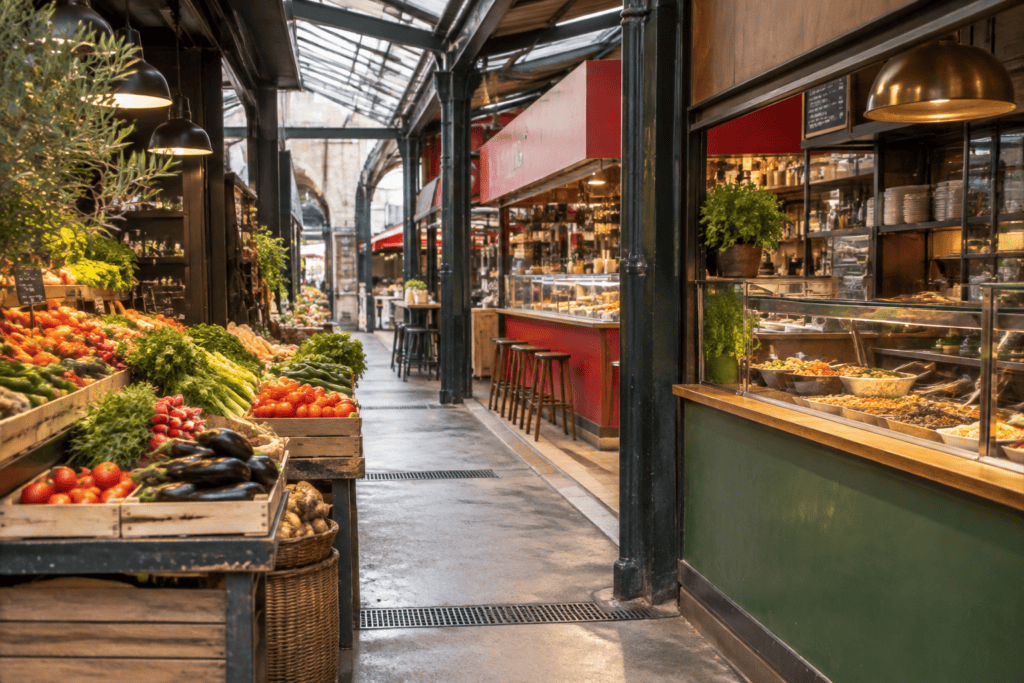
Haut-Marais, north of Rue de Bretagne, is popular for its galleries, workshops, cafés, and more discreet spots. Marché des Enfants Rouges, in the 3rd arrondissement, is a lively place to eat on-site, although it can get quite crowded.
The neighborhood also has a diverse cultural and nightlife scene, with bars, performance venues, galleries, and LGBTQIA+ establishments. Since independent businesses may have varying opening days, check the latest information before setting out.
6. What to eat in Le Marais
Rue des Rosiers is known for specialties associated with Ashkenazi tradition and its falafel spots. The neighborhood’s food scene is more diverse, however, bringing together bakeries, pastry shops, cafés, French restaurants, Mediterranean influences, vegetarian options, and creative dining rooms.
A food-focused route can start with coffee near Place des Vosges, continue toward Rue des Rosiers, and then extend around Rue de Bretagne and Marché des Enfants Rouges. Seating can be limited during mealtimes, and opening hours may change.
To avoid surprises, check the chosen establishment’s information directly for closing days, reservations, and service arrangements. The neighborhood is also perfect for a sweet afternoon break.
7. Suggested itinerary and practical tips
Pour une première découverte, partez de l’Hôtel de Ville et remontez vers la rue des Archives. Continuez vers l’hôtel de Soubise et les jardins des Archives nationales, puis rejoignez la rue des Francs-Bourgeois. Faites un détour par la rue des Rosiers et le Pletzl avant de poursuivre vers Saint-Paul et la place des Vosges.
Wear comfortable shoes: walking is the best way to appreciate the neighborhood’s contrasts, even though some streets are paved. An early arrival offers a more peaceful atmosphere; the end of the day is livelier around the cafés and restaurants.
Le Marais is served by several metro stations and bus lines. For schedules, construction updates, and accessible routes, check RATP or City of Paris information on the day of your visit. From CDG, ORY, or a Paris hotel, Booking Paris Transfer can arrange only a private ride to the neighborhood or your accommodation.
Useful sources
Frequently Asked Questions
How much time do you need to visit Le Marais?
Is Le Marais located in just one arrondissement?
What are the must-see places in Le Marais?
Can you visit Le Marais for free?
When is the best time to discover Le Marais?
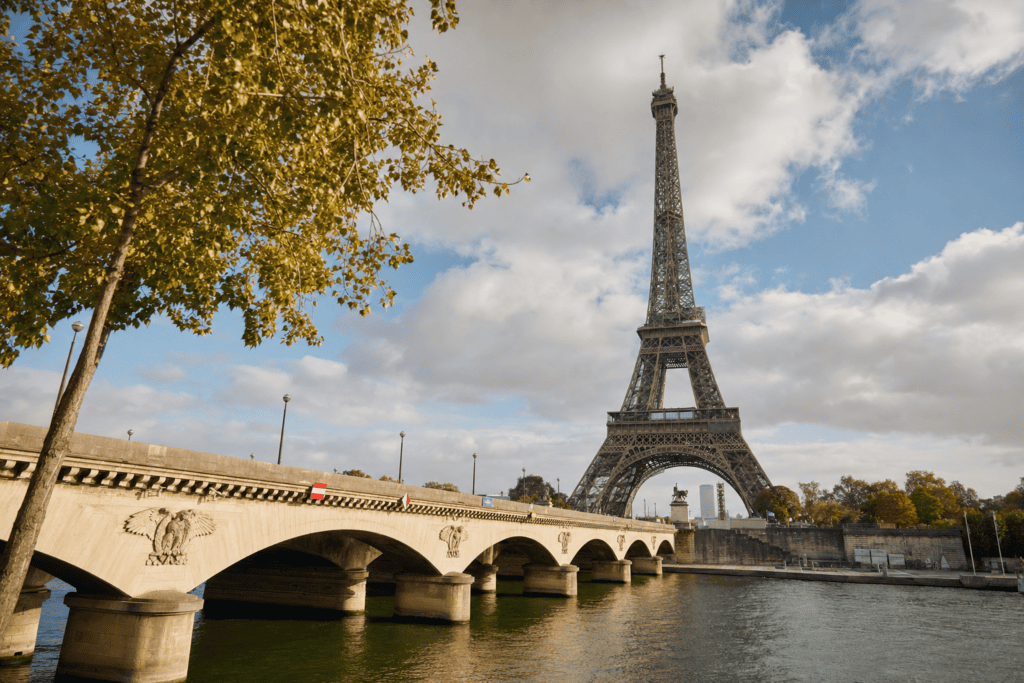 Eiffel Tower Visit the Eiffel Tower with a practical guide to the ascent, panoramic views, access, and the best…
 Seine River Cruise Discover Paris’s quays, bridges, and major monuments from the Seine during a…
 Louvre Museum An essential Paris itinerary featuring the Mona Lisa, antiquities, major European paintings, and the décor of a former palace…
 What to Do in Paris in 3 Days A practical itinerary for discovering Paris in three days, including must-see monuments, neighborhoods to…
 Conciergerie An iconic monument on the Île de la Cité, combining medieval architecture, the French Revolution, and memories of…
 Cité des Sciences et de l’Industrie An interactive museum in Parc de la Villette where families can explore science through exhibitions,…
Online booking · Paris → Le Marais, primarily in Paris’s 3rd and 4th arrondissements
Choose your pickup date and time
Your departure and arrival details are already pre-filled. You can adjust them in the fare calculator before viewing the vehicles and fare.