



Notre-Dame de Reims Cathedral: Visitor Guide
Reims
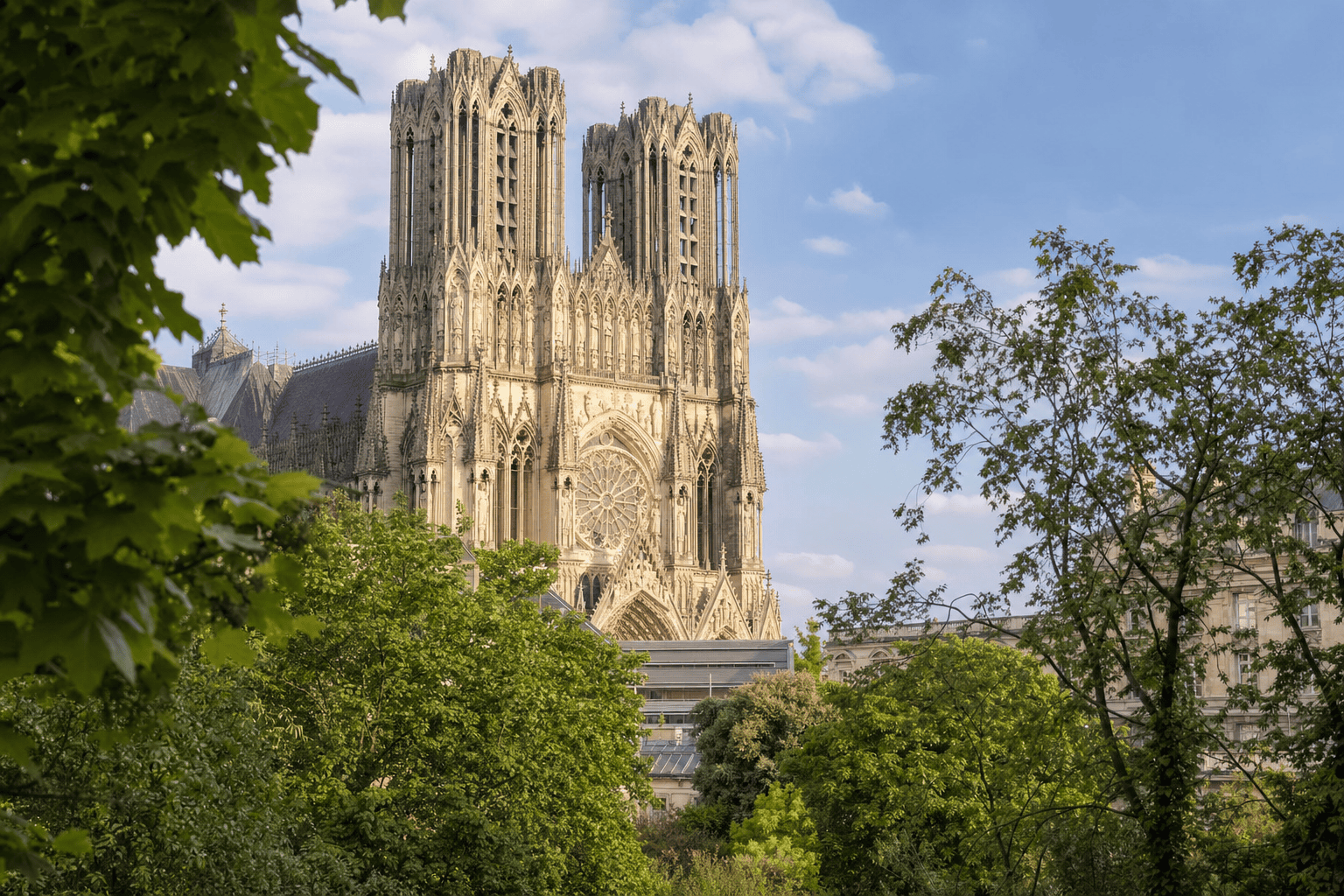
At the heart of Reims, Notre-Dame de Reims Cathedral impresses as much with the elegance of its Gothic architecture as with its exceptional role in French history. Built primarily in the 13th century, it is renowned for its sculpted portals, large rose windows, stained glass and connection to the coronations of the kings of France. Listed as a UNESCO World Heritage Site along with the Palais du Tau and the former Abbey of Saint-Remi, it is one of the Grand Est region’s major cultural attractions.
Practical information
First view the façade from the square, then go inside to take in the volumes, stained glass and sculpted details. Plan a visit to the Palais du Tau as well.
Travel from Paris to Reims with a private driver
To visit the cathedral without arranging the journey yourself, Booking Paris Transfer can provide private transportation between Paris, a Paris hotel, Charles de Gaulle or Orly Airport and Reims, with a return to Paris or onward travel as part of your itinerary. The service covers transportation only: tickets, guided tours and monument admission must be booked separately through the official sites.
Possible departure from Paris, a hotel in the Île-de-France region, CDG or ORY, with a return to Paris depending on the selected itinerary.
Why visit Reims Cathedral?
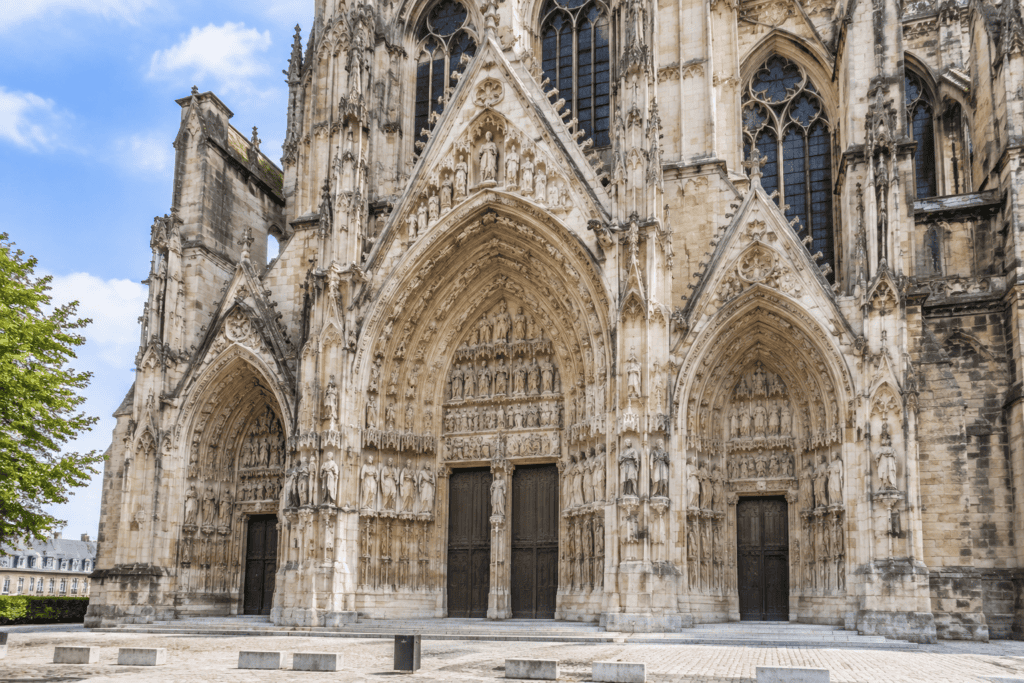
Notre-Dame de Reims Cathedral is one of France’s most important monuments for understanding both Gothic art and the political history of the kingdom. Construction began in the 13th century after the previous building was destroyed by fire, and its architecture demonstrates remarkable mastery of arches, vaults and expansive glazed surfaces. The ensemble is captivating in its coherence: the façade, portals, towers and interior spaces seem to have been conceived as one vast sculpted composition.
Yet a visit is about more than architectural admiration. Reims was the traditional site of the coronation of the kings of France, a ceremony closely linked to Archbishop Saint Remi and the memory of Clovis’s baptism. Together with the nearby Palais du Tau and Saint-Remi Basilica, the cathedral forms an exceptional historical circuit. Even a short visit conveys this dual identity: a medieval masterpiece and a place deeply associated with the symbolic formation of France.
Reading the façade and its sculptures
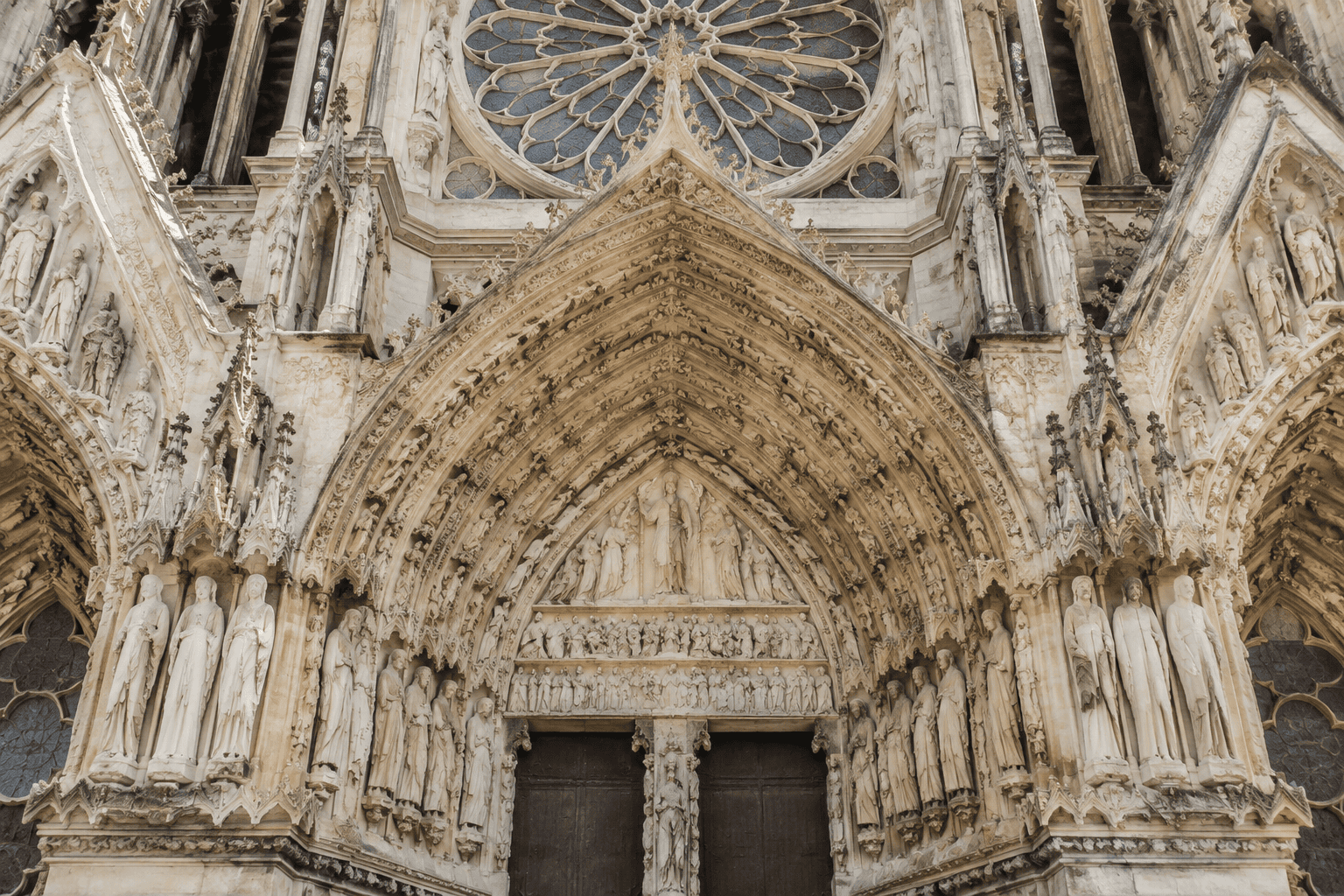
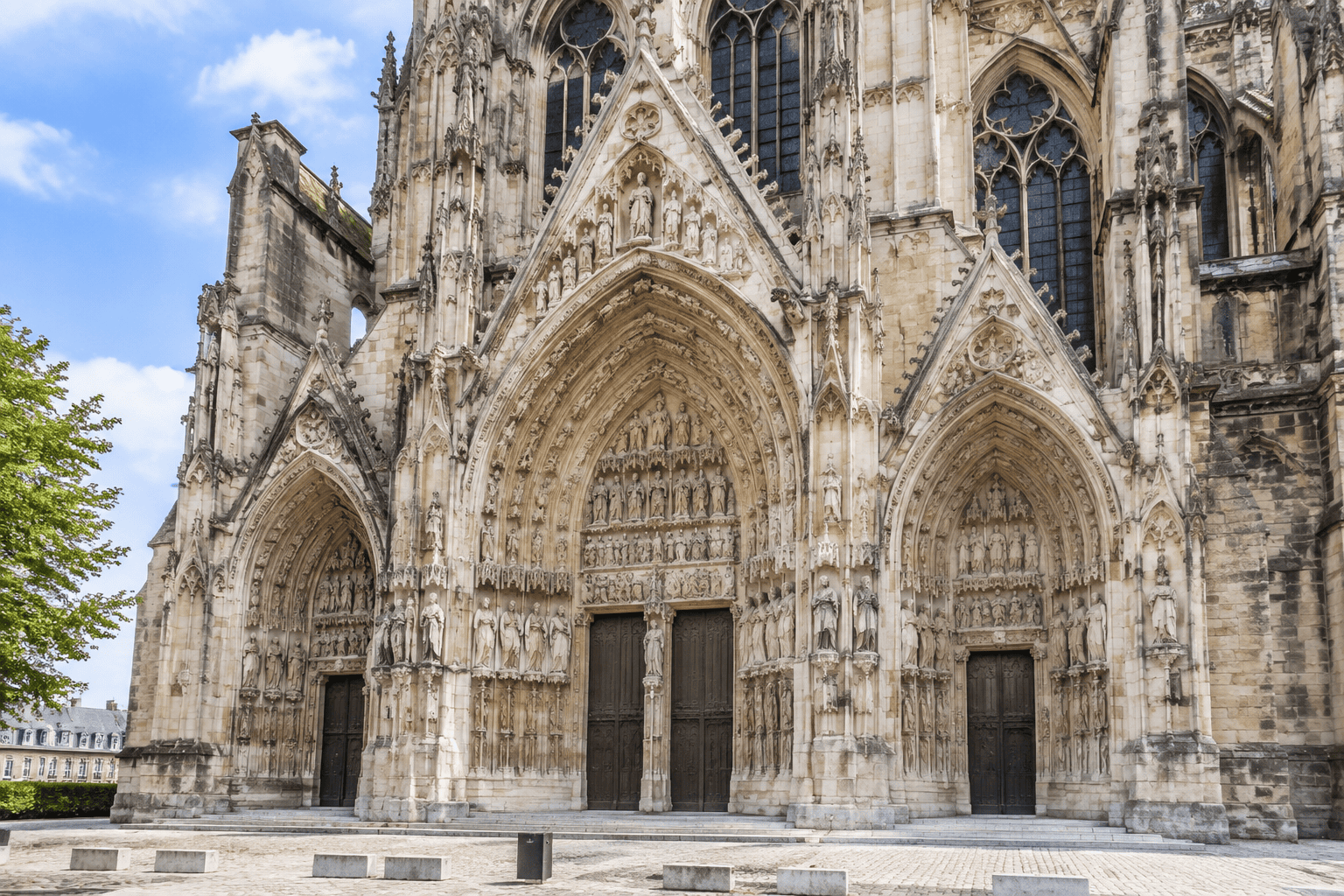
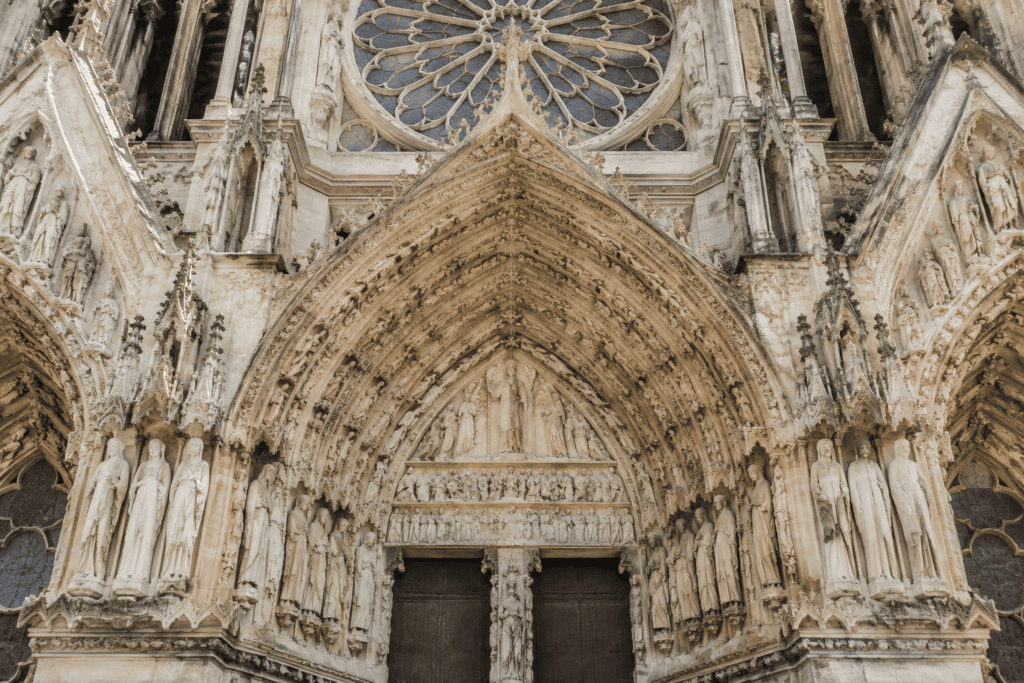
Begin your visit in the square, taking time to view the western façade from a distance. It is organized around three monumental portals, a large rose window and two towers that give the ensemble a sense of vertical balance. The sculptures are more than simple ornaments: they depict biblical episodes, present figures of saints and guide visitors toward the liturgical space.
The richness of its statuary explains why Reims is often considered one of the most remarkable Gothic cathedrals for its sculpted decoration. Look in particular for the figures’ expressions, drapery and poses, which create an astonishing sense of movement. The famous Smiling Angel, restored after the destruction of World War I, is one of the best-known details, but it should not overshadow the diversity of the ensemble. With binoculars or a lens with a good zoom, you can make out details set high on the façade.
Stained glass, light and contemporary works
Inside, light is one of the highlights of the visit. Stained glass colors the chapels and upper windows, while the volume of the nave draws the eye toward the choir. Some historic windows were lost or damaged over the centuries, particularly during World War I, but the building retains a remarkable diversity of compositions and periods.
The cathedral is also known for hosting contemporary creations, notably the stained-glass windows designed by Marc Chagall in the axial chapel. Their blue, red and violet palette creates an atmosphere distinct from that of the medieval windows and shows that the monument continues to evolve artistically. To appreciate them fully, observe how the light changes throughout the day: a clear sky reveals the colors sharply, while softer light emphasizes the contrasts. Also take time to look up at the vaults, piers and arches, whose proportions explain the sense of height characteristic of Gothic architecture.
The cathedral and the coronations of the kings of France
Reims is inseparable from the coronation ceremony. For several centuries, the cathedral provided the setting for the anointing and coronation of many kings of France. The ritual brought together the monarchy, the Archbishop of Reims and the memory of Saint Remi, the bishop whom tradition credits with baptizing Clovis. This history gives the monument a significance that extends far beyond its architecture.
To understand how the ceremonies unfolded, a visit to the Palais du Tau, right next to the cathedral, is especially useful. Once the archbishop’s palace, it hosted the king and participants in the coronations; today, it houses collections and objects connected with the cathedral’s history. The cathedral–Palais du Tau–Saint-Remi Abbey ensemble has been a UNESCO World Heritage Site since 1991. This history is best presented with nuance: the present cathedral is medieval, while the traditions associated with the early kings date back to earlier buildings and accounts.
The scars of World War I
Notre-Dame de Reims Cathedral also bears the memory of the destruction caused by World War I. In 1914, a fire severely damaged the building, causing extensive destruction to the framework, roof and some of the stained glass and sculptures. Images of the wounded cathedral made a deep impression on international public opinion and turned the monument into a symbol of heritage threatened by war.
The restoration drew on archives, surveys and photographs available before the conflict. It should not be understood as a simple, uniform reconstruction: the building’s visible history combines preserved medieval elements, successive restorations and modern technical solutions. The rebuilt reinforced-concrete framework illustrates this adaptation to conservation requirements. As you walk through the nave and chapels, try to sense these layers: Notre-Dame de Reims is not frozen in a single era, but is the result of eight centuries of construction, transformation, destruction and restoration.
How to plan your visit to Reims
For a first visit, begin in the square and at the façade, then enter the nave and move slowly toward the choir. This progression helps convey the effect sought by the builders: a visual and luminous ascent from the entrance toward the most sacred space. Allow about one to one and a half hours to view the sculptures, chapels, stained glass and main architectural features without rushing.
Then add the Palais du Tau to explore the history of the coronations and the treasures associated with the cathedral. Saint-Remi Basilica and its museum are an ideal complement, but they are in another part of Reims, so allow extra time. Access to the towers, opening hours, reservations and visiting conditions may change depending on the season, religious services or construction work. Check the official information from the cathedral and the Centre des Monuments Nationaux before setting out. Respectful attire and particular consideration for the quiet of religious services are recommended in this place of worship.
What to see around Notre-Dame de Reims
The cathedral is in central Reims, making it easy to continue exploring on foot. The Palais du Tau, attached to the building, is the most obvious historical complement. You can then make your way to the central streets, squares and façades rebuilt after World War I. Reims thus offers an interesting contrast between medieval heritage, postwar Reconstruction-era urban planning and Art Deco architecture.
To continue the religious and royal theme, Saint-Remi Basilica deserves a careful visit. Its nave and history complement those of Notre-Dame, while the Saint-Remi Museum helps place the monuments within the history of the city and Champagne. Heritage enthusiasts can also include a Champagne house or cellar tour, booking separately with the relevant establishments. From Paris, Reims is well suited to a day trip, but an overnight stay allows you to visit the monuments at a more relaxed pace. In any case, leave extra time for possible lines, ceremonies or changes to access arrangements.
Frequently Asked Questions
Is Notre-Dame de Reims Cathedral a UNESCO World Heritage Site?
Can you visit the cathedral towers?
How much time should I allow for the visit?
Are Chagall’s stained-glass windows visible in the cathedral?
Is the cathedral always accessible during services?
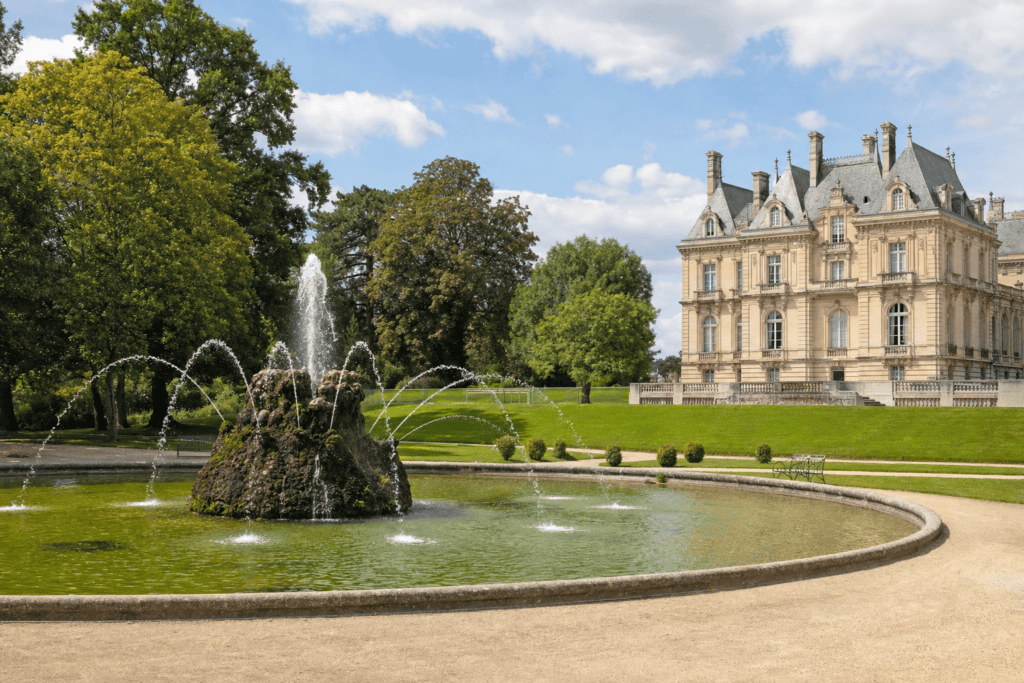 Champagne Park A large 22-hectare park in Reims where nature, leisure, sports, and history come together…
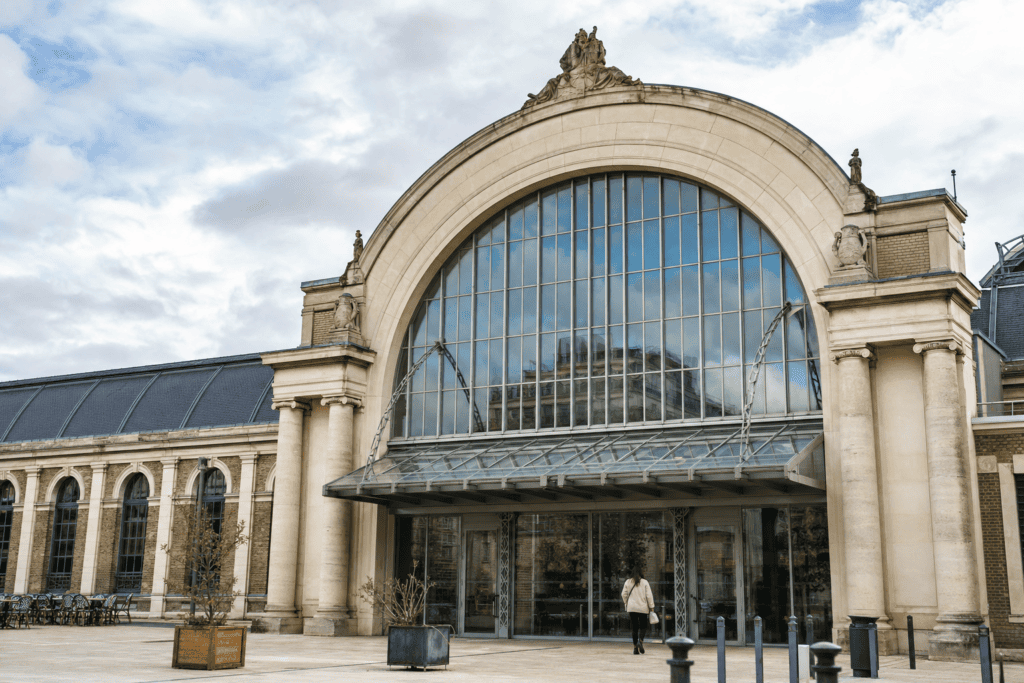 Halles du Boulingrin An iconic covered market in Reims, where Art Deco architecture accompanies a delicious exploration of local products…
 Palace of Tau Next to Reims Cathedral, the Palais du Tau tells the story of royal coronations at…
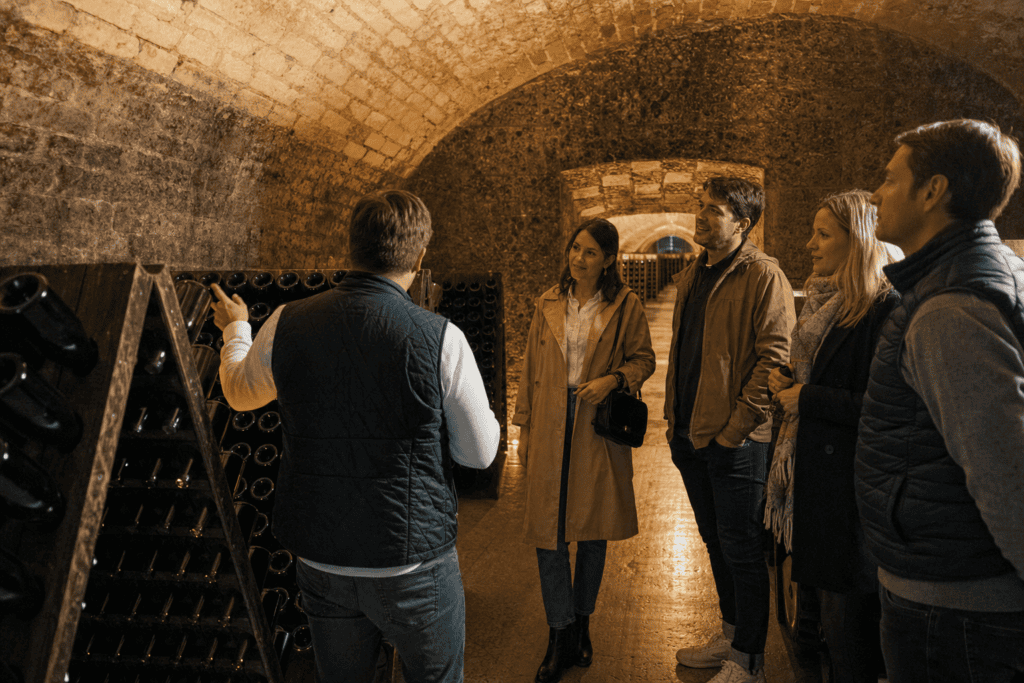 Champagne cellar tour in Reims Descend into Reims’ chalk cellars to learn how champagne is made and enjoy a tasting at the…
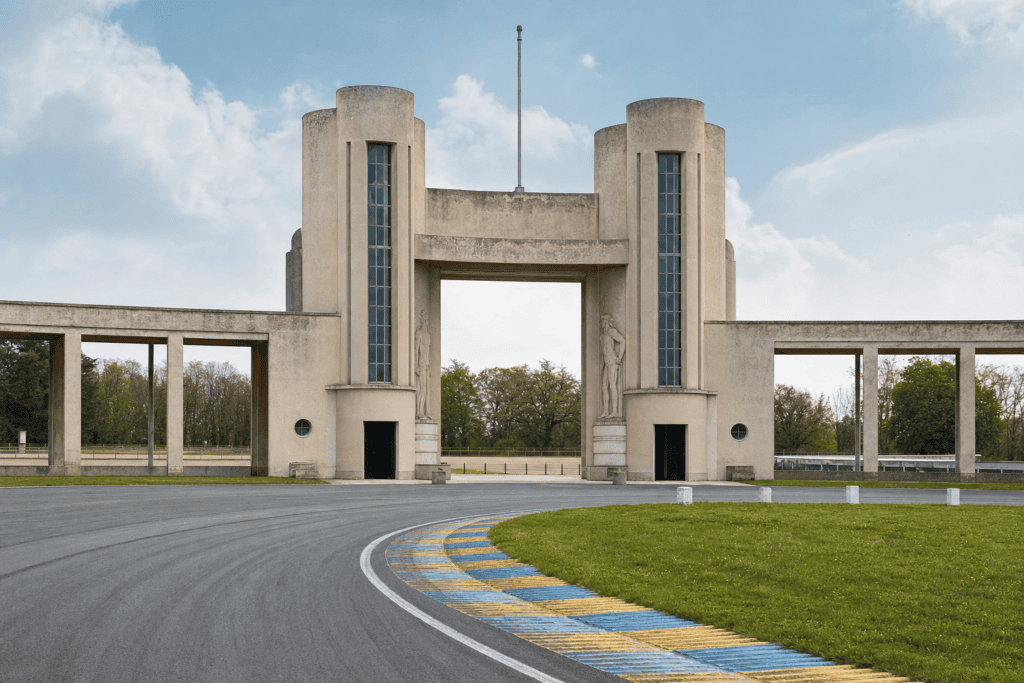 Reims Art Deco Walking Tour A 2- to 3-hour walk between the train station, Les Promenades, Cours Langlet, and…
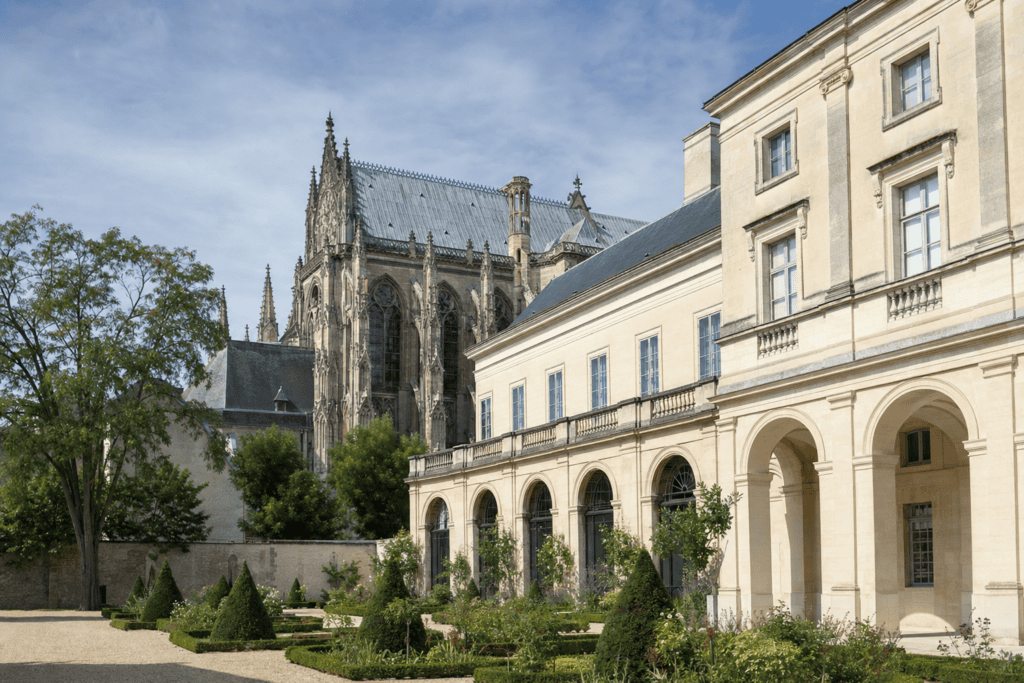 Musée Saint-Remi Housed in a former Benedictine abbey, the Saint-Remi Museum tells the history of Reims from antiquity to the…
Book online · Paris → Place du Cardinal Luçon, 51100 Reims, France
Choose your pickup date and time
Your departure and arrival details are already pre-filled. You can adjust them in the fare calculator before viewing the vehicles and fare.