



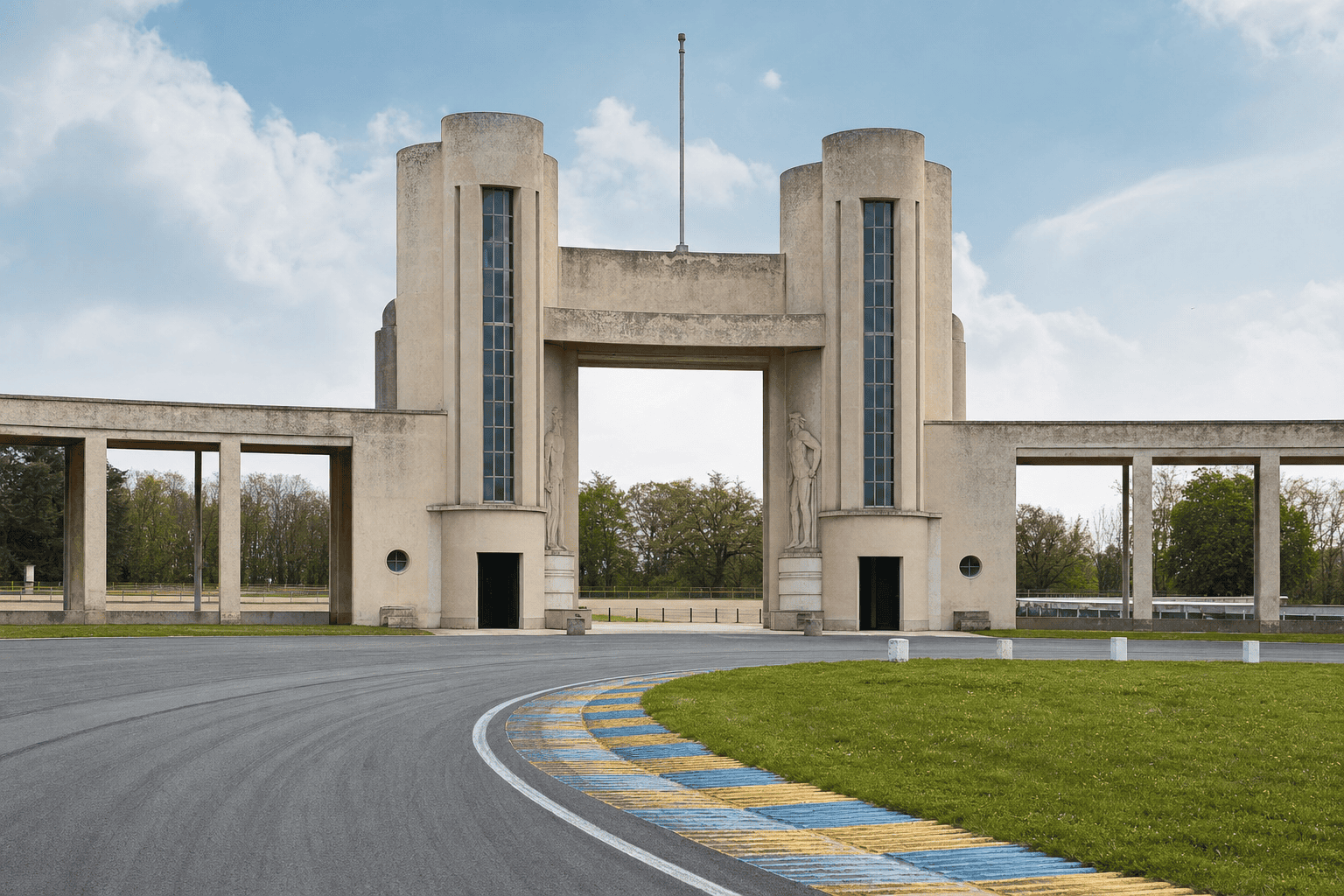
Reims Art Deco Walking Tour: A Guide
Reims
The Reims Art Deco walking tour offers insight into how the city changed after the destruction of World War I. Starting at Reims-Centre train station, the walk continues through the Promenades, the shopping district, Cours Langlet, Passage Subé and Les Halles du Boulingrin. Along the way, it reveals the remarkable variety of interwar architecture: mosaics, ironwork, bow windows, brick, stone, concrete, glass roofs and geometric compositions. The main route is approximately 3 to 4 kilometers long, depending on the streets selected and any detours, and takes 2 to 3 hours with stops. For a more complete visit, add Notre-Dame Cathedral, the Palais du Tau and Carnegie Library. The points below focus on public spaces and indicate where the chronology or access should be checked locally.
Practical information
Check the tourist office’s heritage route before your visit to verify the landmarks and access points. Look above the shop windows, but do not enter private lobbies or block passageways.
Getting to Reims from Paris
For a day trip from Paris, the Île-de-France region, Paris-Charles de Gaulle Airport or Paris-Orly Airport, Booking Paris Transfer can arrange private round-trip transportation to Reims. The service covers transportation only: guided tours, reservations, tastings and admission tickets are independent.
Pickup is available from Paris, the Île-de-France region, CDG or ORY, with a return to Paris. Booking Paris Transfer is not a local sightseeing provider in Reims.
Understanding the Reconstruction of Reims
The Reims Art Deco tour is best understood in light of the scale of the destruction caused by World War I. Much of the city center and many neighborhoods had to be rebuilt during the 1920s. This reconstruction did not produce a uniform landscape: architects combined classical references, regional styles, geometric motifs, new materials and modernist principles. The route’s appeal lies precisely in this diversity. It is not simply about identifying Art Deco ornamentation, but about understanding a city reorganizing its streets, shops, homes and public facilities.
The urban planning project associated with George Burdett Ford supported this modernization by addressing traffic flow, sightlines and connections between neighborhoods. Observe the building lines, the width of the avenues, the corners of the blocks and the differences in height between buildings. Stone, brick, concrete, metal, glass and mosaic were used differently depending on the type of project. A restrained façade may therefore belong to the same reconstruction context as a highly decorated building. To avoid inaccuracies, distinguish between rebuilt structures, preserved elements and later alterations.
Starting at the Train Station and Passing through the Promenades
Reims-Centre train station is a practical starting point, but it should be understood as a layered complex rather than a building that is entirely Art Deco. Its origins date back to the 19thth th century, while war damage, repairs and transport-related adaptations have altered the complex over time. Before setting off, look at the passenger building’s volumes, entrances, platforms and circulation routes. This first stop illustrates that reconstruction does not always completely replace what came before: it repairs, transforms and completes older infrastructure.
From Place de la Gare, head toward the center and the Promenades. The distance is approximately 700 meters, depending on the route, but it is better to follow local heritage directions rather than treat this figure as an official itinerary. The Promenades form an interesting transition between the railway district and the shopping center. Start with broad views, then observe the surrounds, railings, cornices and window patterns. This section is also useful for getting oriented before entering the busier streets.
Observing the City-Center Façades
From the Promenades, gradually make your way into the center through the area around Rue du Temple, Rue de Vesle and the surroundings of Place Drouet-d’Erlon. The route is not based on a single spectacular façade: interesting details are scattered throughout the shopping streets, sometimes above the storefronts. Look for glazed doors, bow windows, balconies, mosaics, sculpted reliefs and stylized ironwork. Building corners deserve particular attention, as they often give narrow plots a monumental presence.
Historical caution is still necessary. A geometric façade is not automatically Art Deco: it may reflect simplified classicism, a regional Reconstruction style or an early form of modernism. Compare the materials, symmetry, verticality, levels and treatment of the storefronts. Private lobbies are not part of the freely accessible route; remain on public property, do not push open doors and respect residents. For photography, side lighting reveals reliefs, while soft light reduces reflections on shop windows.
Reading Cours Langlet and Its Sightlines
Cours Langlet is an important reference point for understanding the urban dimension of the Reconstruction. As you reach it from the shopping district, observe how the buildings frame the view and guide movement. The significance of this avenue lies not only in the façade decoration, but also in its perspective, alignments and connections between neighborhoods. Depending on the direction and viewpoint, Notre-Dame Cathedral can serve as a visual landmark, creating a dialogue between Gothic heritage and the rebuilt city of the interwar period.
Compare the elevations along the avenue. Some favor regular bays and understated cornices; others emphasize vertical lines, setbacks, balconies or geometric motifs. Differences in color and material reflect the fact that reconstruction took place through successive plots and projects. From the train station, the Cours Langlet area is approximately 1.8 kilometers away, excluding detours, but the distance varies depending on the streets taken. For accurate building identification, consult documentation from the tourist office or the City of Reims.
Exploring Passage Subé in Detail
Passage Subé offers a more enclosed sequence, directly connected to commerce and pedestrian movement. It is associated with the reconstruction of central Reims, and its construction dates to the context of the 1920s. However, it is important to distinguish between the creation of the passage, the architectural elements that remain and the commercial alterations that may have changed over time. This distinction matters: a heritage site remains in use and continues to evolve, and its current appearance does not necessarily correspond to a single interwar-period state.
From Cours Langlet, the passage is approximately 400 meters away, depending on the access point and streets followed. Once there, observe the glass roof, metal lines, storefronts and the way light passes through the space. The passage shows that the period’s aesthetic also extended to places of shopping and social interaction. Access may depend on the shops and areas open to the public, so check local information before planning this stop. Walk without inconveniencing customers and ask permission before taking close-up photos of a shop.
Finishing at Les Halles du Boulingrin
Les Halles du Boulingrin make a particularly compelling conclusion. From Passage Subé, allow approximately 1.2 kilometers, depending on the streets and detours. Built in the late 1920s during the Reconstruction, they express a different kind of modernity from the decorated buildings in the center. Their architecture responds to practical needs: sheltering a market, protecting vendors and customers, organizing movement and creating a bright, open volume. Here, structure and function are just as important as ornament.
Begin by walking around the building to observe its silhouette, curved roof, openings and relationship to Rue de Mars. The structural lines become more meaningful after seeing the façades in the center: they reveal a more functional and technical architecture. Activity at the market halls varies by day, market and event. Check information from the City of Reims before you arrive. You can extend this stop with Carnegie Library or the Opera House, but these venues have their own opening hours and access conditions.
Extending Your Discovery of Reims
The tour gains depth when viewed alongside other periods in Reims’ history. Notre-Dame Cathedral and the Palais du Tau recall the city’s religious and political role, as well as its connection to royal coronations. Carnegie Library, near the cathedral, explores another aspect of the 1920s: cultural facilities and decorative arts. Its opening hours and visiting arrangements are separate from the outdoor walk, so check them before setting out.
You can also spend part of the day exploring Champagne heritage at a Champagne house or in the wine-growing villages around Reims, booking directly with the establishments concerned. Photographers can repeat the route at another time of day to compare the shadows, colors and reflections on the mosaics and ironwork. This walk is not a substitute for a guided tour or a cellar visit: it offers an independent way to explore reconstruction, commerce, mobility and innovation. For a day trip from Paris, also allow plenty of time for the return journey.
Useful sources
Frequently Asked Questions
What order should I follow for the Reims Art Deco tour?
How much distance should I expect on this walk?
Is Reims-Centre train station entirely Art Deco?
When was Passage Subé built?
Can Reims be visited from Paris in one day?
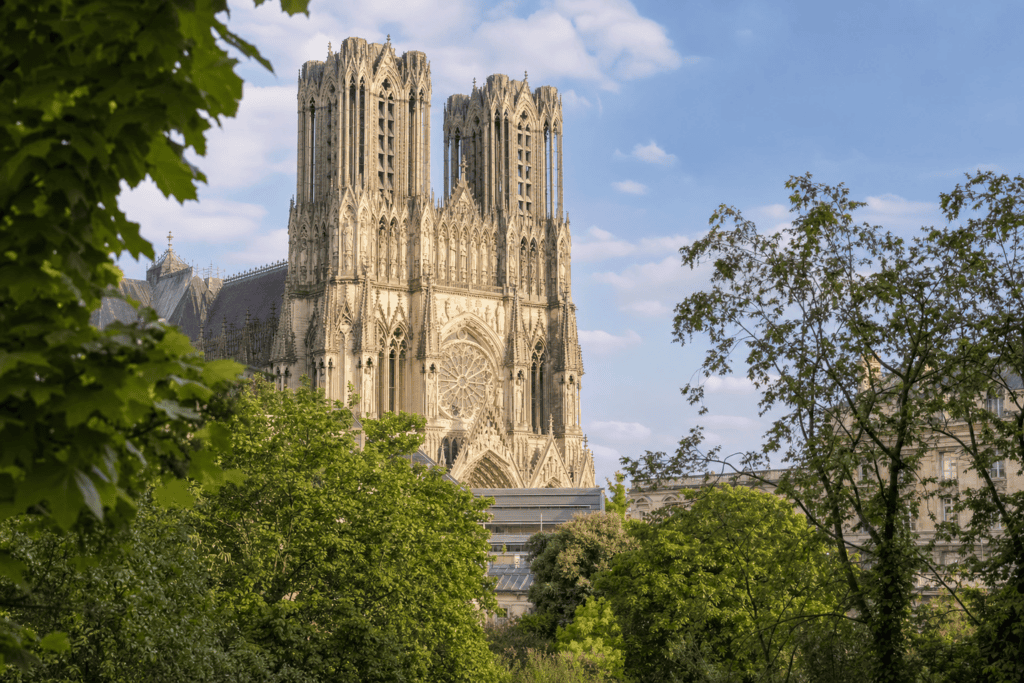 Notre-Dame Cathedral of Reims A Gothic masterpiece in the heart of Reims, featuring monumental sculptures, remarkable stained glass, and historic memory…
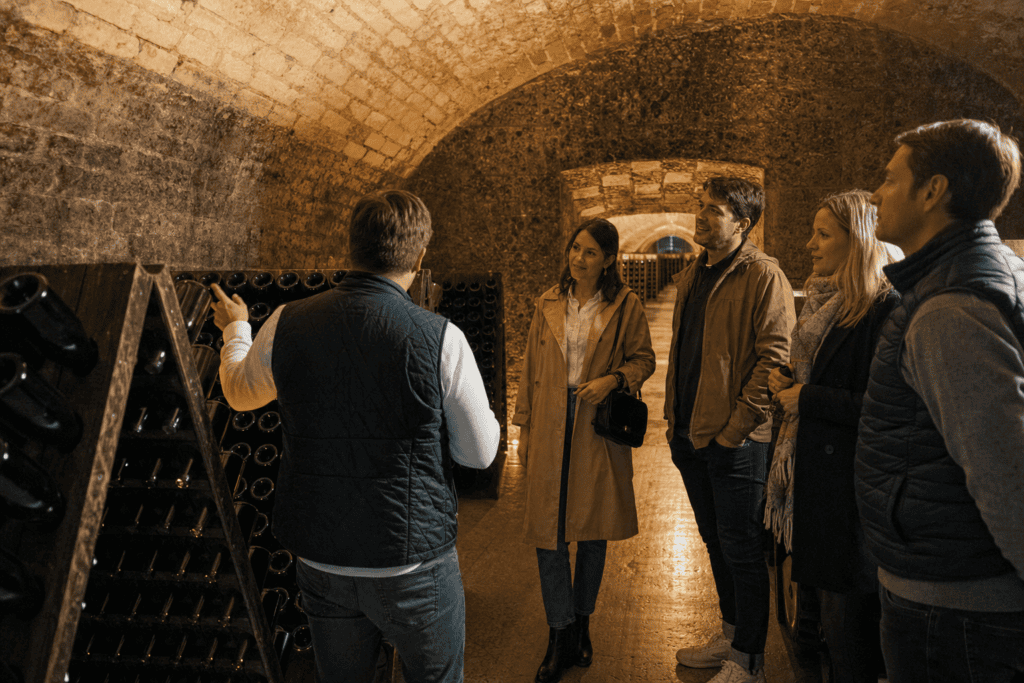 Champagne cellar tour in Reims Descend into Reims’ chalk cellars to learn how champagne is made and enjoy a tasting at the…
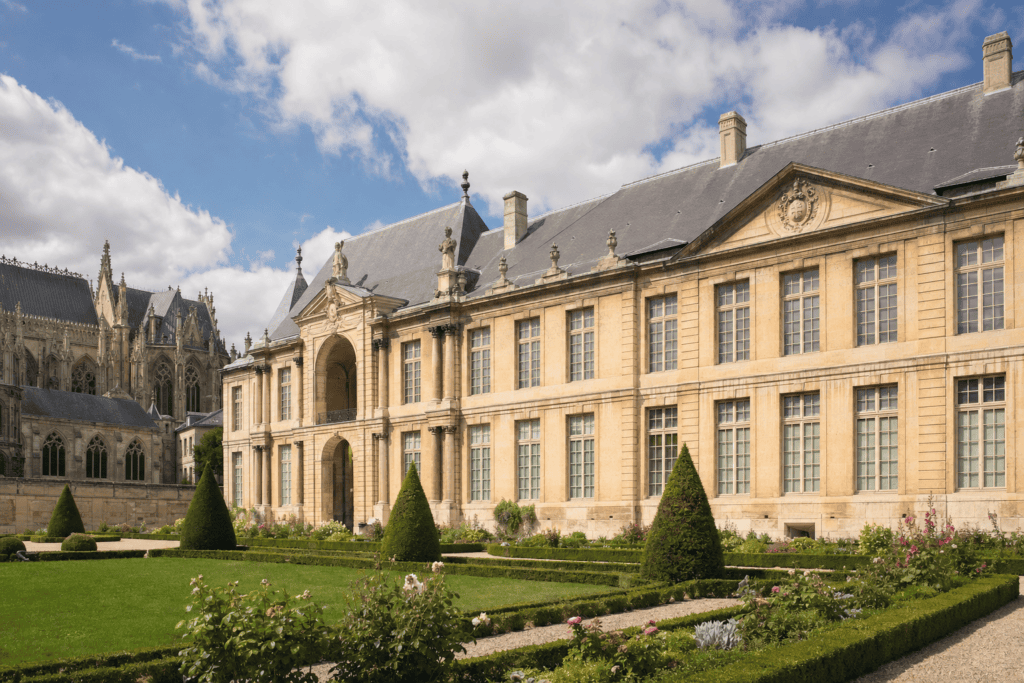 Palace of Tau Next to Reims Cathedral, the Palais du Tau tells the story of royal coronations at…
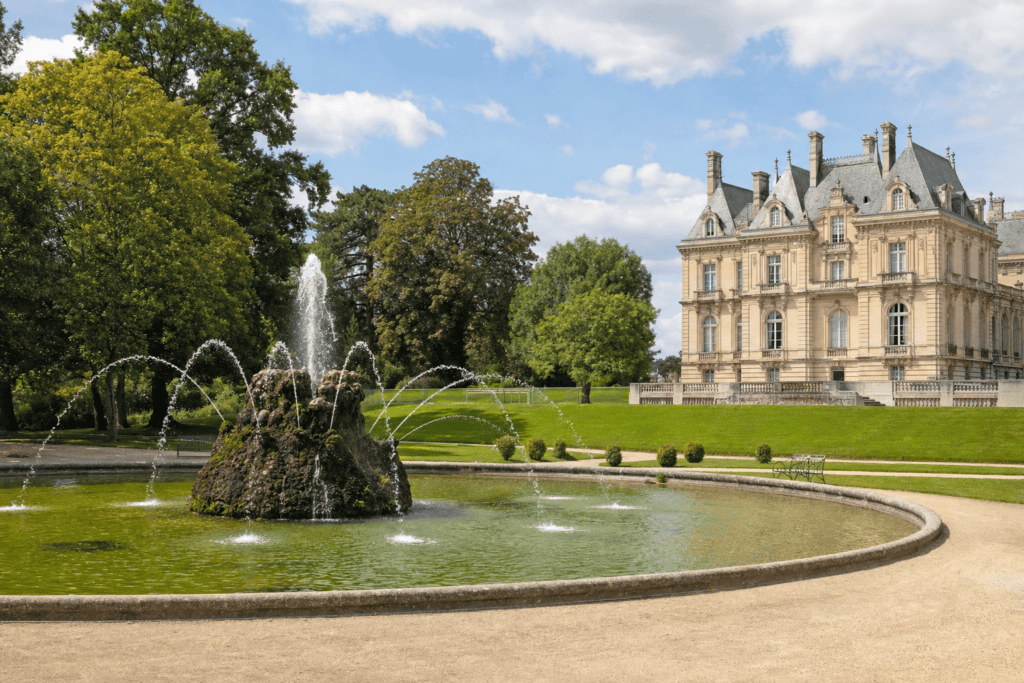 Champagne Park A large 22-hectare park in Reims where nature, leisure, sports, and history come together…
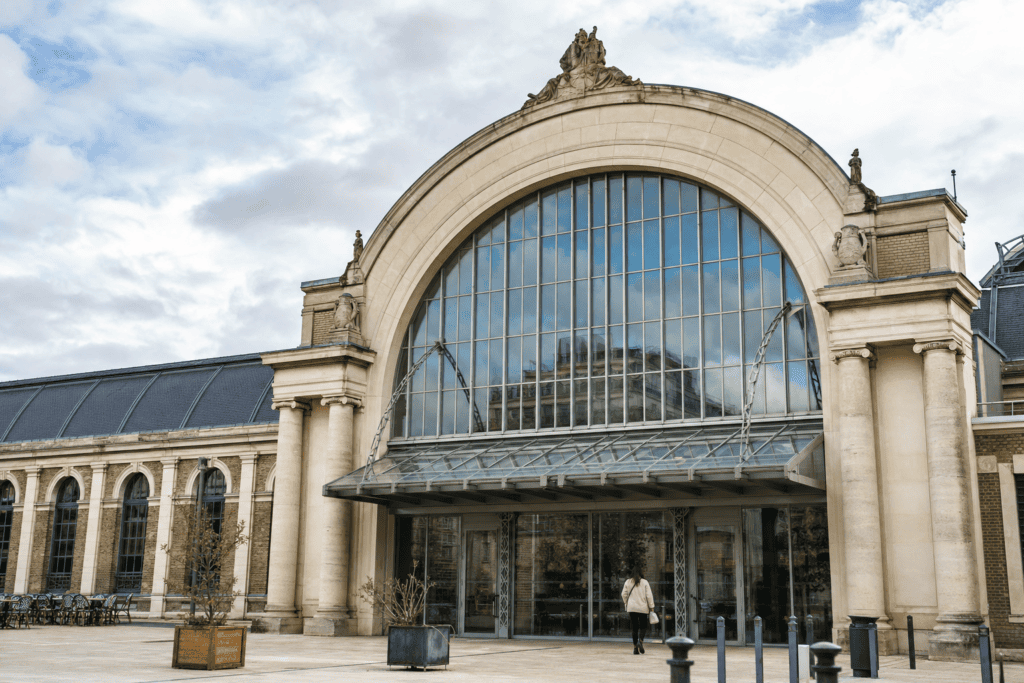 Halles du Boulingrin An iconic covered market in Reims, where Art Deco architecture accompanies a delicious exploration of local products…
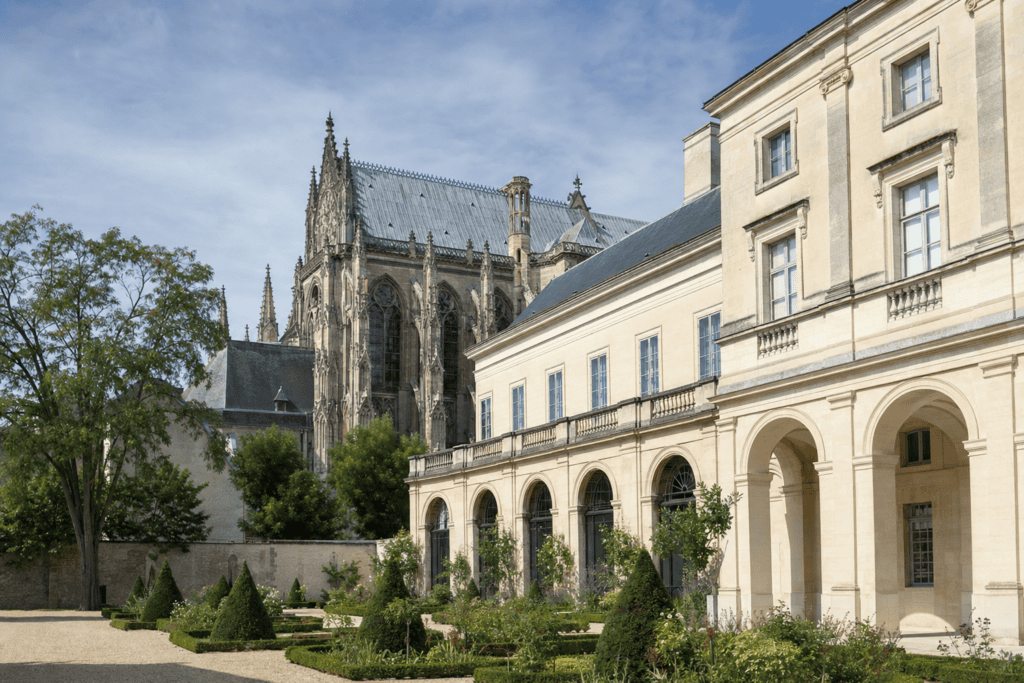 Musée Saint-Remi Housed in a former Benedictine abbey, the Saint-Remi Museum tells the history of Reims from antiquity to the…
Book online · Paris → Recommended departure in front of Reims-Centre train station, Place de la Gare, 51100 Reims. Possible arrival at Les Halles du Boulingrin, Rue de Mars, 51100 Reims.
Choose your pickup date and time
Your departure and arrival details are already pre-filled. You can adjust them in the fare calculator before viewing the vehicles and fare.