



Palais du Tau: The Museum of Royal Coronations in Reims
Reims
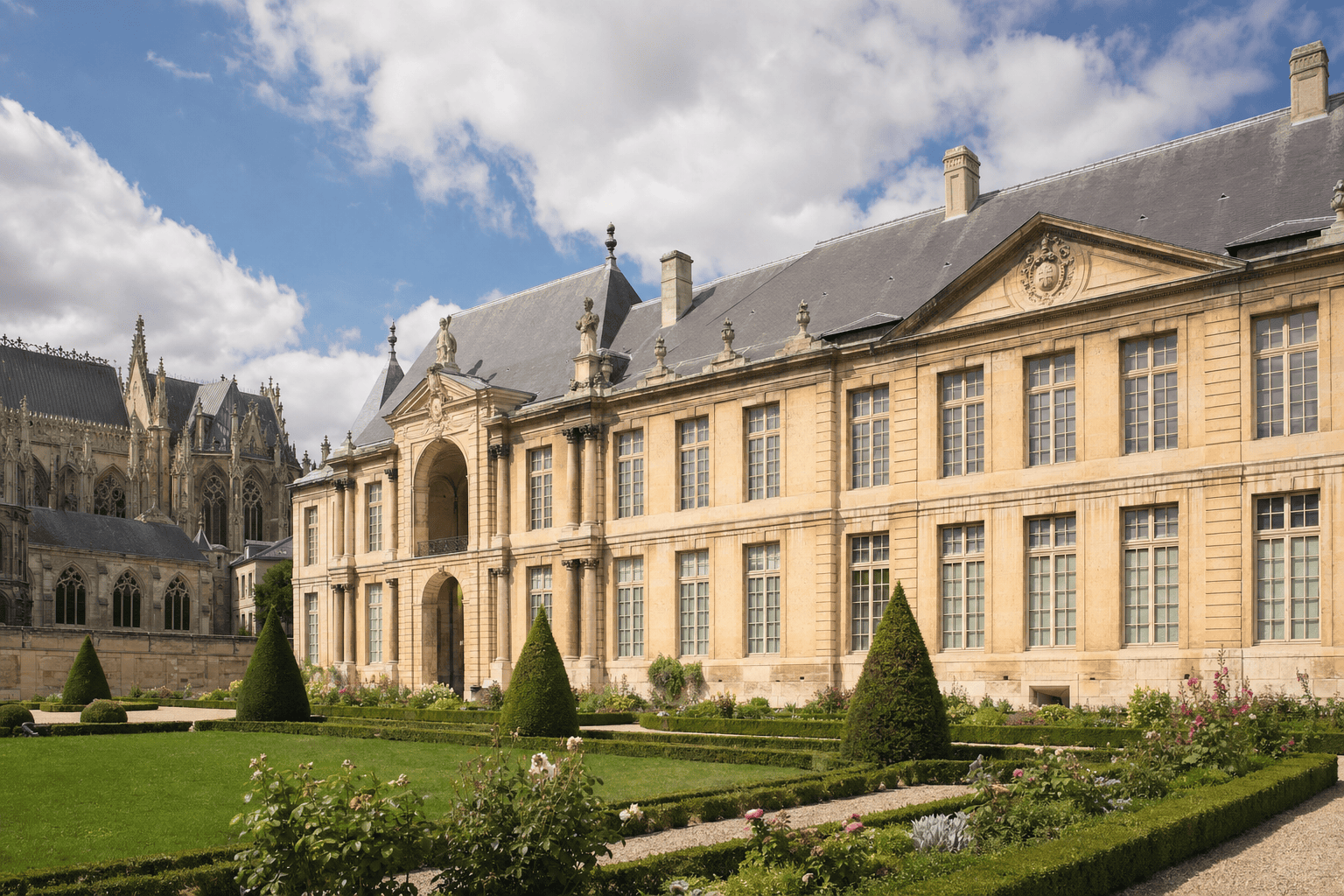
Located next to Reims Cathedral, the Palais du Tau is one of the most important places for understanding the city’s religious, artistic, and political history. Formerly the residence of the archbishops, it also welcomed the kings of France during their coronations. Today, its rooms display the cathedral treasury, sculptures, liturgical objects, and pieces connected with royal ceremonies. A visit naturally complements the cathedral and places the monument within the exceptional ensemble listed as a UNESCO World Heritage Site.
Practical information
Start with the cathedral, then visit the Palais du Tau to better understand the objects, ceremonies, and figures featured in the collections.
Getting to Reims from Paris with a chauffeur
For a private excursion departing from Paris, a Paris hotel, Charles de Gaulle Airport, or Orly Airport, Booking Paris Transfer can arrange your round-trip transportation to Reims. The service covers transportation and coordination of your itinerary, not admission tickets to the Palais du Tau. You can plan a visit to the museum, cathedral, and other Reims attractions before returning to Paris.
Private transportation from Paris, a Paris hotel, CDG, or ORY, with return to Paris according to your itinerary. Monument admission tickets not included.
A Former Residence in the Heart of the Cathedral District
The Palais du Tau occupies a privileged position in Reims’ cathedral district, immediately next to Notre-Dame. Its name recalls the T shape, or tau, formed by its original layout. For centuries, it was the residence of the archbishops of Reims, whose role extended far beyond religious administration alone: the archbishop was also a major figure in the kingdom’s political and ceremonial life.
The palace also served as the king’s residence during his coronation. The sovereign was welcomed there, had a place to rest, and took part in certain ceremonial moments before and after the ceremony held in the cathedral. This physical proximity explains why the visit should not be viewed as a visit to an isolated museum: the Palais du Tau, the cathedral, and the former Saint-Remi Abbey formed a cohesive ensemble associated with the French monarchy.
The present-day monument bears traces of several periods. A significant portion of the palace was rebuilt in the 17thth century, while the palatine chapel and banquet hall retain older elements. Seriously damaged during World War I, the building was later restored and now houses a museum devoted to the history of the cathedral and royal coronations.
Understanding the Reims Coronation Ceremony
The Palais du Tau’s greatest strength is making a ceremonial tradition understandable—one that can seem abstract when you visit only the cathedral. In Reims, the royal coronation combined liturgy, the representation of power, and public spectacle. The king received the anointing in the cathedral, following a ritual traditionally linked to the baptism of Clovis by Bishop Remigius. The Holy Ampulla, kept at Saint-Remi Abbey, held a central place in this tradition.
The museum’s displays help distinguish the ceremony’s different stages and the spaces associated with them. The king arrived in a city prepared for the event, proceeded to the cathedral, and then returned to the palace for receptions and banquets. The Palais du Tau thus appears as the residential and ceremonial counterpart to the sanctuary where the anointing took place.
Thirty-three sovereigns, from Louis the Pious in 816 to Charles X in 1825, were crowned in Reims. This long continuity explains the symbolic richness of the collections. The French Revolution interrupted the tradition, and Charles X’s coronation was the last held in the cathedral. The visit reveals just how closely Reims was connected to the history of the French monarchy.
The Cathedral Treasury and Notable Objects
The collections are at the heart of the visit. They bring together objects connected with the cathedral treasury, the liturgy, and royal ceremonies. Highlights include goldsmiths’ work, textiles, sculptures, paintings, and elements from the former monumental décor. Each object is worth observing for its materials and function, but also for the context in which it was used.
Among the objects most commonly associated with the Palais du Tau are Charlemagne’s talisman, the Holy Ampulla and its reliquary, and pieces connected with the coronation of Charles X. It is best to view these objects as witnesses to successive practices and beliefs rather than as a simple list of treasures. Their significance lies in the intersection of art, dynastic memory, and religious ceremony.
The sculptures from the cathedral also offer insight into the work of medieval workshops and the monument’s transformations over the centuries. The museum thus complements the viewing of the portals and façades: some works, displayed at eye level, make the quality of the sculptor’s craft more tangible. Displays may change, so check the current route before your visit.
Historic Rooms Not to Miss
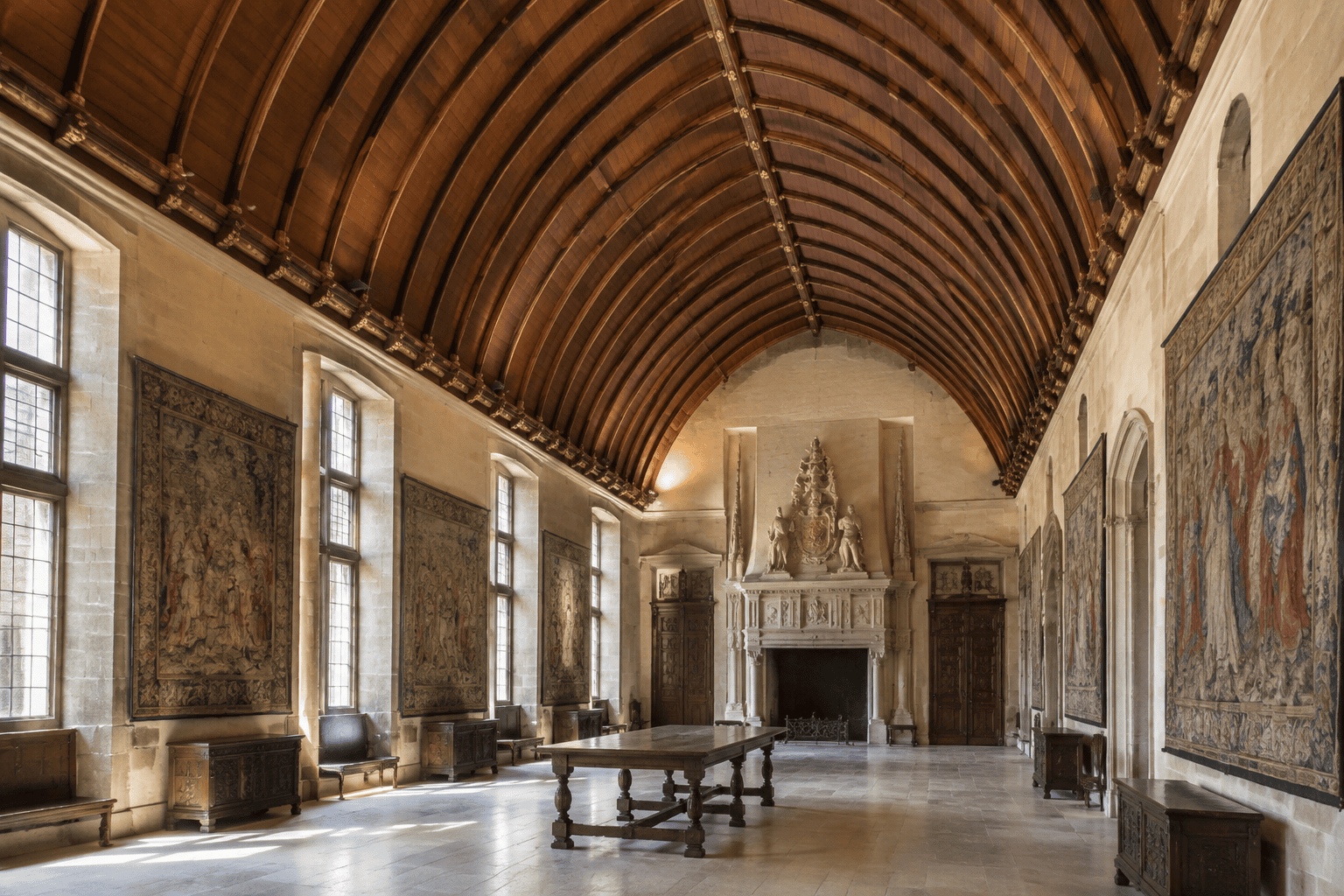
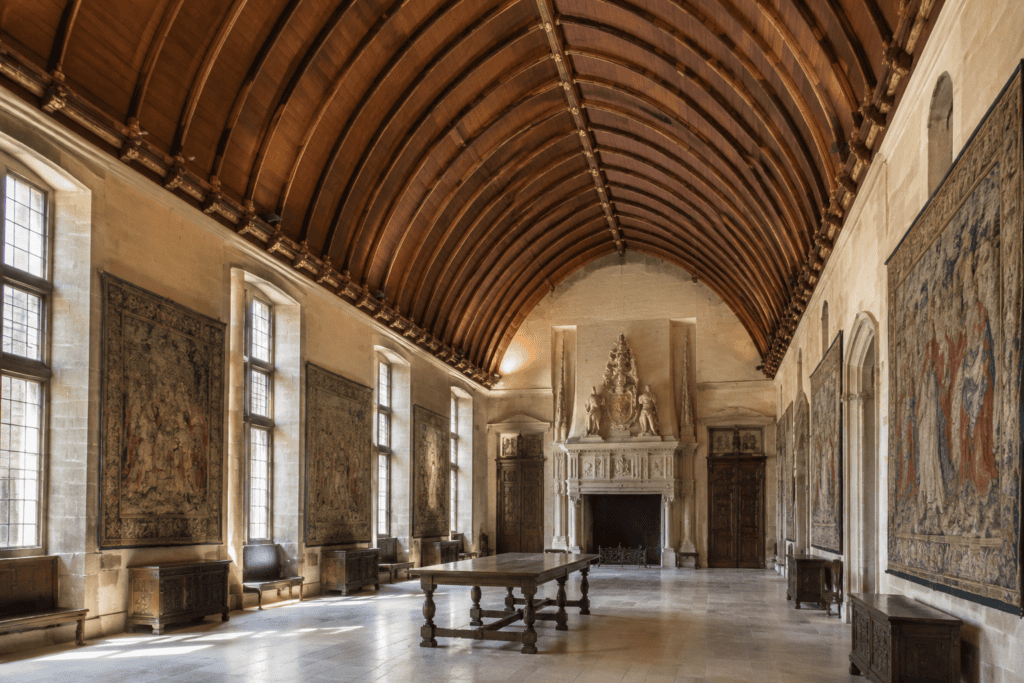
The banquet hall is one of the palace’s most evocative spaces. It recalls the festive and political dimension of the coronation, when the king was received after the ceremony in a formal setting. Its proportions and age make it possible to imagine the building’s welcoming function, even though today’s visit obviously does not recreate the customs of the court.
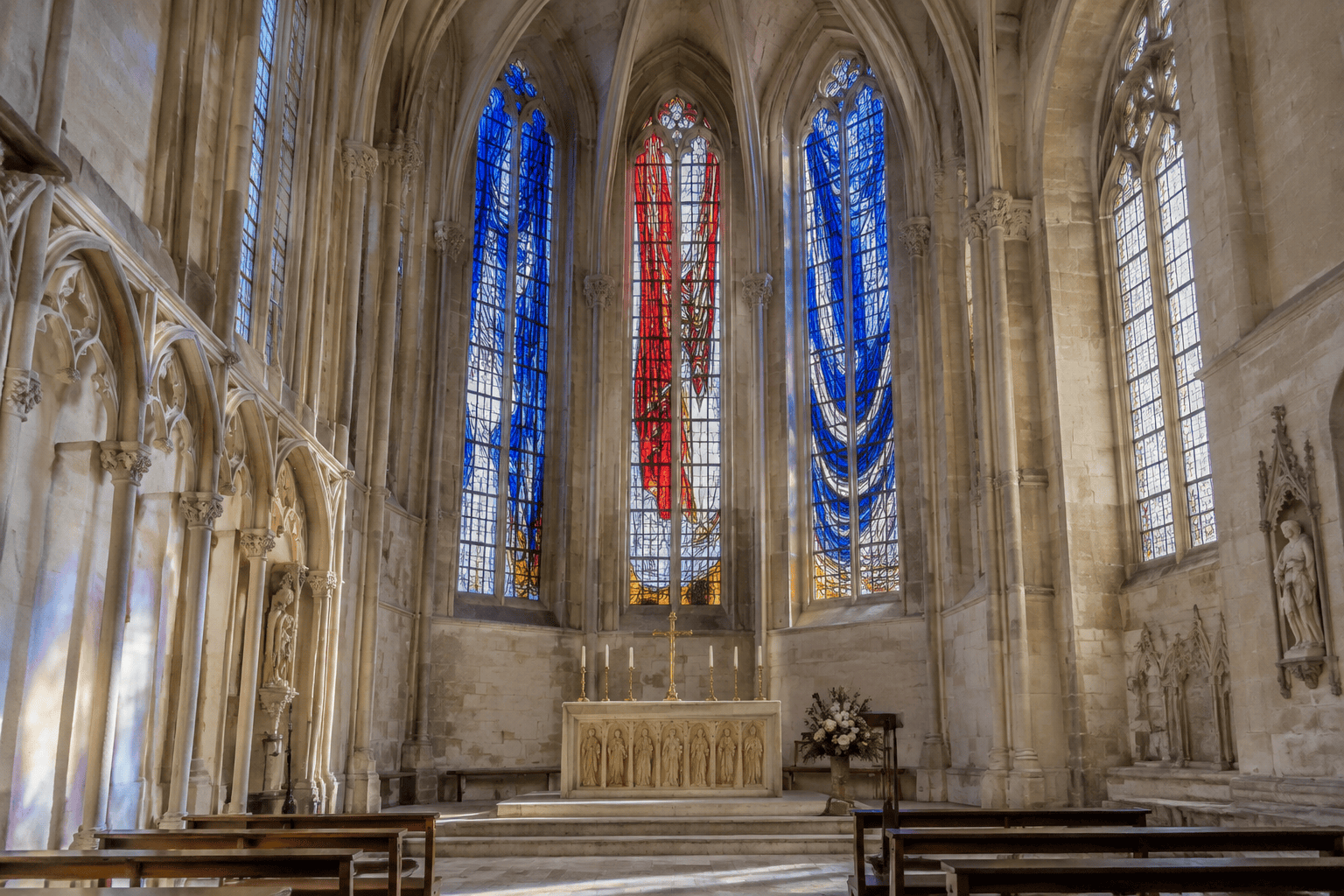
The palatine chapel is another highlight. Dating from the 13thth century, it reflects the close relationship between the archiepiscopal residence, liturgy, and power. Its architecture deserves careful attention: it does not have the cathedral’s monumentality, but offers a more intimate scale and helps explain the palace’s layout.
As you move through the rooms, take time to observe the differences in scale, light, and materials. The building is not a uniform backdrop: it layers medieval traces, modern alterations, and the effects of restoration following the destruction of 1914. This stratification is an essential part of the site’s appeal. For a first visit, it is better to prioritize careful observation over a rushed tour.
A Visit to Combine with Notre-Dame Cathedral
The Palais du Tau is best visited as part of an itinerary focused on the cathedral district. Start with Reims Cathedral to discover its portals, monumental sculptures, and stained glass. The museum then extends this experience inside a place dedicated to the cathedral’s history, treasury, and role in the coronations.
The ensemble formed by the cathedral, the Palais du Tau, and the former Saint-Remi Abbey is listed as a UNESCO World Heritage Site. This designation is based less on a single monument than on the historical and architectural connections between the three sites. If time allows, continue to the Saint-Remi Museum and its former abbey, which provide additional insight into Saint Remigius, Clovis, and the tradition of the Holy Ampulla.
Wear comfortable shoes and leave some time between visits. The opening hours of the cathedral, museum, and any guided tours may not be the same. Busy periods, religious services, or conservation work may also affect the usual arrangements. Official websites remain the best source of information on the day of your visit.
Practical tips for planning your visit
The Palais du Tau is located at 2 Place du Cardinal-Luçon, in central Reims. Its location makes it easy to explore on foot from the train station, city center, and main sites in the cathedral district. If you arrive by car, check parking options and downtown traffic conditions in advance, as being close to the monument does not mean parking is available in front of the entrance.
Before setting out, check the official Palais du Tau website or the Centre des Monuments Nationaux ticketing site for opening hours, prices, any reservation requirements, and access conditions. This information may change depending on the season, construction work, events, or cultural programming. Booking a time slot may be required during certain periods or for certain activities.
Visitors interested in art history should allow at least an hour, while a family visit can be adapted by selecting a few emblematic objects and recounting the king’s journey during the coronation. Visitors with reduced mobility or specific needs are advised to consult accessibility information and contact the monument’s team directly before traveling.
Why Include the Palais du Tau in Your Itinerary
The Palais du Tau deserves a special place in a stay in Reims because it adds historical depth to your discovery of the city. The cathedral immediately impresses with its scale and sculpture; the museum explains the customs, objects, and figures that contributed to its renown. This complementarity turns a simple monument visit into a genuine exploration of French history.
The site appeals equally to enthusiasts of religious heritage and visitors drawn to royal ceremonies, decorative arts, or architecture. It offers a relatively compact route that is nevertheless rich enough to warrant an attentive visit. Families can focus on the most spectacular objects, while enthusiasts can take time to examine the details of the textiles, sculptures, and goldsmiths’ work.
From Paris, Reims is well suited to a day trip or a longer stop in Champagne. By combining the Palais du Tau with the cathedral, the Saint-Remi Museum, a walk through the historic center, and, depending on your plans, a visit to Champagne houses, you can create a varied itinerary. The Palais du Tau is one of the best historical starting points.
Useful sources
Frequently Asked Questions
Where is the Palais du Tau located?
What can you see at the Palais du Tau?
How much time should I allow for the visit?
Is the Palais du Tau open year-round?
Can you visit the Palais du Tau from Paris in one day?
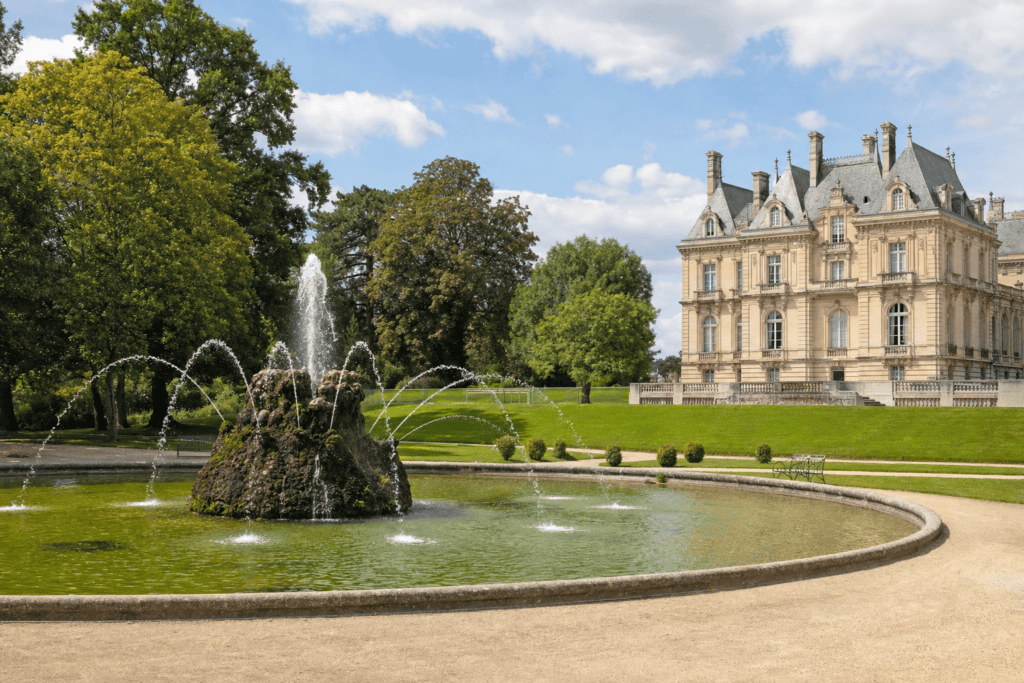 Champagne Park A large 22-hectare park in Reims where nature, leisure, sports, and history come together…
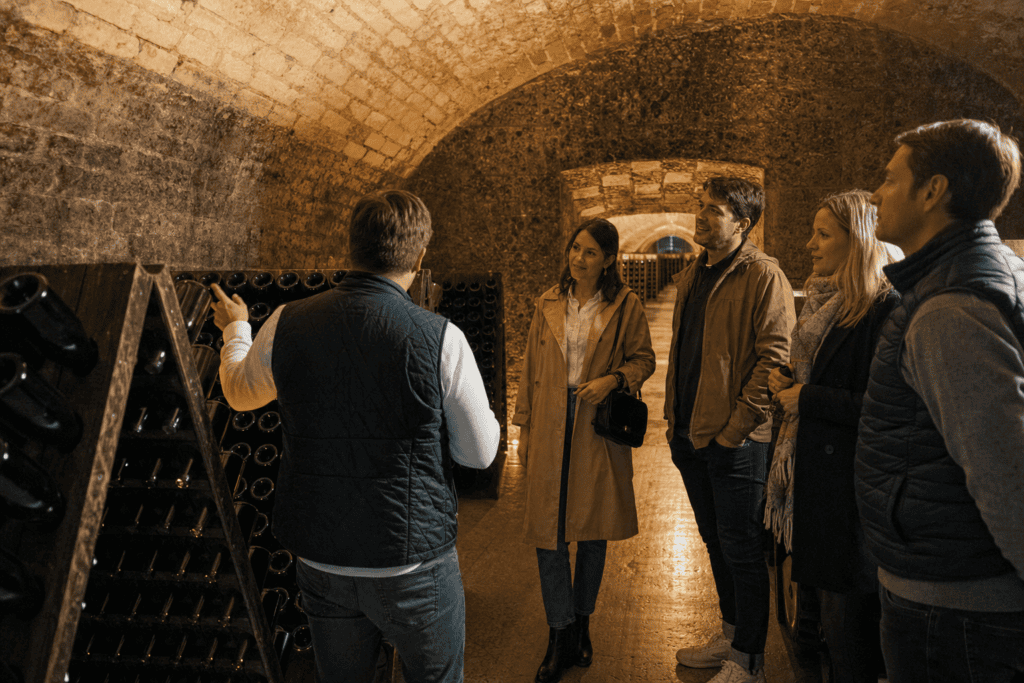 Champagne cellar tour in Reims Descend into Reims’ chalk cellars to learn how champagne is made and enjoy a tasting at the…
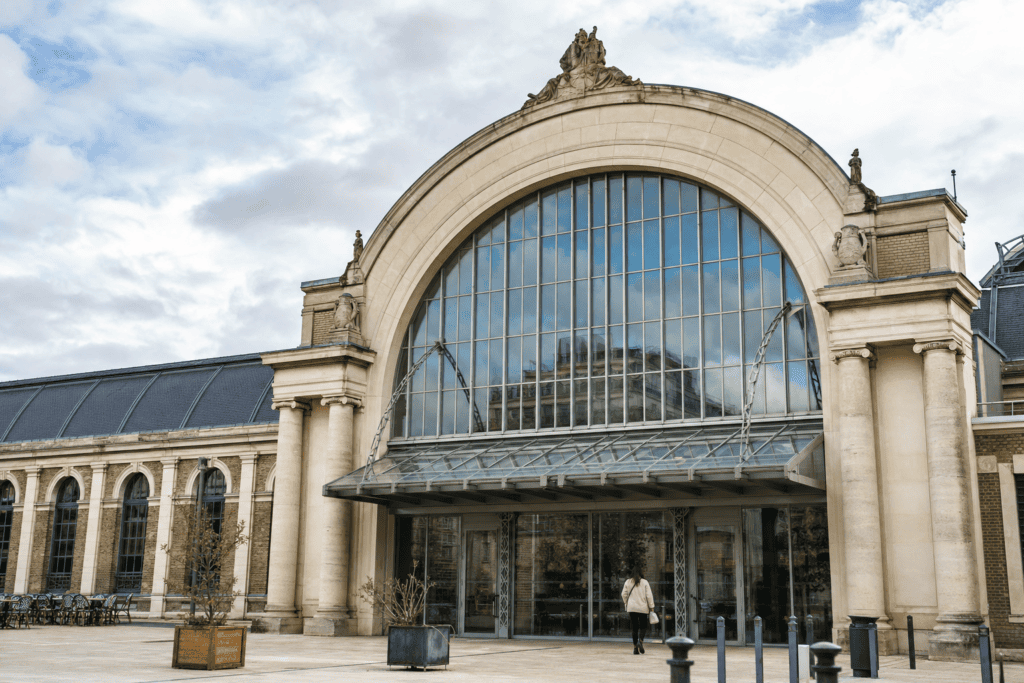 Halles du Boulingrin An iconic covered market in Reims, where Art Deco architecture accompanies a delicious exploration of local products…
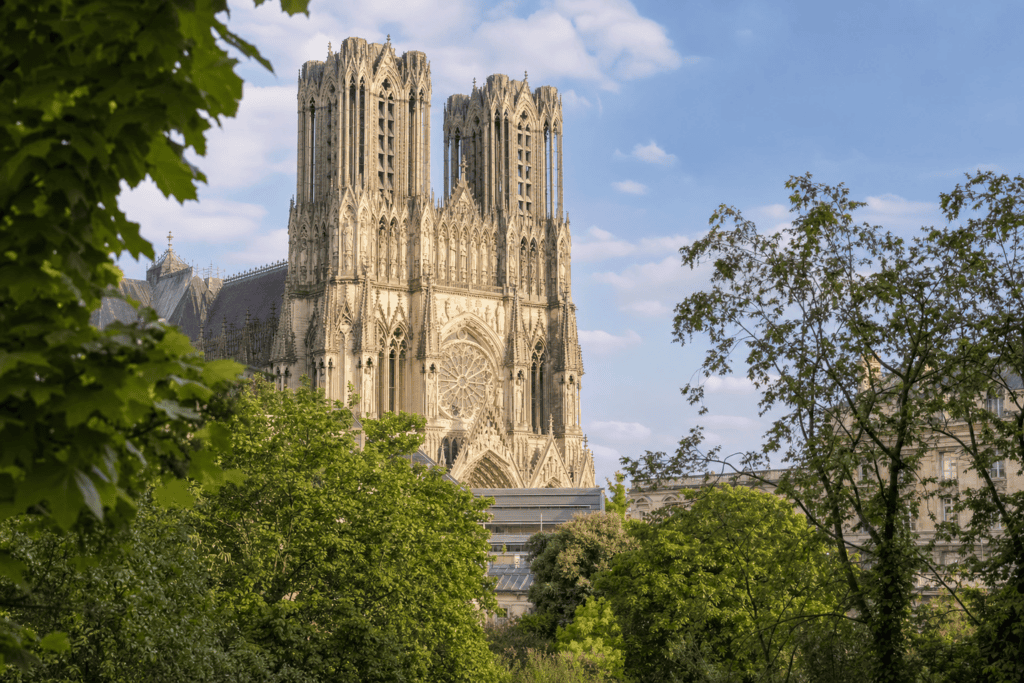 Notre-Dame Cathedral of Reims A Gothic masterpiece in the heart of Reims, featuring monumental sculptures, remarkable stained glass, and historic memory…
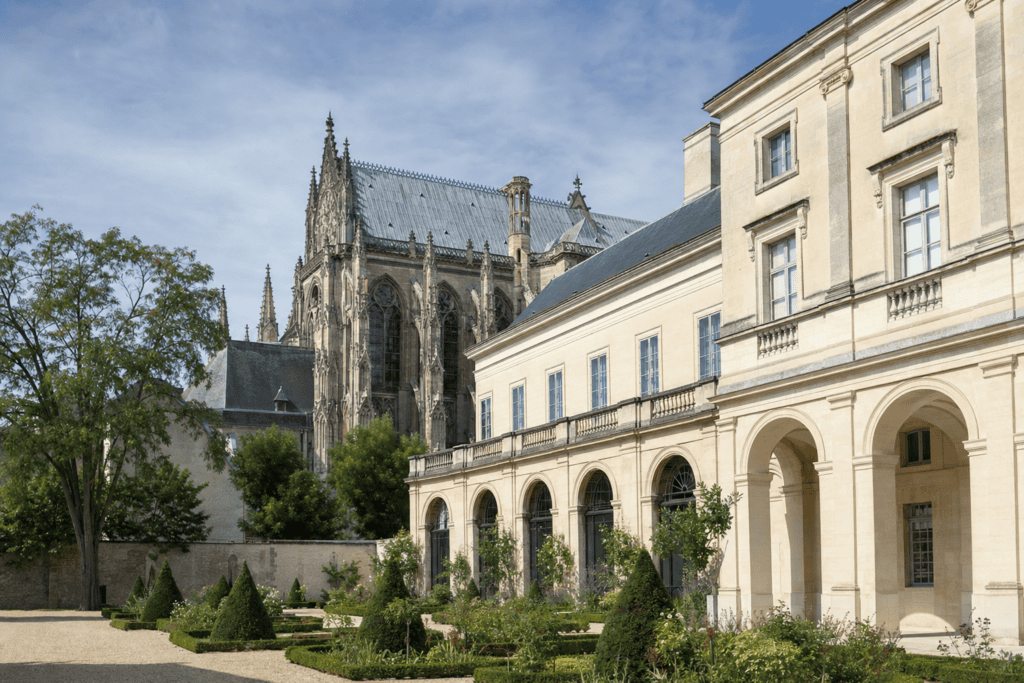 Musée Saint-Remi Housed in a former Benedictine abbey, the Saint-Remi Museum tells the history of Reims from antiquity to the…
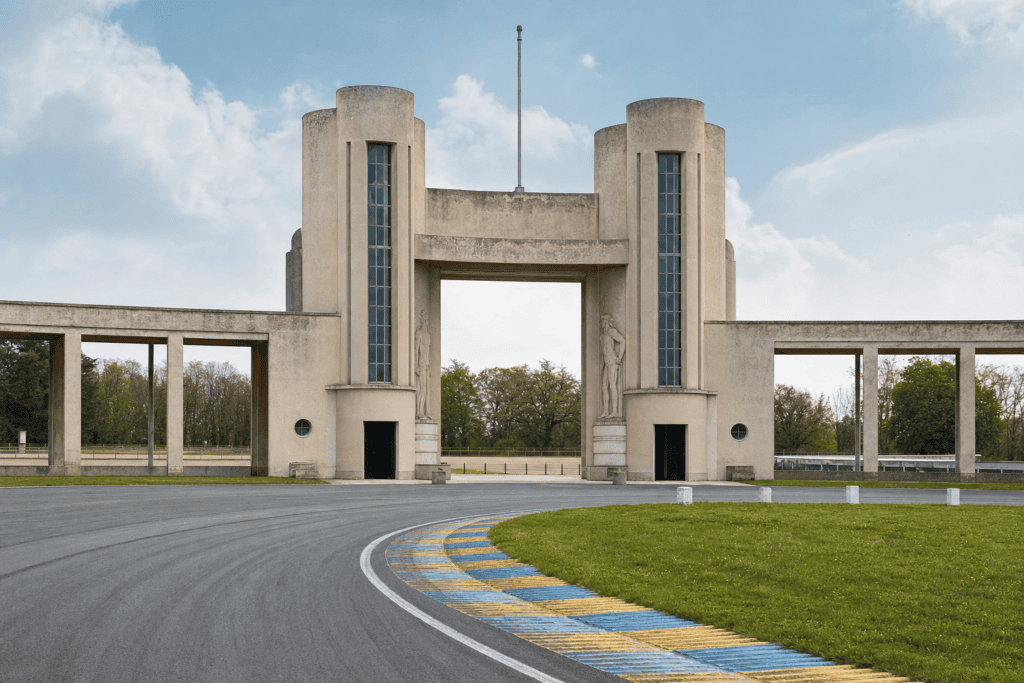 Reims Art Deco Walking Tour A 2- to 3-hour walk between the train station, Les Promenades, Cours Langlet, and…
Online booking · Paris → 2 Place du Cardinal-Luçon, 51100 Reims, Grand Est, France
Choose your pickup date and time
Your departure and arrival details are already pre-filled. You can adjust them in the fare calculator before viewing the vehicles and fare.