



Sainte-Mère-Église Church: In the Footsteps of John Steele
Sainte-Mère-Église
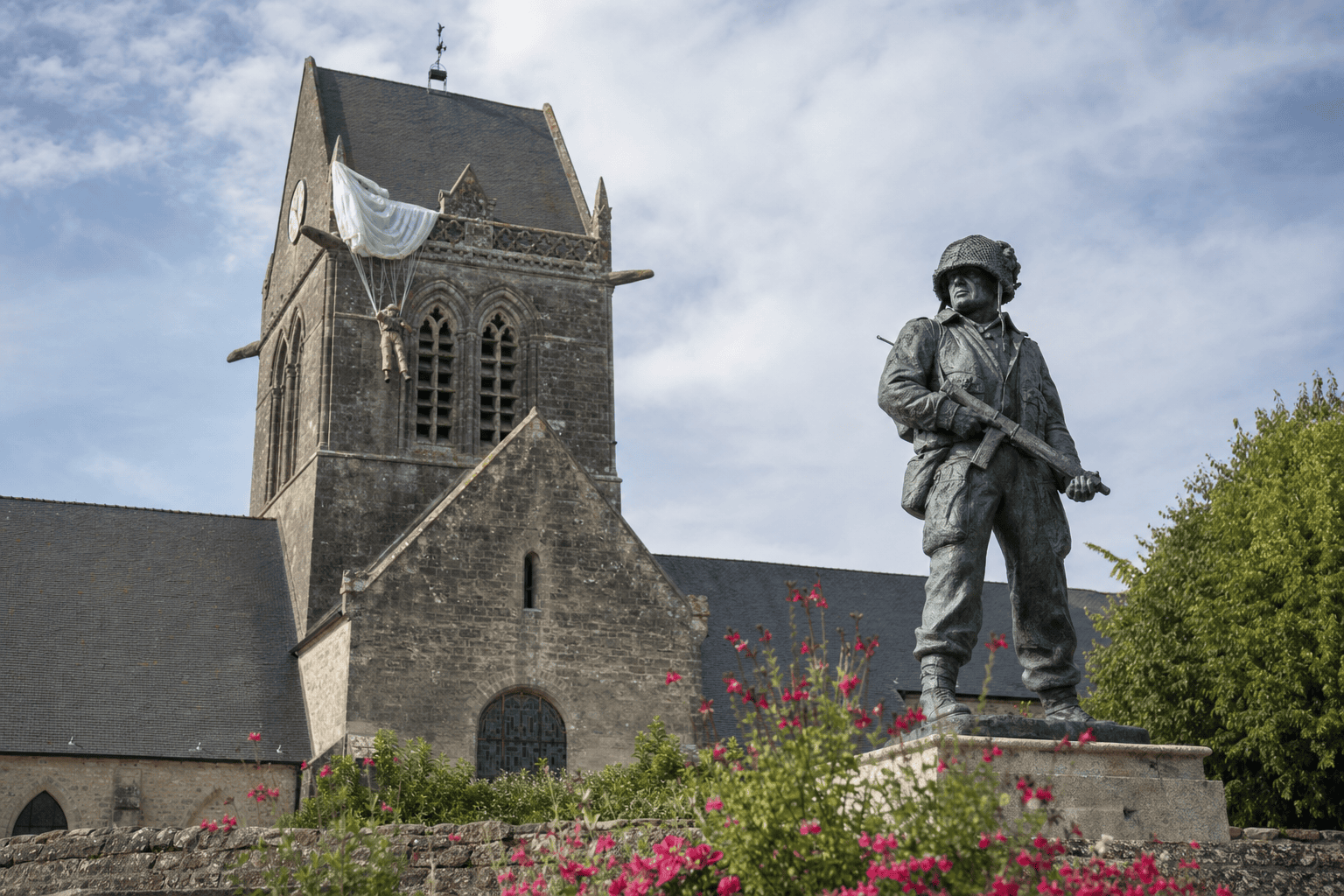
Sainte-Mère-Église Church is one of the most recognizable sites associated with the memory of D-Day in Normandy. During the night of June 5–6, 1944, American paratrooper John Steele became caught on its bell tower during the airborne operations. Today, the mannequin visible on the spire, the commemorative stained-glass windows, and the Airborne Museum across from the church recount this episode while placing it within the broader history of the Battle of the Cotentin. The visit can be combined with La Fière, Utah Beach, Azeville Battery, or Carentan, but the sites are spread out and require realistic planning.
Practical information
Start by viewing the church from the square, then visit the Airborne Museum before heading to one or two nearby sites. As the church is a place of worship, access may vary depending on services and ceremonies.
Getting to Sainte-Mère-Église from Paris
Booking Paris Transfer peut organiser un trajet privé au départ de Paris, d’un hôtel parisien, de l’aéroport Charles-de-Gaulle ou d’Orly vers Sainte-Mère-Église. L’itinéraire peut inclure Utah Beach ou d’autres sites du D-Day, avec retour à Paris ou continuation selon le programme défini à l’avance. Le service concerne le transport uniquement et ne comprend pas les billets d’entrée des musées ou monuments.
Departure from Paris, a Paris hotel, CDG, or ORY; return to Paris or a Normandy memorial itinerary to be agreed upon before departure.
A Bell Tower That Became a Symbol of D-Day
Notre-Dame Church in Sainte-Mère-Église stands in the center of town, on an easily identifiable square. Its fame is linked to the American airborne operations carried out during the night of June 5–6, 1944, before and during the landings on the Normandy beaches. Paratroopers were dropped in areas sometimes far from their intended zones, while a fire lit up the village and made the situation particularly chaotic.
The mannequin suspended from the bell tower is now the site’s best-known visual landmark. It does not replace historical study of the operation, but it immediately identifies the location described in accounts of D-Day. From the area in front of the church, observe the square, the adjoining streets, and the position of the Airborne Museum. Reading the terrain this way helps explain how an individual episode became an international symbol of the arrival of airborne troops in the Cotentin.
The outdoor visit is brief, but it is best approached as a memorial stop rather than simply a photo opportunity. Commemorative plaques, flags, and elements relating to civilian victims recall that the village was caught up in intense fighting. The peaceful, rebuilt setting today should not obscure the violence of that night and the days that followed.
The Story of John Steele and How It Is Remembered
John Steele belonged to the 505th Parachute Infantry Regiment of the 82nd Airborne Division. During his descent over Sainte-Mère-Église, his parachute caught on the church spire. Injured in the foot, he remained suspended and tried to stay still to avoid the gunfire taking place around the building. He was eventually cut down by German soldiers, then taken prisoner before managing to escape.
The story became famous through firsthand accounts, books about D-Day, and the film The Longest Day. However, some details were simplified or embellished by popular culture. It is therefore useful to distinguish between the historical facts, personal accounts, and the memorial presentation visible today. The mannequin on the bell tower is a marker of remembrance, not an exhaustive reconstruction of the entire operation.
This nuance makes the visit more meaningful. John Steele’s episode draws attention, but it opens onto a collective history: that of paratroopers scattered across the hedgerows, units trying to regroup, residents caught up in the fighting, and German soldiers surprised by the scale of the operation. The Airborne Museum provides the maps, objects, and firsthand accounts needed to move beyond the anecdote.
Sainte-Mère-Église’s Role in the Battle
The landings did not take place only along the coast. The airborne units were tasked, among other things, with disrupting German communications, securing crossroads, and protecting the exits from the beaches. Sainte-Mère-Église lay within the operational area of the 82nd Airborne Division, near roads and wetlands that were important for military movements.
The dispersal of the paratroopers complicated the operation’s first hours. Some soldiers landed in the marshes, while others found themselves isolated or far from their units. The Cotentin hedgerows, with their embankments, sunken lanes, and flooded areas, made movement difficult. Nevertheless, the village was quickly captured by American forces, giving it a special place in accounts of the liberation of Normandy.
To understand how the operations complemented one another, combine the church with La Fière, a few miles to the west, where fighting focused on a bridge and access to the marshes. Utah Beach presents the amphibious aspect of the landings. Carentan, farther south, offers insight into another strategic hub of the battle. Distances and drive times vary depending on the route and stops, so it is better to limit the number of stops than try to see everything in one day.
Viewing the Church, Stained-Glass Windows, and Area in Front
Start with an exterior tour of the church. From the square, several viewpoints offer a clear view of the bell tower and the mannequin associated with John Steele. Also look at the surrounding façades and the streets converging toward the center. This observation gives a more concrete sense of the situation in a village lit by flames and crossed by soldiers during the night.
Inside, the commemorative stained-glass windows evoke the parachute drops and give the site both a religious and historical dimension. The church remains a place of worship, and access may change because of a service, ceremony, construction work, or local event. Respect the silence, worshippers, and posted instructions. Photography should remain discreet and must not disturb prayer or a celebration.
The square is also a good starting point for planning the rest of your visit. Around June 6, ceremonies may result in temporary traffic or parking restrictions. Families and history enthusiasts can set aside time to read the plaques and monuments before heading to the nearby museum. This gradual approach prevents the site from being reduced to the sole image of the paratrooper hanging from the bell tower.
The Airborne Museum Across from the Church
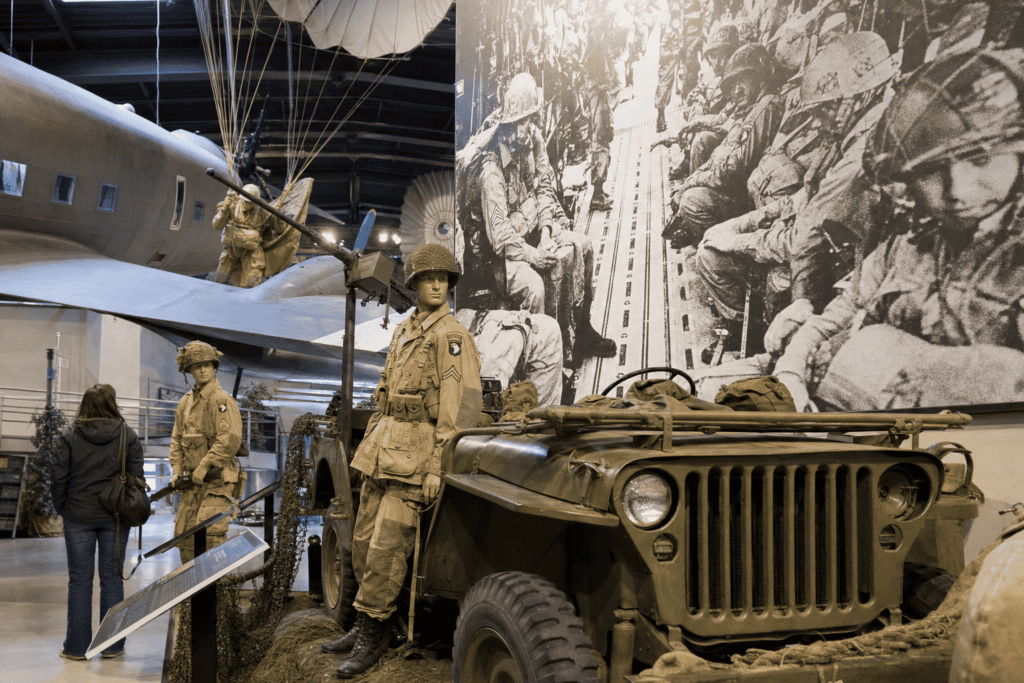
The Airborne Museum, located across from the church, is the natural complement to this stop. Dedicated to the American paratroopers of the 82nd and 101st Airborne Divisions, it places Sainte-Mère-Église within the preparation and execution of the airborne operation. The exhibits cover training, aircraft, gliders, equipment, nighttime drops, and the fighting that followed in the Cotentin.
The proximity of the two sites makes for a coherent visit: first observe the bell tower and stained-glass windows, then spend more time in the museum to understand the military objectives and individual experiences. The collections and firsthand accounts help move beyond John Steele’s anecdote. They also show the diversity of soldiers’ experiences and how difficult it was to find one’s bearings after a scattered drop.
Visit length depends on your pace and which areas are open when you arrive. The Airborne Museum is separate from the church and has its own visitor policies. For seasonal hours, admission prices, accessibility, and any reservation requirements, check its official website directly. A museum visit can take several hours, especially if you take time to follow the firsthand accounts and historical displays.
Connecting the Sites of the Cotentin
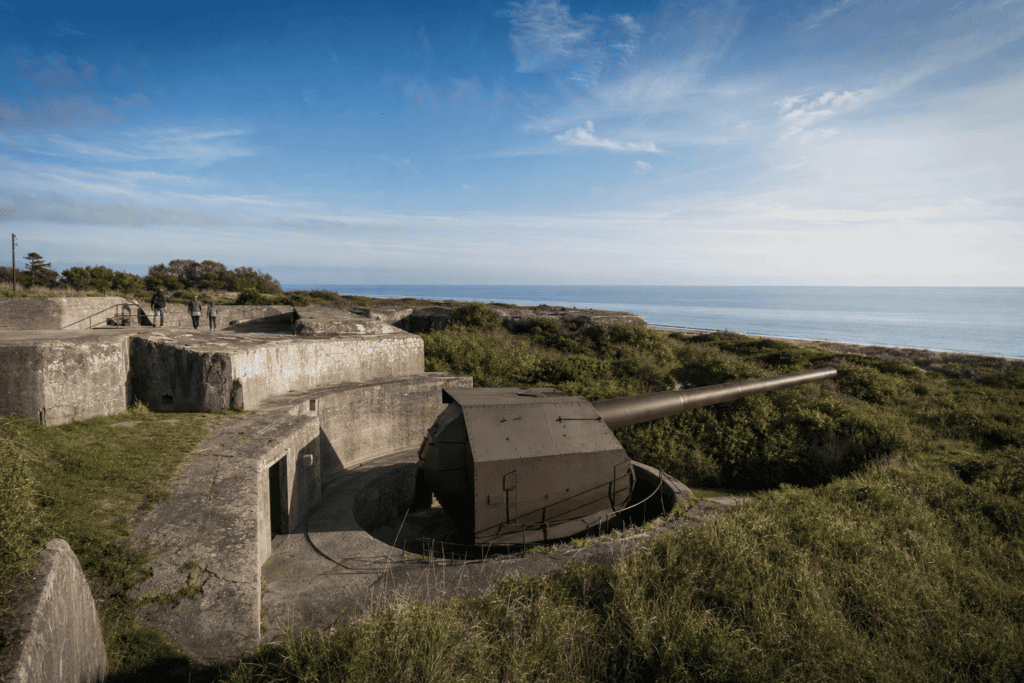
Sainte-Mère-Église can be the starting point for a day devoted to the airborne sector and Utah Beach. From the town center, La Fière is the most direct extension for exploring the fighting around a strategic crossing. Utah Beach lies farther west, while Azeville Battery adds a fortified Atlantic Wall site to the itinerary. These places are not clustered around the church, so distances, opening hours, and the duration of each visit must be factored into the day’s planning.
Carentan, to the south, offers another perspective on the fighting in the Cotentin. The Cotentin and Bessin Marshes add a landscape dimension and help explain the difficulties faced by advancing troops. A car is generally the most flexible option because the memorial sites are spread out. From Carentan train station, the final connection to Sainte-Mère-Église and the beaches is not served by a regular tourist shuttle; you will need to research available transportation or arrange a transfer.
For a realistic day, the church and museum can fill the morning, with one or two outdoor sites in the afternoon. Visitors arriving by train can also stay overnight in Carentan, Bayeux, or Caen and plan their transportation in advance. This approach is more reliable than an itinerary packed with beaches, museums, and batteries that leaves no time for the visits themselves.
Planning a Respectful Visit
Spring and early fall often offer a good balance for exploring Sainte-Mère-Église and nearby sites. Conditions are generally suitable for outdoor travel, while visitor numbers may be lower than in midsummer. The period around June 6 has special commemorative significance, with ceremonies and gatherings, but it also brings high demand for accommodations and possible traffic changes.
In summer, arrive early to visit the church, museum, and a nearby site without turning the day into a race. Wear suitable shoes if you add La Fière, the marshes, or other rural locations. An offline map can be useful in areas where mobile coverage varies. Visitors with reduced mobility should contact the church, museum, and outdoor sites separately, as their access conditions may not be the same.
Finally, approach this visit with a spirit of reflection. The local history concerns the paratroopers, residents, German soldiers, and civilian victims. Respecting a service, ceremony, or memorial space matters just as much as the quality of the historical itinerary. A successful visit combines observation of the site, an understanding of the military context, and sensitivity to the still-living memory of the Cotentin.
Frequently Asked Questions
Where is Sainte-Mère-Église Church located?
Did John Steele really remain hanging from the bell tower?
How much time should I allow for a visit?
Can Sainte-Mère-Église be visited without a car?
Which sites can be combined with the church?
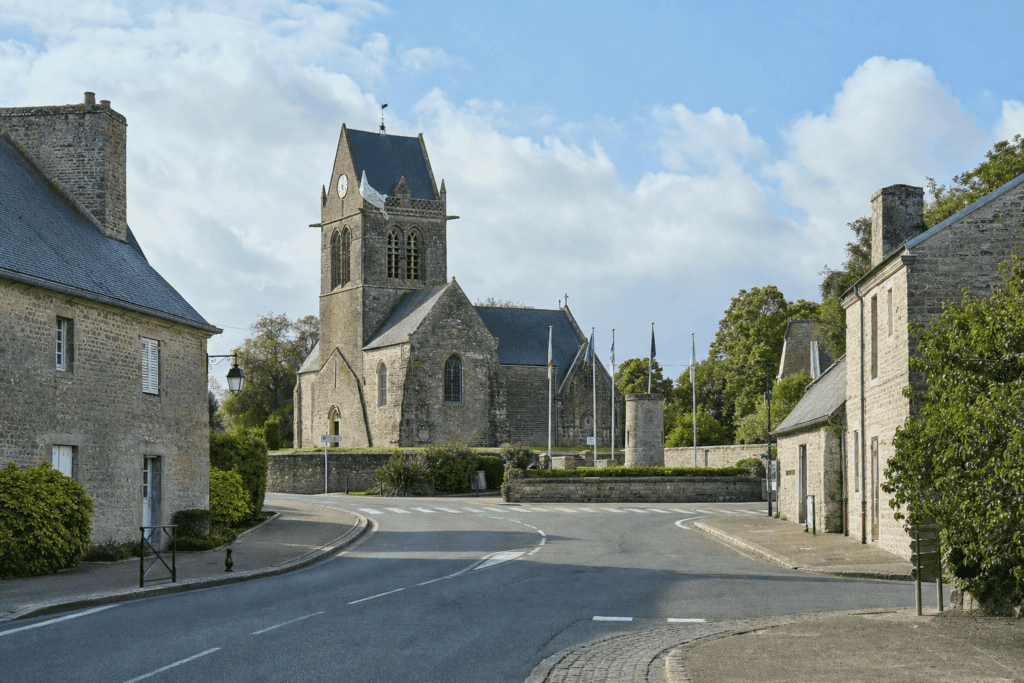 Getting to Sainte-Mère-Église from Carentan, Bayeux or Caen A practical guide to getting to Sainte-Mère-Église from Paris, Caen, Bayeux, Carentan, or Cherbourg and planning an…
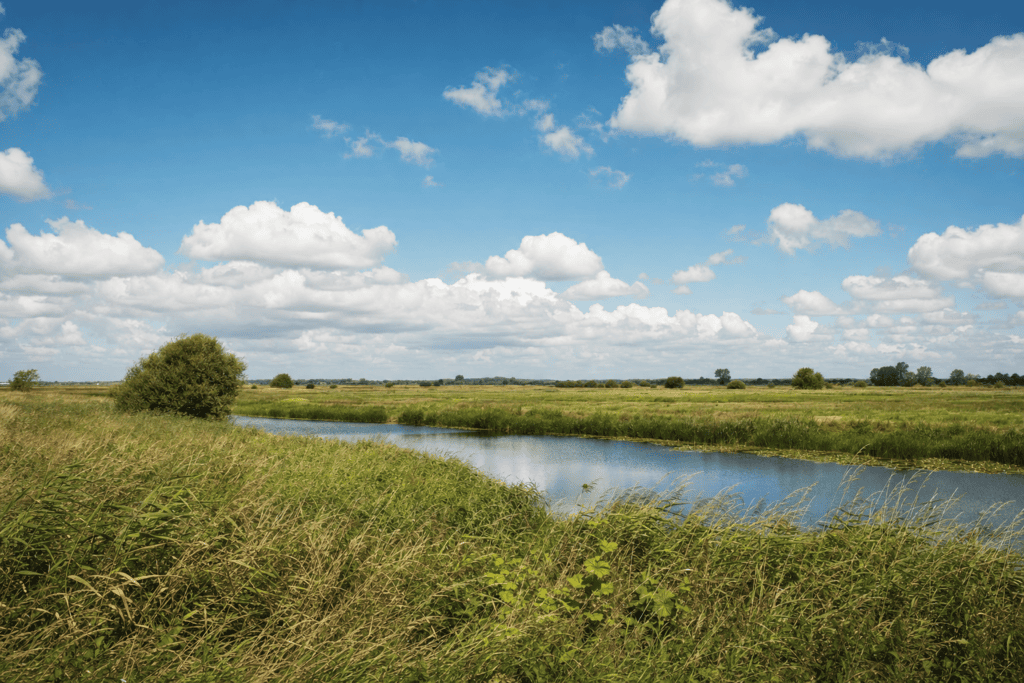 Cotentin and Bessin Regional Nature Park Discover the Cotentin’s marshes, birds, and hedgerows from Sainte-Mère-Église, combining nature, history, and…
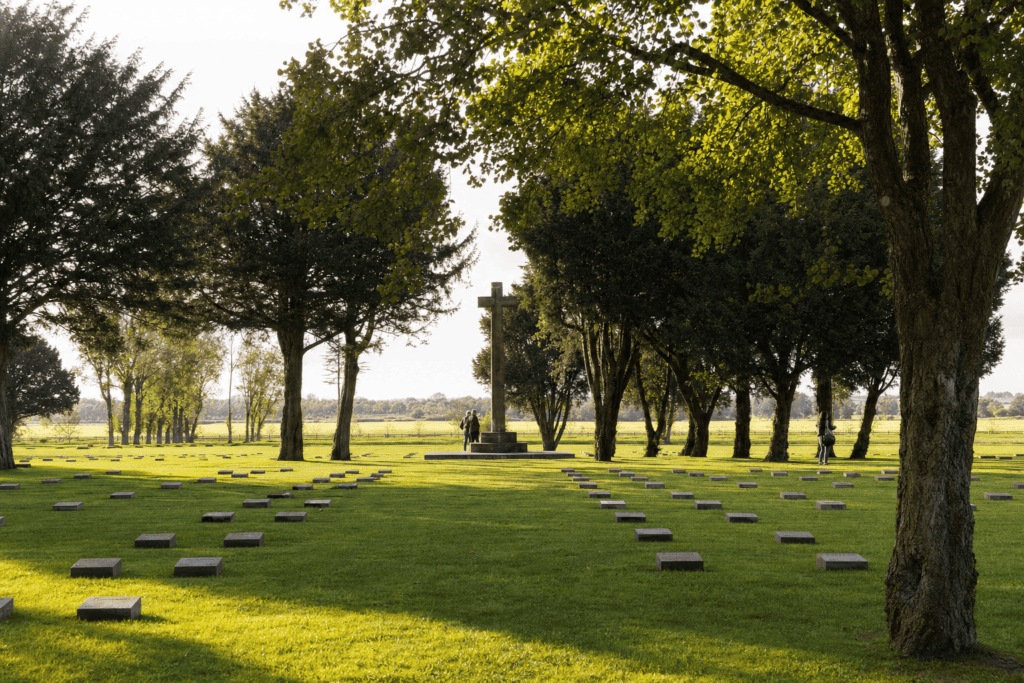 Orglandes German Military Cemetery A solemn German cemetery in the Cotentin, to combine with Sainte-Mère-Église, Utah Beach, and Carentan.
 Airborne Museum A major D-Day museum dedicated to American paratroopers and the battles around Sainte-Mère-Église.
 Azeville Battery A Cotentin German battery for understanding the Atlantic Wall defenses and the fighting…
 Sainte-Mère-Église Market A Cotentin food stop to confirm, ideal before the Airborne Museum and D-Day sites…
Online booking · Paris → Place de l’Église, 50480 Sainte-Mère-Église, Manche, Normandy, France
Choose your pickup date and time
Your departure and arrival details are already pre-filled. You can adjust them in the fare calculator before viewing the vehicles and fare.