



D-Day Beaches from Sainte-Mère-Église
Sainte-Mère-Église
From Sainte-Mère-Église, a full day allows you to visit several major sites in the American sector of the D-Day area. The Airborne Museum explains the airborne operations of the night of June 5–6, 1944; the Azeville Battery showcases the Atlantic Wall defenses; and Utah Beach reveals the coastline where the amphibious assault took place. These sites are close by Cotentin standards, but spread out enough to require careful planning. A car remains the easiest option; from Carentan, Cherbourg, Bayeux or Caen, you will need to arrange an additional road connection. For a first visit, focus on three stops and allow more time for the museums than for quick photo stops alone.
Practical information
First, check the official information for all three sites, then plan your itinerary around their actual opening hours rather than a simple estimate of distances.
Getting to Sainte-Mère-Église from Paris
Booking Paris Transfer can arrange a private transfer from Paris, a Paris hotel, CDG or ORY to Sainte-Mère-Église. The return trip can be to Paris or incorporated into a Normandy itinerary planned in advance. This service covers transportation only: it does not include admission tickets or historical guiding.
Departure from Paris, a Paris hotel, CDG or ORY; return to Paris or onward travel in Normandy according to the agreed itinerary.
Sainte-Mère-Église, a historic starting point
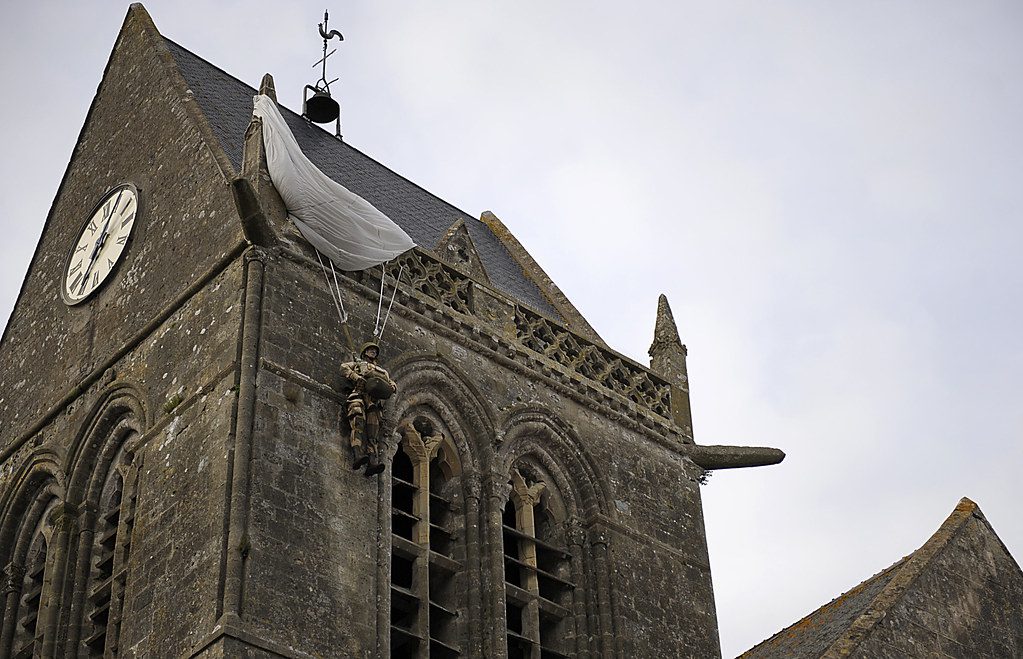
Sainte-Mère-Église is a particularly relevant starting point for exploring the American sector of the D-Day landings. During the night of June 5–6, 1944, the town was at the heart of airborne operations involving the US 82nd and 101st Airborne Divisions. Controlling the roads, crossroads and passages through the Cotentin was intended to facilitate the advance of troops landing at Utah Beach. The church steeple has become the best-known symbol of this episode, but it alone does not convey the complexity of the fighting.
Start with the Airborne Museum in the center of the village. Its collections, vehicles and exhibits dedicated to the nighttime drops help explain the military objectives, navigation challenges and dispersal of the paratroopers. Allow plenty of time if you want to read the testimonies and follow the exhibits without rushing.
After the museum, a short walk through the center lets you see the church, monuments and local memorials before heading toward Azeville or Utah Beach.
Understanding the Atlantic Wall at Azeville
The Azeville Battery offers a different perspective on D-Day. This German Atlantic Wall position included several concrete casemates, underground passageways and facilities designed to defend the Cotentin coast. Visiting it reveals how a coastal battery was organized and places the fighting within the broader defensive system protecting the approaches to Utah Beach.
The site lies inland, along departmental roads and rural lanes. From Sainte-Mère-Église, the route is short by regional standards, but the actual travel time depends on your starting point, traffic and chosen detours. An up-to-date map is preferable to a theoretical mileage estimate. The visit includes underground, dark and sometimes uneven areas; visitors with strollers or mobility difficulties should contact the site before planning this stop.
Azeville deserves a planned visit rather than an improvised stop. Check the official information for opening conditions and the possibility of a guided tour, especially outside the high season.
Utah Beach and Sainte-Marie-du-Mont
Utah Beach is located in the municipality of Sainte-Marie-du-Mont and forms the westernmost sector of the Allied assault beaches on June 6, 1944. Once you reach the coast, geography becomes essential: the beach, dunes, marshes and roads crossing the hedgerows explain the challenges faced by the soldiers. A walk outside the museum helps convey the distance between the shoreline and the inland areas.
The Utah Beach Landing Museum presents the amphibious operation, the units involved, the vehicles and the objectives of the American advance. Its artifacts and maps usefully complement the Airborne Museum by showing another phase of the same day: after the parachute drops, the arrival by sea and the consolidation of the beachhead.
The seafront is exposed to wind and changing weather. Wear suitable shoes and bring rain protection and plenty of water. Respect the monuments, paths, natural areas and private property. Parking and visitor facilities may vary depending on the season and commemorative events.
A well-planned one-day itinerary
For a first visit, begin in Sainte-Mère-Église with the Airborne Museum and the historic center. This first stop provides context for the airborne operations before you continue to the coastal defenses. Then head to the Azeville Battery and finish at Utah Beach. This order follows an easy-to-understand progression: parachute drops inland, the German defensive system and the amphibious assault on the coast.
Keep the schedule flexible. The roads through the Cotentin cross dense hedgerow country, with some narrow lanes and intersections that slow travel. Allow extra time for parking, access checks, breaks and visits that take longer than expected. On and around June 6, ceremonies may alter the usual routes.
Avoid trying to add Crisbecq, Saint-Marcouf, Carentan and several cemeteries at the same time. Three thoroughly visited sites provide a richer understanding than a succession of quick stops. If you have a second day, devote it instead to Carentan, the Cotentin marshes or other batteries in the area.
Other sites in the American sector
The area around Sainte-Mère-Église offers enough sites to extend your stay. The Crisbecq and Saint-Marcouf batteries will interest visitors who want to explore the history of the Atlantic Wall and compare several coastal positions. Their access arrangements, opening hours and visiting conditions differ from those at Azeville, so check each site separately before changing your itinerary.
The Ferme-Musée du Cotentin in Sainte-Mère-Église takes a closer look at rural life, landscapes and everyday life. It can be an interesting break for families or travelers who want to understand the agricultural setting in which the fighting took place.
The Cotentin and Bessin marshes are also important for understanding the terrain. Hedgerows, ditches, wet meadows and raised roads influenced the movement of soldiers. A scenic walk or a visit focused on the marshes therefore complements the military museums. For a longer stay, Carentan broadens the experience without overloading the day devoted to Utah Beach.
Arriving by train and reaching the sites
Sainte-Mère-Église does not have a train station served directly by major rail lines. Carentan is generally a convenient arrival point for exploring the Utah Beach area, while Cherbourg may suit travelers arriving from northern Cotentin. Bayeux and Caen are useful as part of a broader Normandy itinerary, but they add a road connection to the Cotentin peninsula.
From a train station, the final leg must be arranged separately. The memorial sites are spread out, and regular public transportation does not necessarily serve every museum or battery at the times you want. A rental car, pre-booked taxi or private transfer is therefore better suited to a day with several stops. Confirm pickup, waiting time and the return journey before traveling.
Travelers without a car can also limit their program to Sainte-Mère-Église and one coastal site, or plan for two days. This avoids relying on an uncertain connection and leaves more time for visits. Train schedules and road transportation options should be checked for the exact travel date.
Season, remembrance and preparing for your visit
Spring and early fall often offer pleasant conditions for visiting the sites, with interesting light over the hedgerows and coast. Summer provides longer days, but visitor numbers may be higher. Around June 6, the Cotentin hosts many ceremonies and events related to D-Day: this is a significant period for remembrance, but it requires advance planning.
Before setting out, check the official information for the Airborne Museum, Azeville Battery and Utah Beach Museum. Opening hours, guided tours, access conditions and parking may change depending on the season, construction work or events. For galleries and outdoor areas, wear closed-toe shoes and bring a windbreaker and rain protection.
Be respectful in cemeteries, near monuments and during ceremonies. Do not move any objects found on the ground, and stay on authorized routes. A specialist guide or audio guide can enhance your historical understanding, but information provided by site staff remains the reference for the visit and safety.
Frequently Asked Questions
Can you visit Azeville and Utah Beach on the same day?
Which train station should I use to reach Sainte-Mère-Église?
How can I visit the D-Day beaches without a car?
What order should I follow for a first day?
Is the visit suitable for children and people with reduced mobility?
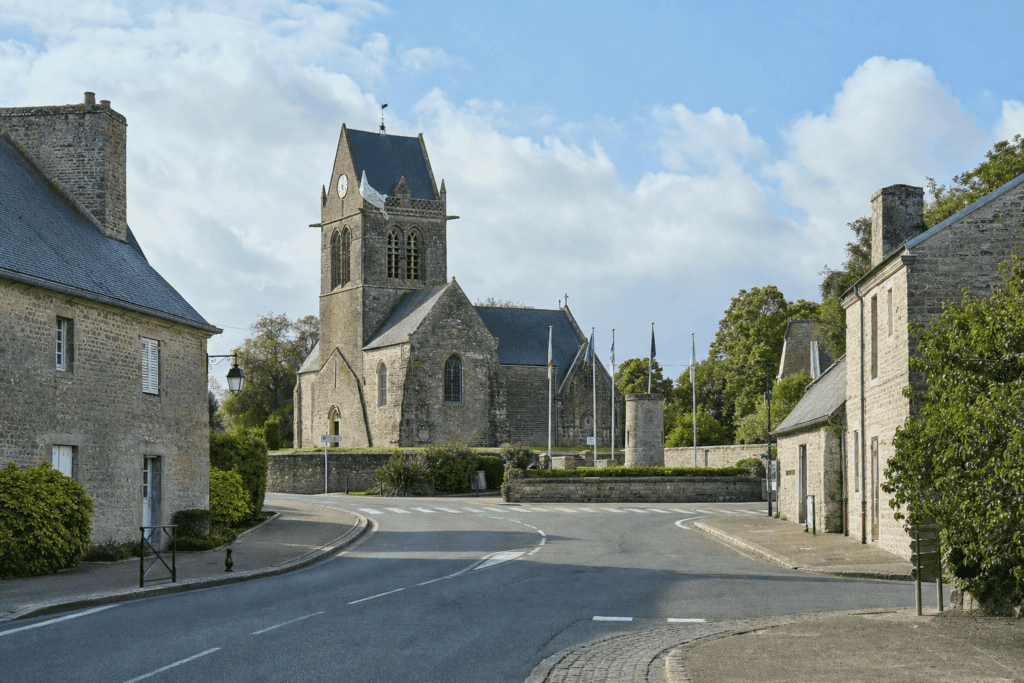 Getting to Sainte-Mère-Église from Carentan, Bayeux or Caen A practical guide to getting to Sainte-Mère-Église from Paris, Caen, Bayeux, Carentan, or Cherbourg and planning an…
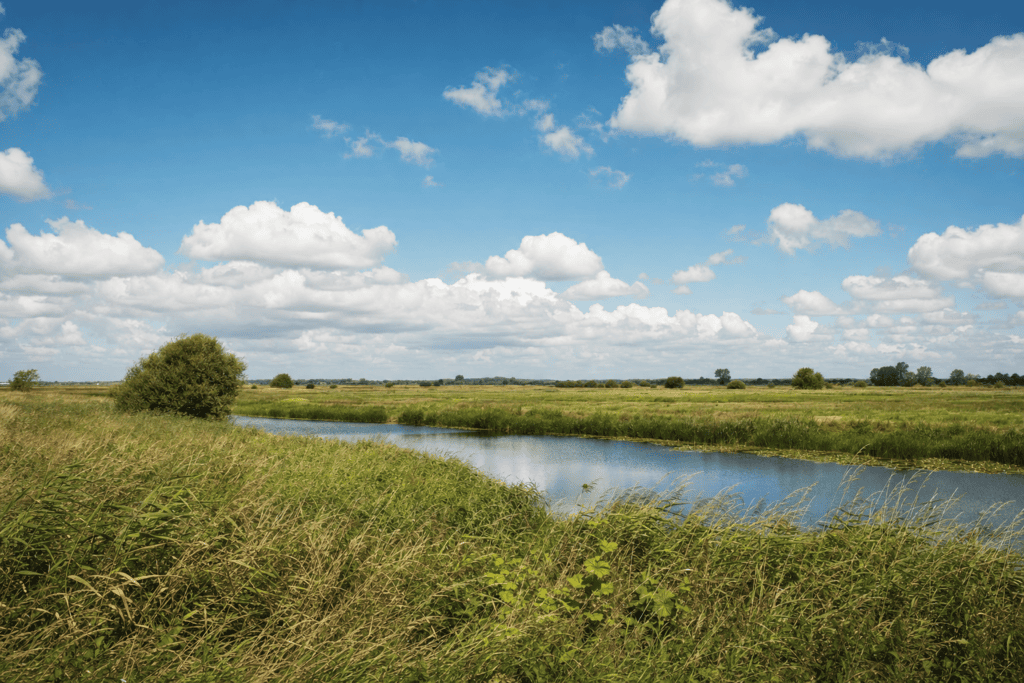 Cotentin and Bessin Regional Nature Park Discover the Cotentin’s marshes, birds, and hedgerows from Sainte-Mère-Église, combining nature, history, and…
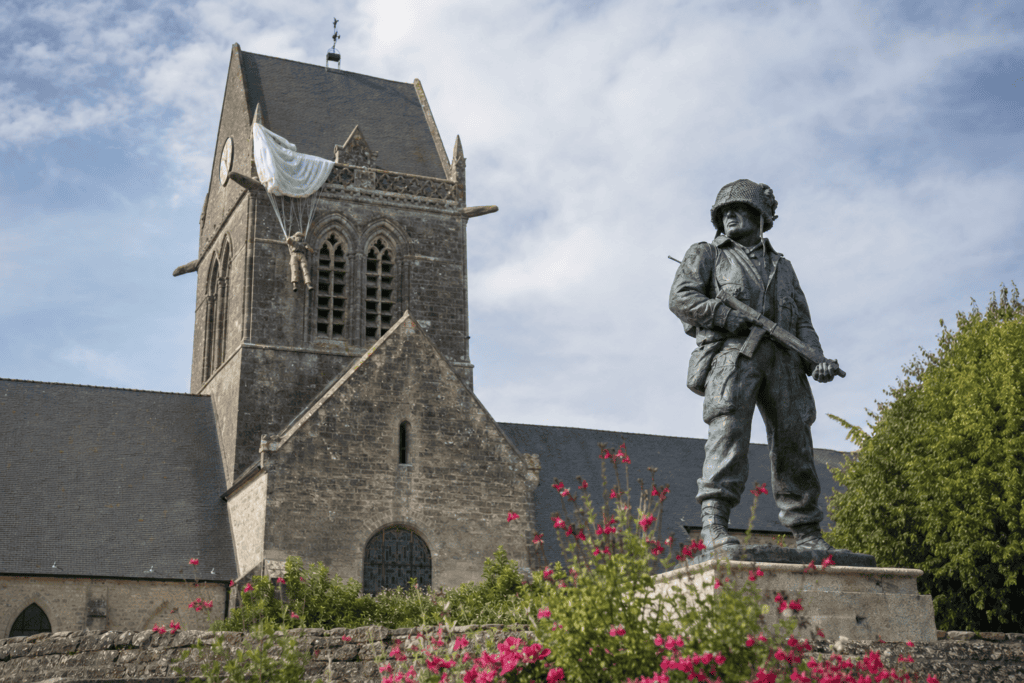 Sainte-Mère-Église Church and Paratrooper John Steele The steeple associated with John Steele, commemorative stained-glass windows, and the Airborne Museum make this a major stop…
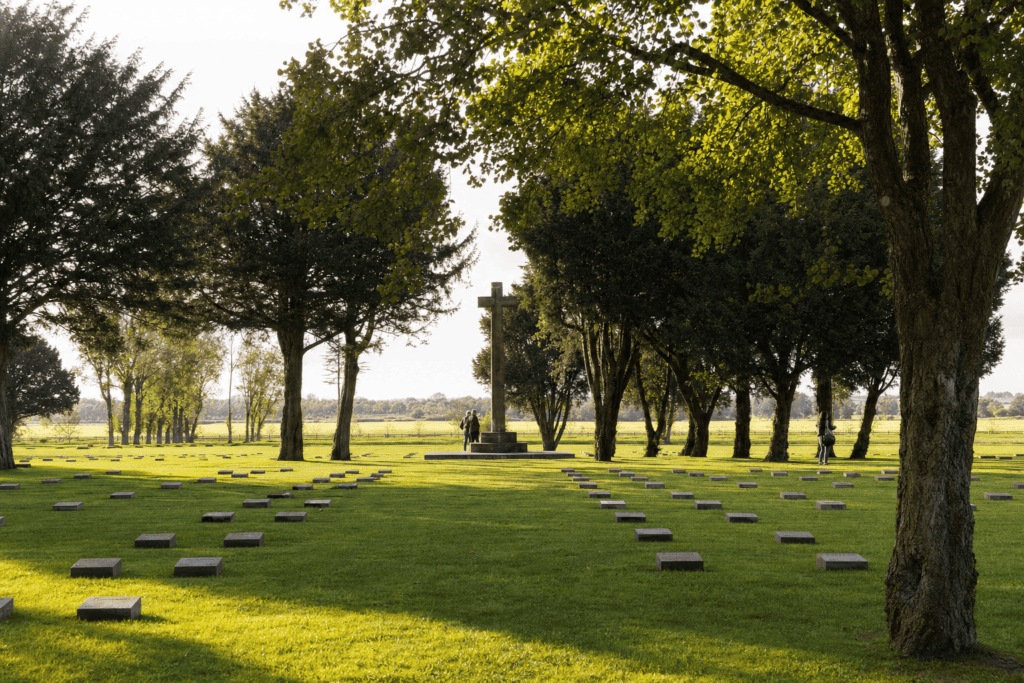 Orglandes German Military Cemetery A solemn German cemetery in the Cotentin, to combine with Sainte-Mère-Église, Utah Beach, and Carentan.
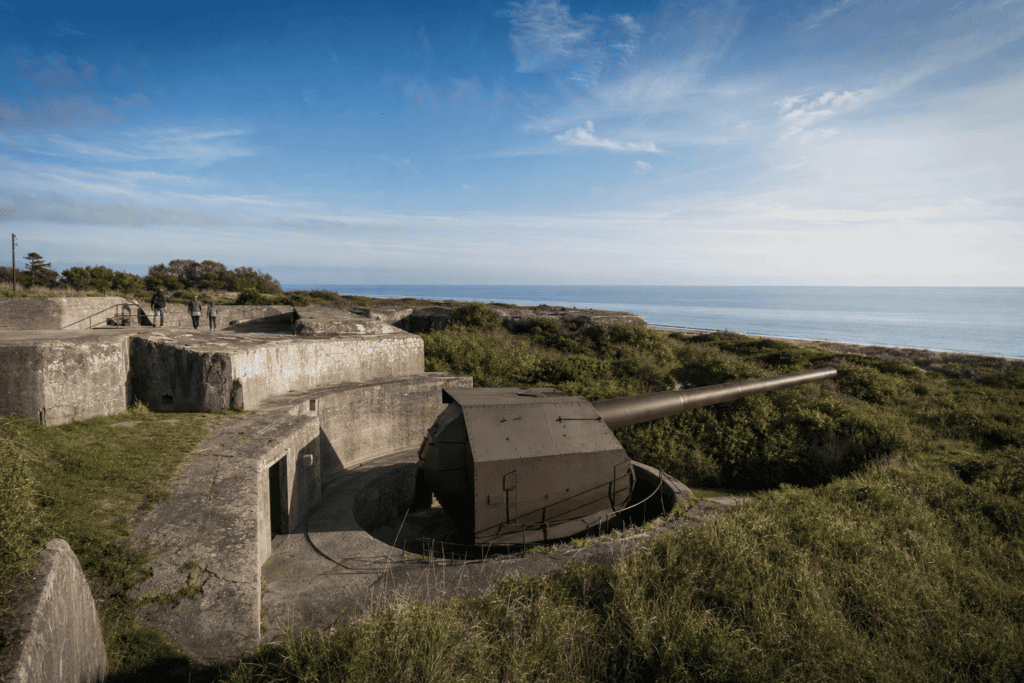 Azeville Battery A Cotentin German battery for understanding the Atlantic Wall defenses and the fighting…
 Sainte-Mère-Église Market A Cotentin food stop to confirm, ideal before the Airborne Museum and D-Day sites…
Online booking · Paris → Sainte-Mère-Église, 50480, Manche, Normandy
Choose your pickup date and time
Your departure and arrival details are already pre-filled. You can adjust them in the fare calculator before viewing the vehicles and fare.