



Destination guide · Haute-Savoie · Auvergne-Rhône-Alpes
Visiting Chamonix-Mont-Blanc: A Guide to Alpine Landscapes and Activities
Visiting Chamonix-Mont-Blanc means discovering an international Alpine valley surrounded by glaciers, rocky peaks, mountain villages, and panoramic views of the Mont Blanc massif. The destination is equally suited to a first high-altitude excursion and to a stay devoted to hiking, winter sports, mountaineering heritage, or exploring the landscapes of Haute-Savoie.
Explore Chamonix-Mont-Blanc
Chamonix-Mont-Blanc highlights
 Attractions
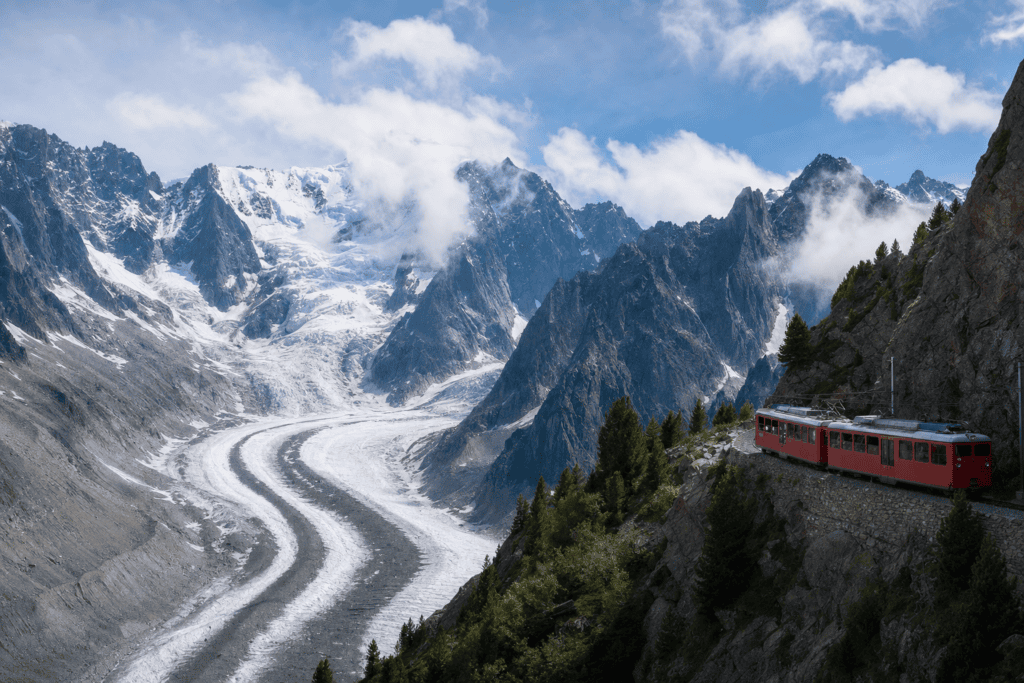
Mer de Glace and Montenvers Train
A scenic cog railway journey to 1,913 meters, facing the Mer de Glace, the…
 Attractions
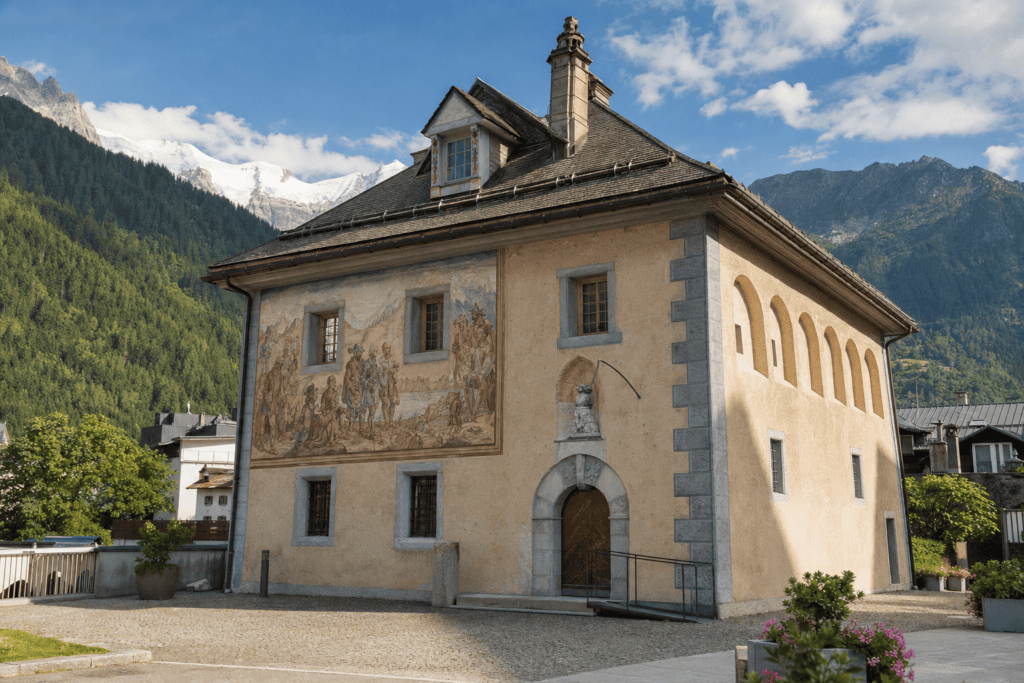
Chamonix Alpine Museum
A cultural visit in the heart of Chamonix exploring the valley’s history, mountaineering, glaciers, and development…
 Must-see
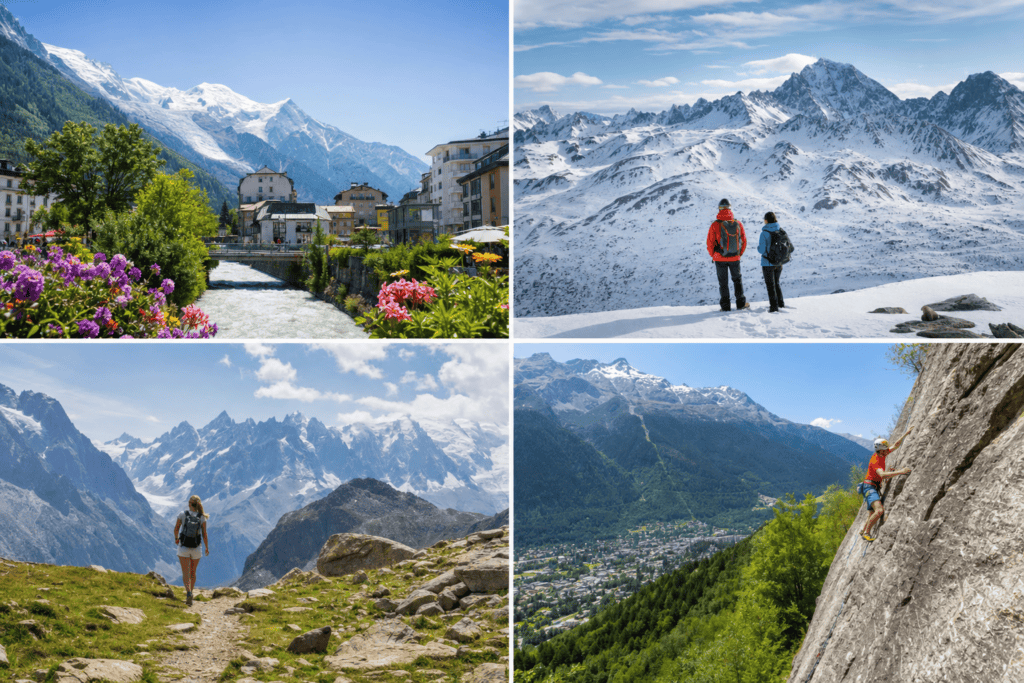
What to Do in Chamonix in Every Season
A season-by-season guide to choosing between skiing, hiking, panoramic views, adventure sports, culture, relaxation, and Savoyard cuisine…
 Must-see
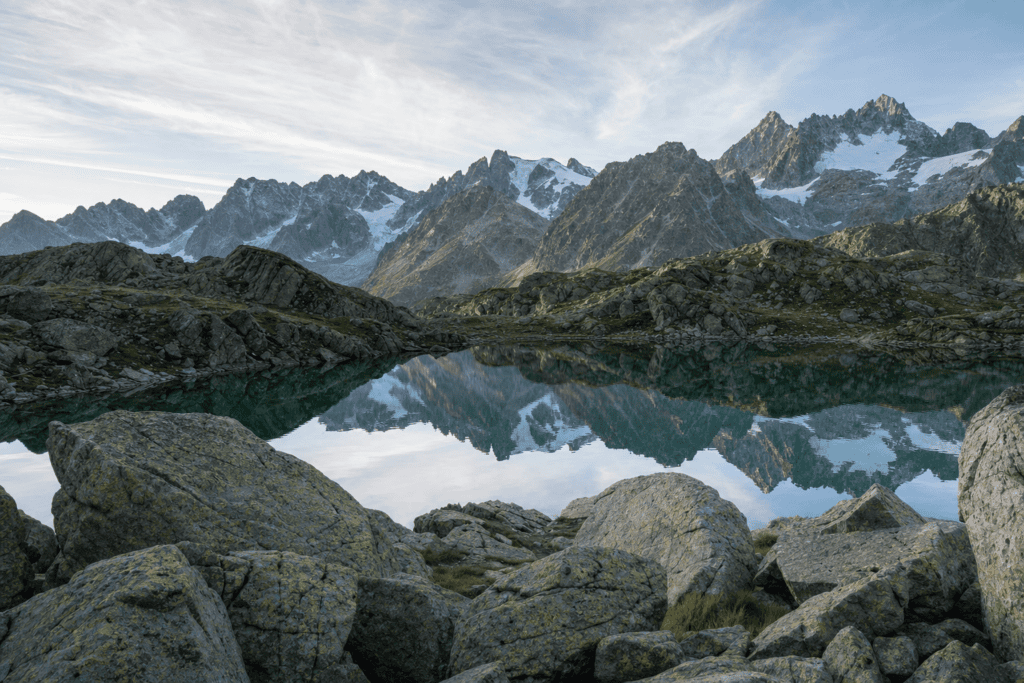
Lac Blanc and the Aiguilles Rouges Nature Reserve
A panoramic hike facing the Mont Blanc massif, to be planned according to snow conditions, weather, fitness level, and…
 Must-see
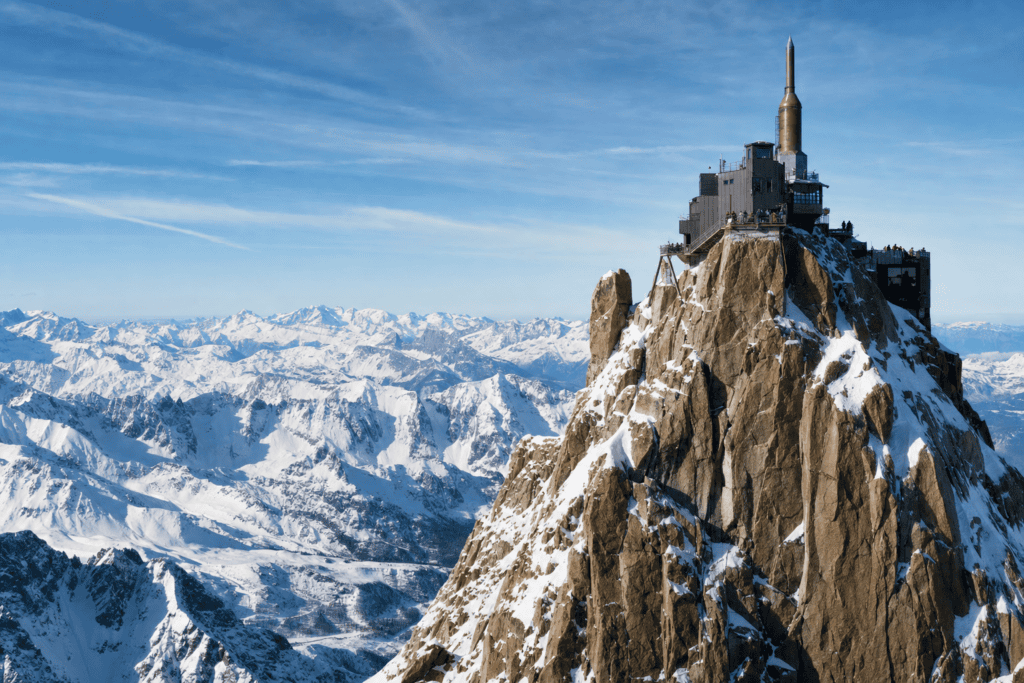
Aiguille du Midi
A spectacular cable car ascent to 3,842 meters, with 360-degree views of the massif…
Other destinations to discover
Annecy
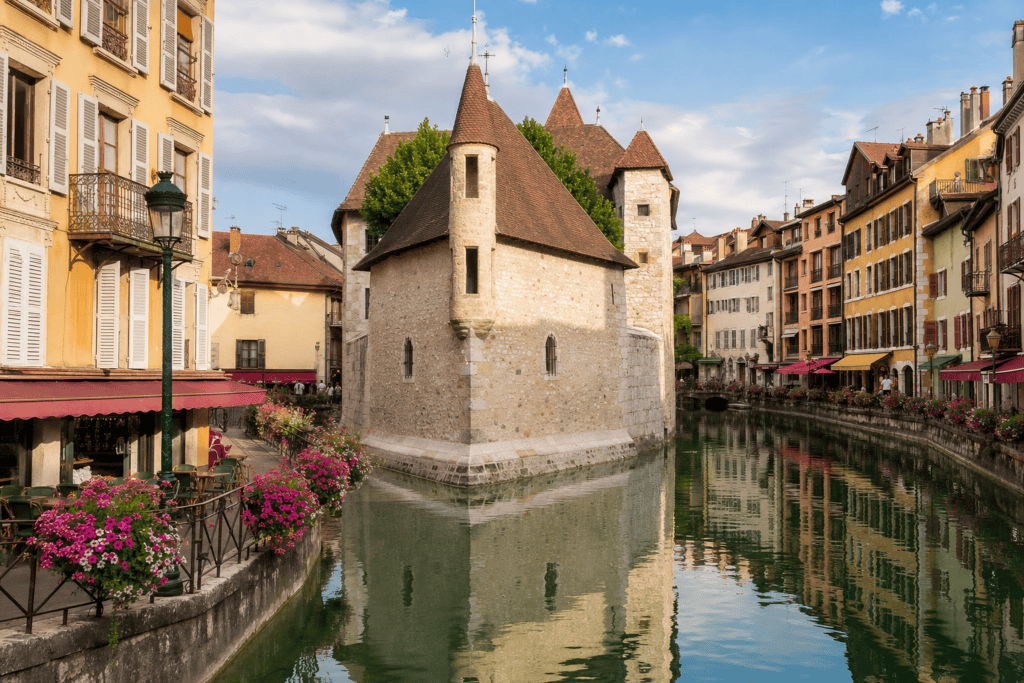
Between historic lanes, lakeshores and the slopes of Semnoz, Annecy offers a balance…
Lyon
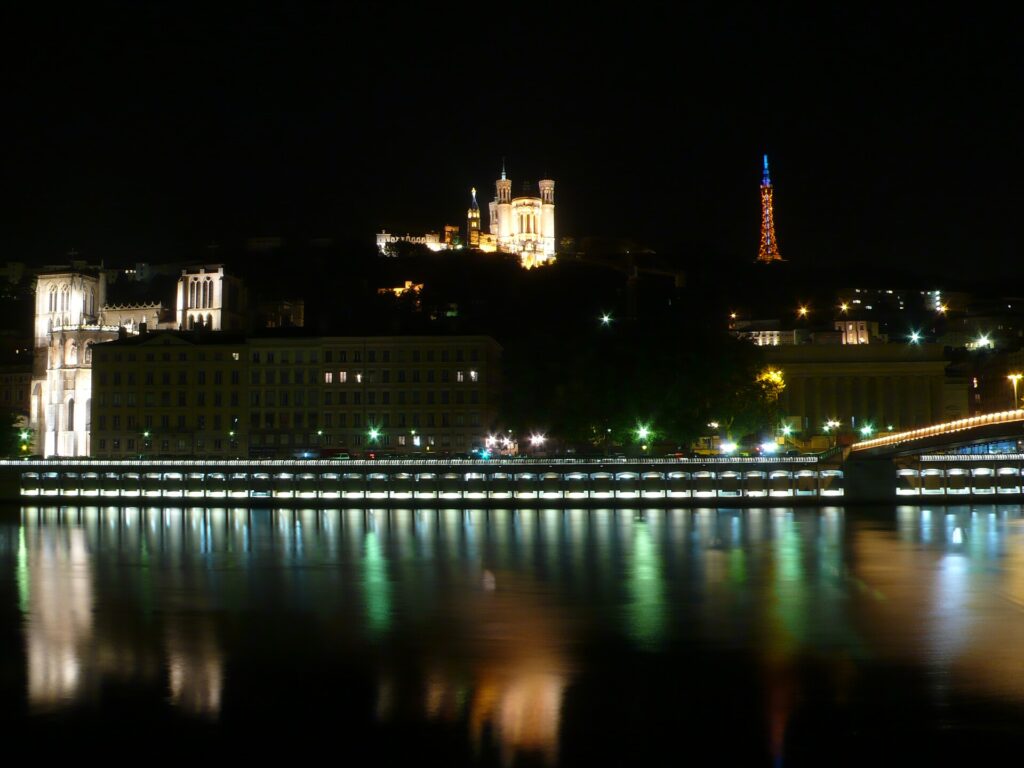
Explore Lyon on foot among Roman remains, traboules, Renaissance neighborhoods, the history of the silk workers, museums, and local specialties.
Dijon
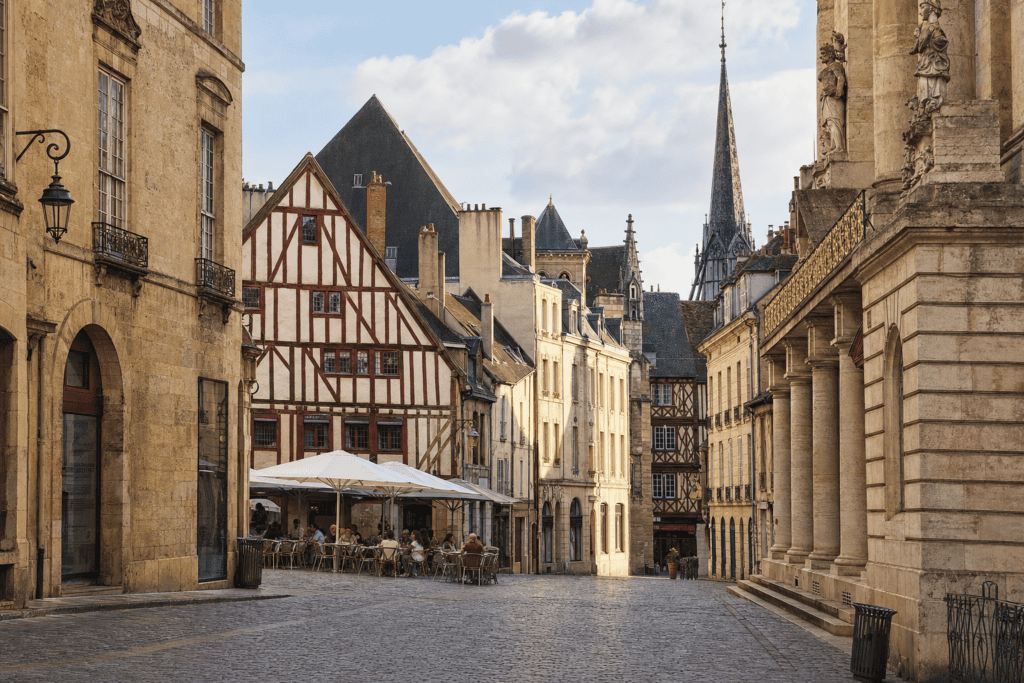
An elegant, food-loving city, with the dukes’ palace, the Owl’s Trail, and renowned local wine regions of…
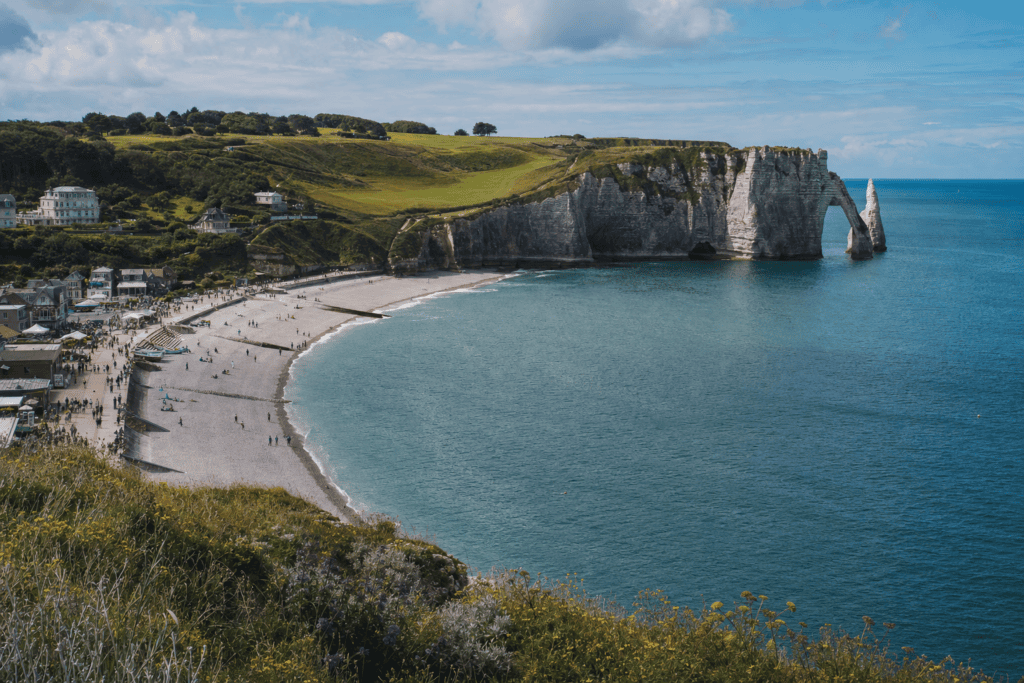
Étretat
Chalk cliffs, natural arches, coastal trails, and Belle Époque villas: Étretat reveals a Normandy landscape…
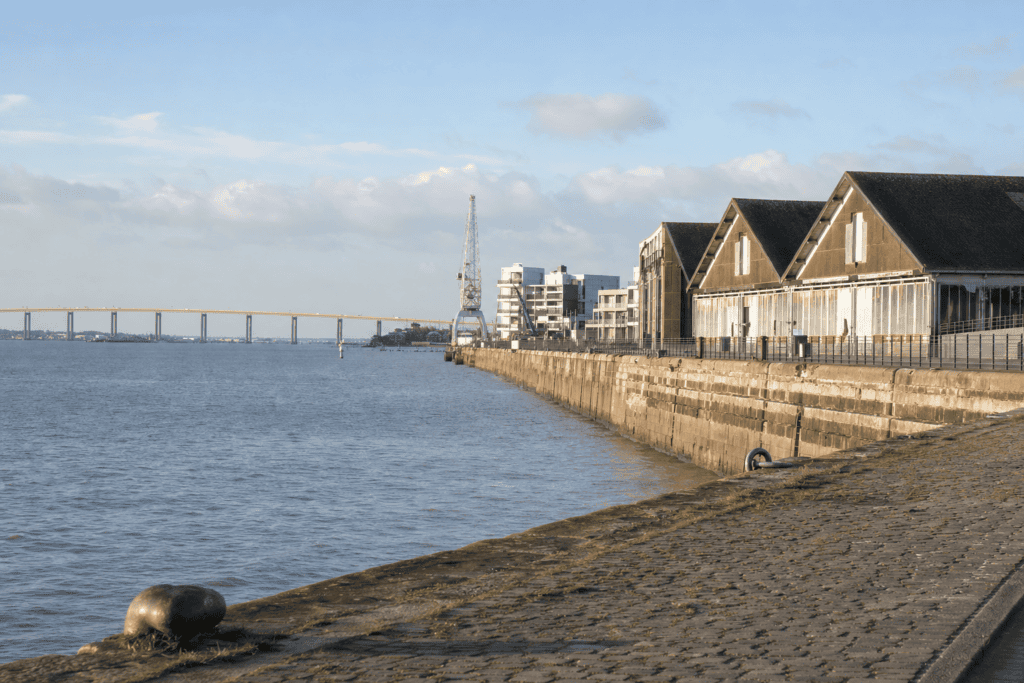
Saint-Nazaire
A surprising port city with a submarine base, ocean liners, Atlantic beaches, the Loire estuary, and marshes…
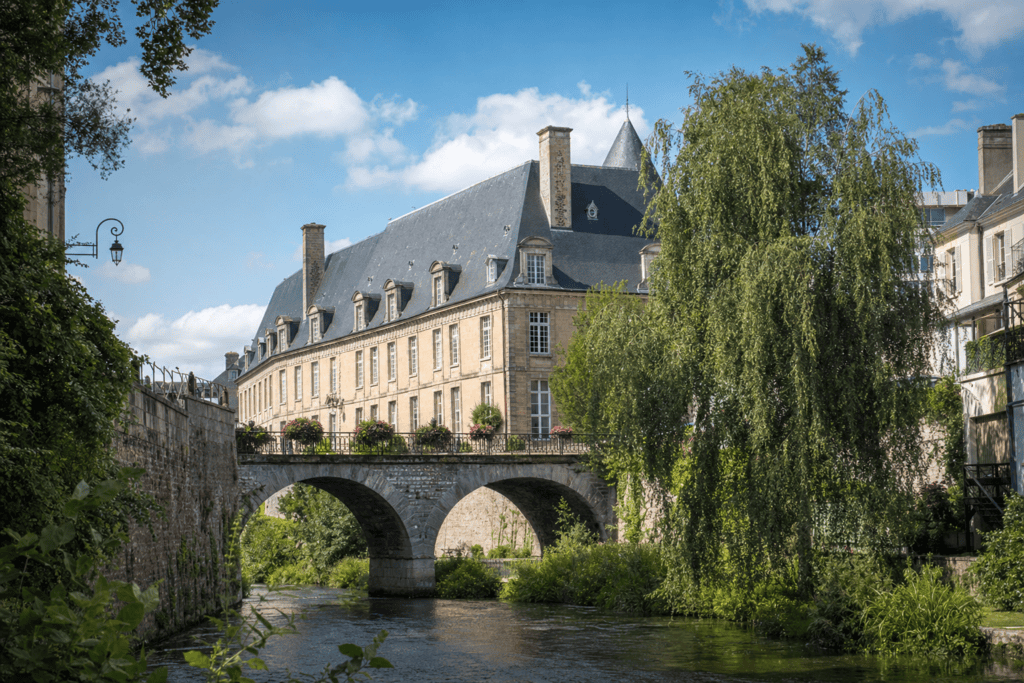
Alençon
Alençon charms visitors with its historic heritage, exceptional needle lace, religious legacy and landscapes…
DESTINATION GUIDE
Chamonix-Mont-Blanc Travel Guide
Why visit Chamonix-Mont-Blanc?
Chamonix-Mont-Blanc is one of France’s best-known Alpine destinations. Located at the end of the Arve Valley, between the Mont Blanc massif and the Aiguilles Rouges, the town offers remarkable access to high mountains without being limited to winter sports. You can admire glaciers, explore panoramic trails, discover the history of mountaineering, or simply enjoy a lively town center surrounded by spectacular peaks.
The destination suits a wide range of travelers. Visitors who do not hike can reach some viewpoints by cable car or discover the Mer de Glace aboard the Montenvers train. Hikers have routes of varying difficulty throughout the valley and along the slopes. Mountaineers, skiers, and trail-running enthusiasts will find challenging terrain that requires preparation suited to mountain conditions.
Aiguille du Midi: a high-mountain experience
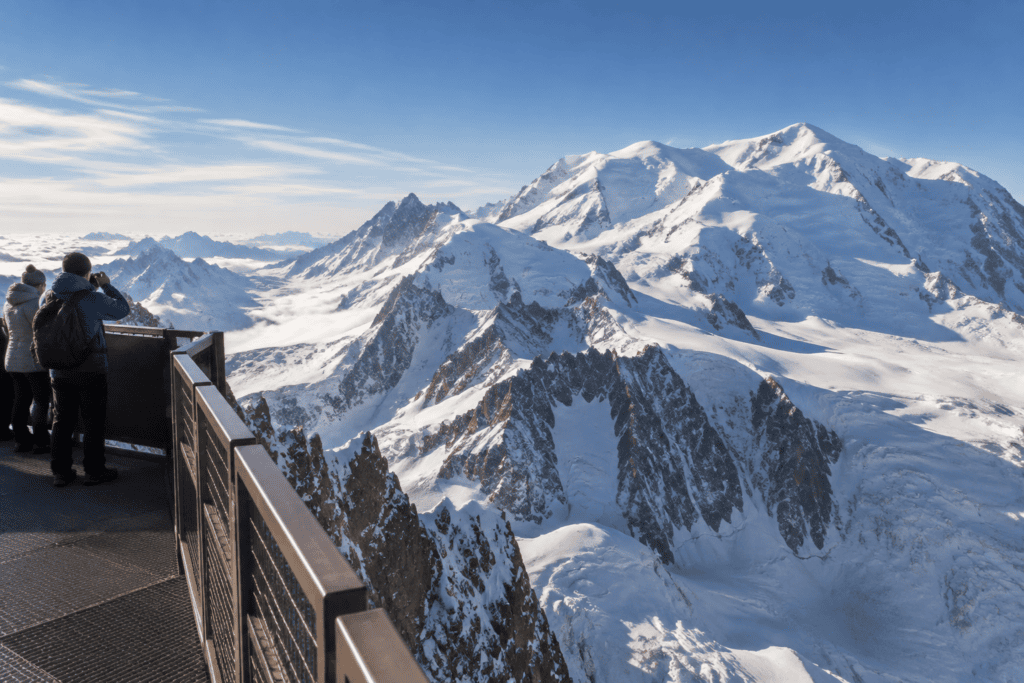
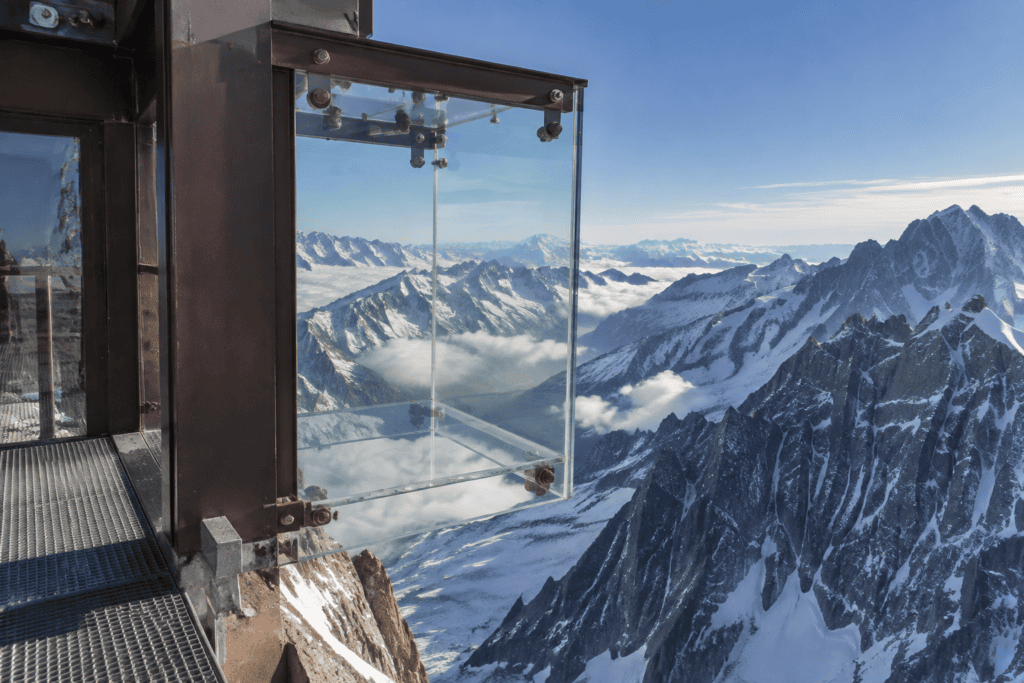
From central Chamonix, the Aiguille du Midi cable car takes visitors to a viewpoint at 3,842 meters above sea level. When weather conditions allow, the terraces offer sweeping views across the French, Swiss, and Italian Alps, with Mont Blanc in the foreground. The site also features spaces dedicated to the history of mountaineering and observation installations such as Step into the Void.
This ascent is not simply an urban stroll: the altitude can cause shortness of breath or discomfort, even in people who are in good physical condition. Pay attention to how you feel and plan to bring warm clothing, sunglasses, and sun protection. Operating conditions, schedules, and access to the various facilities may change; check official information before departing.
The Montenvers Train and the Mer de Glace
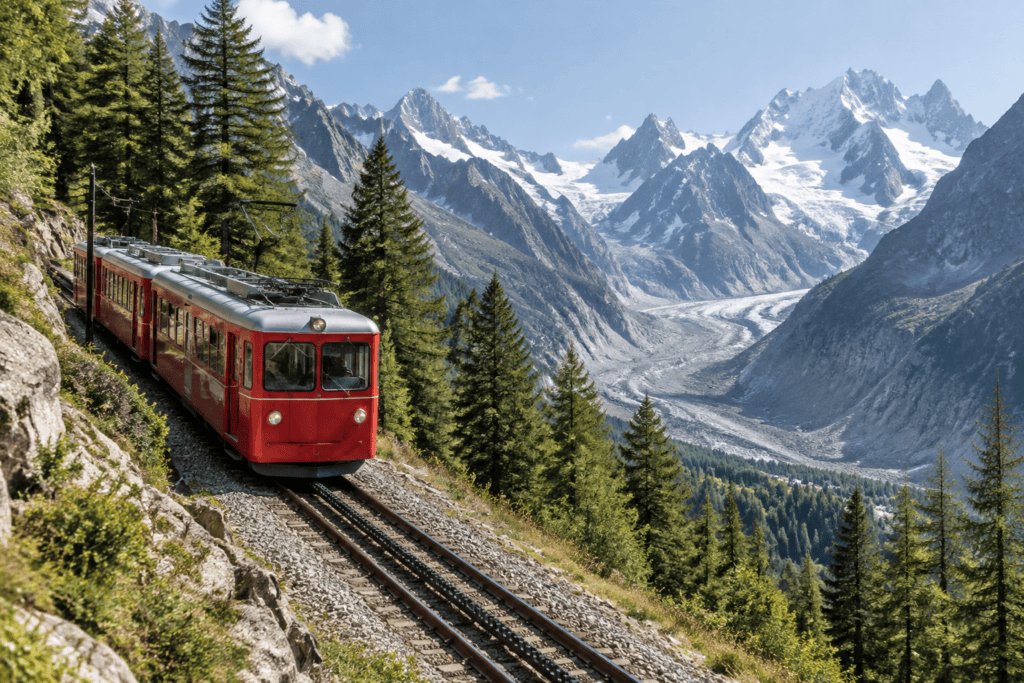
The Montenvers cog railway departs from central Chamonix and reaches the Montenvers site at approximately 1,913 meters above sea level. The train journey generally takes about 20 minutes, depending on operating conditions. The ride is part of the experience: the railway climbs the valley slopes and offers views of the Drus, the Grandes Jorasses, and the surrounding mountains.
Once there, views of the Mer de Glace, the Glaciorium, and the facilities connected with the ice cave can round out the visit, depending on the season and access conditions. The site also offers a better understanding of how glaciers are changing and the effects of climate change. The Mer de Glace has retreated considerably and its surroundings are changing; this reality is an integral part of discovering the site, beyond simply seeking a beautiful photograph.
Hiking, viewpoints, and nature
The Chamonix Valley offers an extensive network of trails, with routes that vary greatly in difficulty, duration, and elevation. For a first introduction, walks around the town center, Les Gaillands, or the valley villages let you enjoy the scenery without immediately committing to a high-mountain route. The Brévent, Flégère, and Aiguilles Rouges areas offer remarkable views of the Mont Blanc massif, but some trails quickly become technical or exposed.
Before any hike, check trail conditions, the weather, any restrictions, and access conditions for the lifts. At altitude, a route described as easy can become challenging in snow, fog, or wet conditions. Wear appropriate footwear and bring water, a warm layer, and plenty of extra time. Near glaciers and rocky areas, follow safety instructions carefully and stay on authorized trails.
- For an iconic view: choose a viewpoint accessible by lift, then adapt the walk to your ability and the day’s conditions.
- For a family outing: choose a short route with little exposure that is suitable for the weather.
- For a challenging hike: ask locally about trail conditions and set out with the appropriate equipment.
- For an outing in a nature reserve: stay on the trails, respect wildlife, and follow the rules concerning dogs, camping, and picking plants.
Valley villages and activities
Chamonix is the liveliest center of the valley, with shopping streets, cafés, cultural facilities, and heritage connected to the first travelers and mountaineering pioneers. A careful walk reveals façades from different eras and shows how the former rural community became an international resort.
The valley, however, extends well beyond central Chamonix. Les Houches, Les Tines, Argentière, Le Tour, Vallorcine, and Servoz each have their own atmosphere and landscapes. Trains, buses, and cycling routes make it possible to explore at a more gradual pace without always relying on a car. Traffic conditions and available services vary by season, so check ahead before planning an excursion to a more distant village.
Which season should you choose?
Winter attracts skiers and snow enthusiasts, but Chamonix retains a strong Alpine character year-round. Spring can offer contrasts between a green valley and snow-covered peaks, while summer is ideal for hiking, high-altitude viewpoints, and outdoor activities. Fall often brings a quieter atmosphere and beautiful colors in wooded areas, with services sometimes more limited between seasons.
There is no single best time to visit; the choice depends on what you want to do. For lifts, museums, trains, and glacier sites, always check official schedules, as hours, temporary closures, and access may change depending on the weather, construction, or season.
Practical tips for planning your visit
- Check the mountain forecast, not just the valley forecast.
- Check opening conditions for busy facilities in advance.
- Plan several options: a cultural outing or valley walk can replace a canceled high-altitude excursion.
- Follow the instructions of lift operators, nature reserves, and mountain professionals.
- Whenever possible, use trains, buses, and low-impact transportation to get around the valley.
Getting to Chamonix from Paris: by car, train, or private transfer
From Paris, the journey to Chamonix is a long trip that generally requires a full day by public transportation, or approximately six to eight hours by road depending on the route, stops, and traffic. Travel times are especially variable during winter weekends, school vacations, and periods of heavy traffic in the Alps.
By train via Geneva: one option is to take a TGV or another long-distance train from Paris to Geneva, then continue to Chamonix by coach, regional train, or an organized connection depending on the day. From Geneva, you should generally allow about one and a half to two hours to reach Chamonix, depending on the service chosen and traffic conditions. Check schedules with SNCF, regional operators, and the transportation providers concerned.
By train via Saint-Gervais-les-Bains: you can also travel from Paris to Saint-Gervais-les-Bains–Le Fayet with one or more connections, then take the Mont-Blanc Express to Chamonix. This option is appealing to travelers who want to make the rail journey part of an Alpine itinerary, but connections and schedules should be checked for the date of travel.
Via Lyon or Annecy: a route through Lyon, Annecy, or Bellegarde-sur-Valserine may be practical depending on the available schedules. The final leg is then made by coach or regional train to the Chamonix Valley. There is no single combination that works year-round: compare the total travel time, number of connections, and luggage transportation conditions.
By car or private transfer: Driving offers greater flexibility for luggage and sports equipment, but traffic can significantly extend the journey. A private transfer may be arranged from Paris, Charles de Gaulle Airport, or Orly Airport, with a return to Paris at the end of your stay. Booking Paris Transfer provides long-distance transportation from Paris or its airports in this context; train tickets, lift tickets, and admission to visited sites must be arranged separately with the relevant operators.
Before booking, check updated routes and schedules on the official websites of the SNCF, the official Chamonix website and the lift operator. For international travel via Geneva, also check the documents required and the conditions applicable to your situation.
Useful sources
Getting to Chamonix from Paris
For a stay in the Alps, arrange a private transfer from Paris, CDG, or ORY, with the option of returning to Paris or including Chamonix in a multi-city itinerary beginning in the Île-de-France region. Driving time depends heavily on traffic, the season, and stops. Booking Paris Transfer does not provide local drivers in Chamonix and does not sell attraction tickets.