



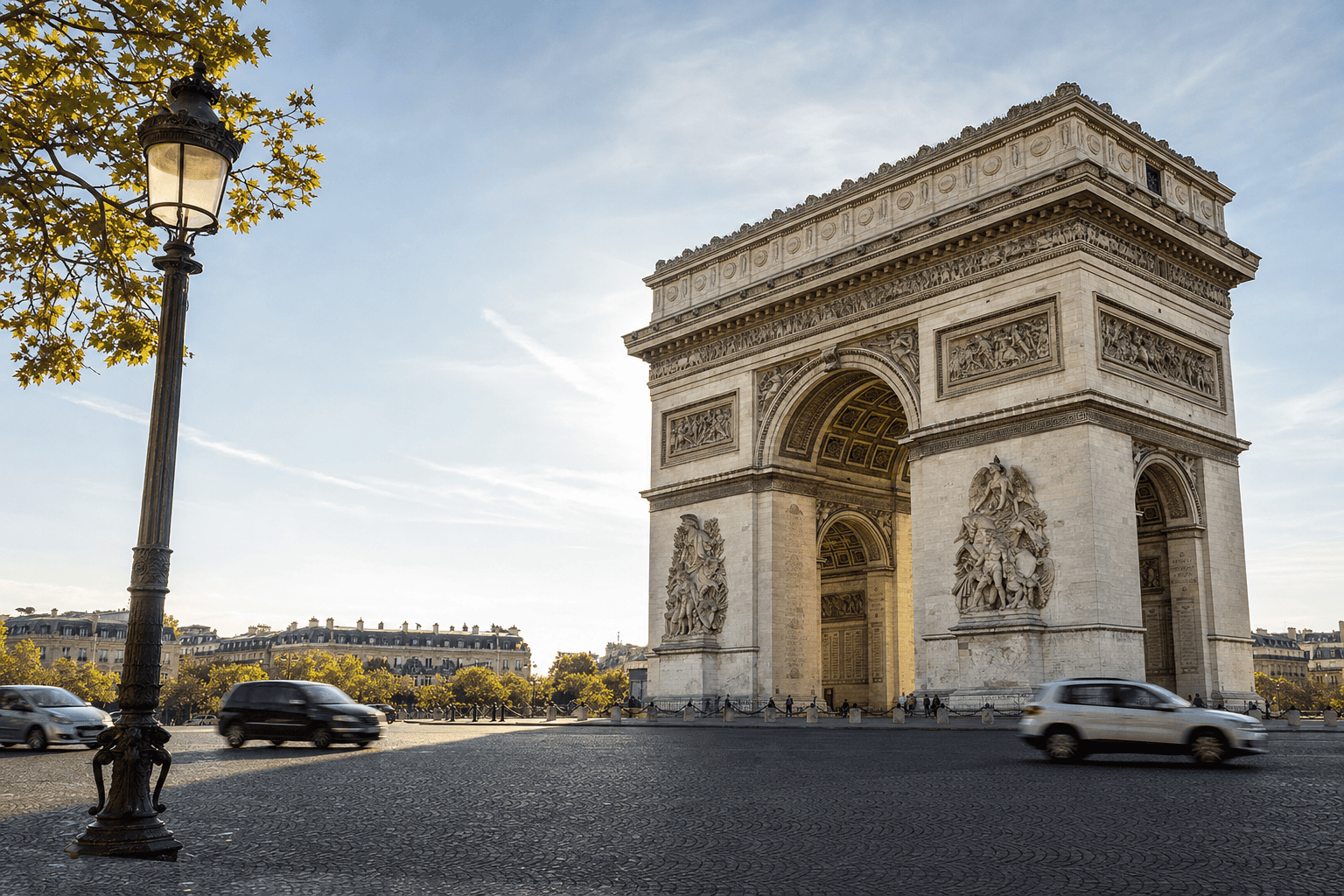
Arc de Triomphe: Visit and Panoramic Views
Paris
Standing at the center of Place Charles-de-Gaulle, the Arc de Triomphe is at once a historic monument, a memorial, and one of the best viewpoints over Paris. From its terrace, you can see the spectacular layout of the city’s grand avenues, from the Champs-Élysées to La Défense, with numerous urban landmarks visible in the distance. A visit also offers insight into the sculptures, inscriptions, and symbolic role of the Tomb of the Unknown Soldier. To plan your visit, it is best to check the monument’s official website for opening hours, access requirements, and any exceptional closures.
Practical information
The climb to the terrace involves 284 steps. Wear comfortable shoes and check the official information before your visit, especially in the event of a ceremony or unfavorable weather.
Reach the Arc de Triomphe from Paris with peace of mind
For a comfortable arrival from your Paris hotel, the train station, or one of the Paris airports, Booking Paris Transfer can arrange a private ride to the vicinity of the Arc de Triomphe, subject to traffic conditions and access restrictions. Transportation can also be arranged for your return to Paris or as part of a personalized Paris itinerary. This service covers transportation only and does not include admission to the monument.
Possible departure from a Paris hotel, Paris, CDG, or ORY, with return to Paris according to your itinerary.
Why visit the Arc de Triomphe?
The Arc de Triomphe holds a unique place in the Parisian landscape. It is not merely a famous backdrop seen from the Champs-Élysées: it is a monument you can explore, observe, and understand. From the top, the capital unfolds from an exceptional perspective, organized around Place Charles-de-Gaulle and its twelve avenues. The Champs-Élysées stretches toward the Tuileries Garden and the Louvre, while the historic axis continues west toward La Défense.
A visit therefore combines several experiences: discovering the architecture, interpreting the sculpted reliefs, exploring military history, and taking in the panoramic views. The forecourt and Tomb of the Unknown Soldier can be seen freely, while access to the interior and terrace is part of the monument’s visitor route. For a first trip to Paris, it is a particularly interesting place because it brings together national history, urban planning, and photography in one location.
A history linked to Napoleon and France
Construction of the Arc de Triomphe was commissioned in 1806 by Napoleon I to honor the Grande Armée. Inspired by the monumental arches of antiquity, the structure was designed as a symbol of victory and military glory. It was completed after the Napoleonic period, in 1836, which explains why the monument extends beyond the history of the First French Empire alone.
The façades bear the names of battles and generals associated with the French Revolution and the Empire. The large reliefs, particularly those by François Rude, Jean-Pierre Cortot, and Antoine Etex, give the monument a narrative and expressive dimension. Over time, the Arc has become the setting for major moments in French history: national ceremonies, parades, and tributes. This layering of memories makes it possible to visit the monument with a more nuanced perspective: it celebrates victories, but also recalls the human cost of conflicts and the gradual creation of a national memorial site.
The Tomb of the Unknown Soldier and the Flame
Under the great arch stands the Tomb of the Unknown Soldier, installed after World War I. It honors all combatants who died for France, giving symbolic representation to those whose identities were never recovered. The presence of this tomb profoundly transformed the meaning of the Arc de Triomphe: the monument is no longer associated solely with military victories, but also with reflection and remembrance.
The Flame of Remembrance, lit in 1923, is rekindled every evening as part of a commemorative ceremony. Visitors should behave respectfully around the tomb and avoid disrupting official gatherings. The forecourt is accessible without entering the monument; from ground level, visitors can observe the inscriptions, arch, and reliefs. To better understand the significance of this place, take time to read the historical information and observe how passersby, ceremonies, and Paris traffic coexist around this solemn space.
Climb to the panoramic terrace
The terrace is the highlight of the visit. It offers a spectacular view of Paris, with the Champs-Élysées in the foreground and the grand avenues radiating from the square. Depending on visibility, you can spot several iconic landmarks, including the Eiffel Tower, the Louvre, the La Défense district, and the rooftops of central Paris. The star-shaped layout of the avenues is especially clear from this height, whereas it is difficult to perceive from street level.
The climb involves a staircase of 284 steps, with areas where you can catch your breath. It is therefore best to take the ascent gradually, especially with children or after a long day of walking. An elevator may be available for some visitors depending on accessibility arrangements, but the details should be confirmed directly with the monument. Wind can be noticeable on the terrace, which remains exposed; a light jacket is useful even when the temperature feels pleasant at street level. For photos, late-afternoon light often highlights the Champs-Élysées axis.
What can you see inside the monument?
The interior route offers a better understanding of what can be seen quickly from the street. The sculpted reliefs depict military episodes and feature allegorical figures, soldiers, and national symbols. The names engraved on the walls and beneath the arch testify to the scale of the commemorative project. A museum area complements the visit with information about the monument’s construction, transformations, and major associated events.
Visitor materials are available in several languages, and a multimedia guide app can deepen your experience with routes devoted to the highlights, façades, and chronology. If you enjoy architecture, observe the proportions of the arch, the ceiling coffers, and the contrast between the monument’s imposing exterior and the more confined spaces of the mezzanine level. The visit is rich enough to interest art history enthusiasts while remaining accessible to those who simply want to place the Arc within the story of Paris. Take time to look up: some details are easy to miss from the forecourt.
Access, transportation, and practical tips
L’Arc de triomphe se trouve place Charles-de-Gaulle, dans le 8e arrondissement de Paris. L’accès au monument s’effectue par le Passage du Souvenir, situé en hauteur de l’avenue des Champs-Élysées ou du côté de l’avenue de la Grande-Armée. La station Charles-de-Gaulle–Étoile est desservie par les lignes de métro 1, 2 et 6 ainsi que par le RER A. Cette desserte rend le monument facile à intégrer dans une journée consacrée aux Champs-Élysées, au quartier de la Madeleine ou au Trocadéro.
Opening hours vary by season and may change in the event of a ceremony, weather conditions, or a security decision. Last admission is before closing, so be sure to check the official website before setting out. Large bags, strollers, and certain items such as tripods or selfie sticks may be subject to restrictions. There is no luggage storage at the monument. For a more comfortable visit, bring as few belongings as possible, wear suitable shoes, and allow extra time for the security check.
Extend your visit around the Champs-Élysées
After your visit, the area around the Arc de Triomphe is ideal for a varied stroll. Walking down the Champs-Élysées takes you along an avenue lined with boutiques, cafés, restaurants, and theaters. The area near the Arc is especially lively, while the view opens up toward the gardens and Place de la Concorde. You can then continue toward the Tuileries and the Louvre along Paris’s historic axis.
In the other direction, Avenue de la Grande-Armée leads toward Porte Maillot and offers a different atmosphere, more closely associated with the business districts and major facilities of western Paris. For a cultural day, you can combine the Arc with the Petit Palais, Grand Palais, Musée de l’Orangerie, or the Louvre, taking into account the distances and reservation times specific to each institution. The best itinerary depends on your pace: plan a break after climbing to the terrace and avoid scheduling too many indoor visits without time to rest.
Frequently Asked Questions
Can you see the Tomb of the Unknown Soldier without buying a ticket?
How many steps are there to reach the terrace?
Can you cross Place Charles-de-Gaulle directly?
What is the best time to visit the Arc de Triomphe?
Are the Arc de Triomphe’s opening hours the same year-round?
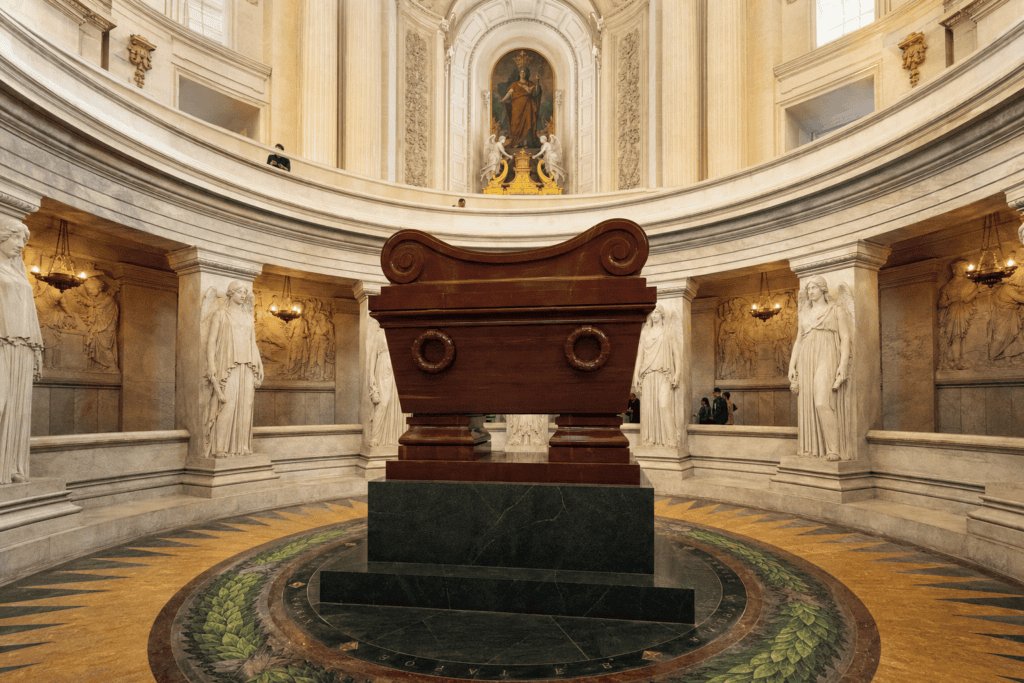 Army Museum and Napoleon’s Tomb A rich historical journey through Les Invalides, featuring military collections, monumental architecture, and the tomb of Napoleon I.
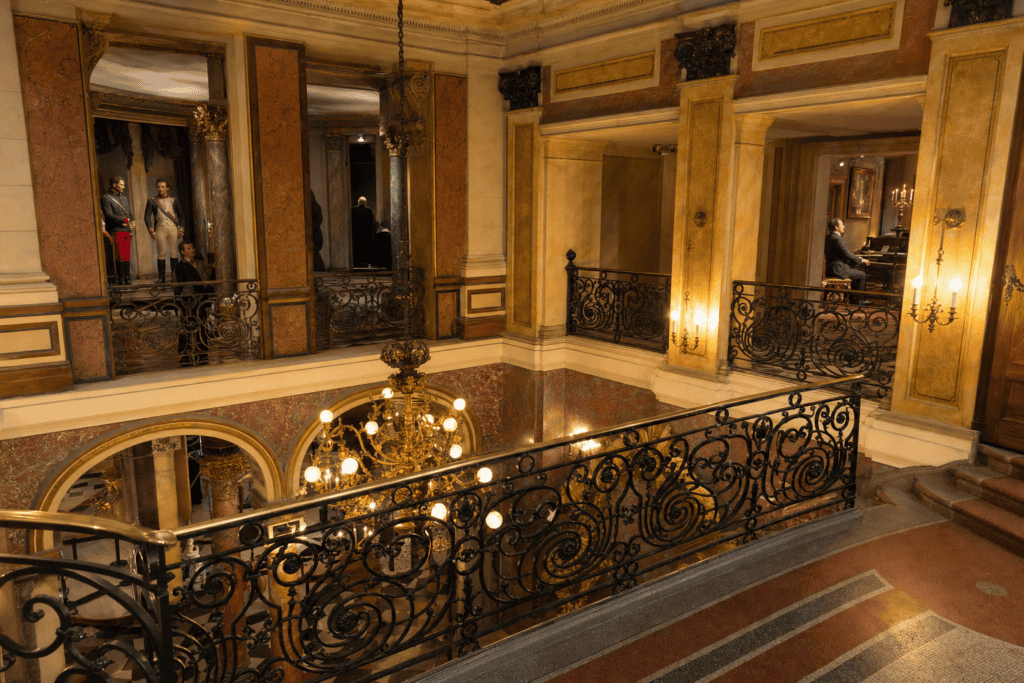 Musée Grévin A family-friendly, photo-worthy outing in Paris, with wax figures, historic sets, the Hall of Mirrors…
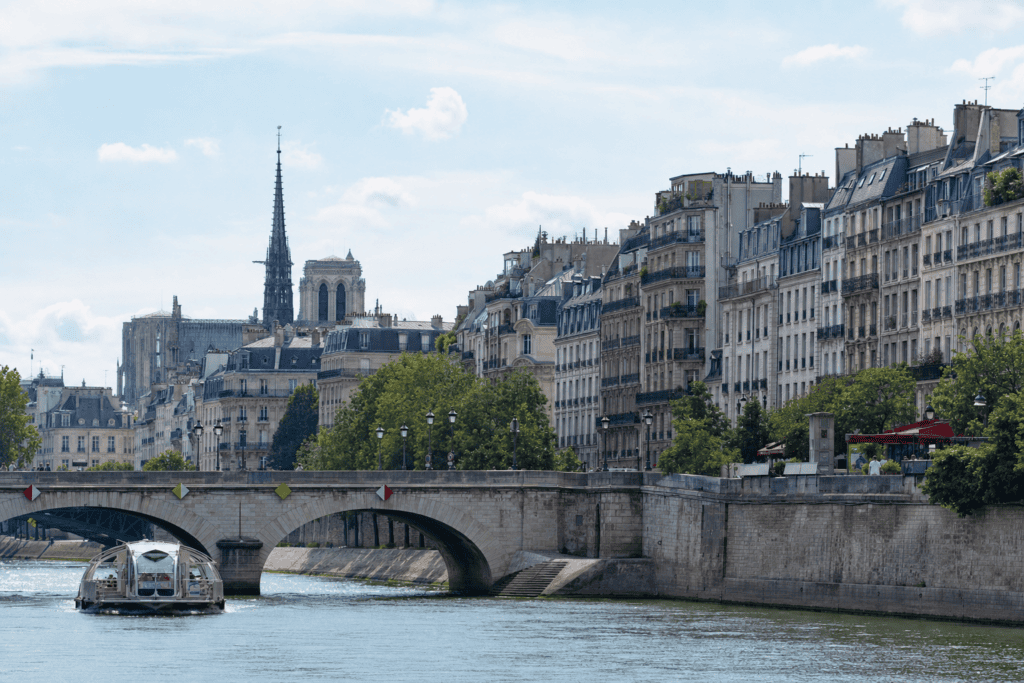 What to Do in Paris in 3 Days A practical itinerary for discovering Paris in three days, including must-see monuments, neighborhoods to…
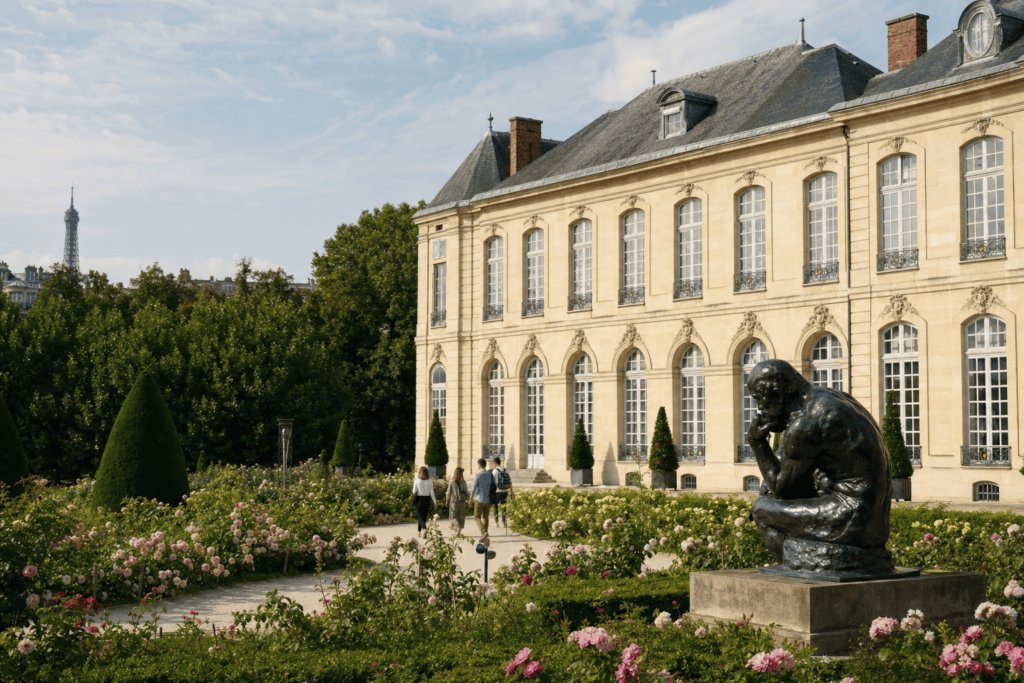 Musée Rodin A historic mansion, a sculpture garden, and major works by Rodin near the…
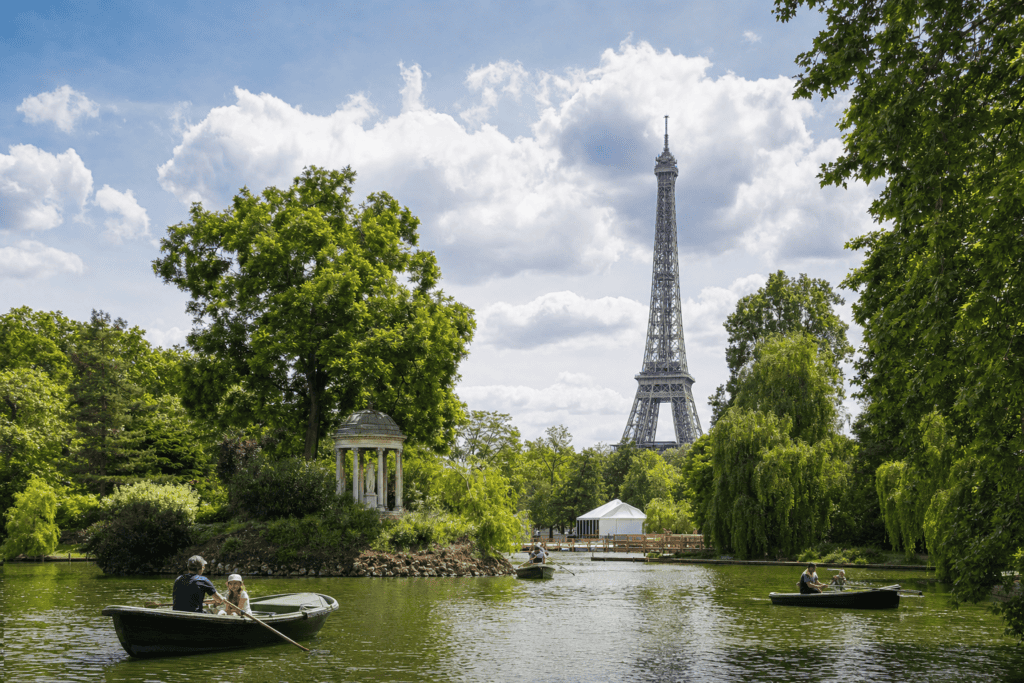 Jardin d’Acclimatation A historic Paris park with rides, animals, gardens, and a walk suitable for a flexible family outing…
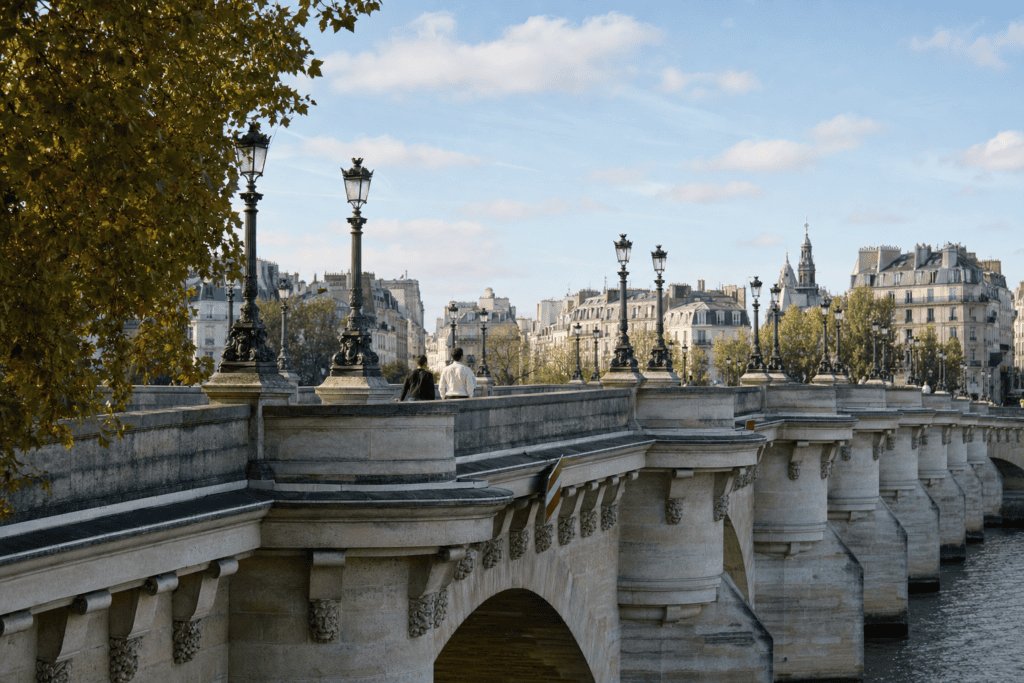 Pont Neuf Pont Neuf connects the two banks of the Seine around Île de la Cité…
Online booking · Paris → Place Charles-de-Gaulle, 75008 Paris, France
Choose your pickup date and time
Your departure and arrival details are already pre-filled. You can adjust them in the fare calculator before viewing the vehicles and fare.