



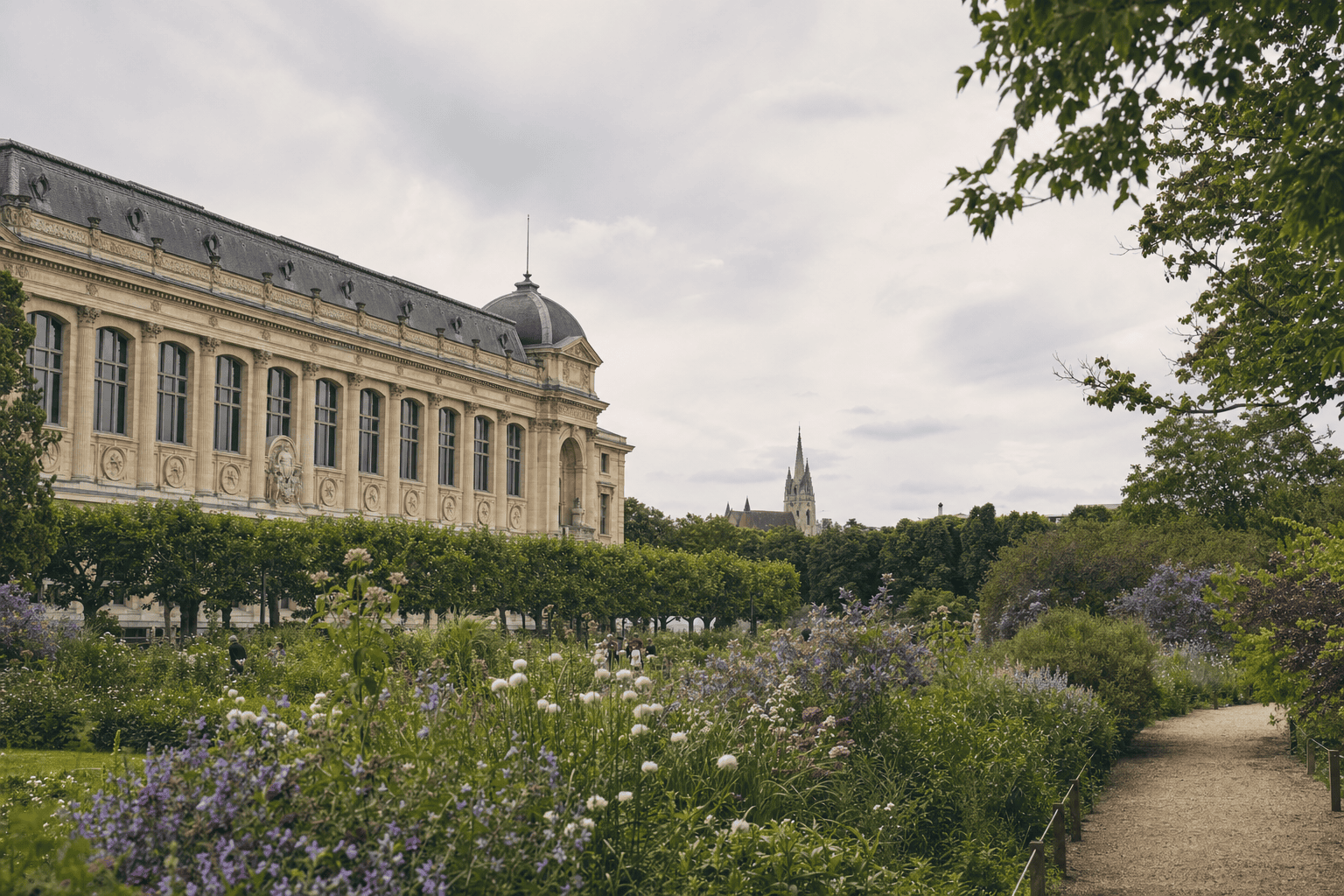
Jardin des Plantes in Paris: Greenhouses and Biodiversity
Paris
In the heart of the 5th arrondissement, the Jardin des Plantes brings together strolling, botany, natural history, and scientific research. Its grand avenues, flower beds, greenhouses, alpine garden, and zoo make it far more than a simple Parisian green space. It is the historic heart of the National Museum of Natural History and appeals both to families and to visitors who want a closer look at the plant collections and nearby galleries.
Practical information
Plan your visits around your priorities: the Grandes Serres and alpine garden for botany, the Grande Galerie de l’Évolution for families, and the zoo for animals. Indoor spaces may close on certain days or vary by season.
Getting to the Jardin des Plantes from Paris
For a comfortable arrival from your Paris hotel, Charles de Gaulle Airport, or Orly Airport, Booking Paris Transfer can arrange private transportation to the Jardin des Plantes. The service covers transportation only, not admission to the galleries, greenhouses, or zoo. You can also arrange a return trip to Paris or a cultural itinerary in the 5th arrondissement.
Departure is available from Paris, a Paris hotel, CDG, or ORY, with a return to Paris depending on your itinerary.
A botanical garden in the heart of the Latin Quarter
The Jardin des Plantes stretches across the 5th arrondissement, between rue Cuvier, rue Buffon, rue Geoffroy-Saint-Hilaire, and quai Saint-Bernard. Its central vista gives the walk a clear structure: botanical plots and flower beds are arranged around avenues lined with plane trees, with the Grande Galerie de l’Évolution in the background. The site belongs to the National Museum of Natural History, and its history goes back to the Royal Garden of Medicinal Plants, founded in the 17th century.
This origin explains its distinctive character. Visitors come not just for a lawn or a shady break, but for a landscape designed to observe, classify, and share knowledge about the living world. Statues of Buffon and Lamarck, historic buildings, and old trees give the visit real depth. It is a natural stop between Gare d’Austerlitz, the Latin Quarter, the Seine, and the Museum’s other sites.
The Grandes Serres: A Botanical Journey
The Grandes Serres are one of the site’s main attractions. Behind their metal-and-glass structures, visitors move from a Parisian setting into very different plant environments. The visit evokes tropical rainforests, arid regions, savannas, mangroves, and the flora of New Caledonia. Heat, humidity, impressive foliage, and sometimes unusual plant forms create an experience very different from that of the outdoor flower beds.
These collections are not purely decorative. They extend the Jardin des Plantes’ scientific mission of preserving, studying, and presenting plants from many parts of the world. The greenhouses are especially interesting for visitors who want to understand how plants adapt to their environment: roots, leaves, thorns, vines, and conservation strategies become the guiding themes of the walk. Check the official information before your visit, as opening hours and days may vary by season.
Flower Beds, the School of Botany, and the Alpine Garden
Outside, the Jardin des Plantes unfolds in a series of small sections. The plots along the main vista offer an easy-to-follow walk, while the School of Botany presents plants according to a scientific and educational system. This arrangement makes it easier to look at a familiar plant in a new way: its family, characteristics, origin, and relationships with other species become easier to understand when presented along a coherent route.
The alpine garden offers a more enclosed, mineral setting. It brings together plants adapted to mountains and challenging terrain in a space that contrasts with the garden’s broad vistas. Tree enthusiasts can also look for several notable specimens identified by the Museum, including a cedar of Lebanon associated with the site’s botanical history and a plane tree planted during Buffon’s tenure. The best way to visit is to slow down, read the labels, and venture beyond the main paths to discover the quieter areas.
A Site Connected to the History of Science
The Jardin des Plantes is the historic heart of the National Museum of Natural History. Its buildings recount centuries of research, teaching, and collection displays. The Grande Galerie de l’Évolution presents the diversity of life; the Gallery of Paleontology and Comparative Anatomy attracts visitors interested in skeletons and the history of life; and the Gallery of Geology and Mineralogy offers another perspective on rocks, crystals, and the formation of Earth.
This concentration makes the garden an especially appealing destination in changeable weather or for a full cultural day. You can begin with an outdoor stroll, then choose a gallery based on the group’s ages and interests. History enthusiasts will also appreciate the traces of Buffon, Lamarck, and the naturalists who helped make Paris a major center for the study of the natural world. Gallery tickets are separate from simply walking through the garden, so always check the arrangements with the Museum.
The Zoo and Discovering Animals
The zoo occupies part of the Jardin des Plantes and complements its botanical focus with an exploration of wildlife. This historic zoo is home mainly to small and medium-sized species, in an urban setting that allows for a relatively compact visit. It can suit families who want to combine animals, plants, and science exhibits without crossing the entire Paris region.
The visit is best approached thoughtfully: the enclosures, endangered species, and conservation programs provide an opportunity to discuss biodiversity rather than reduce the experience to simply observing animals. Presentation conditions and access to certain areas may change, so it is best to consult the official page before visiting. For a balanced day, you can schedule the zoo separately from the Grandes Serres, then take a break along the central avenues. Children often enjoy the alternation between animals, monumental plants, and fossils.
Access, Transportation, and Planning Your Visit
The Jardin des Plantes is well connected to Paris’s transportation network. Its proximity to Gare d’Austerlitz makes it easy to reach from several French cities, while metro and bus lines serving Jussieu, Place Monge, and Gare d’Austerlitz connect the site with Paris’s main neighborhoods. Visitors arriving by plane can continue from Charles de Gaulle or Orly by public transportation, or choose a road transfer to their hotel and the garden.
The site has several gates and addresses, depending on the area you want to visit. For the galleries and Grandes Serres, the entrance listed by the Museum may differ from the one used for a walk through the flower beds. This distinction matters when the group includes children, people with reduced mobility, or visitors with a reservation for an exhibition. Avoid scheduling too tightly: the garden is extensive, the buildings are spread across the grounds, and some visits require a security check or a specific time slot.
When to Visit and What to See Around the Garden
Spring is the obvious season for enjoying the blooms, leafy trees, and horticultural displays. Fall brings a calmer atmosphere and beautiful colors along the paths. In winter, the greenhouses and galleries give the site special appeal, although indoor opening hours may be reduced. Weekends and school holidays are often busier, particularly around the zoo and the Grande Galerie de l’Évolution.
The Jardin des Plantes fits easily into a Paris itinerary. From its surroundings, you can reach the Latin Quarter, the Paris Mosque, the Arènes de Lutèce, the Seine, or Gare d’Austerlitz. For a science-focused route, combine several Museum sites; for a lighter day, stick to the gardens, greenhouses, and a break in the rue Mouffetard area. Wear comfortable shoes and check the official information before setting out, especially for exceptional closures, construction work, and temporary exhibitions.
Useful sources
Frequently Asked Questions
Is the Jardin des Plantes free?
How much time should I allow to visit the Jardin des Plantes?
Which entrance should I use for the Grandes Serres?
Can you visit the Jardin des Plantes with children?
Is the Jardin des Plantes near Gare d’Austerlitz?
 Passage des Panoramas A historic covered arcade in Paris, notable for its glass roof, specialty shops, and side passages…
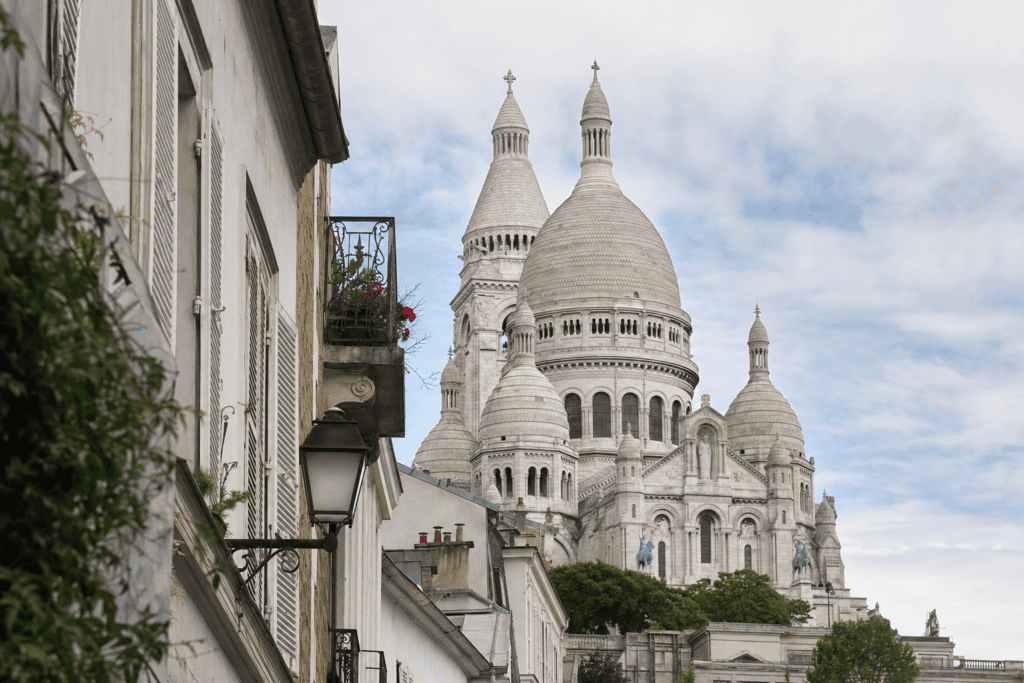 Montmartre and the Sacré-Cœur Basilica A walking route through Abbesses, Place du Tertre, and Sacré-Cœur, with narrow streets…
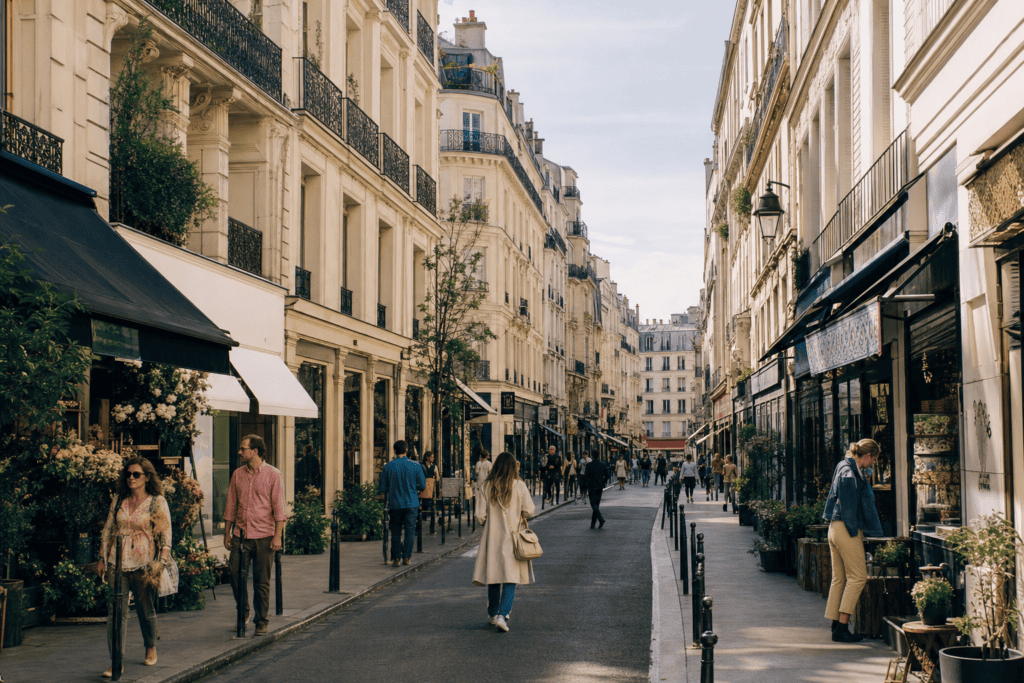 Rue des Martyrs A Parisian uphill route through food shops, cafés, 9th-arrondissement heritage, and the route toward Montmartre.
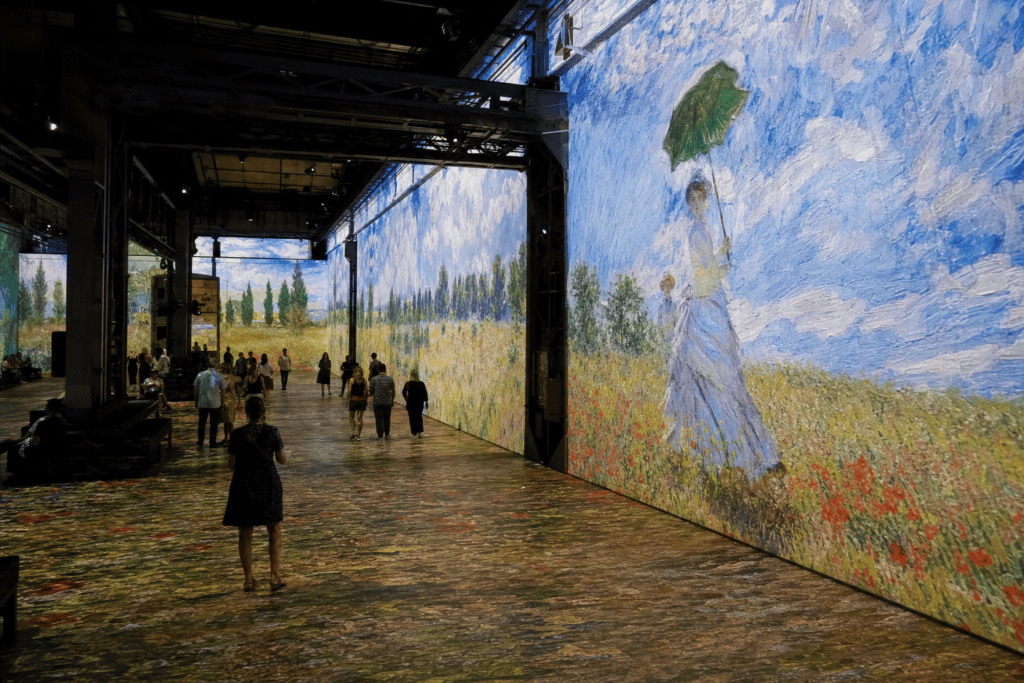 Atelier des Lumières In a former foundry in the 11th arrondissement, Atelier des Lumières combines monumental projections, music, and architecture…
 Pont Neuf Pont Neuf connects the two banks of the Seine around Île de la Cité…
 Foodie Paris: pastries, cheeses, and local specialties A practical guide to discovering Parisian bakeries, pastry shops, cheese shops, markets and specialties by neighborhood.
Online booking · Paris → Jardin des Plantes, 57 rue Cuvier, 75005 Paris. Other entrances are available on rue Geoffroy-Saint-Hilaire, rue Buffon, and from the quai Saint-Bernard.
Choose your pickup date and time
Your departure and arrival details are already pre-filled. You can adjust them in the fare calculator before viewing the vehicles and fare.