



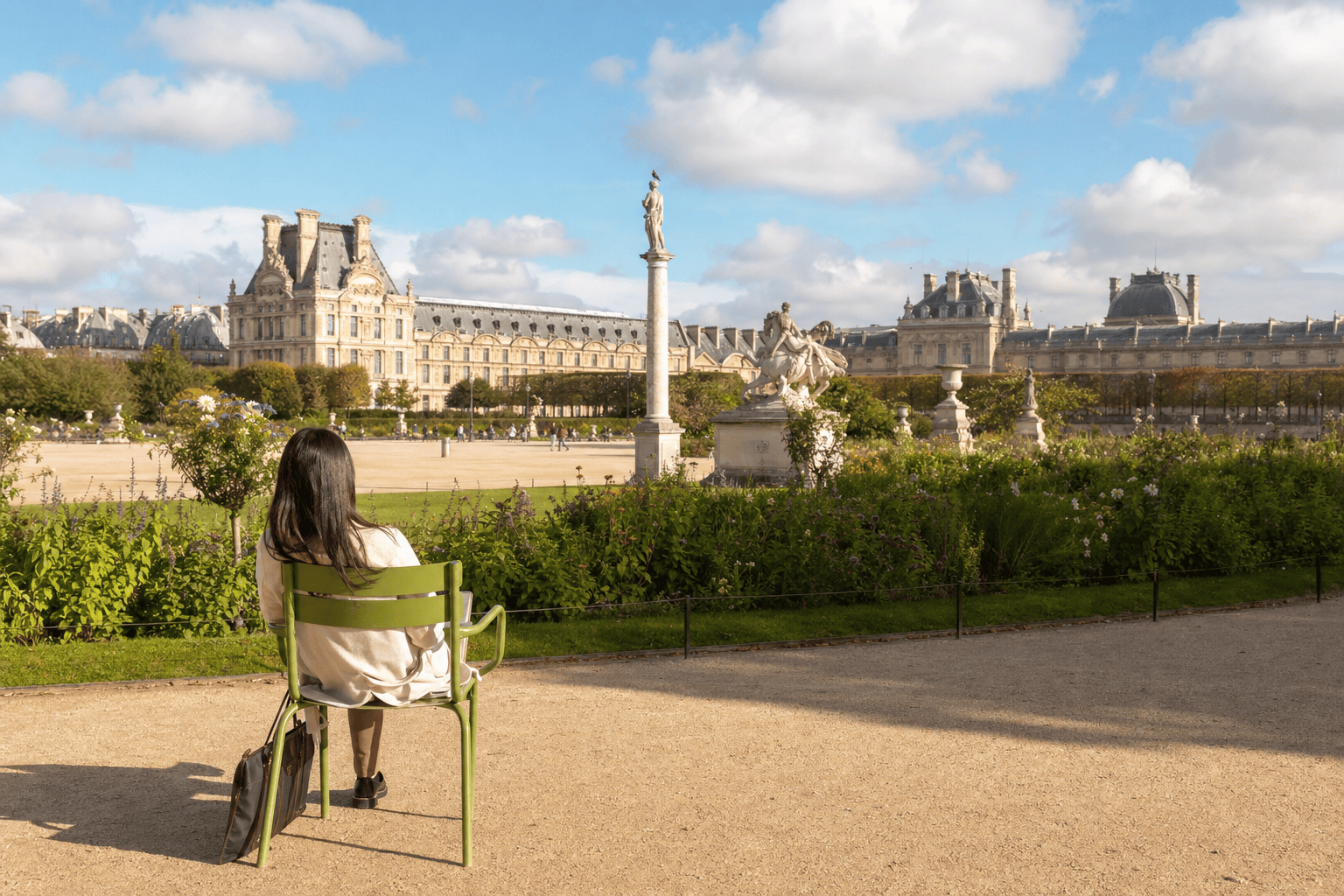
Tuileries Garden: Visitor’s Guide Between the Louvre and Place de la Concorde
Paris
Between the Louvre Museum and Place de la Concorde, the Tuileries Garden is one of Paris’s most iconic promenades. Its carefully designed perspectives, ponds, green chairs, sculptures, and terraces tell nearly five centuries of history. Free to enter and easy to include in a day of sightseeing, it connects the Louvre, the Musée de l’Orangerie, the Seine, and the Champs-Élysées on foot. This guide covers its history, highlights, metro access, and the best times to visit.
Practical information
To understand the garden, start near the Carrousel du Louvre and walk west toward Place de la Concorde. Wear comfortable shoes: the distances are considerable, and some paths are paved with stone.
Getting to the Tuileries from Paris
From a Paris hotel, CDG, or ORY, Booking Paris Transfer can arrange your journey to central Paris and the area around the Tuileries Garden. The service is dedicated to transportation and can be incorporated into an itinerary that includes the Louvre, Place de la Concorde, or another Paris neighborhood. No admission tickets or museum reservations are sold.
Transportation departing from Paris, Île-de-France, CDG, or ORY, with a return to Paris or onward travel according to your itinerary.
A Former Royal Garden in the Heart of Paris
The Tuileries Garden takes its name from the tile workshops and pottery makers once located in this area. In 1564, Catherine de’ Medici had a garden laid out beside the Tuileries Palace, which no longer exists. The site was initially designed as a residential and ceremonial space, arranged according to the tastes of the court.
Starting in 1664, André Le Nôtre extensively redesigned the grounds. He organized the parterres, opened up long perspectives, and created the grand avenue that visually extends the Louvre’s axis westward. This classical composition remains easy to understand as you walk through the garden.
The Tuileries Palace was burned in 1871, but the garden survived. Its history explains its distinctive character: it is at once a former royal estate, a landscape monument, and a lively public space visited every day by Parisians and travelers.
Understanding Paris’s Grand Perspective
The Tuileries are best understood as one stage in Paris’s grand perspective. From the Louvre courtyard, the axis crosses the garden, reaches Place de la Concorde, continues along the Champs-Élysées, and leads toward the Arc de Triomphe. The garden therefore serves as a transition between several major landmarks.
From the east, the Carrousel courtyard provides the approach to the Tuileries. The grand avenue then leads to the round pond, followed by the octagonal pond and the Fer à cheval at the western end. The terraces along the Seine and Rue de Rivoli offer different viewpoints.
For a short visit, follow the central axis to the first large pond. For a more complete experience, walk through the entire garden and continue to Place de la Concorde. This progression clearly reveals the layout envisioned by Le Nôtre.
Sculptures, Ponds, and a Strolling Atmosphere
The Tuileries Garden can also be experienced as an open-air museum. Statues, vases, and sculptural groups are placed throughout the paths and groves. They reflect the garden’s various artistic periods and successive transformations. Contemporary works installed outdoors add a more modern dimension to the setting.
The sculptures by Aristide Maillol are among the most recognizable works. Their rounded forms engage with the trees, lawns, and geometric parterres. They offer plenty of subjects for photography enthusiasts without requiring a museum visit.
The ponds shape the garden’s everyday life. Green chairs invite visitors to read, watch passersby, or take a break between visits. Families, joggers, strollers, and photographers share the space, especially when the weather is mild. This daily use balances the site’s monumental character.
Combining the Tuileries with the Louvre and the Musée de l’Orangerie
The Louvre’s proximity makes the Tuileries a natural complement to a cultural day. You can walk through the garden before visiting the museum, starting with some time outdoors, or afterward, to take a break and enjoy a change of atmosphere. No ticket is required to enter the garden.
A well-organized route is to start at the Carrousel du Louvre, follow the main paths, and reach the round pond. Then continue west to the Musée de l’Orangerie, located near Place de la Concorde. The museum is especially known for Claude Monet’s Water Lilies, but it has its own hours and admission requirements.
Check the official information for the garden, the Louvre, and the Musée de l’Orangerie separately before your day out. Hours, reservations, security checks, and any temporary closures may differ.
Access, Metro, and Practical Information
The garden occupies a central location in the 1stand arrondissement, between Rue de Rivoli, the Seine, and Place de la Concorde. For the eastern end, the stations Palais Royal–Musée du Louvre on Lines 1 and 7, or Pyramides on Lines 7 and 14, are convenient. The station Tuileries, on Line 1, serves the central area.
For the western end, get off at Concorde, served by Lines 1, 8, and 12. Depending on your chosen entrance, the stations Assemblée Nationale on Line 12 or Madeleine on Lines 8, 12, and 14 may also work, though they involve a longer walk. Lines and access points may be affected by construction or events.
Restrooms and services available in the garden may depend on opening hours, the season, and the facilities operating on the day of your visit. It is best to check the official practical information for the Tuileries Garden before setting out rather than relying on a specific facility.
Seasons, Light, and Visiting Tips
In spring, the flower beds and trees make the Tuileries especially enjoyable, while longer days encourage breaks around the ponds. In summer, the garden becomes a busy central retreat. Visitors may seek out the terraces and shaded areas during the hottest hours; bring water and sun protection.
Autumn highlights the foliage, perspectives, and statues. In winter, the geometric lines stand out more clearly and the garden may be quieter, but the terraces can be windy and some paths may be less comfortable after rain.
For photographs of the central axis, go in the morning if you want to avoid the crowds. Late in the day, light from the west enhances the view toward Place de la Concorde and the Champs-Élysées. Families will enjoy the ponds and places to rest, while history enthusiasts can look for the guided visits or walks included in the official program.
Walking Routes from the Tuileries
A cultural half-day can begin at the Louvre, cross the Tuileries, stop at the Musée de l’Orangerie, and continue to Place de la Concorde. From there, head along the Champs-Élysées or down toward the Seine. This route brings together palaces, gardens, works of art, and Paris’s major avenues without complicated transfers.
For a more relaxed stroll, enter from Rue de Rivoli, make your way to the round pond, and take time to enjoy the garden before heading toward the riverbanks. Another option is to return toward the Carrousel, then continue to the Palais-Royal and the covered passages of the 2ndth district.
The Tuileries are also easy to include in a short stay, between two appointments or visits. If you are carrying luggage from a Paris hotel, CDG, or ORY, Booking Paris Transfer can arrange transportation to Paris according to your itinerary; the service covers transportation only and includes neither museum tickets nor priority access.
Frequently Asked Questions
Is admission to the Tuileries Garden free?
How much time should I allow?
Which metro station should I choose?
Are the garden’s hours fixed year-round?
Can I get to the Tuileries from CDG or ORY?
 National Museum of the History of Immigration An essential Paris museum for understanding the history of migration, individual journeys, and the role…
 The Paris Sewers An underground Paris experience exploring the history of sanitation, the galleries, and the trades that…
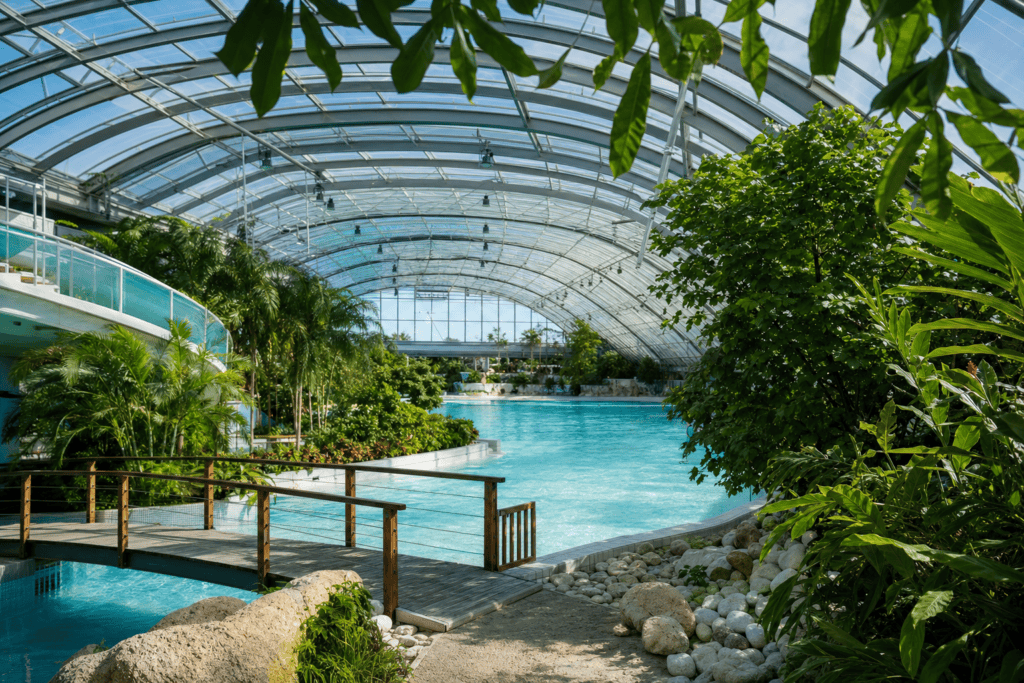 Aquaboulevard An indoor water park in the 15th arrondissement, convenient for a half-day family outing between Balard and…
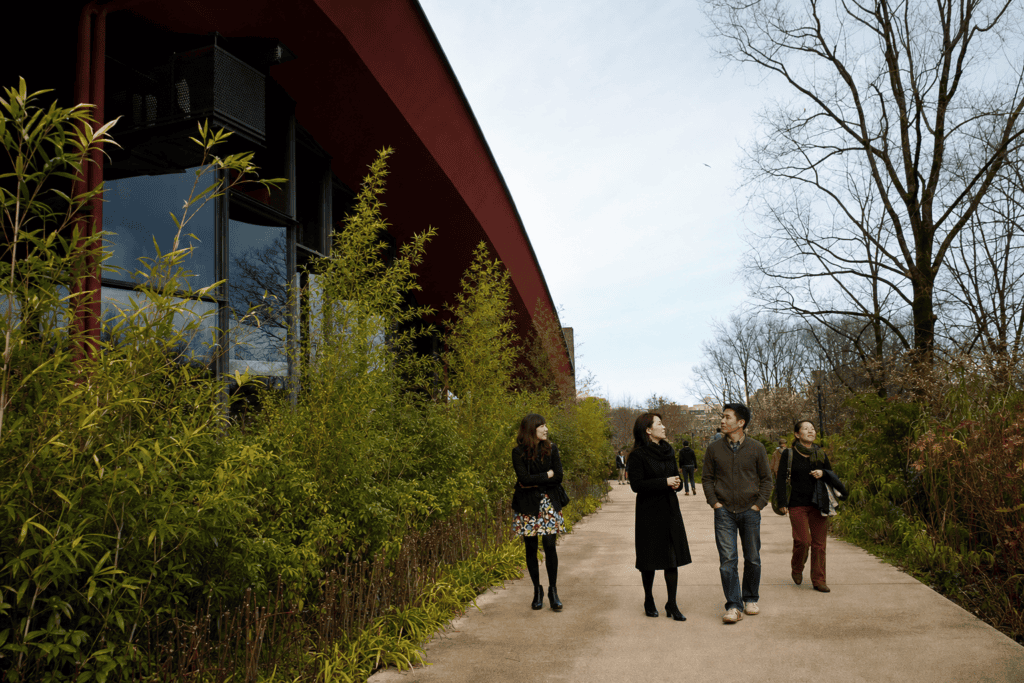 Musée du quai Branly – Jacques Chirac A Paris museum devoted to the arts and civilizations of Africa, Asia, Oceania, and the Americas, with a…
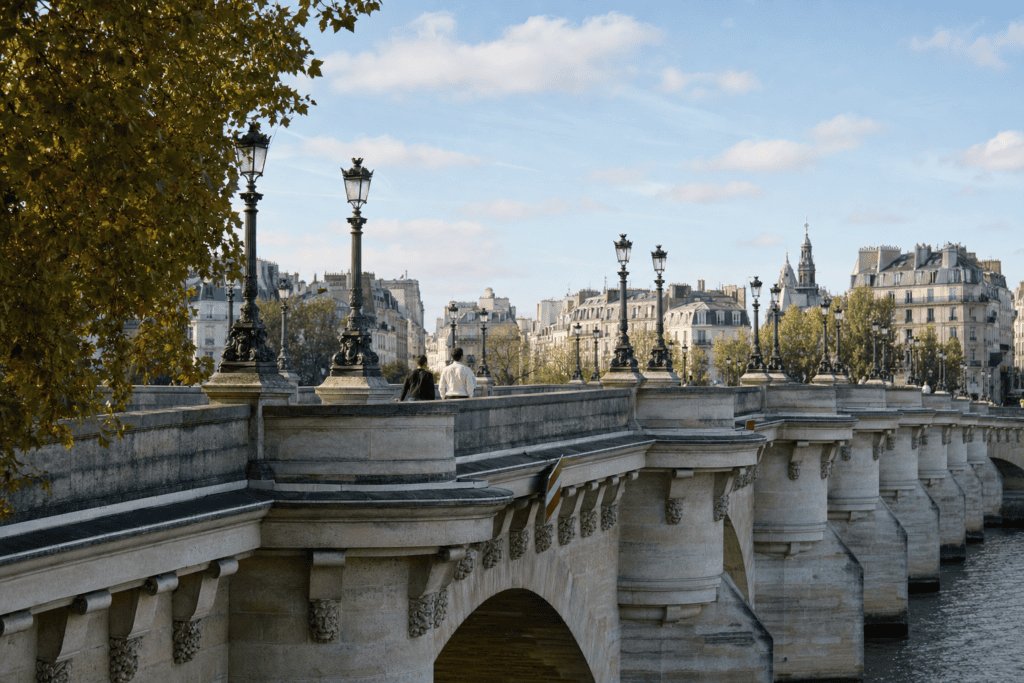 Pont Neuf Pont Neuf connects the two banks of the Seine around Île de la Cité…
 Musée Grévin A family-friendly, photo-worthy outing in Paris, with wax figures, historic sets, the Hall of Mirrors…
Online booking · Paris → Tuileries Garden, 75001 Paris, France
Choose your pickup date and time
Your departure and arrival details are already pre-filled. You can adjust them in the fare calculator before viewing the vehicles and fare.