



Philharmonie de Paris: concerts, museum, and architecture
Paris
Located in the 19th arrondissement at the entrance to Parc de la Villette, the Philharmonie de Paris brings together a spectacular concert hall, a varied music program, and several cultural experiences. A symphony concert, jazz, world music, exhibition, music museum, family activity, or architectural walk: the site often merits half a day, especially if you also explore the park and nearby venues. This page introduces the main spaces, access from Paris train stations and airports, and the details to check before your visit.
Practical information
Do not assume that the museum, exhibition, concert, and Belvédère hours are the same: check the practical information page for your booked activity and the Philharmonie’s accessibility information.
Getting to the Philharmonie from Paris
Booking Paris Transfer peut organiser un trajet privé depuis Paris, un hôtel parisien, la gare du Nord, la gare de l’Est, la gare de Lyon, la gare Montparnasse, la gare Saint-Lazare, CDG ou ORY vers la Philharmonie de Paris, avec retour vers Paris selon votre itinéraire. Le transport concerne uniquement le trajet : les billets de concert, de musée et d’exposition doivent être réservés séparément auprès de l’établissement. Prévoyez une marge suffisante avant le début du spectacle.
Private transportation from Paris, the main Paris train stations, CDG, or ORY, with the option of a return trip to Paris. Admission tickets not included.
Finding the Philharmonie in northeastern Paris
La Philharmonie de Paris se trouve au 221 avenue Jean-Jaurès, dans le 19e arrondissement, à proximité immédiate de la Porte de Pantin et du parc de la Villette. Elle appartient à un vaste ensemble culturel qui comprend la Cité de la musique, le Musée de la musique, la Grande Halle, le Zénith Paris – La Villette et la Cité des sciences et de l’industrie. Cette concentration permet de construire une sortie très différente selon le temps disponible et l’âge des participants.
The venue is therefore more than a concert hall you arrive at just before the curtain rises. You can begin with a walk through the park, visit an exhibition or museum, and then attend a concert. Travelers who already know central Paris’s monuments will find contemporary architecture and a more open cultural district, dotted with gardens, footbridges, and distinctive buildings.
However, make sure you identify the exact building shown on your reservation. Nearby institutions have separate entrances, schedules, and access requirements. The official presentation page Philharmonie helps explain the site’s overall layout before your visit.
Admiring Jean Nouvel’s architecture
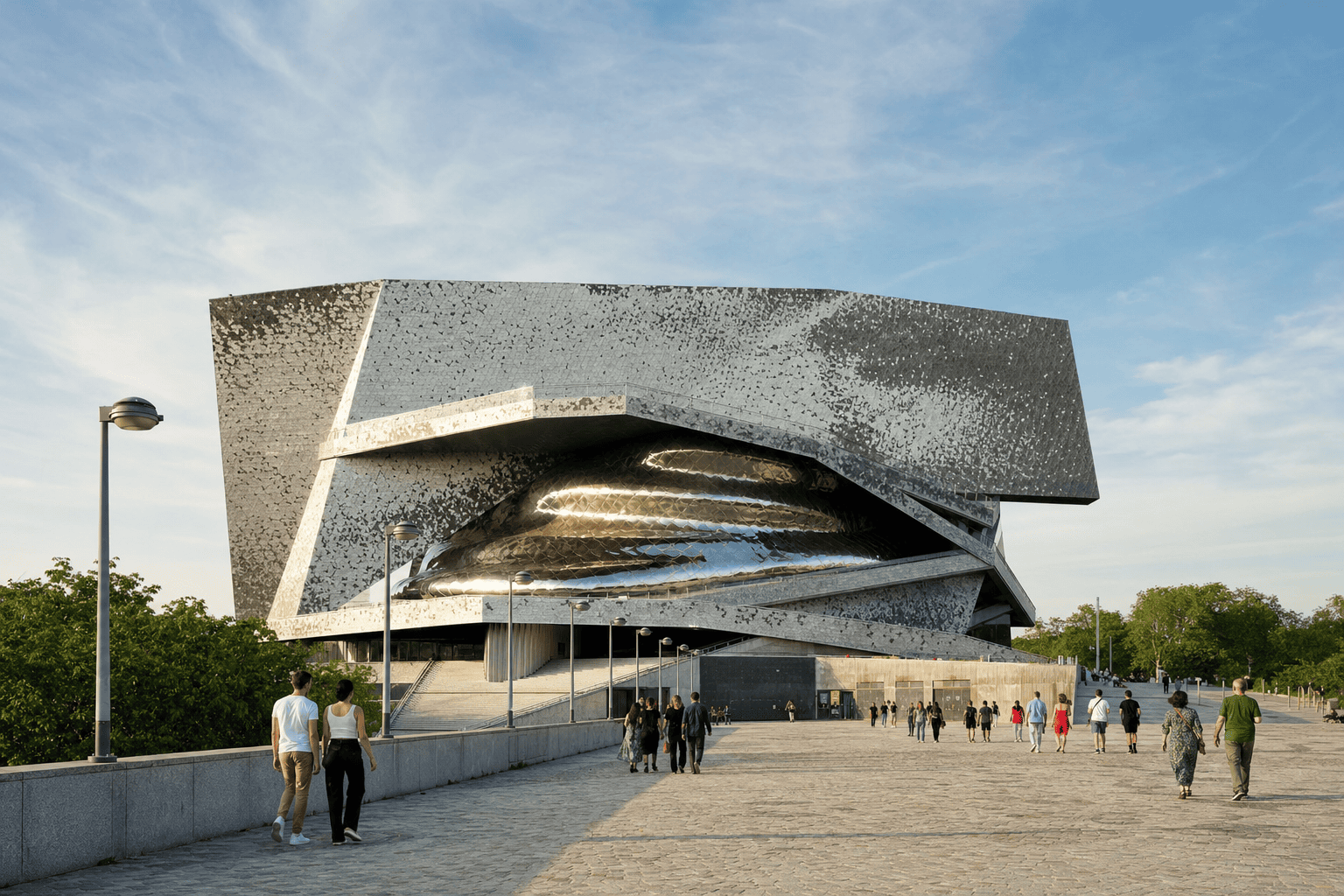
Designed under the direction of Jean Nouvel, with Métra + Associés as associate architect, the Philharmonie opened to the public in 2015. Its mineral-like volume, sloping planes, and pathways give the impression of an artificial hill set beside the park. The building reveals itself gradually: the forecourt, ramps, stairs, and footbridges create different viewpoints rather than presenting a single façade to observe quickly.
The exterior is covered with thousands of metal birds, a detail that becomes more visible when viewed from a distance. From the edges of the park, the silhouette engages in a dialogue with Christian de Portzamparc’s Cité de la musique and the other venues at La Villette. This relationship between architecture and landscape is reason enough to visit even without attending a concert.
Arriving a little early gives you time to take in the building’s forms, find the entrance for your activity, and avoid a rushed first impression. Interior spaces, upper areas, and the Belvédère may not be accessible under the same conditions on every visit. The arrangements announced on the official website should take precedence over general descriptions or outdated information found elsewhere.
Experiencing a concert in the Grande salle Pierre Boulez
The Grande salle Pierre Boulez is the Philharmonie’s most iconic feature. Its enveloping design places spectators around the stage on several levels, creating an unusual visual closeness between the audience and musicians. Combined with the hall’s acoustic design, this layout offers an experience unlike that of a traditional front-facing auditorium.
The Orchestre de Paris has a central role here, but the schedule also includes visiting orchestras, conductors, soloists, and chamber ensembles. Depending on the season, you may hear symphonic music, contemporary works, jazz, world music, early music, or programs combining film and music. It is therefore best to check the schedule rather than assume that every evening features the same repertoire.
For your first visit, choose a format that suits your listening habits. A major symphonic program lets you experience the full scale of the hall; a narrated concert, short work, or discussion may feel more approachable for visitors less familiar with classical music. The official page for each event specifies the hall, time, any age recommendations, and useful arrival information.
Explore concerts, exhibitions, and activities
The Philharmonie’s program appeals to a wide range of audiences. It may include recitals, baroque music, contemporary works, jazz, popular music, international musical traditions, lectures, and artist talks. This variety makes the venue a good option for travelers who want to discover a concert without limiting their choice to the symphonic repertoire.
The Musée de la musique, located in the Cité de la musique, displays instruments, artworks, and objects that tell the story of musical practices. Temporary exhibitions offer another way to explore an artist, period, or culture. The Philharmonie des enfants, meanwhile, offers interactive experiences for young visitors, with a recommended age and booking requirements to check for each offering.
To plan your day, check the concert schedule, museum page, exhibition page, or selected family activity separately. The spaces do not necessarily have the same opening hours, and some entrances require separate reservations. Leave time between activities so that an enjoyable cultural itinerary does not become a race against the clock.
Enjoy the Belvédère and Parc de la Villette
Parc de la Villette naturally complements a visit to the Philharmonie. Its lawns, themed gardens, footbridges, and cultural venues let you extend your visit outdoors. The contrast between contemporary buildings, green spaces, and former industrial structures gives the neighborhood an atmosphere distinct from the classic walks of central Paris.
The Belvédère is an architectural and landscape highlight, but access depends on the conditions announced by the venue and the scheduled activity. Do not automatically assume it is open before or after every concert. The page The venue and practical information is the most reliable source for checking accessible spaces, routes, and any restrictions.
You can also combine the Philharmonie with the Grande Halle, Zénith Paris – La Villette, or Cité des sciences et de l’industrie. After a performance, plan your return in advance: crowds may increase at closing time, and not all park exits offer the same conditions in the evening. A walk before the concert is often easier to fit in than a long detour after the performance.
Getting there from a Paris train station or airport
From Gare du Nord, metro line 5 provides a direct route to Porte de Pantin, the most straightforward access point for the Philharmonie. From Gare de l’Est, the same line is also convenient once you reach the corresponding station. Travelers arriving at Gare de Lyon, Gare Montparnasse, or Gare Saint-Lazare will generally need to make a connection; the exact route depends on network conditions and the time of travel.
From Charles de Gaulle, compare rail and road options based on your luggage, arrival time, and concert time. From Orly, the journey also involves connections or a road transfer, with travel time significantly affected by traffic. For a performance at a fixed time, allow extra time for baggage claim, line changes, and possible delays.
Porte de Pantin is served by metro line 5, while tram T3b also serves the area. Access conditions, accessibility, and instructions may vary by event; check the venue’s official page forhours and practical information. Visitors arriving by car should allow for traffic and should not automatically count on finding an available parking space nearby.
Preparing for a comfortable, accessible visit
Preparation depends first on the type of reservation you have. A concert, exhibition, Musée de la musique visit, and children’s activity may not use the same entrance or require the same arrival time. Read the instructions on your ticket carefully and check the latest guidance before leaving your hotel. Arriving early is especially helpful if you need to find a specific seat or check a coat.
Visitors with disabilities can review the welcome services, routes, and assistance options described on the official page dedicated to the Philharmonie’saccessibility. If your situation requires special arrangements, contact the venue well in advance to confirm the conditions that apply to your event and seat location.
For families, check the recommended age, duration, and booking requirements for each activity. For visitors carrying luggage, a direct route may be more comfortable than a series of connections. The district is large: allow time to walk between buildings, reach the metro station, or find a vehicle after the performance. Since schedules and rules may change, official pages remain the final reference.
Frequently Asked Questions
Where is the Philharmonie de Paris located?
What is the best metro access?
Can you visit without attending a concert?
Is the Belvédère always accessible?
How much time should I allow for a visit?
Is the Philharmonie suitable for families?
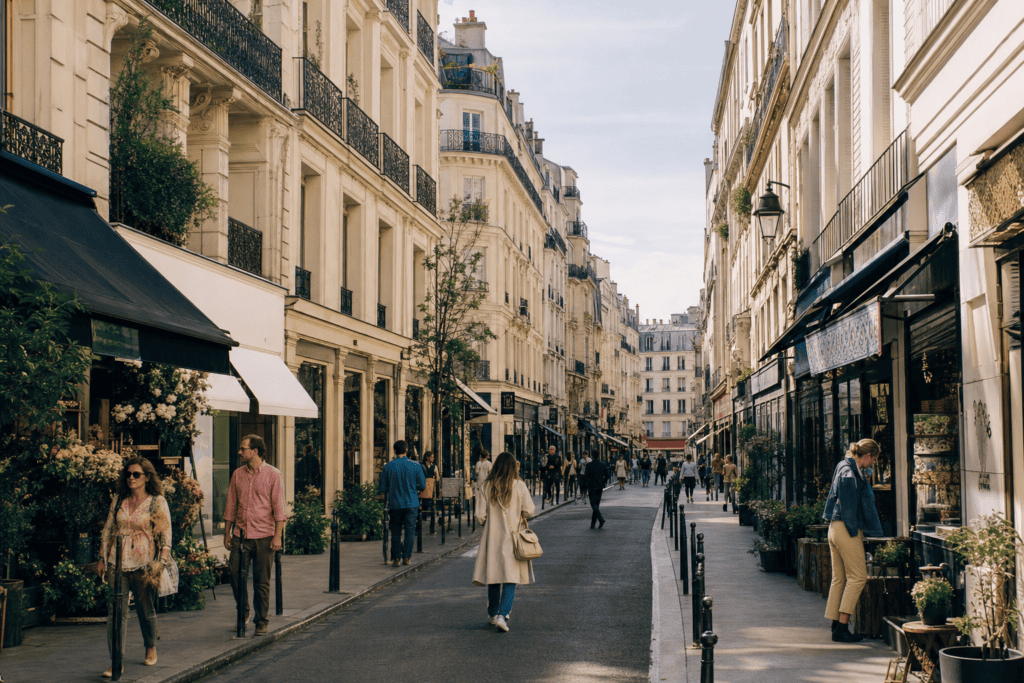 Rue des Martyrs A Parisian uphill route through food shops, cafés, 9th-arrondissement heritage, and the route toward Montmartre.
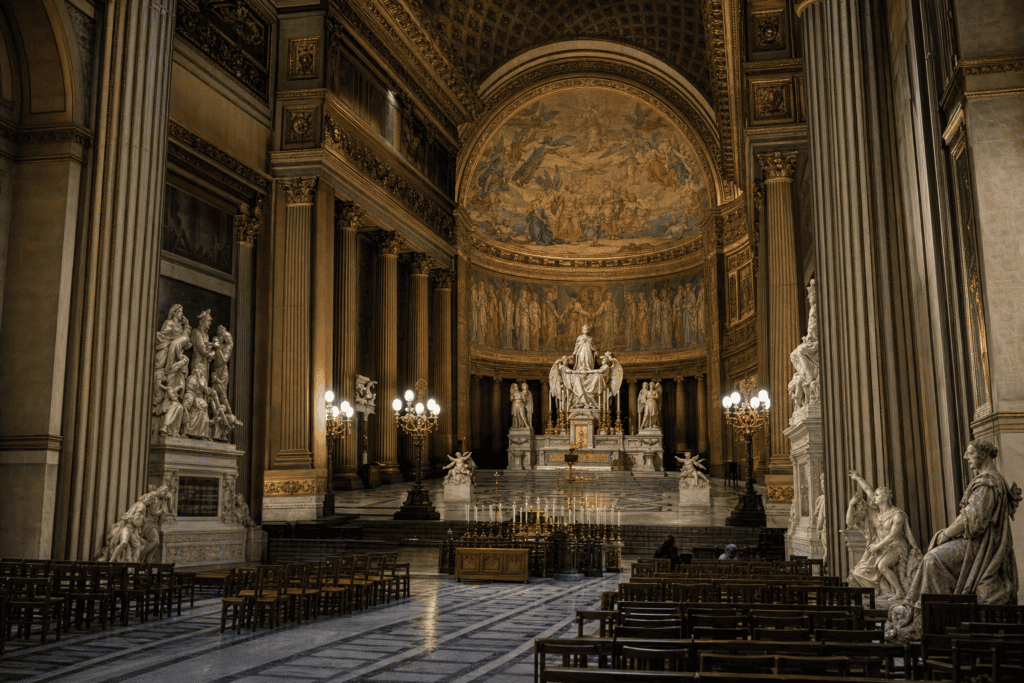 La Madeleine Church A major neoclassical monument, ideal for a stop between Place de la Concorde, the Palais Garnier, and the grand…
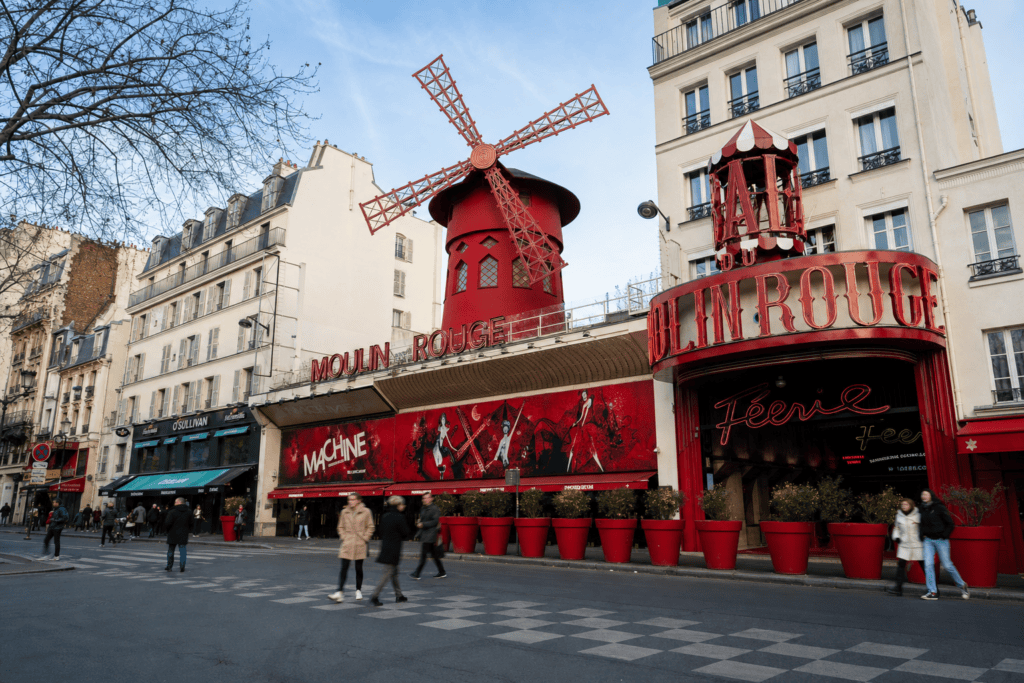 Moulin Rouge A historic Montmartre cabaret, famous for its Féerie revue, spectacular costumes, and the legacy of…
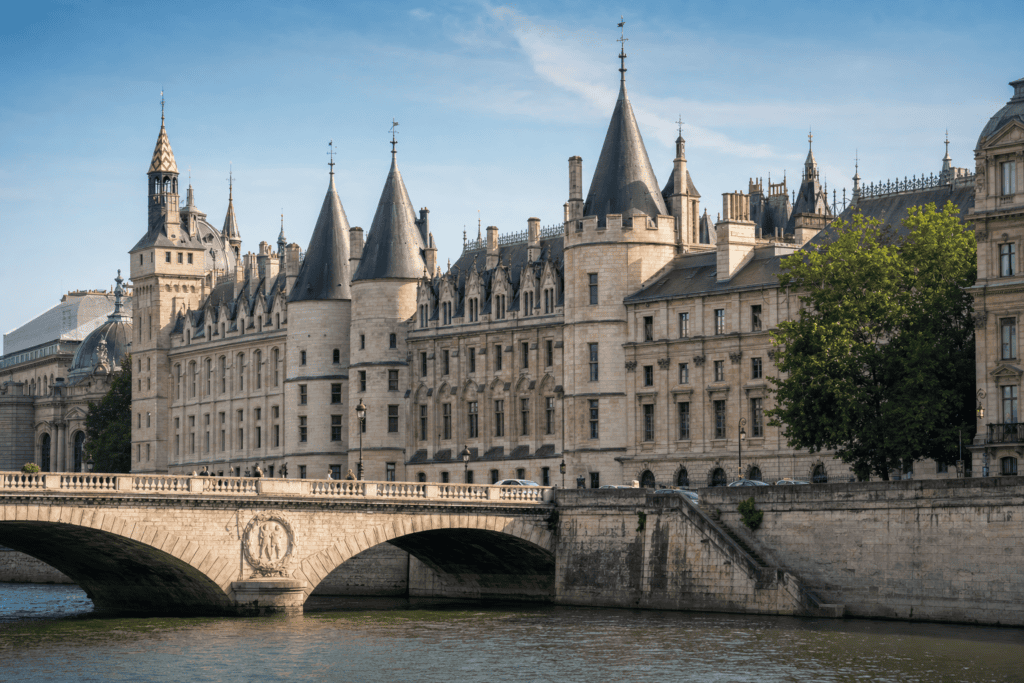 Conciergerie An iconic monument on the Île de la Cité, combining medieval architecture, the French Revolution, and memories of…
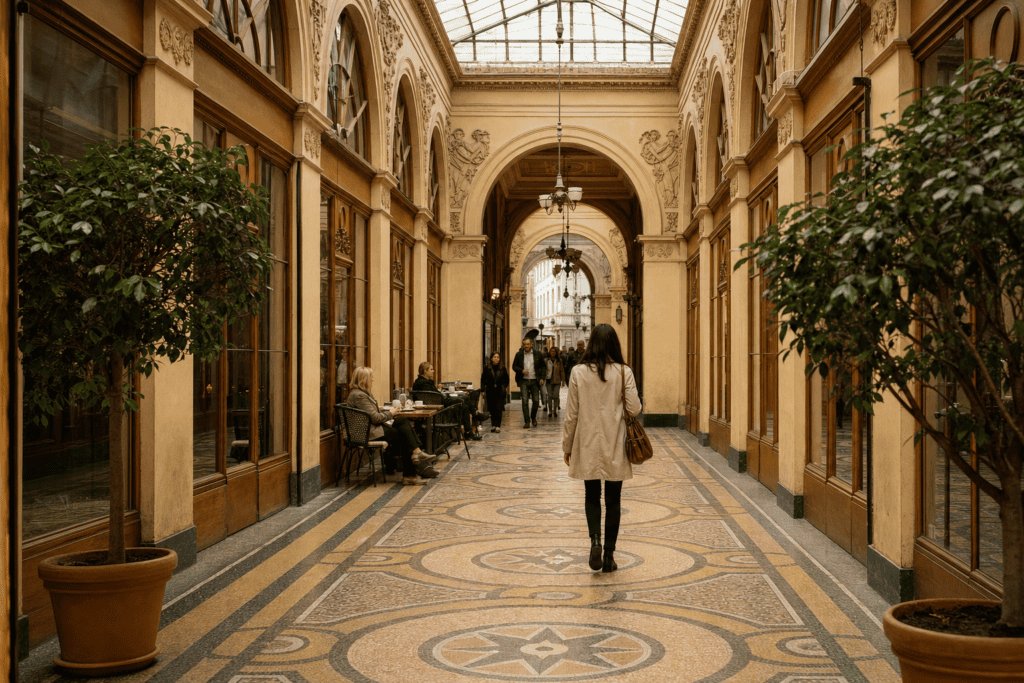 Galerie Vivienne A historic Parisian covered passage where mosaics, a glass roof, an old bookshop, and refined boutiques create an elegant stroll…
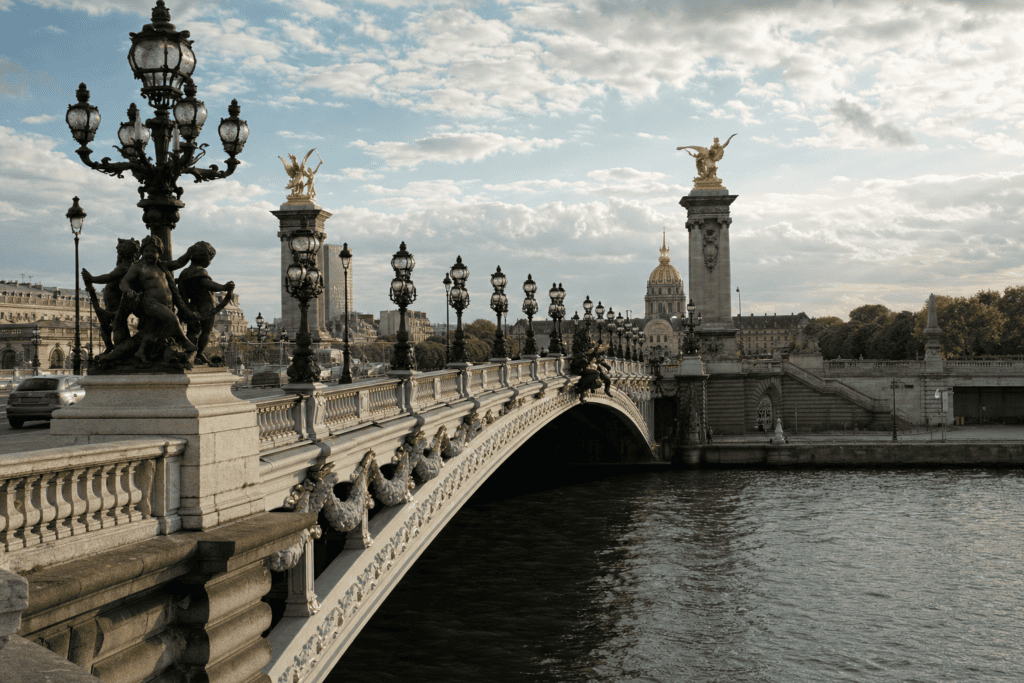 Pont Alexandre III An exceptional Belle Époque bridge, famous for its gilding, sculptures, and views over the…
Online booking · Paris → 221 Avenue Jean-Jaurès, 75019 Paris, France
Choose your pickup date and time
Your departure and arrival details are already pre-filled. You can adjust them in the fare calculator before viewing the vehicles and fare.